



LEOPARD SAFARI GUIDE FOR 2026
The leopard moves through the hushed twilight of the African bush like a whispered legend, where golden light filters through acacia thorns and shadows dance across the savanna. This rosette-cloaked phantom, master of stealth and keeper of mysteries, reigns as Africa’s most elusive and enchanting predator.
For safari travelers, glimpsing a leopard represents the ultimate wildlife encounter. These solitary hunters embody everything wild and untamed about Africa, and understanding their secrets transforms a simple sighting into a profound connection with nature’s most flawless predator.
Understanding Leopards Physical Character
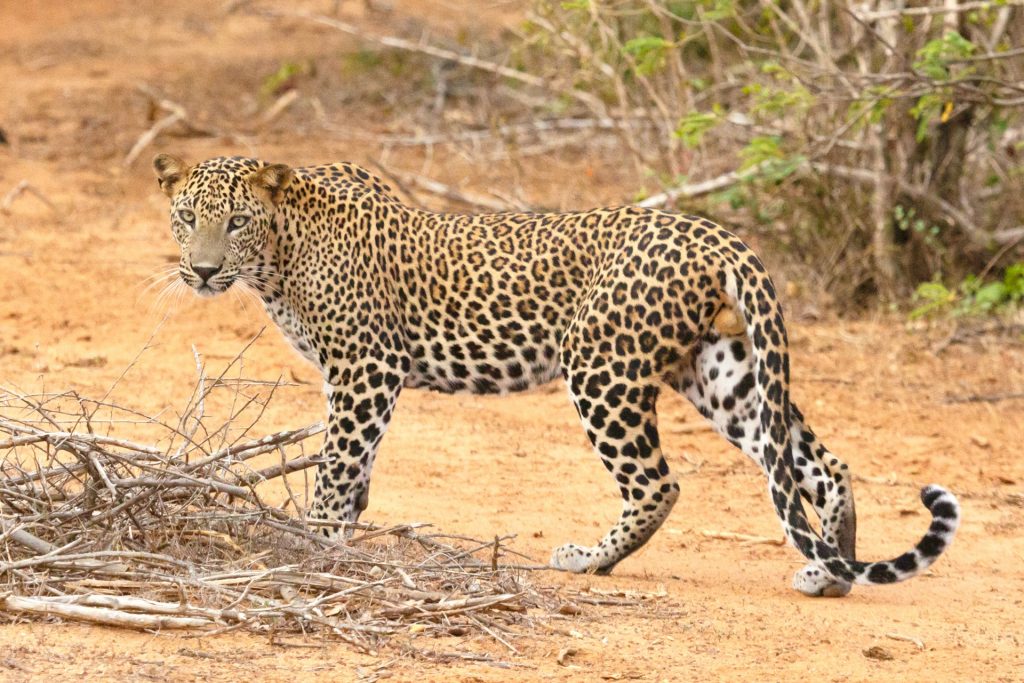
Leopards (Panthera pardus) wear coats painted by evolution itself. Their distinctive rosettes, circular arrangements of spots forming rings around lighter centres, create camouflage so perfect that leopards vanish in plain sight. Watch one draped across a branch, and suddenly the tree itself seems alive, breathing with feline grace.
These medium-sized big cats weigh between 30-90 kilograms, with males commanding the upper range. What they lack in sheer size compared to lions, they compensate for with pound-for-pound strength that defies belief. A leopard can hoist prey weighing as much as itself, sometimes more, straight up a vertical tree trunk, a feat requiring jaw-dropping power in legs, shoulders, and neck.
Black Panthers: Shadows Within Shadows
Among leopards walks an even rarer vision: the black panther. These melanistic leopards carry genetic variations that produce excessive black pigmentation, although their rosettes remain faintly visible beneath the darkness. In rainforests where dappled shadows reign supreme, black leopards possess the ultimate camouflage advantage, making them ghosts among ghosts.
Masters of Adaptation: Why Leopards Thrive Everywhere
Unlike lions tied to grasslands or cheetahs requiring open plains, leopards inhabit extraordinary diversity, from tropical rainforests to arid deserts, from sea-level savannas to Himalayan peaks exceeding 5,000 meters. This adaptability makes leopards the world’s most widely distributed big cat, thriving where other predators cannot.
Their secret? Remarkable flexibility in everything, diet, hunting times, and habitat preferences. Leopards hunt over 100 different prey species, from beetles to animals weighing 150 kilograms. When circumstances demand, they’ll hunt during daylight despite preferring nocturnal prowls. They’ll live near human settlements if necessary, though they prefer wilderness solitude.
This adaptability, however, doesn’t mean leopards are common sightings. Their secretive nature, nocturnal habits, solitary lifestyle, and exceptional camouflage make them safari’s most challenging Big Five member to encounter.
How do Leopards Hunt?
Watching a leopard hunt, if you’re extraordinarily fortunate, reveals predation as an art form. Unlike lions that rely on pride cooperation or cheetahs that chase prey in explosive sprints, leopards are ambush assassins employing patience, precision, and stealth.
The process unfolds like a ritual: First, the leopard detects prey using eyesight six times sharper than humans in darkness, complemented by acute hearing. Then comes the stalk, a slow-motion ballet where the cat flows between cover, freezing when prey glances up, advancing when they feed. The leopard crouches impossibly low, minimising its profile, closing the distance to mere meters.
The final attack explodes in seconds, a sprint, a leap, a suffocating bite to the throat or nape. Within 5-25 minutes, the struggle comes to an end. Success rates approach 38%, remarkably high among big cats, a testament to their stalking mastery.
Tree Caching: The Leopard’s Signature Move
Perhaps no leopard behaviour captures imagination like tree caching. After making a kill, leopards drag carcasses, sometimes weighing more than themselves, up vertical trunks into protective branches. This remarkable feat serves crucial purposes: protecting food from lions, hyenas, and wild dogs that would steal ground-level kills, and keeping meat cooler, fresher, and away from insects.
A cached kill might sustain a leopard for days, with the cat returning periodically to feed in arboreal safety. For safari-goers, discovering a leopard draped beside its larder, amber eyes watching the world below, represents Africa’s most iconic wildlife scene.
The Leopard’s Secret Life
Leopards live alone, intersecting only for brief mating encounters. Males maintain territories of 20-60 square kilometers, overlapping multiple smaller female ranges. They mark boundaries through urine spraying, scent rubbing, and scratch marks on trees—invisible signatures declaring ownership to wandering rivals.
Communication happens through distinctive vocalisations: rasping territorial calls, the sawing sound resembling wood being cut (audible two kilometres away), purrs of contentment, and growls of warning. These sounds, echoing through African nights, send shivers down safari spines.
Cubs: Vulnerable Beginnings
Female leopards give birth to 2-3 cubs after 90-105 day gestations, hiding them in dense vegetation, caves, or rock crevices. Cubs emerge blind and helpless, weighing mere hundreds of grams. For their first two months, mothers leave them hidden while hunting, moving them frequently to avoid predator detection.
Cub mortality reaches 40-50%, lions, hyenas, and even male leopards (through infanticide) pose constant threats. Those surviving learn hunting through observation and play, remaining with mothers for 12-18 months before dispersing to establish their own territories.
Where to See Leopards on Safari: Your Best Chances
While leopards inhabit much of sub-Saharan Africa, certain destinations offer dramatically better viewing odds:
Kenya’s Leopard Hotspots: Kenya stands among Africa’s premier leopard destinations. Samburu National Reserve boasts healthy leopard populations and expert trackers specializing in locating these elusive cats, particularly around riverine forests where they rest during heat. The private Loisaba Conservancy offers exceptional leopard viewing with fewer crowds, combining luxury accommodations with intimate wildlife encounters in pristine wilderness.
South Africa’s Sabi Sands: The undisputed champion for leopard encounters. Habituated leopards here tolerate safari vehicles, providing virtually guaranteed sightings. Private reserves allowing off-road driving and night drives create unparalleled opportunities.
South Luangwa, Zambia: Exceptional leopard density combined with expert guides specializing in nocturnal game drives. The park’s walking safaris add unique perspectives on leopard behavior.
Okavango Delta, Botswana: Water channels and islands create ideal leopard habitat, though thick vegetation sometimes challenges visibility.
Serengeti, Tanzania: The Seronera region particularly offers good leopard viewing, especially around kopjes (rocky outcrops) where they rest.
Safari Tips for Leopard Spotting
Maximize your leopard encounter chances through strategic planning:
- Book private reserves permitting off-road driving—following leopards into bush dramatically improves sightings
- Include night drives when leopards are most active
- Budget multiple days—even in prime areas, leopard sightings require time and luck
- Choose experienced guides who understand leopard behavior and territories
- Visit dry season when vegetation is thinner and animals concentrate around water
- Exercise patience—leopards appear on their own schedule, never ours
Conservation: Protecting the Phantoms
Despite their adaptability, leopards face mounting pressures. Classified as Vulnerable globally, with certain subspecies Critically Endangered, they’re declining across most ranges. Habitat loss through agricultural expansion, retaliatory killing following livestock predation, poaching for skins and traditional medicine, and prey depletion all threaten populations.
Current estimates suggest 500,000 leopards remain globally, though their secretive nature makes accurate counts difficult. Some subspecies teeter on extinction’s edge: fewer than 100 Amur leopards survive, Arabian leopards number under 200, and Javan leopards exist in critically low, unknown numbers.
Your safari supports conservation directly. Tourism revenue funds protected areas, anti-poaching patrols, and community programs reducing human-wildlife conflict. Every leopard sighting represents conservation success—proof that protecting wild spaces benefits both nature and local communities.
The Eternal Mystery of the Leopards
Leopards remind us that Earth still harbors mysteries, that even well-studied animals maintain secrets, that wildness persists despite human encroachment. They embody adaptation’s triumph—survivors thriving through intelligence, strength, and flexibility when specialists failed.
On safari, scanning thornbush for rosettes, checking tree branches for telltale tails, listening for sawing calls in darkness, this becomes pilgrimage into the unknown. And when finally a leopard materializes from shadows, golden eyes meeting yours across the divide between human and wild, you understand why people travel continents for such moments.
These spotted shadows slipping through dappled light, these powerful hunters hoisting impossibly heavy prey skyward, these solitary spirits surviving against odds—leopards represent Africa’s enduring mystery and untamed beauty. They deserve not just our admiration but our commitment to ensuring that future generations know leopards not from photographs alone but as living expressions of wilderness itself.
In the leopard’s gaze lies Africa’s ancient heartbeat, still strong, still wild, still calling us into the sacred shadows where true magic dwells.
Your Leopard Safari Awaits: Answer the Call of the Wild
Let’s be honest: tracking leopards in Africa isn’t about checking boxes on a wildlife list. It’s about pursuing one of nature’s most perfectly crafted mysteries, about patience rewarded with moments that stop your breath, about connecting with something wild and untamed that changes how you see the world. The leopard sighting you dream of—that golden-eyed phantom draped across a branch, rosettes glowing in late afternoon light—requires more than luck. It demands the right destination, expert guides who read the bush like poetry, strategic planning for the right season, and enough time for Africa’s rhythms to reveal their secrets. Book with specialists who secure prime locations like Sabi Sands or Loisaba early, include night drives when leopards hunt, and invest in trackers who spot signs invisible to untrained eyes.
Prepare for something profound: that moment when a leopard emerges from shadows and looks directly at you, two mammals separated by millennia yet connected by something primal and true. You’ll carry that encounter forever—the thundering heart, the held breath, the absolute presence of being witnessed by wildness itself. Africa’s leopards are calling from ancient territories, from moonlit branches, from shadows that dance between thorns, waiting in places where wilderness still reigns supreme and magic lives.