From
$7,221

🔒 Your details are kept private and never shared with third parties.
The only lodge in Shaba National Reserve — a natural spring oasis on the Ewaso Nyiro River, where Joy Adamson lived and Born Free's final chapter was written
Shaba National Reserve occupies 239 square kilometres of volcanic northern Kenya — a landscape of dramatic lava flows, doum palm-lined watercourses, and the semi-arid scrubland that stretches between the Ewaso Nyiro River and the distant hills of the Northern Frontier District. It is wilder in character than the adjacent Samburu and Buffalo Springs reserves, less visited, and consequently more completely itself: the wildlife moves through without the mediation of a dozen other game drive vehicles at every sighting. The reserve was gazetted in 1976; the lodge opened thirteen years later as its only accommodation, a status it holds to this day.
Joy Adamson knew Shaba before anyone thought of building a lodge here. She came here for the wild leopard she was working to rehabilitate in her final years, and she is buried in the reserve she loved — a fact that gives the landscape a layer of personal and conservation history that few national reserves in East Africa can claim with the same intimacy. The film To Walk with Lions, based on the Adamsons’ story, was filmed partly at this lodge; Sir Richard Harris stayed here for weeks during production. The connection to Born Free runs through the landscape itself: Elsa’s country, the northern frontier, the particular quality of dry-country wilderness that Joy wrote about and George protected.
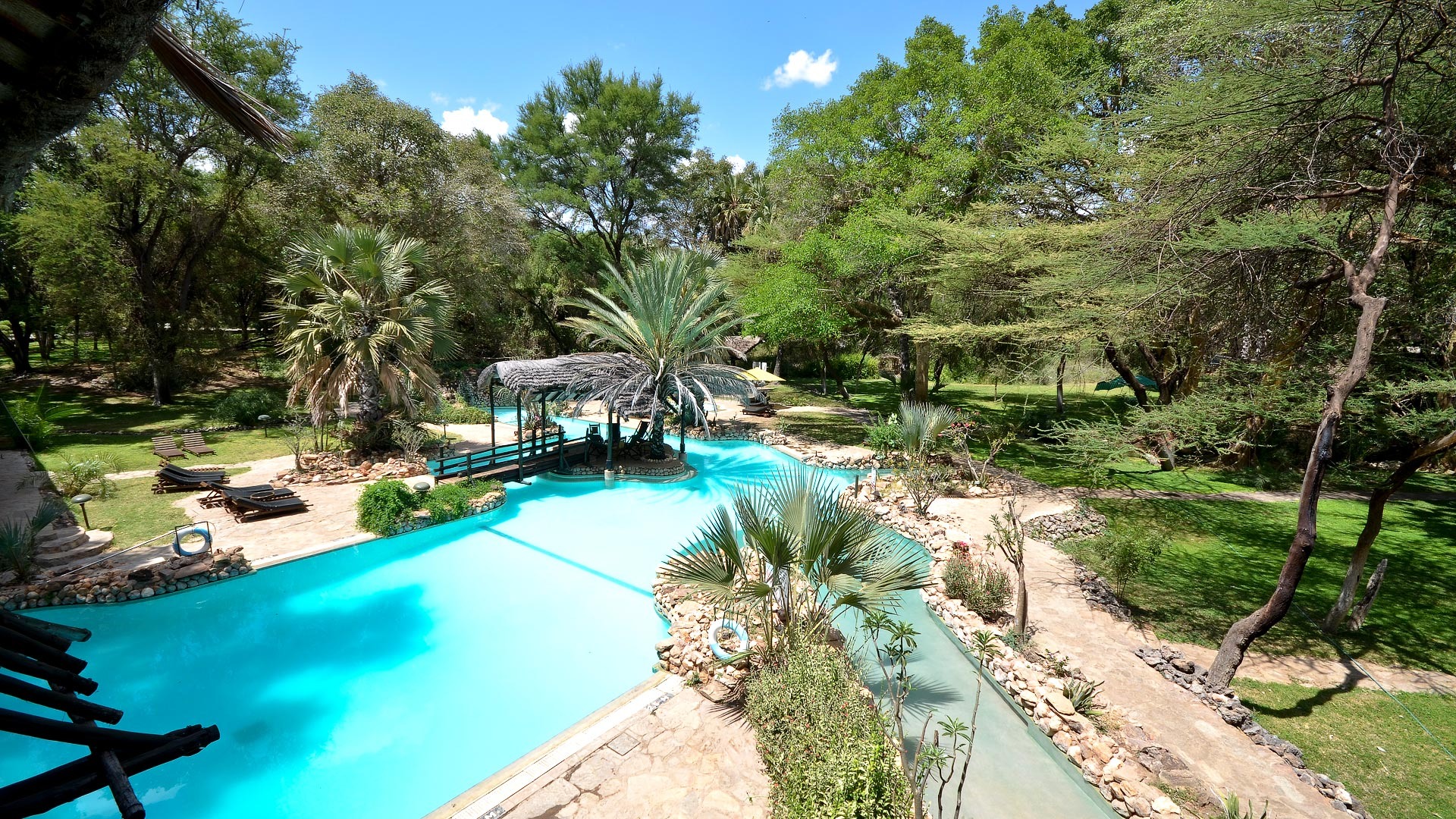
The lodge is built on a natural oasis — springs that rise through the ground and flow in cascades and fish ponds through the grounds before reaching the Ewaso Nyiro River beyond. The result is a lodge that feels genuinely different from the landscape that surrounds it: shaded, green, and threaded with the sound of running water in a reserve where shade and water are both scarce and therefore precious.
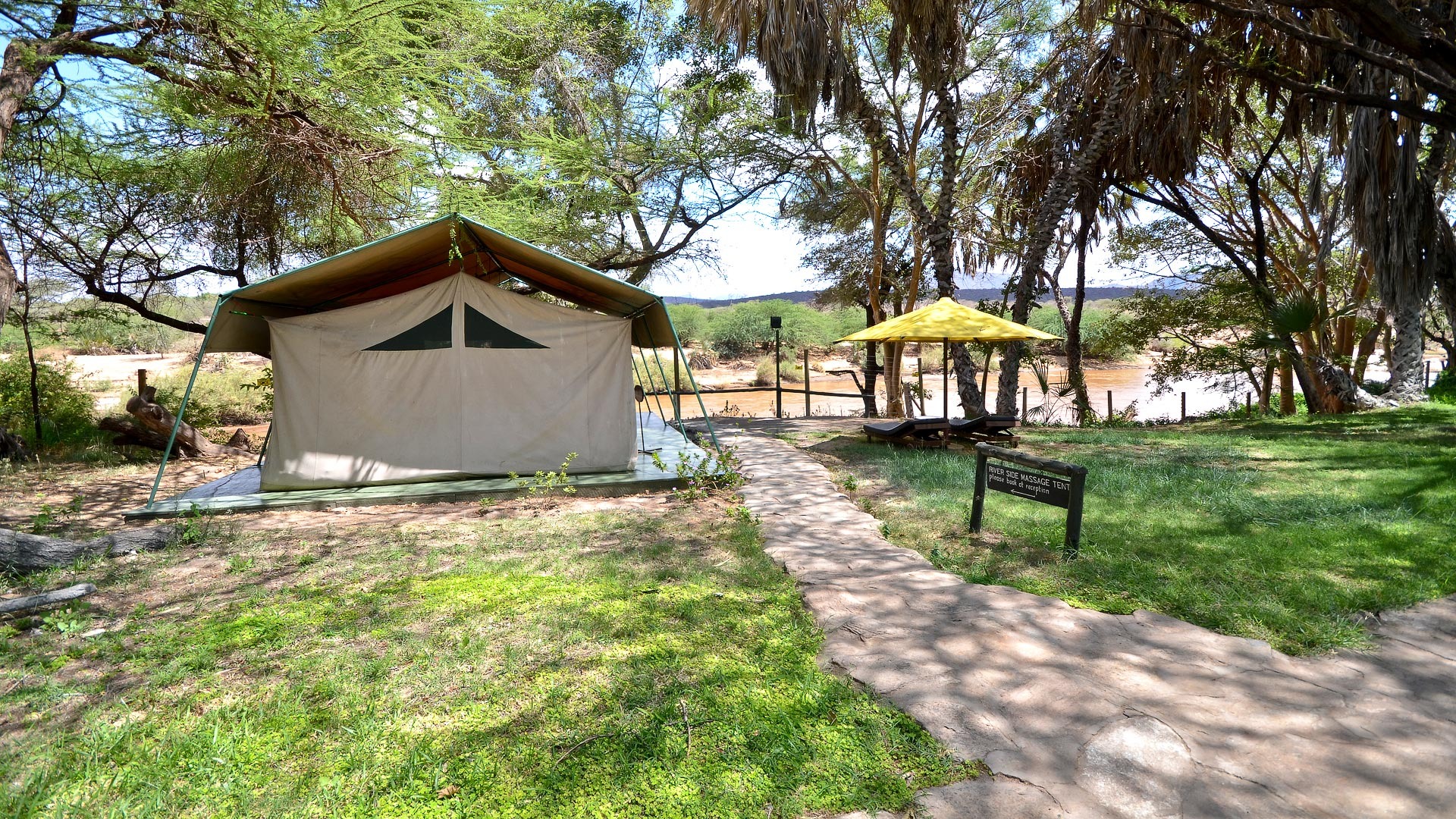
Eighty-five chalet-style rooms step down toward the river, all with private terraces facing the water or the garden. The restaurant and bar overlook the river directly, making meals and sundowners an extension of the game viewing rather than a break from it.
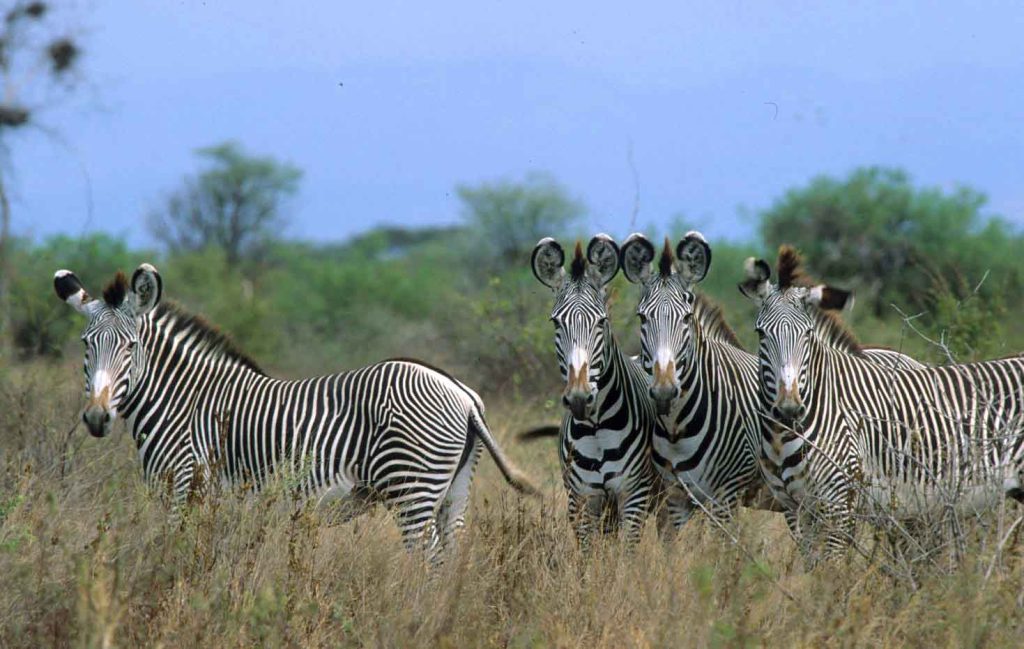
The Samburu Special Five — Grevy’s zebra, reticulated giraffe, gerenuk, Beisa oryx, and Somali ostrich — are all present in Shaba alongside lion, leopard, cheetah, elephant, and buffalo. The reserve’s volcanic terrain and rocky gorges provide habitat of a different character from the open riverine plains of the adjacent reserves, producing species and sighting conditions that complement rather than duplicate a Samburu experience.
The sole lodge in Shaba National Reserve, Sarova Shaba is built over natural springs along the Ewaso Nyiro River — a lush oasis in a stark volcanic landscape where Joy Adamson lived and the Samburu Special Five still roam.
As Shaba's only lodge since 1989, Sarova Shaba's presence has been central to the reserve's survival as a protected area — influencing anti-poaching and habitat management directly. Local materials, on-site gardens, and community employment ground the operation in its landscape. Every guest's reserve fee funds Isiolo County's wildlife protection.
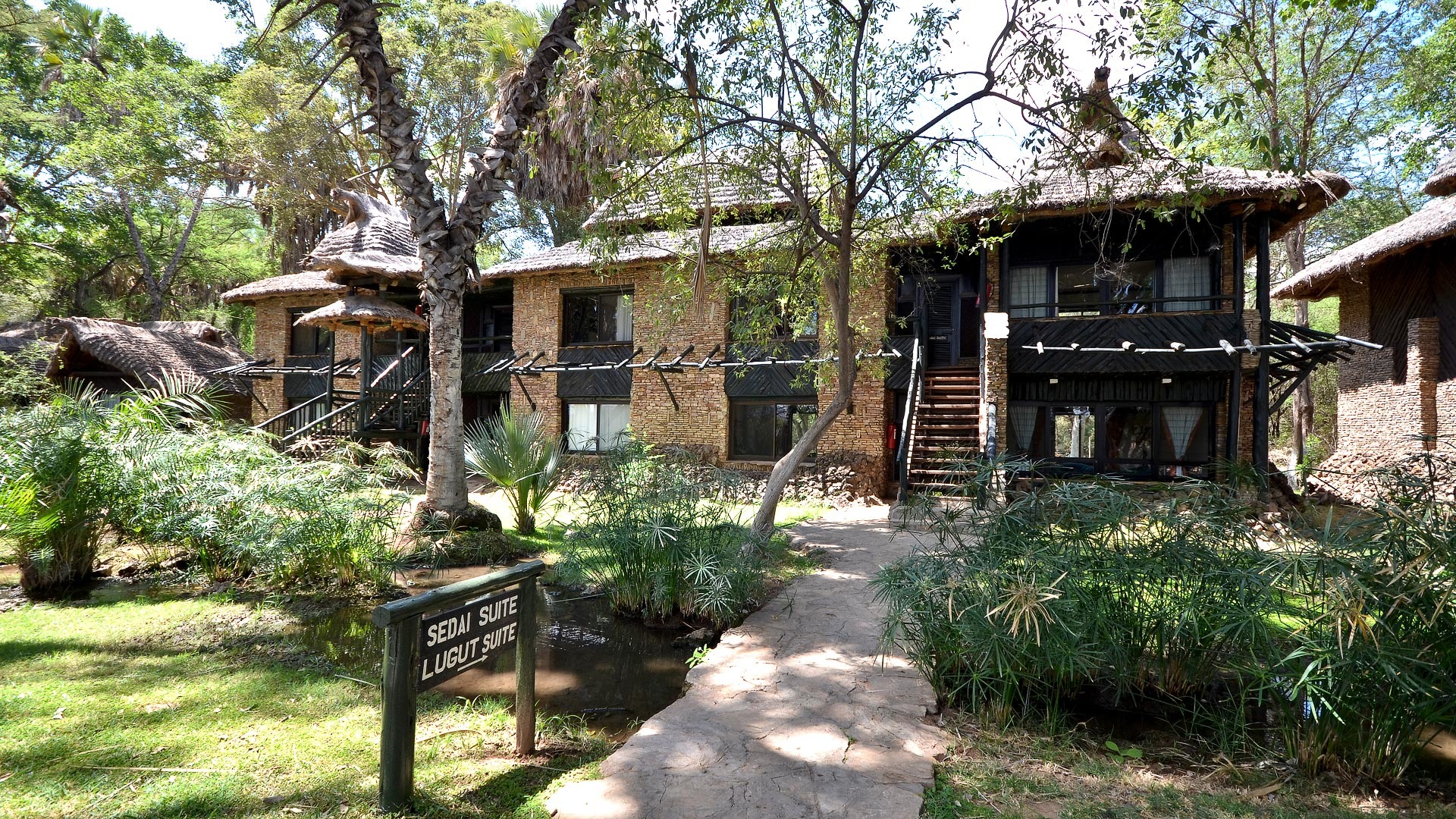
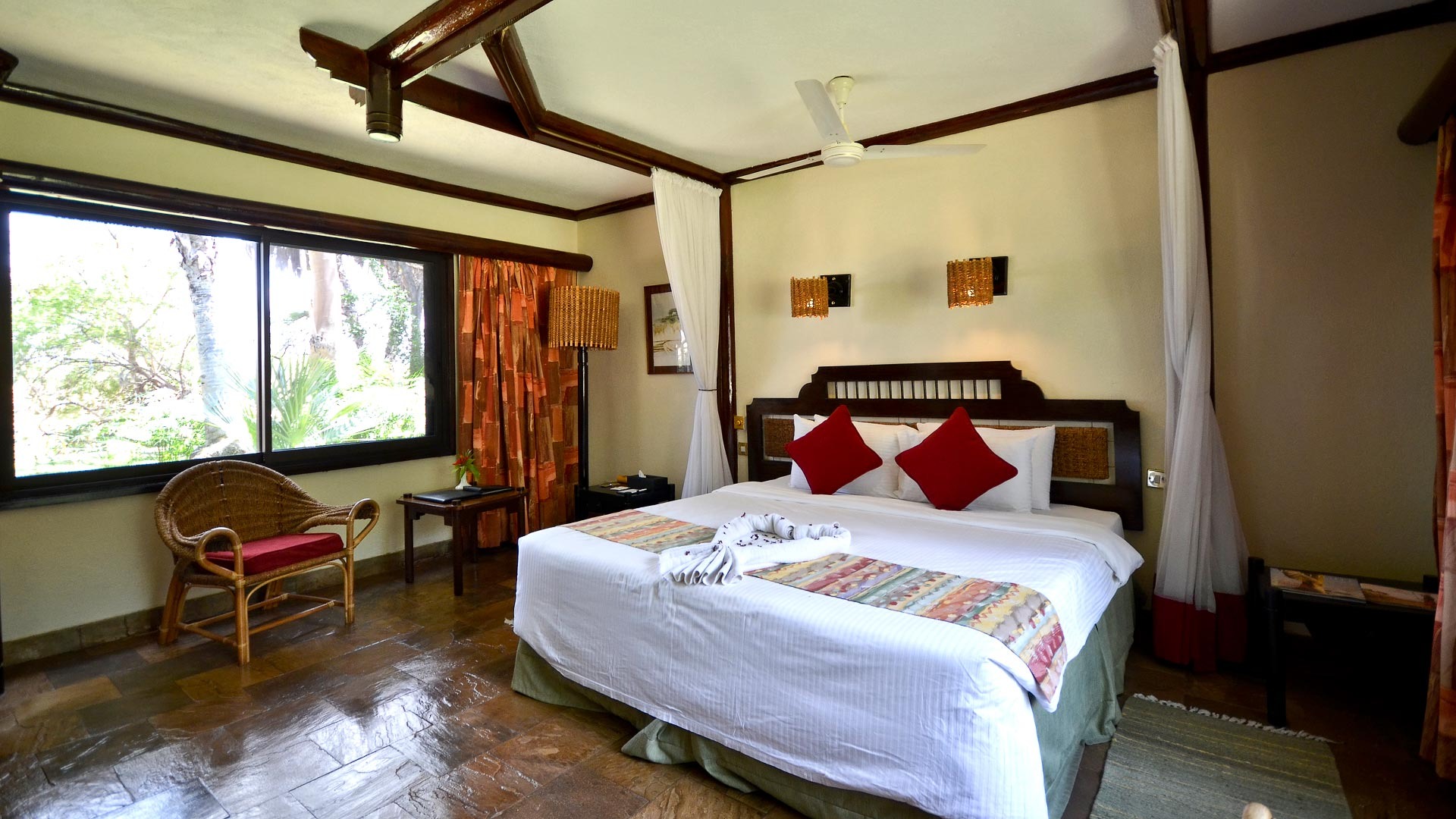
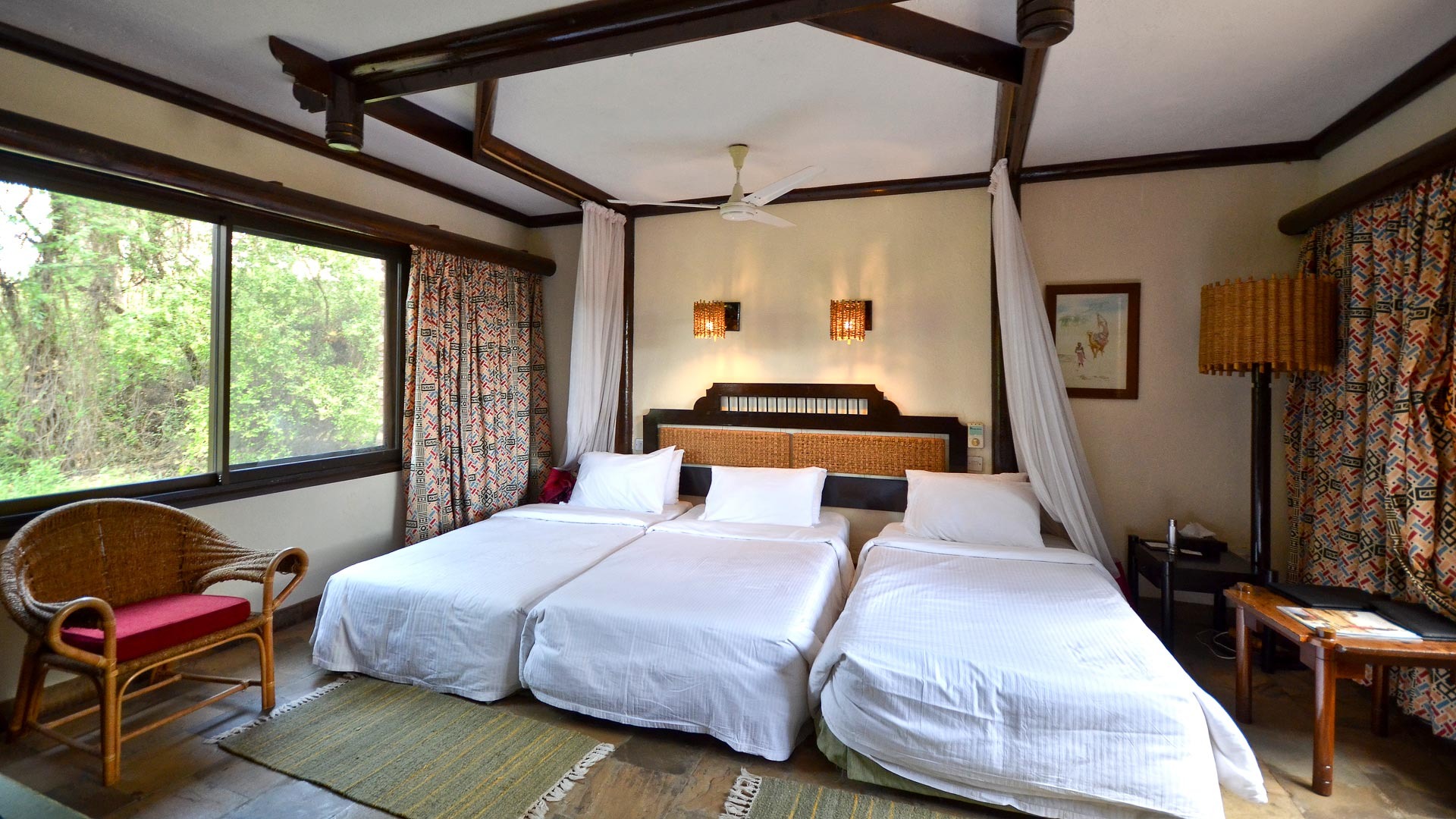
All 85 rooms are built in chalet style using local stone and mountain cedar, with thatched roofs and a warm, woody interior palette that belongs to the northern Kenya bush without trying to compete with it. Each room has a private terrace or balcony with views of the Ewaso Nyiro River or the lodge’s spring-fed gardens; air conditioning keeps the Shaba heat manageable through the afternoon. En-suite bathrooms with hot shower, tea and coffee facilities, minibar, and in-room safe are standard. The lodge includes one superior suite with a Jacuzzi — the most private and best-equipped room on the property — and four luxury suites for guests celebrating special occasions or seeking elevated comfort. The gardens, fish ponds, and spring cascades around the rooms give the immediate environment of every chalet a quality that is entirely unlike the reserve’s wider landscape: lush, cool, and animated by the sounds and birds of the riparian corridor.
Eighty stone-and-cedar thatched rooms, each air-conditioned with a private terrace facing the Ewaso Nyiro River or spring-fed gardens — crocodiles in the river below, kingfishers in the doum palms, and the northern Kenya bush close enough to engage but far enough to rest.
Four luxury suites offer more space, upgraded furnishings, and a larger bathroom than the standard rooms, with the same stone-and-cedar construction and river or garden orientation — ideal for honeymoons, anniversaries, or guests for whom Shaba is a deliberate destination.
The single superior suite is the lodge's most private and fully appointed room — Jacuzzi, commanding river view, and the most complete Shaba experience available within the reserve's only accommodation.
Every moment at Sarova Shaba is crafted to immerse you deeper in the wild.
Ready to plan your stay?
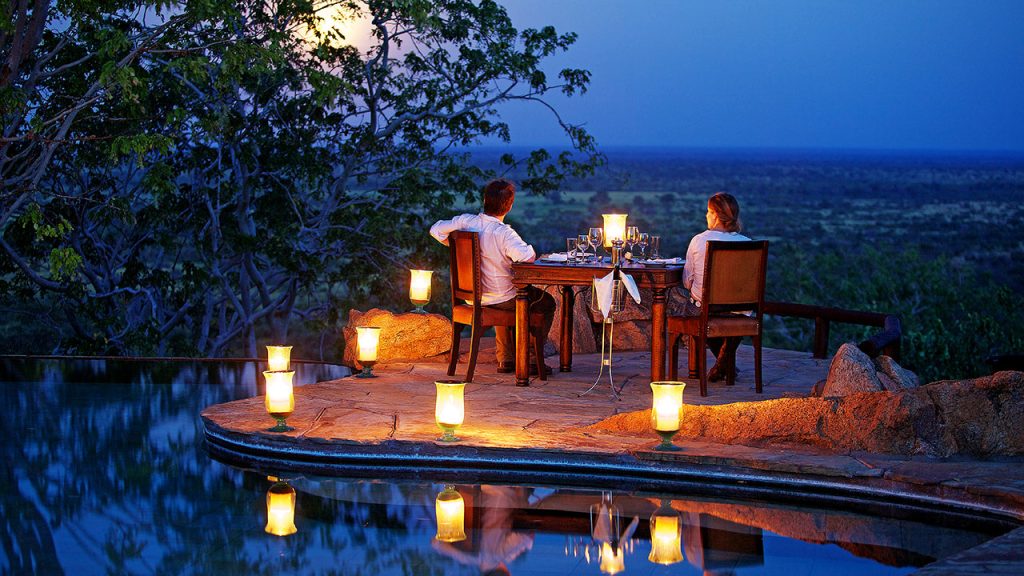
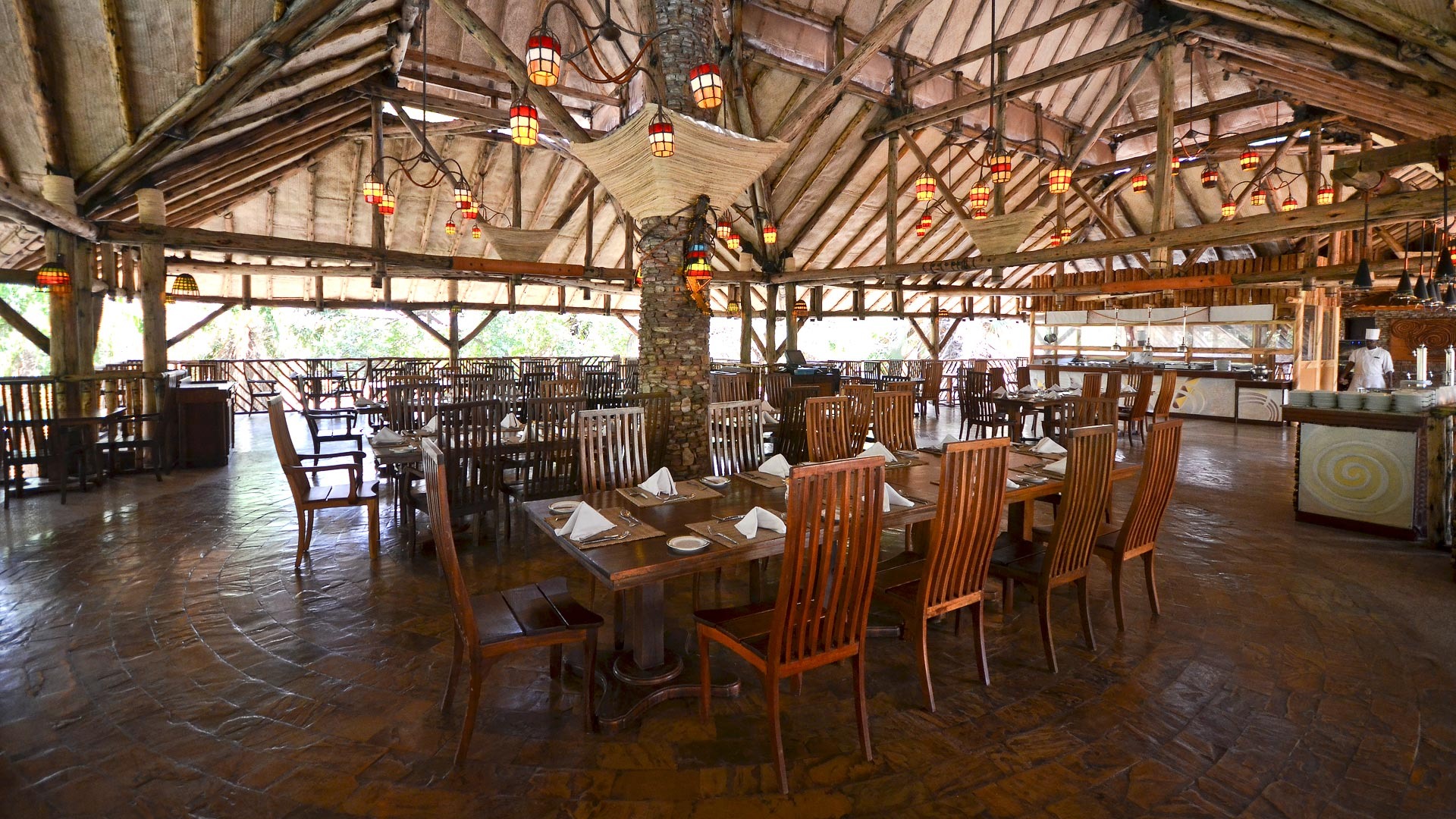
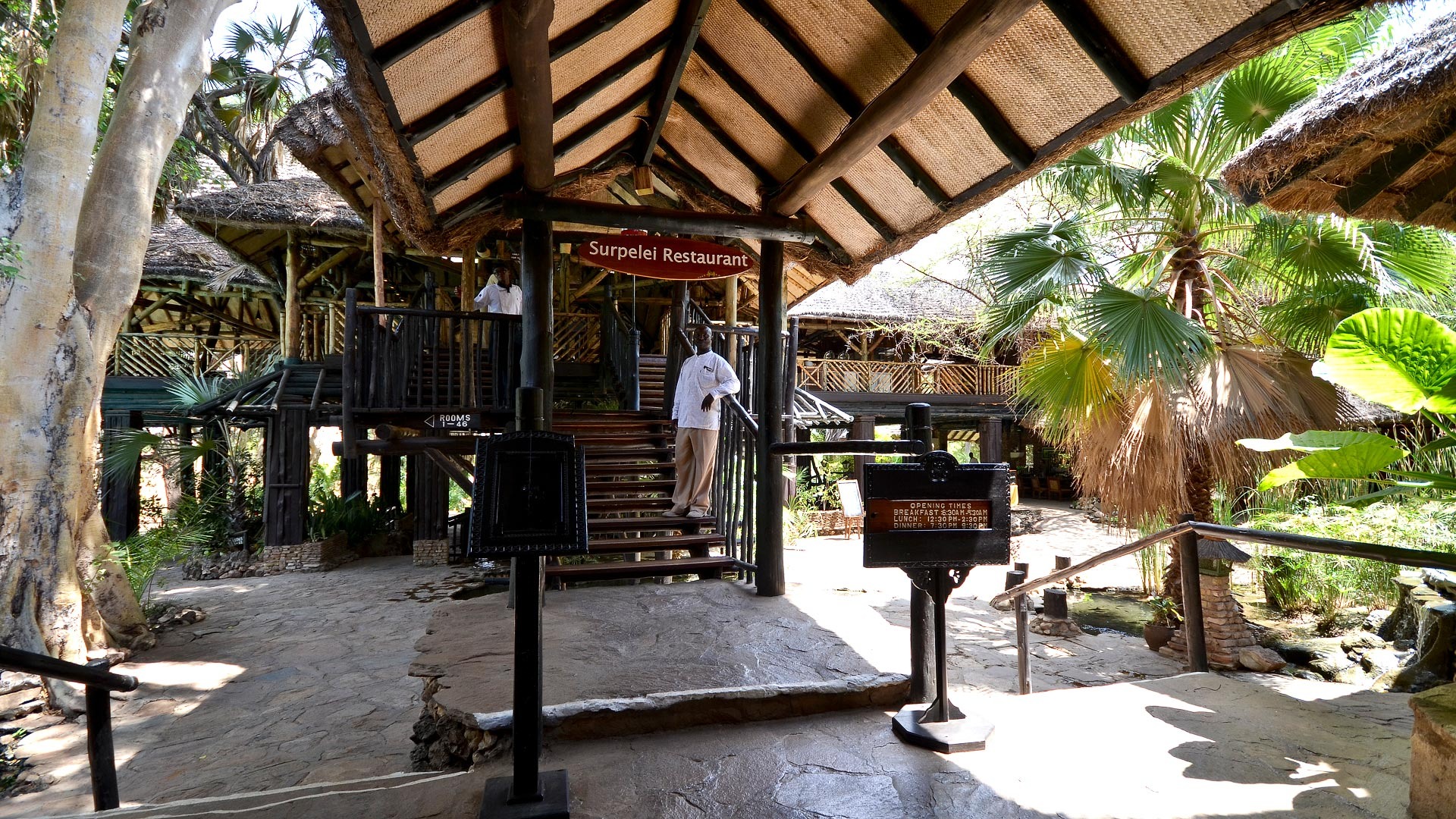
The restaurant and bar at Sarova Shaba both face the Ewaso Nyiro River — a design decision that makes every meal a continuation of the game viewing, with crocodile, monitor lizard, and the regular cast of birds and mammals using the river visible throughout the day. The kitchen sources from its own vegetable and herb garden, and the menu combines à la carte selections with themed buffets of international and Kenyan cooking. The Chemi Chemi Bar — built into the lodge’s natural spring environment, interconnected with the lush vegetation and water streams — is the evening’s most atmospheric setting, particularly when the sky above Shaba fills with stars. The bar’s storytelling sessions and Samburu cultural songs deliver the kind of evening entertainment that feels rooted in the landscape rather than performed for it. For meals away from the main dining room, the lodge offers Bush, Boma, and Riverbed dining — three distinct outdoor settings that make eating in the reserve as memorable as seeing wildlife in it.
Shaba National Reserve is a year-round destination, and Sarova Shaba Game Lodge operates without seasonal closure. The reserve’s hot, semi-arid climate means daytime temperatures average around 29°C throughout the year, making shade and the lodge’s air conditioning both genuinely useful. The dry seasons — January to March and June to September — offer the most reliable game viewing, with wildlife concentrated at the Ewaso Nyiro River and the reserve’s seasonal water sources. The Special Five are resident year-round and encountered consistently across all seasons.
The short rains of November and December bring brief afternoon showers and a greening of the reserve’s vegetation; the long rains of April and May are more sustained and reduce visitor numbers significantly. Rates during the green season are typically the most accessible of the year, and the solitude of having Shaba’s 239 square kilometres almost entirely to oneself is at its most complete. Shaba pairs naturally with Samburu and Buffalo Springs Reserves — accessible within 30 to 60 minutes of the same airstrips — and with Meru National Park for a northern Kenya circuit that covers terrain from the volcanic Shaba highlands to Meru’s forested river systems.
Explore handcrafted itineraries where Sarova Shaba forms part of the journey.
Please share your name and email so we can follow up with you.