From
$6,519

🔒 Your details are kept private and never shared with third parties.
Lyrical Tucked in Kenya's first community conservancy — ten suites where Super Tuskers drift past and Kilimanjaro owns the view.
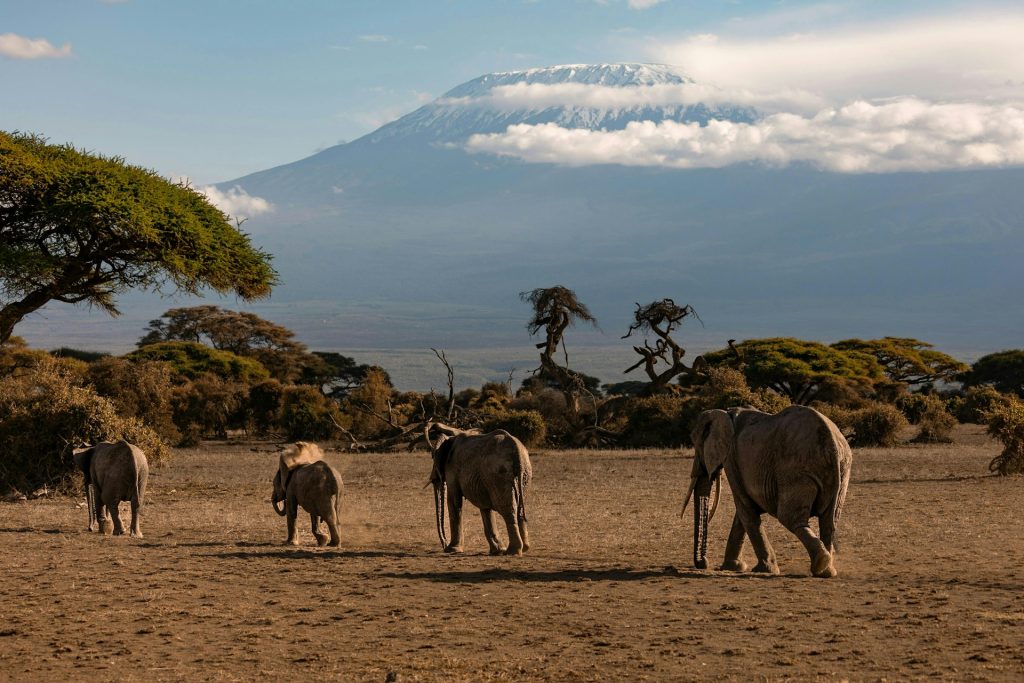
The word “angama” means “suspended in mid-air” in Swahili, a name first given to the Angama Mara lodge above the Great Rift Valley, chosen for what you feel standing on its glass deck above the Maasai Mara below. The name was earned again when the Angama team found Kimana Sanctuary: a fever tree forest on the edge of the Amboseli ecosystem, with Mount Kilimanjaro rising from the Tanzania border on the southern horizon so completely that it seems to occupy the same space as the lodge rather than existing at a distance from it. The sensation, particularly at dawn when the mountain is clear and the light finds the snow on Kibo’s crater rim, is one of suspended proximity — Africa’s highest peak, close enough to feel personal.
Kimana Sanctuary covers 5,700 acres of critical wildlife corridor linking Amboseli National Park to the Chyulu Hills and Tsavo West — a migratory passage for the elephant herds, lions, cheetahs, and plains game that move between these ecosystems with the seasons. The sanctuary is Kenya’s first community-owned conservancy, established by and belonging to 844 Maasai families who receive direct economic benefit from every guest night. It is managed by Big Life Foundation, whose commitment Angama has formalised through an $11 million investment over 25 years — one of the most significant private conservation commitments in the Amboseli ecosystem’s history.
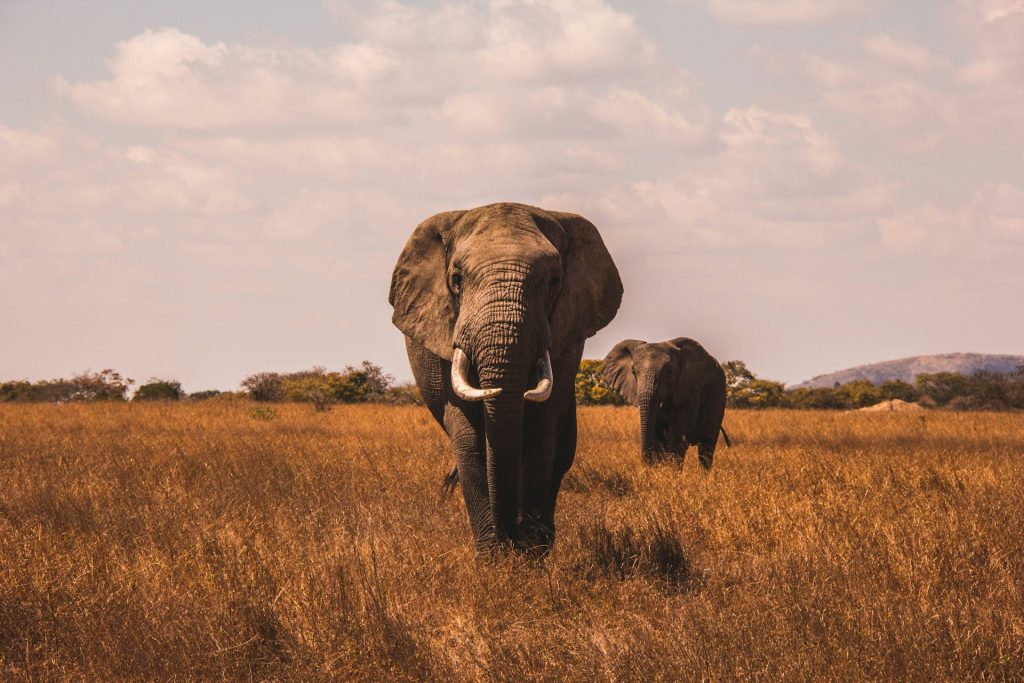
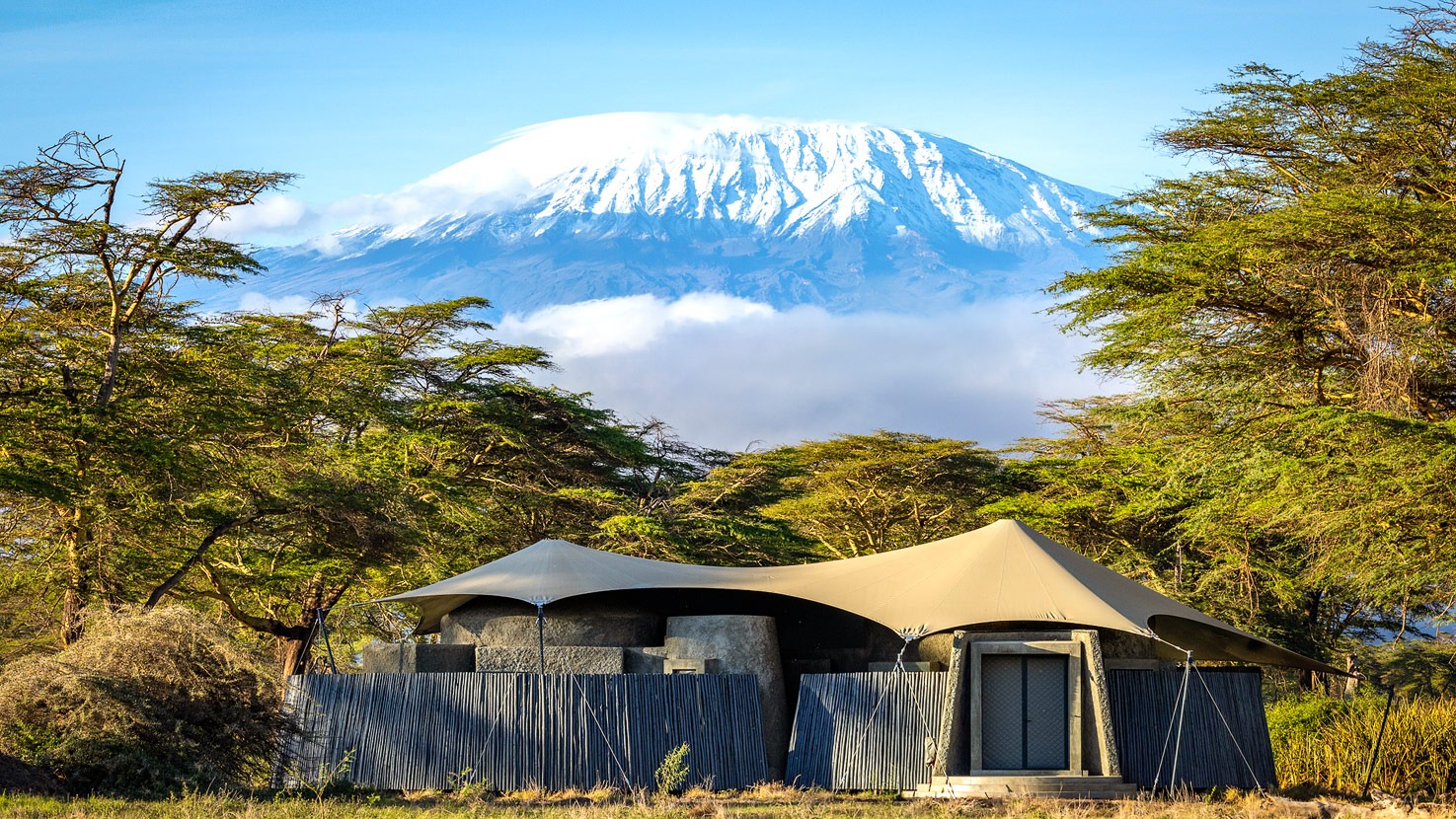
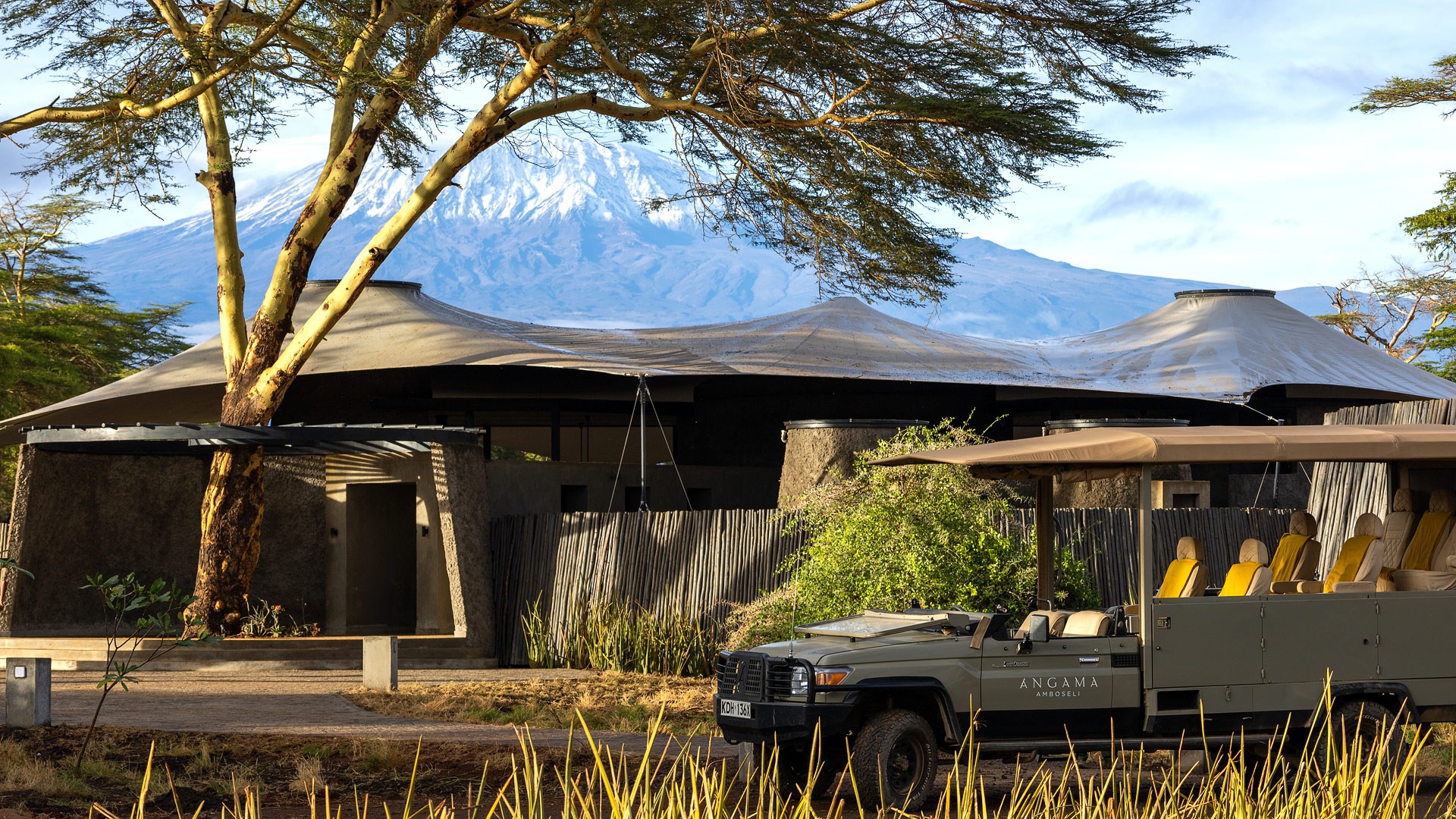
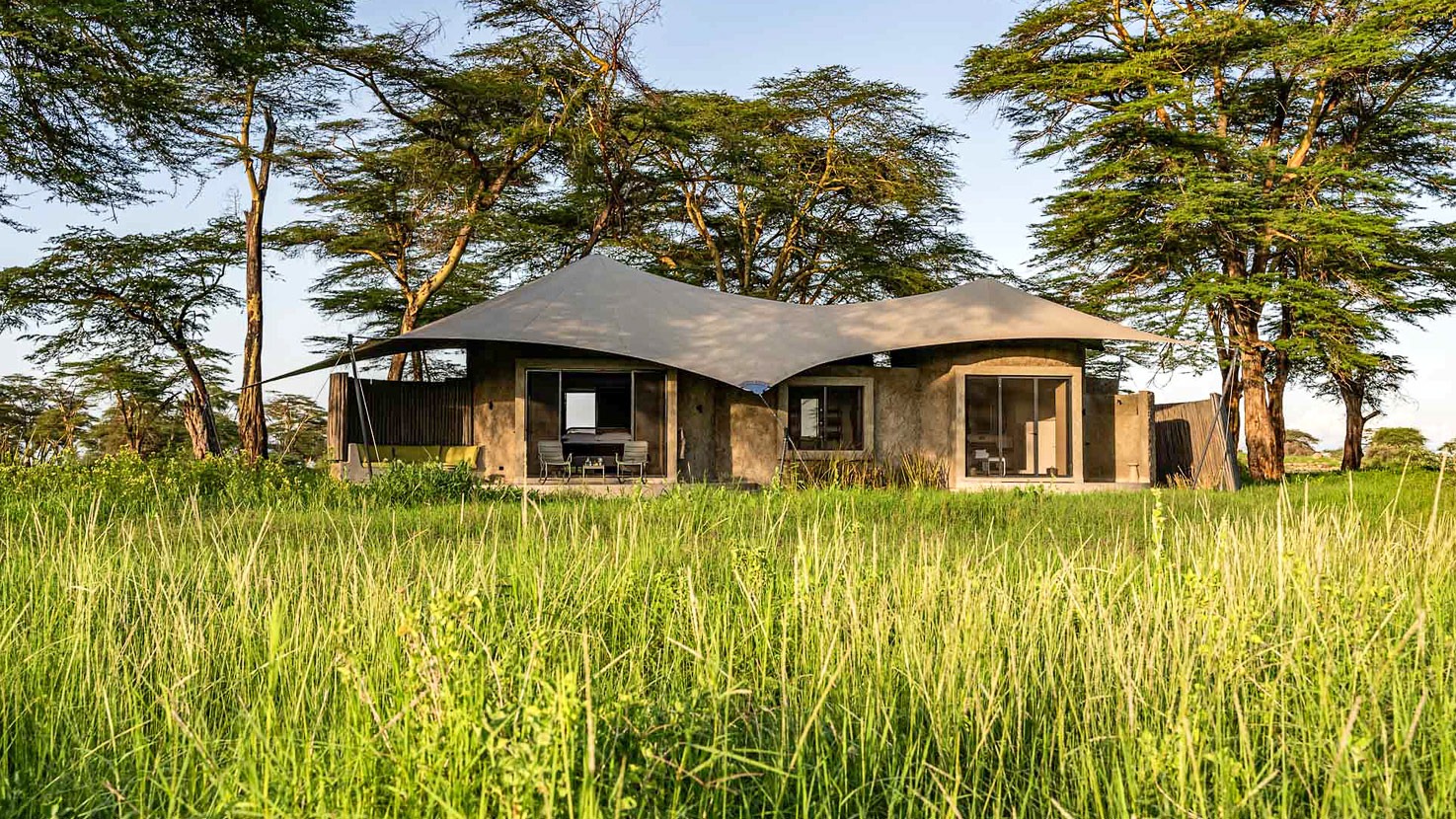
The lodge opened as the physical expression of this commitment. The ten suites are built from canvas, concrete, and rattan — a bold architectural register that makes no attempt to disappear into the landscape but instead arrives in it with confidence and purpose. The exterior texture of each suite is partly achieved with elephant dung mixed into the concrete — a material connection between the lodge and the animals that define the sanctuary. Floor-to-ceiling screened doors open every suite directly to the Kilimanjaro view and to the fever tree canopy beyond. A swimming pool with a drinking trough below — positioned specifically because the elephants like to spend time in this area of the sanctuary — turns afternoon relaxation into passive wildlife observation of the highest order. Super Tuskers, the last elephants on earth with tusks long enough to drag on the ground as they walk, have been seen in the sanctuary. Seeing one here, from a rocking chair on a suite veranda, requires very little from the guest beyond patience and the willingness to stay.
Angama Amboseli sits within Kimana Sanctuary — Kenya's first community conservancy, owned by 844 Maasai families. Ten tented suites in a fever tree forest, each framing Kilimanjaro. Super Tuskers drift through. The walls are partly built from their dung.
Kenya's first community conservancy, owned by 844 Maasai families. An $11 million, 25-year commitment to Big Life Foundation rangers across 1.6 million acres. Built without removing a single fever tree. This is what serious conservation credentials look like.
Ten detached tented suites are arranged within the fever tree forest, each positioned independently to maximise privacy and the Kilimanjaro view. The architecture is a confident blend of canvas roof, concrete walls with elephant dung texture, and rattan detailing — bold, sustainable, and deeply rooted in the materials of the place. Each suite has an extra-length super king bed, a large en-suite bathroom with both indoor and outdoor shower, a dressing area, double vanity, personalised drinks armoire, and a private veranda with rocking chairs and binoculars. Two sets of two interconnected suites accommodate families without sacrificing the privacy of separate bedroom spaces. One suite is fully wheelchair-enabled. Three suites have triple configurations for children twelve and under. All suites have fans and screened doors that open fully to the landscape.
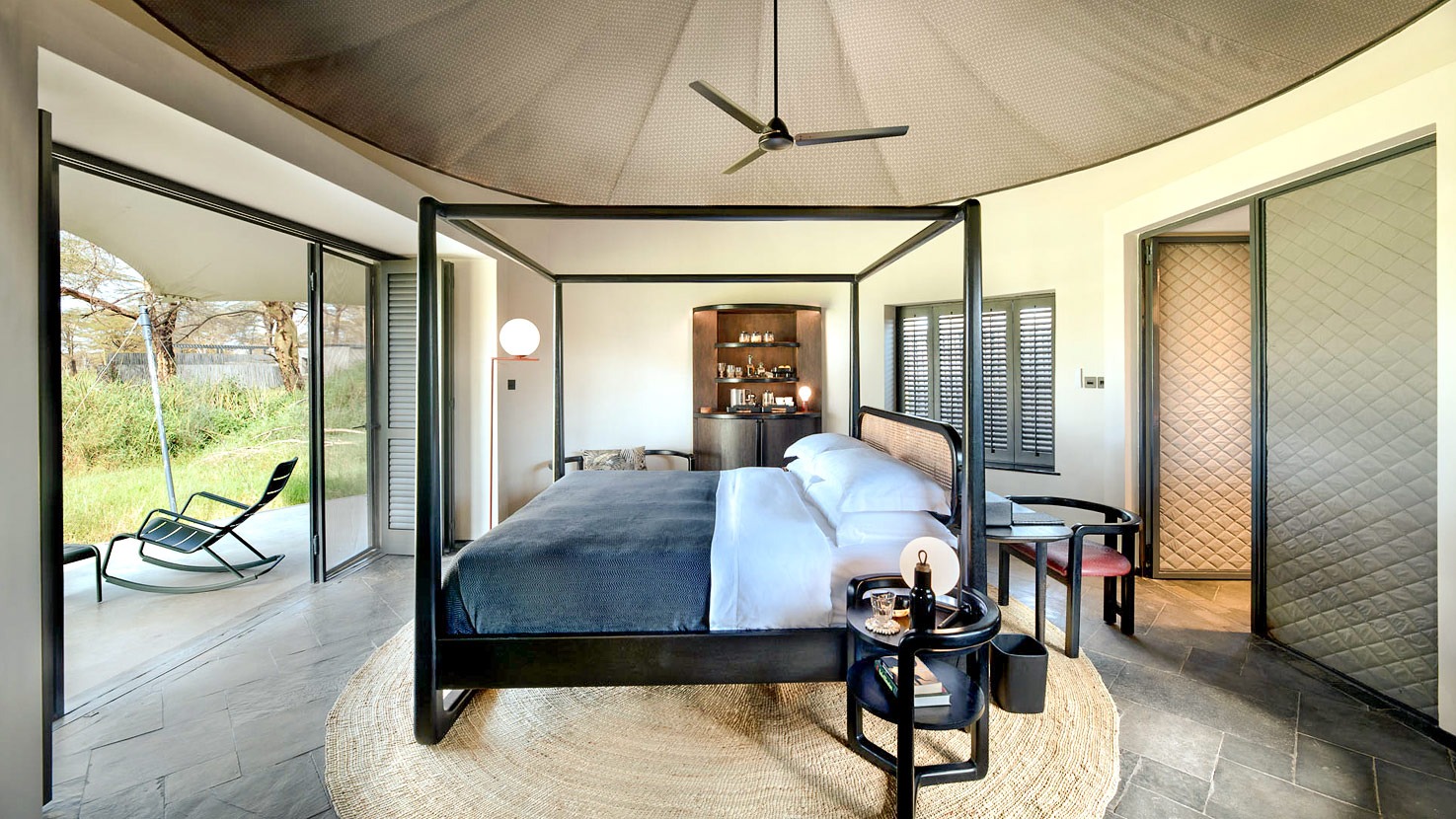
Ten canopy suites, each oriented to Kilimanjaro from every angle — bed, veranda, outdoor shower. Elephant-dung concrete, canvas, and rattan root the contemporary design in its landscape. At dawn, the outdoor shower with the mountain in first light is the detail guests remember most.
Four suites across two interconnected pairs — each fully private, with its own veranda and Kilimanjaro view, but linked internally for families moving between rooms. Triple configurations for children twelve and under. Private vehicle required for families with under-sixes booking fewer than three suites. All ages welcome.
Every moment at Angama Amboseli is crafted to immerse you deeper in the wild.
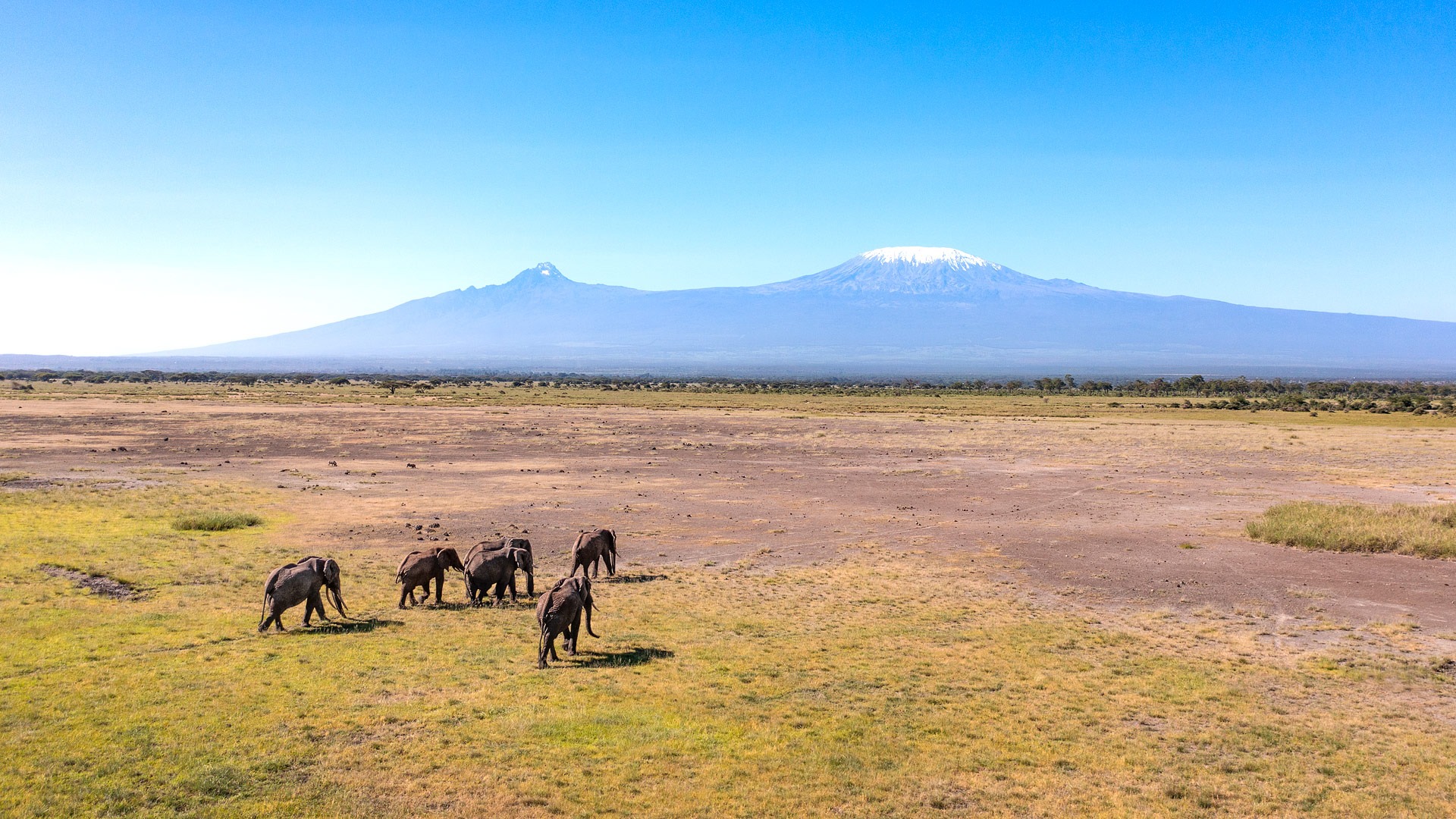
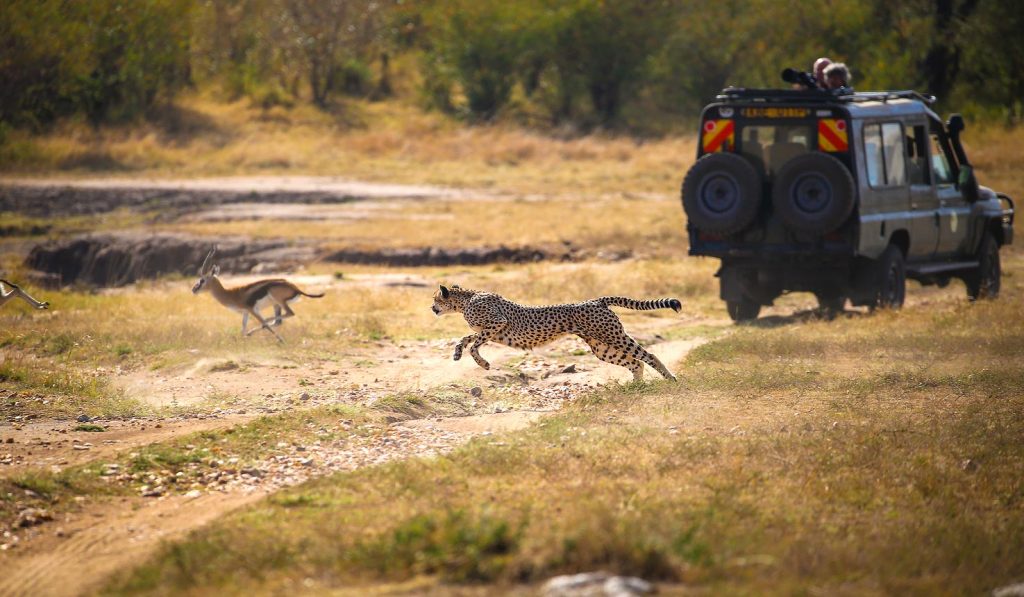
A critical elephant corridor with a perennial stream — and one of the most reliable places in Africa to encounter Super Tuskers up close. Both sanctuary game drives and full-day Amboseli National Park excursions are included, with the park's marshlands producing that iconic Kilimanjaro-backdrop shot
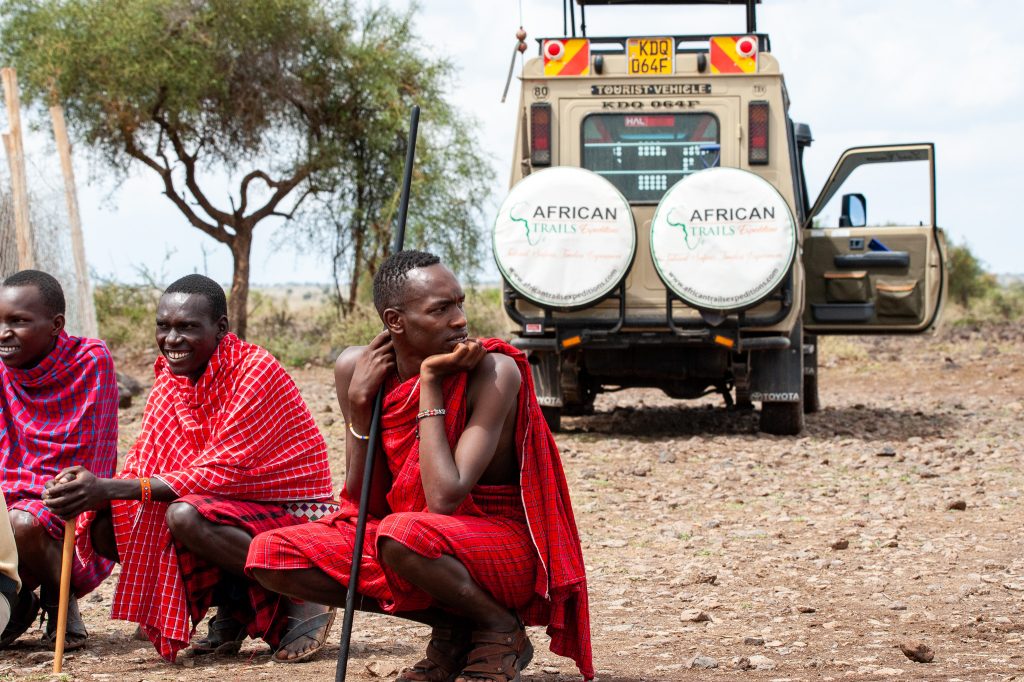
Night drives and walking safaris with Maasai naturalists — both impossible inside the national park. After dark, leopard, serval, and aardvark. On foot, the tracks, the plants, and the slow read of a landscape that rewards the pace.
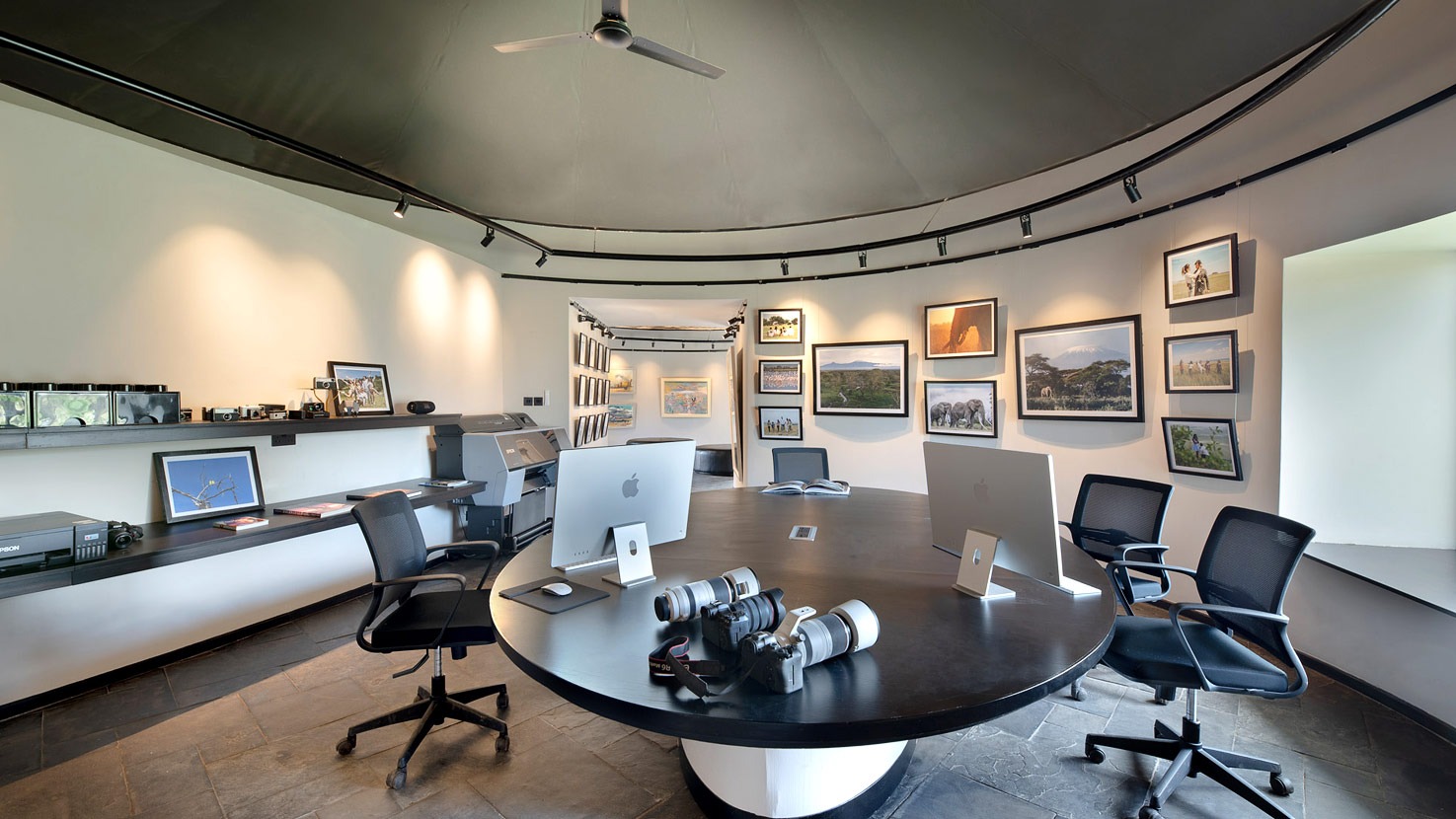
Few lodges in Kenya have a full-time Photographic Studio. Angama Amboseli does — with tutorials, editing sessions, and private photographic safaris to match the setting. An Art Gallery and Weaving Studio alongside.
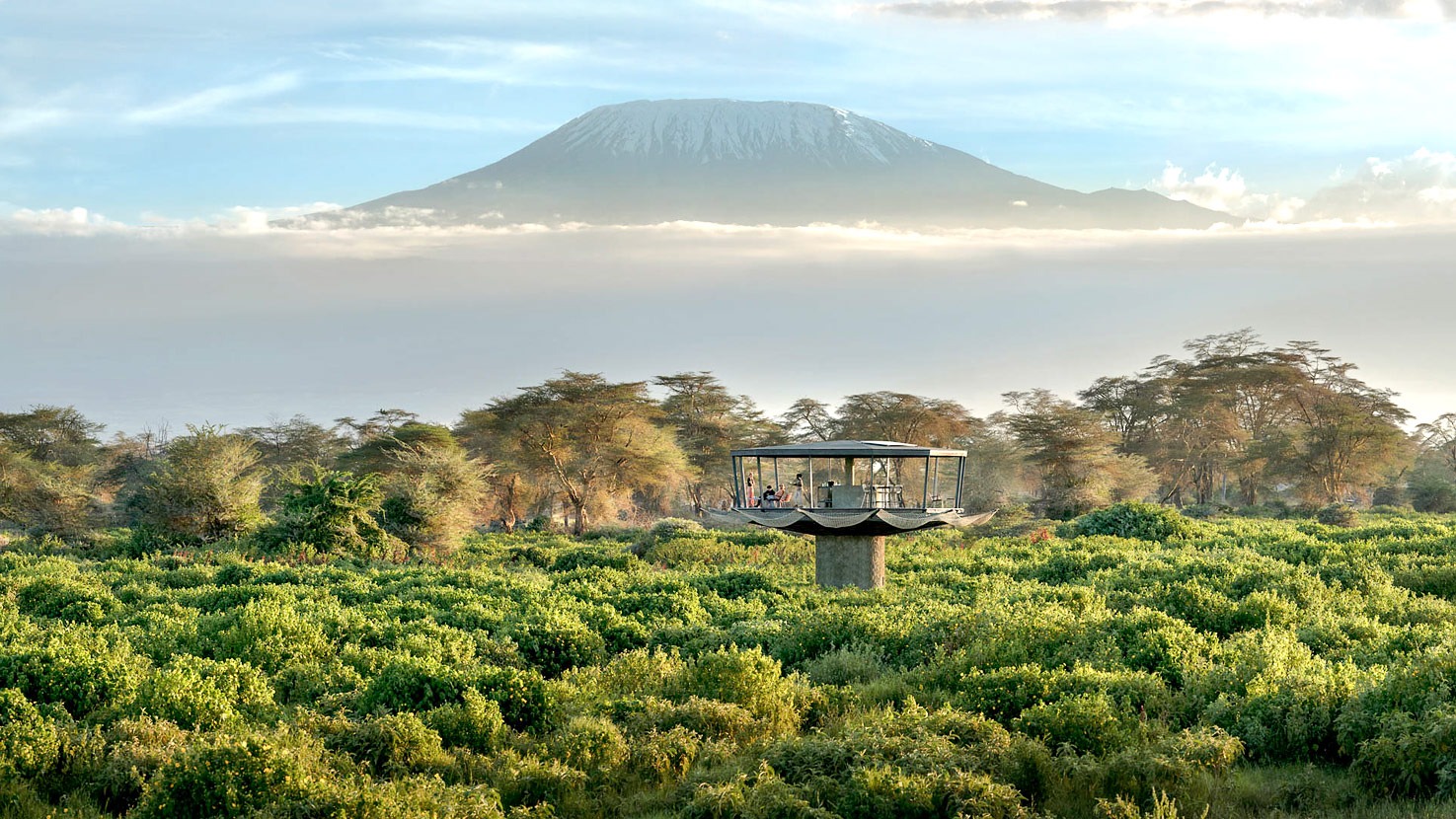
A marsh-side viewing tower with Kilimanjaro on the horizon. A rim-flow pool with a drinking trough below — resident elephants visit both. Sundowners on the terrace as the mountain takes the last light.
Ready to plan your stay?
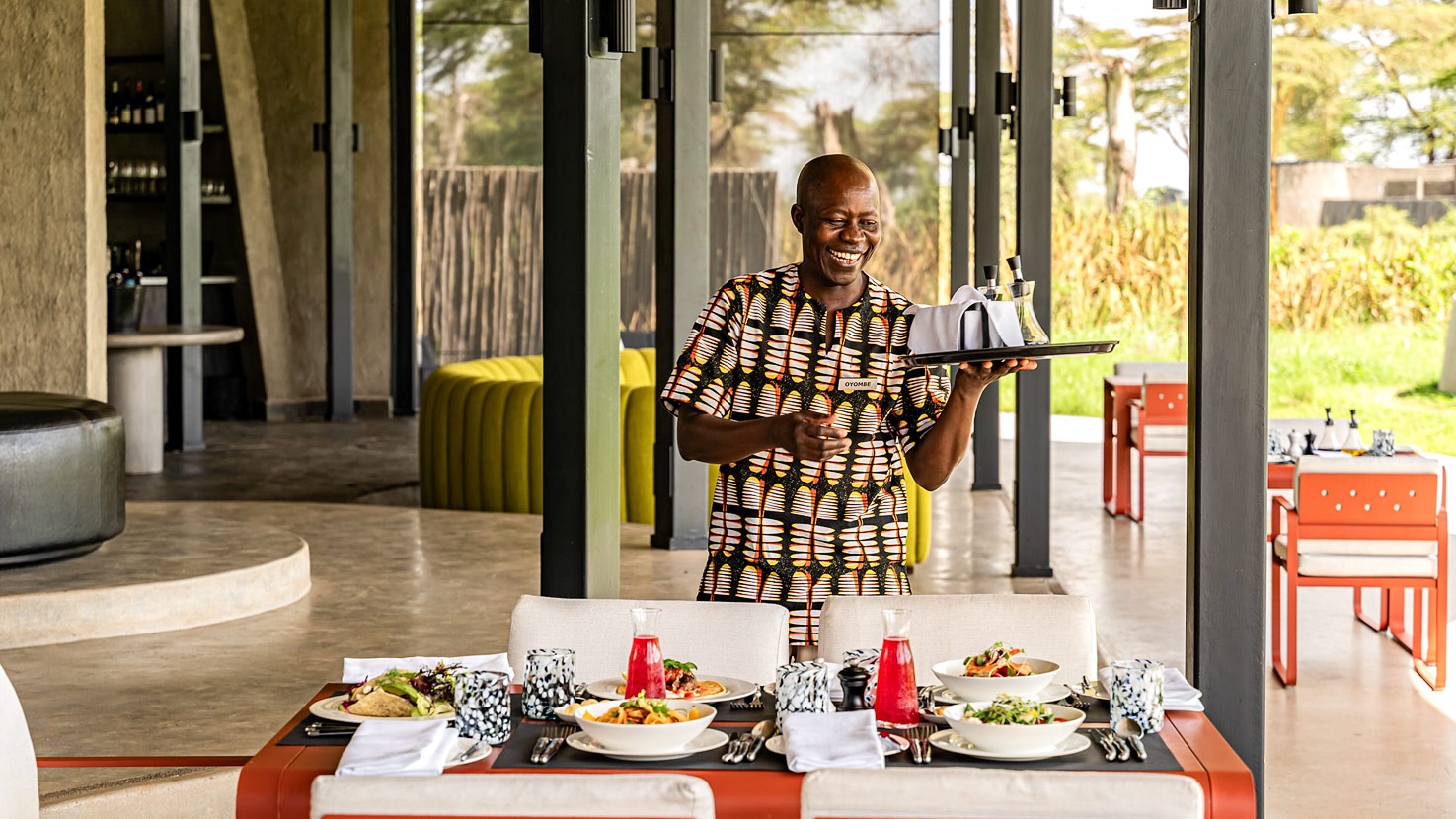
Angama Amboseli operates without fixed meal times — a philosophy that sounds simple and represents in practice a kitchen of considerable discipline and flexibility. Meals are prepared to the guest’s preferred schedule; the chef’s team adapts to early departures, late returns from full-day safaris, and whatever the day’s mood demands. Fresh, locally sourced ingredients underpin a menu that blends contemporary cooking with Kenyan flavour — honest, precise, and generous without excess. Breakfast on the guest area patio with the mountain above. Picnic lunches in the sanctuary are laid at private Angama sites under acacia trees. Candlelit dinners around the Baraza fire pit as the Kimana night assembles. For full-day Amboseli National Park excursions, picnic setups are arranged at locations chosen by the guides. All meals and drinks are included in the rate with the exception of French Champagne and reserve wines.
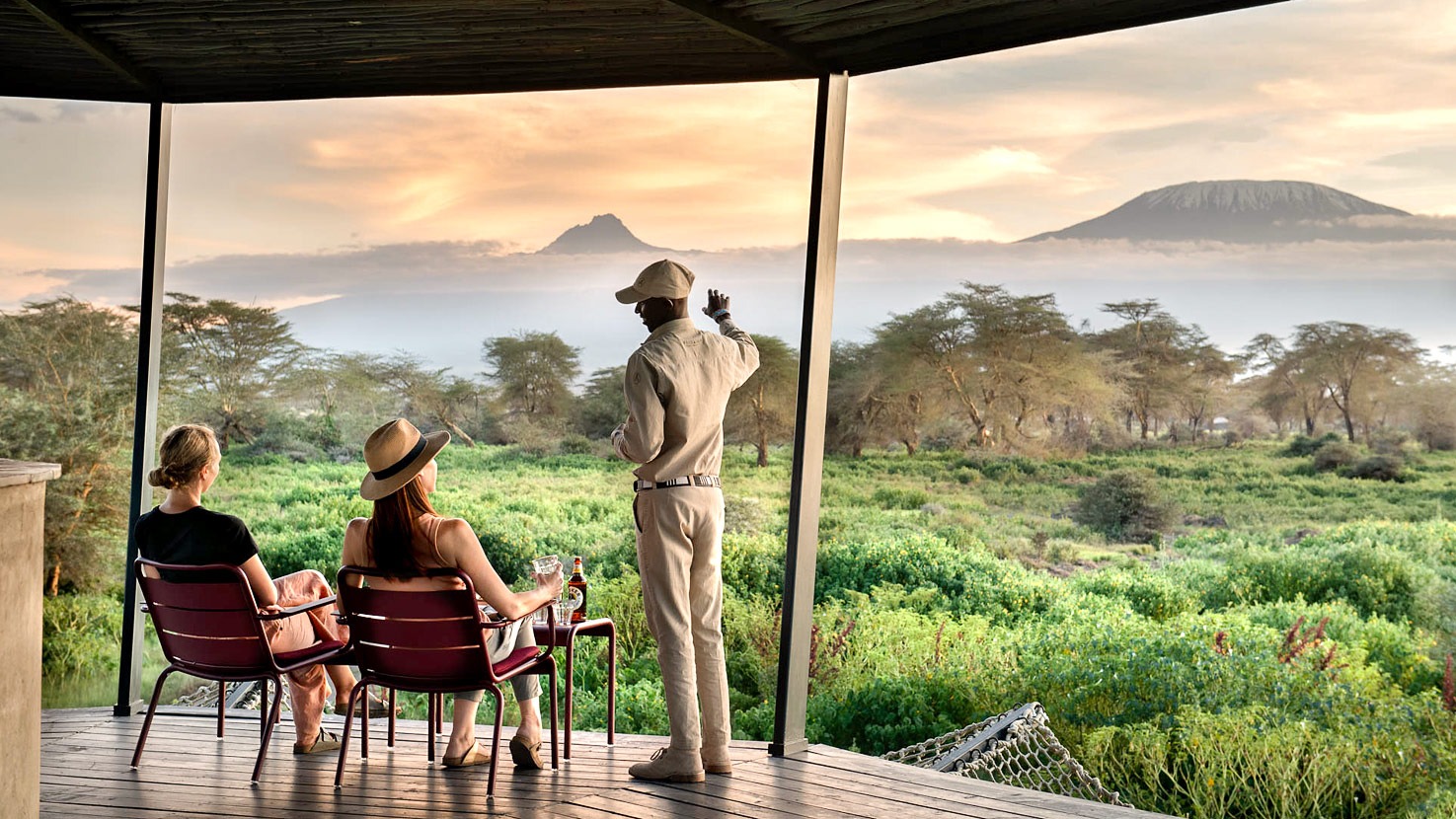
Angama Amboseli and the Kimana Sanctuary are rewarding destinations year-round. The sanctuary’s perennial stream gives it a wildlife reliability that seasonal water sources cannot match — elephant, eland, giraffe, and the sanctuary’s resident predators are present and findable across all twelve months. The dry seasons — January to March and June to October — offer the clearest Kilimanjaro views, with the mountain most consistently revealed during the early mornings of the dry season before afternoon cloud builds around the summit. Game viewing across both the sanctuary and Amboseli National Park is most productive in these months, with shorter vegetation and concentrated wildlife at water sources.
The long rains of April and May bring lush vegetation and excellent birding across Amboseli’s 400-plus recorded species; the sanctuary greens dramatically and visitor numbers drop. The short rains of November and December are brief and often enhance rather than disrupt the experience. Angama Amboseli opens year-round with no seasonal closure and pairs naturally with the Maasai Mara, Tsavo, or Chyulu Hills for a southern Kenya circuit.
Explore handcrafted itineraries where Angama Amboseli forms part of the journey.
Please share your name and email so we can follow up with you.