From
$2,424

🔒 Your details are kept private and never shared with third parties.
The camp that pioneered photographic safari in the Mara, and the only property with walking access to the ecosystem's last two southern white rhinos.
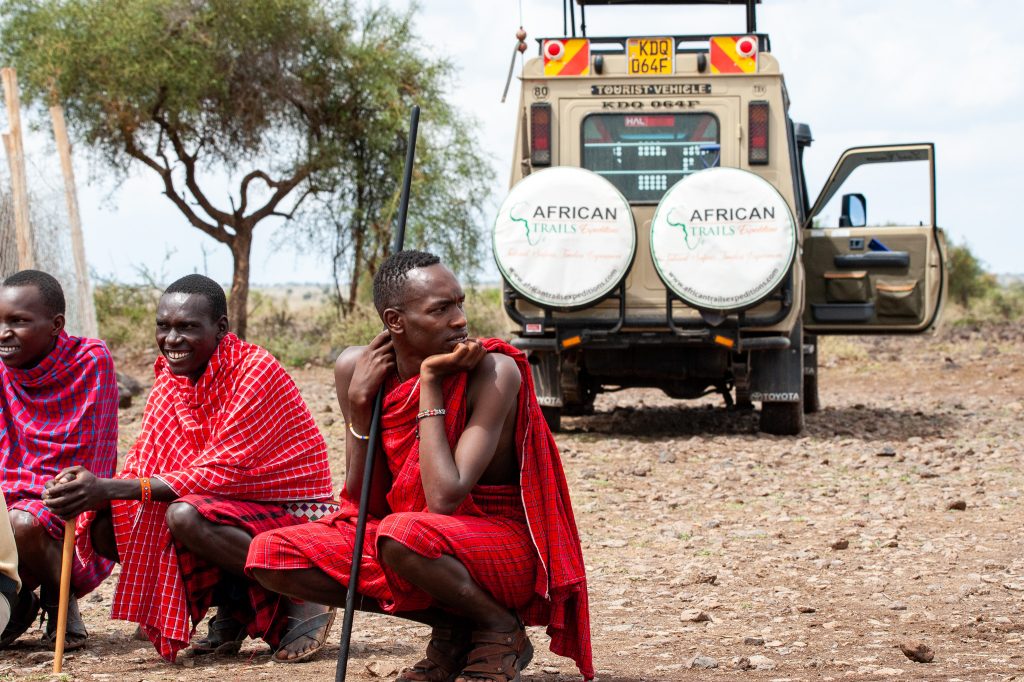
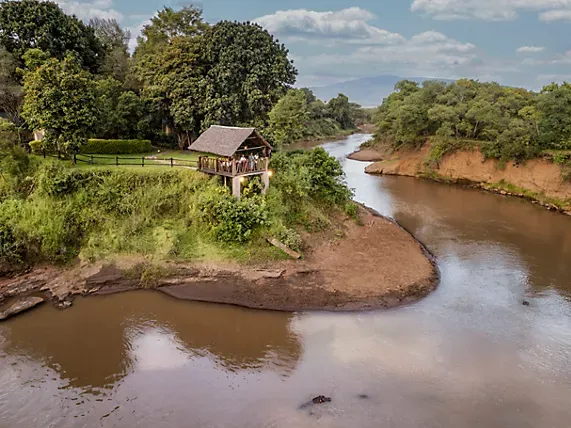
The Ol Choro Oiroua Conservancy is one of the oldest community-owned conservancies in Kenya and the private land on which the Fairmont Mara Safari Club was founded — not as a commercial outpost on borrowed territory, but as a direct partnership with the 177 Maasai landowners whose 17,000 acres form its boundary. The conservancy sits in the northwestern corner of the Mara ecosystem, at the foot of the Aitong Hills, where the Mara River bends in a near-complete loop around the property’s forested setting. The result is a camp enclosed on three sides by water: the river, its crocodiles, its hippo pods, and the woodland corridor it sustains are not adjacent to the property but constitutive of it.
The Fairmont Mara Safari Club’s history within this landscape begins with the 1977 hunting ban that ended Kenya’s colonial-era hunting industry and opened the Maasai Mara to photographic safari. The camp — purposefully named a Club in acknowledgment of its founding connection to the Mount Kenya Safari Club — was among the first to establish the model that would define East African luxury safari: permanent tented accommodation, dedicated guiding, and a service register that placed the wilderness experience inside a context of genuine hospitality rather than functional field accommodation. That founding character, refined through decades of operation and a significant recent refurbishment, remains the organising principle of the property today.
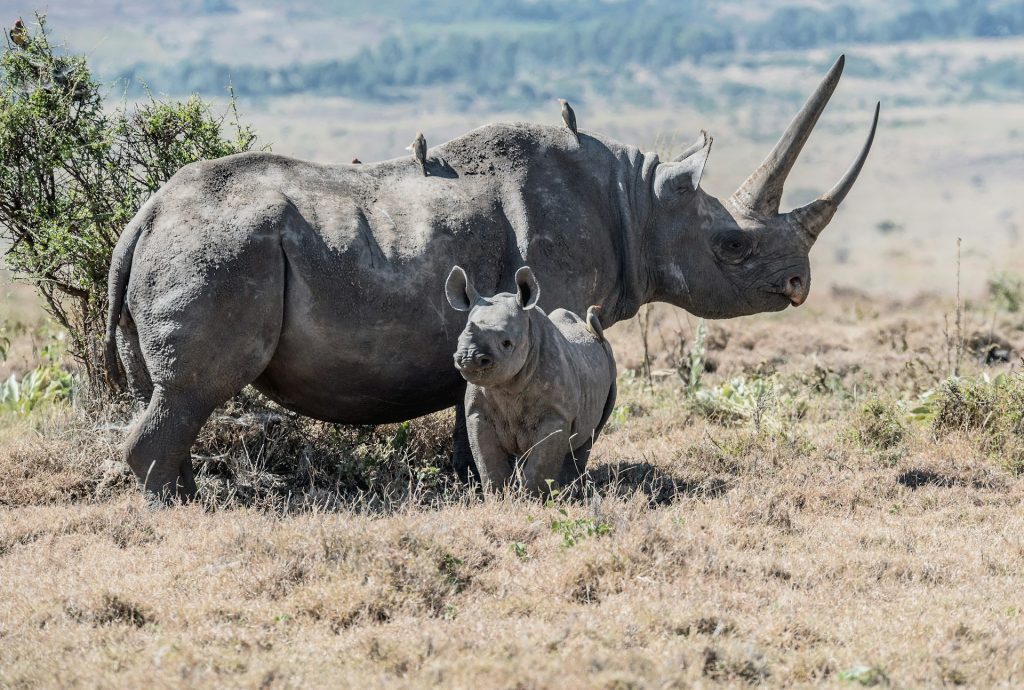
The camp’s most singular offering is one that no other property in the ecosystem can match: walking access to the Ol Choro Rhino Sanctuary, where the last two southern white rhinos in the Maasai Mara are protected under 24-hour armed ranger surveillance. The encounter — on foot, at close range, with rangers who know each animal individually — is not a game drive sighting but something categorically different: a direct confrontation with what conservation, at its most committed, actually looks like in practice.
The first photographic safari camp in the Maasai Mara, the Fairmont Mara Safari Club retains its founding character: colonial interiors, a river deck with hippos below, and a provenance newer camps cannot replicate. 38 tented suites, night drives, a walking rhino encounter, and five-star hospitality
Fairmont Mara Safari Club operates within Ol Choro Oiroua, Kenya's first community-owned conservancy, where guest revenue funds Enkerende Primary School, female income-generation projects, and the ranger programme protecting the Mara's last two southern white rhinos. At 65 rooms across 17,000 acres, low density is a land management principle rather than a marketing claim.
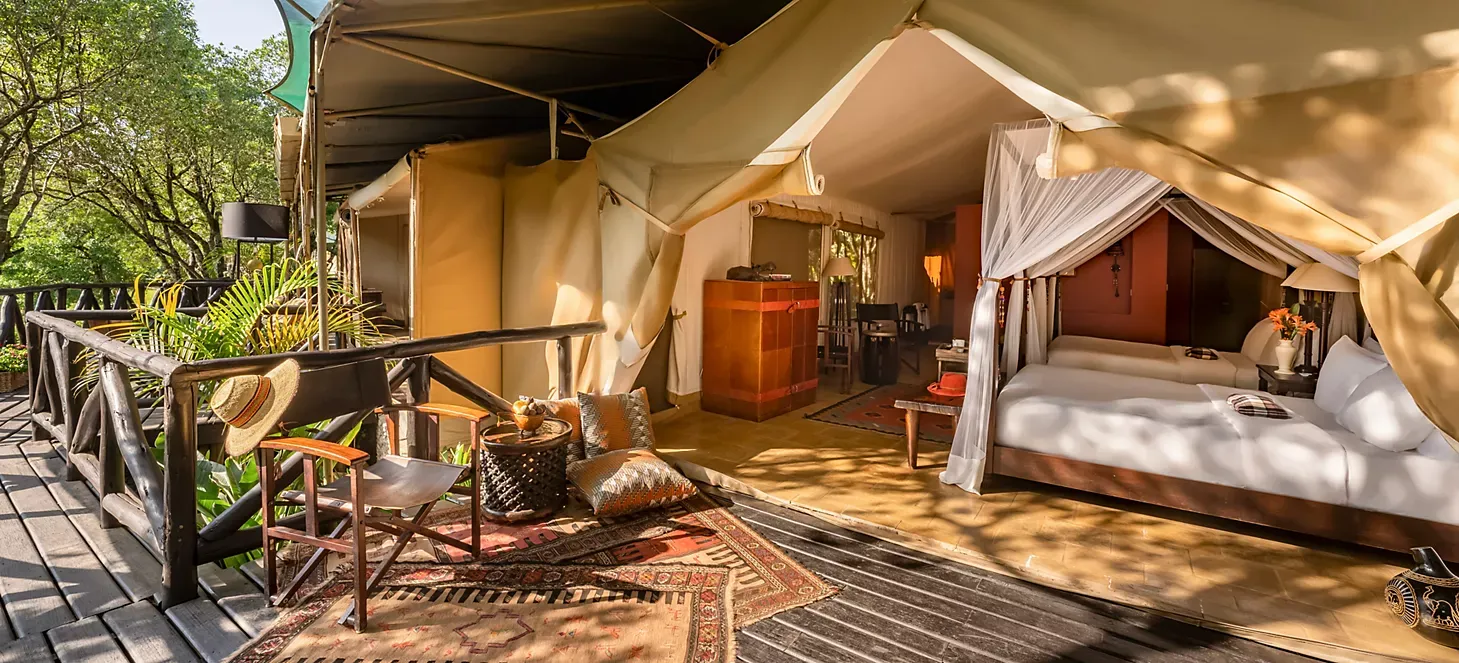
Thirty-eight tented suites are distributed across the forested riverbank, each positioned on a private deck that faces the Mara River. The interiors reflect the camp’s aesthetic position between two traditions: the Maasai cultural vocabulary, expressed in handcrafted detailing, warm textiles, and beaded accents, sits alongside the colonial safari register of four-poster beds, rich wood surfaces, and the kind of considered comfort that the original Mount Kenya Safari Club established as a standard in East Africa. All suites carry en-suite bathrooms, indoor and outdoor shower configurations on the Deluxe category, and private decks with direct sightlines to the river’s hippo pods and crocodile banks below. The camp’s recent refurbishment extended through the public areas — the Kiboko Restaurant, the Kifaru Bar and Tapas, and the new Hippo Terrace — while preserving the lounge’s original atmosphere of beaded curtains, plush sofas, and the particular quality of a riverside room that has been receiving guests for decades.
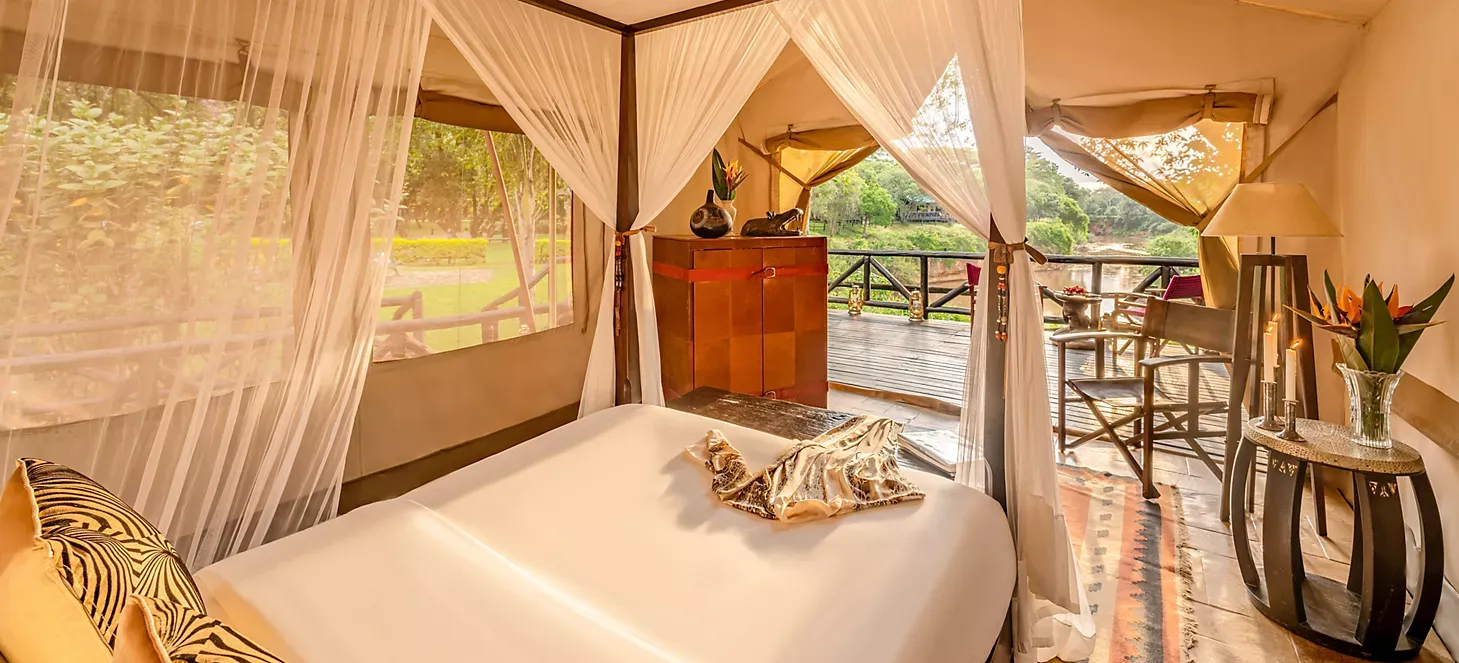
Maasai-inspired tented suites with four-poster beds, en-suite facilities, and a private deck above the Mara River. Hippos and crocodiles are visible throughout the day; the river's nocturnal soundtrack defines the nights. Five-star Fairmont service in every detail.
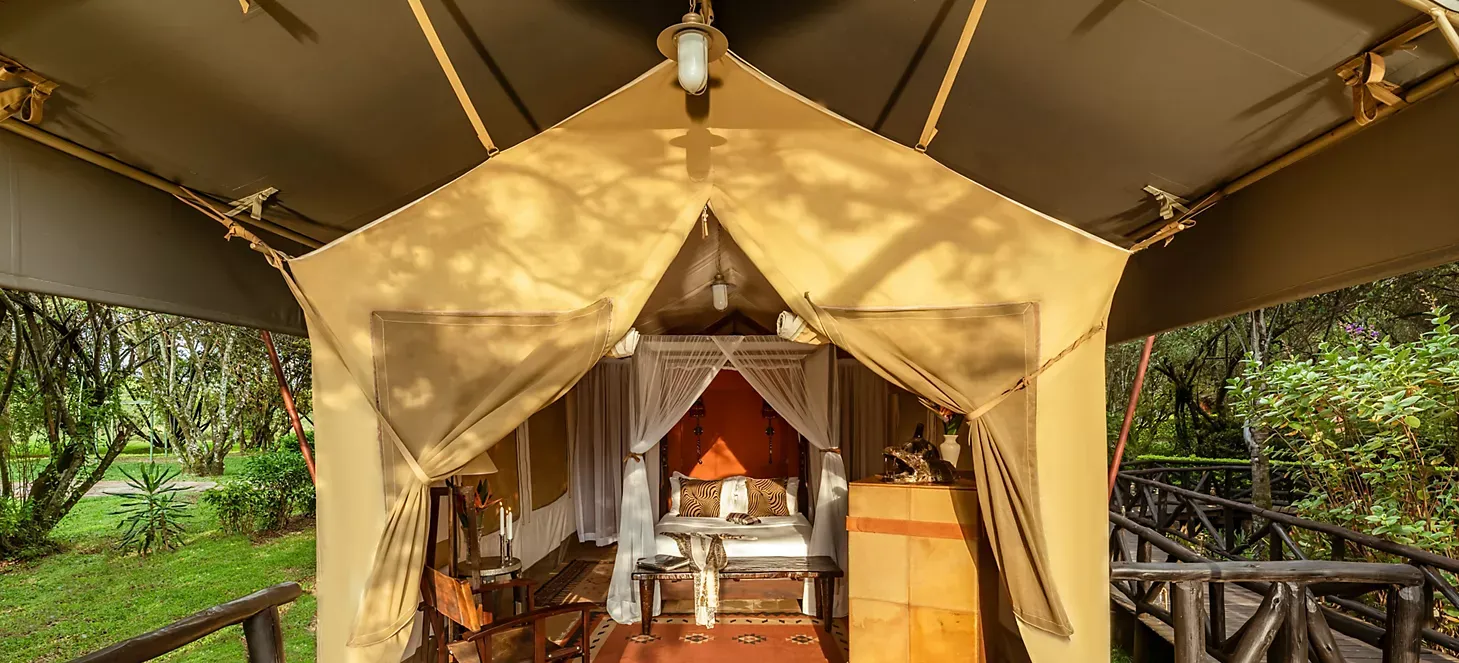
The Deluxe extends the standard suite with a larger sunbed deck and outdoor shower, a memorable detail in a riverside forest setting. The same four-poster beds and Maasai-influenced interiors, with additional space for a sitting area.
Every moment at Fairmont Mara is crafted to immerse you deeper in the wild.
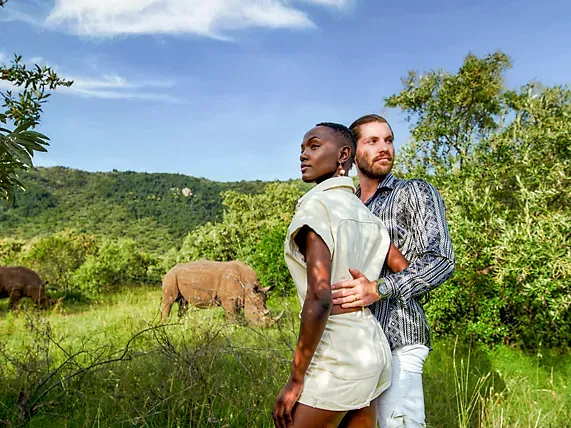
The Ol Choro Rhino Sanctuary holds the last two southern white rhinos in the Mara, protected by a 24-hour armed ranger programme. The visit is on foot and unhurried — frequently described as the encounter that stands apart from everything else.
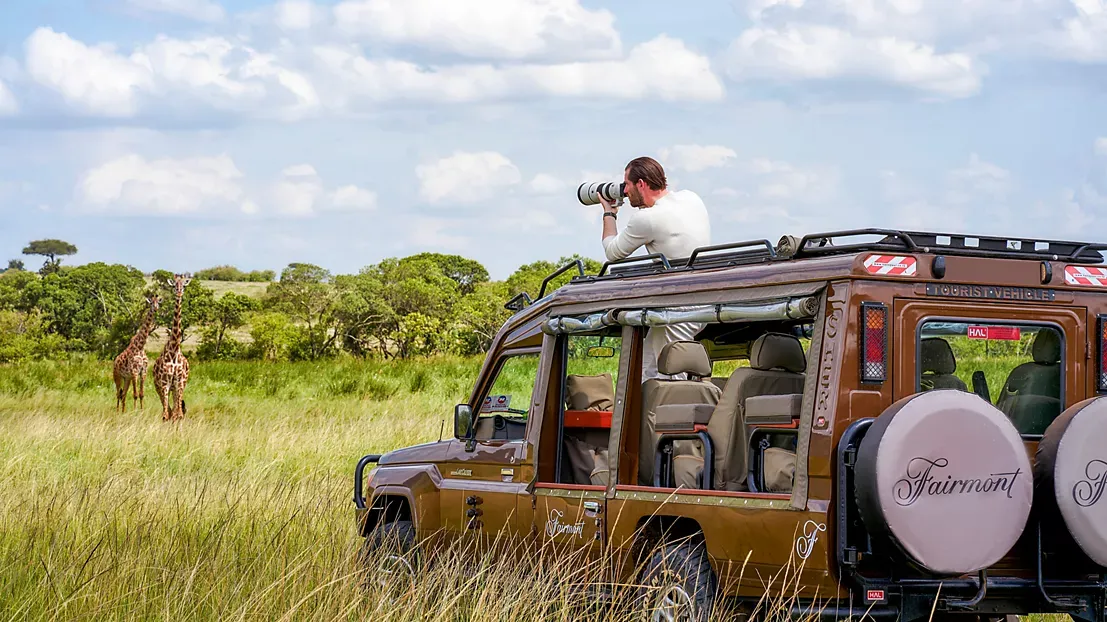
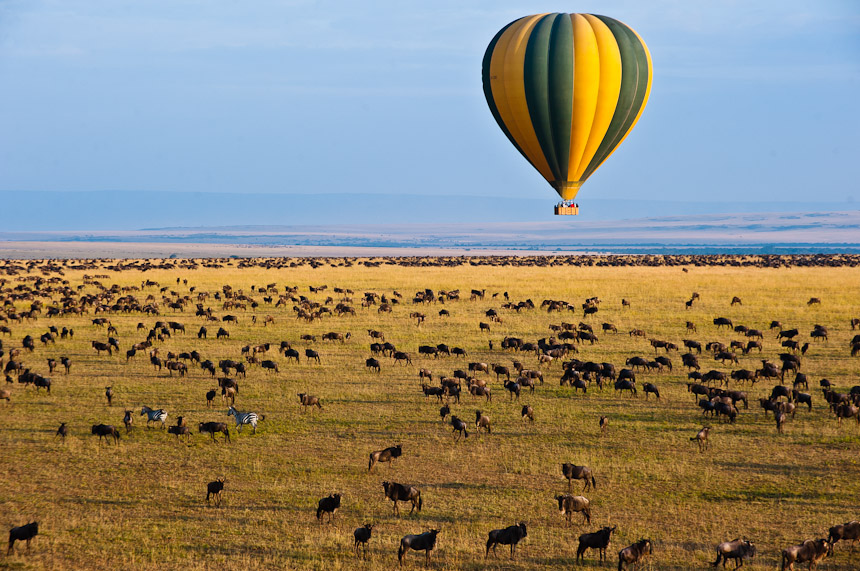
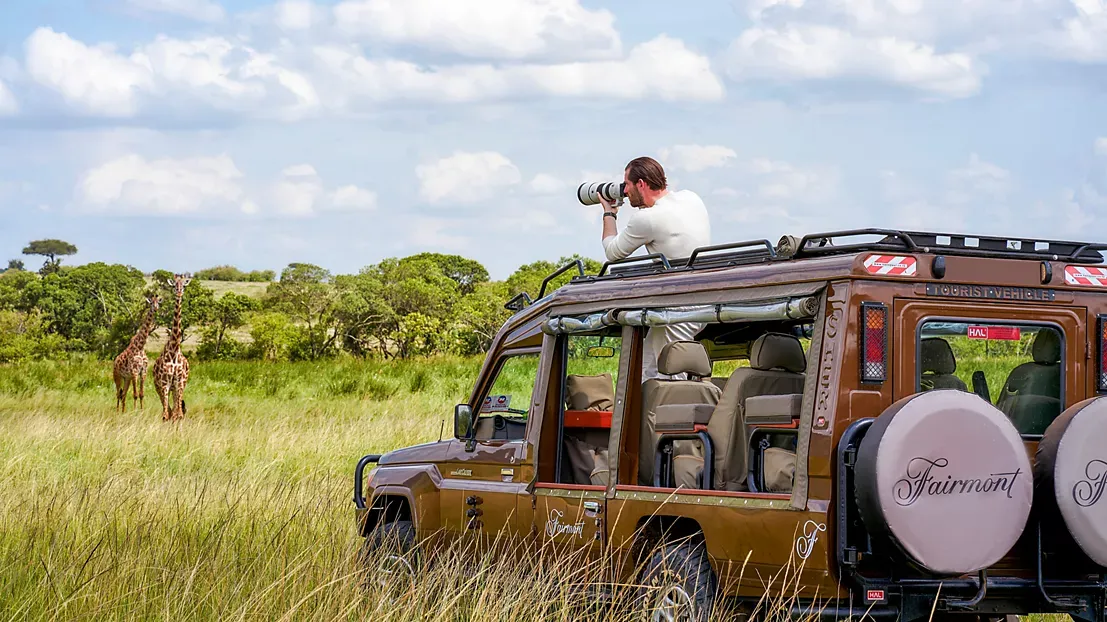
Ol Choro Oiroua permits night drives across its 17,000 acres, extending into the hours when leopard, hyena, and nocturnal predators become the subjects. The conservancy sits within the migration corridor, with wildebeest herds crossing the Mara River through these plains between July and October.
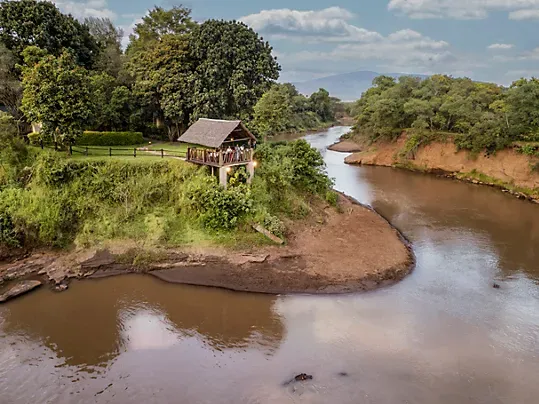
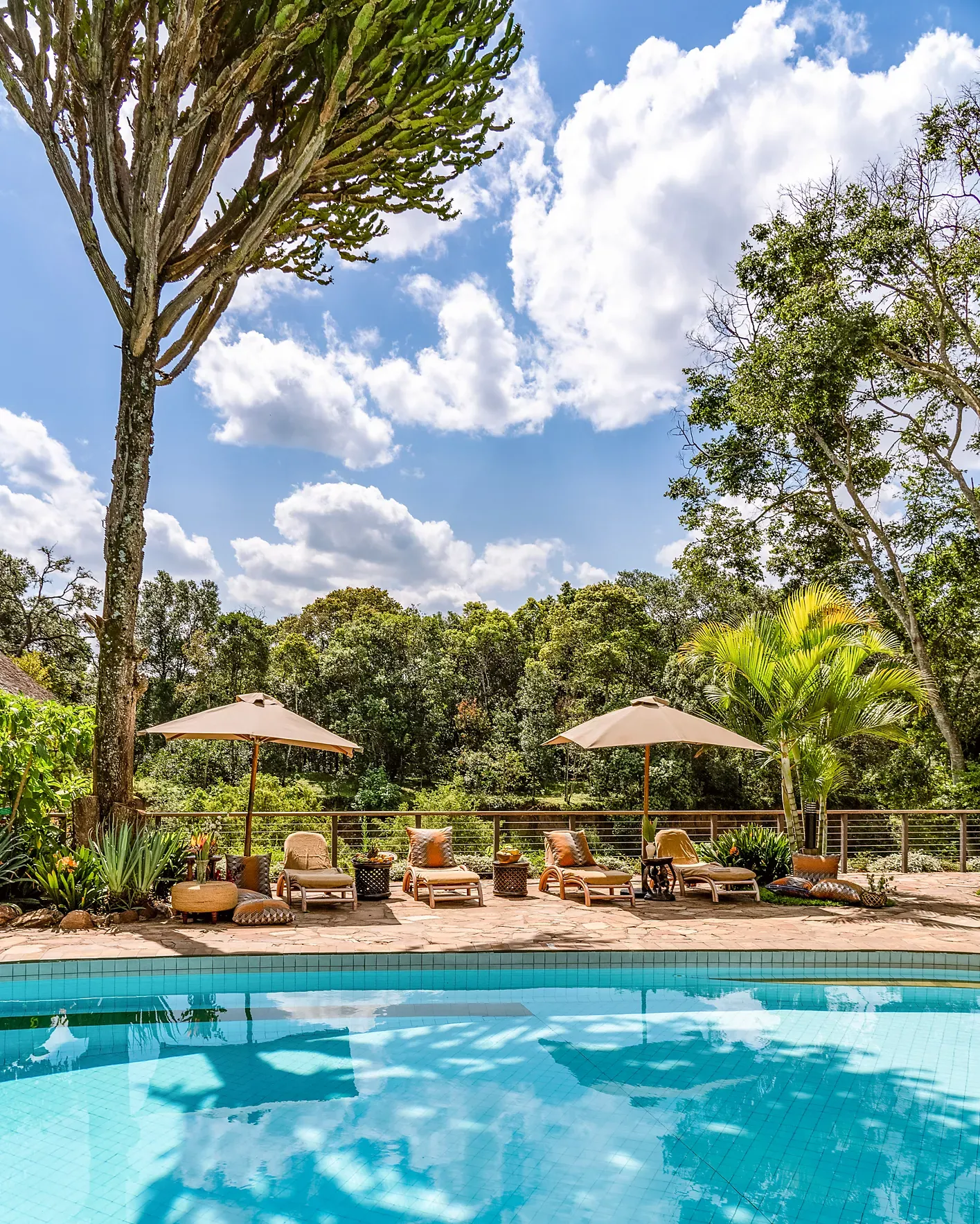
The Hippo Terrace positions guests directly above resident hippo pods throughout the day, from dawn coffee to sundowners as crocodiles settle onto the banks. It is the feature guests mention most consistently when describing daily life at the camp.
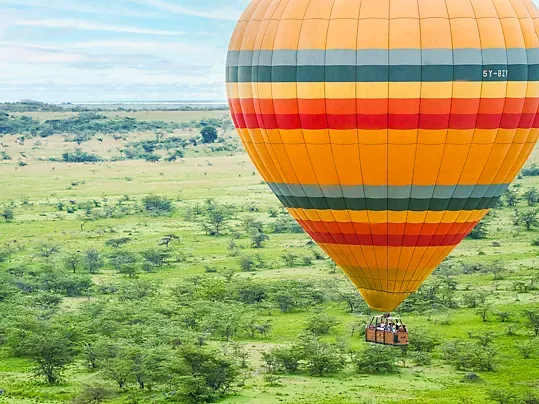
A sunrise balloon flight reveals the river loop, Aitong Hills, and open migration plains, concluding with a champagne bush breakfast. Between July and October, the migration herds are visible from altitude at a scale that changes the understanding of the ecosystem entirely.
Ready to plan your stay?
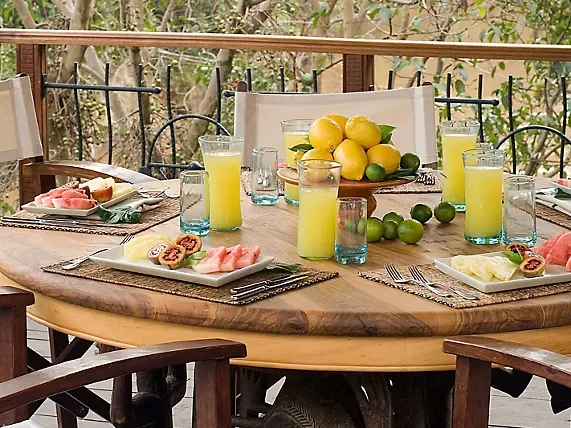
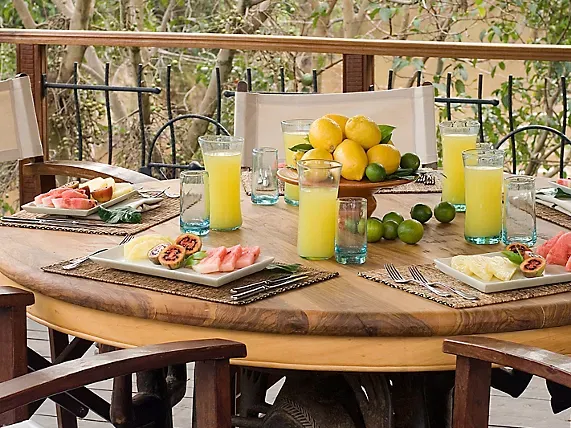
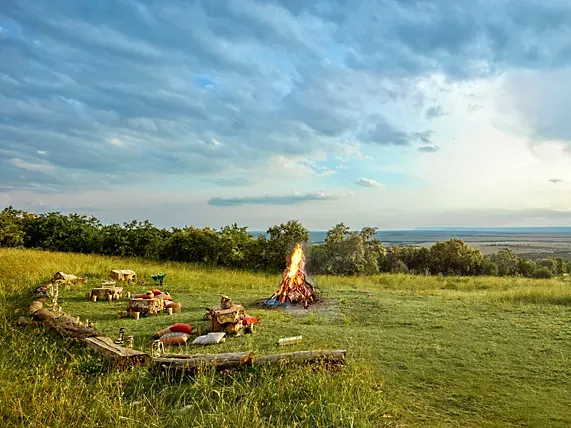
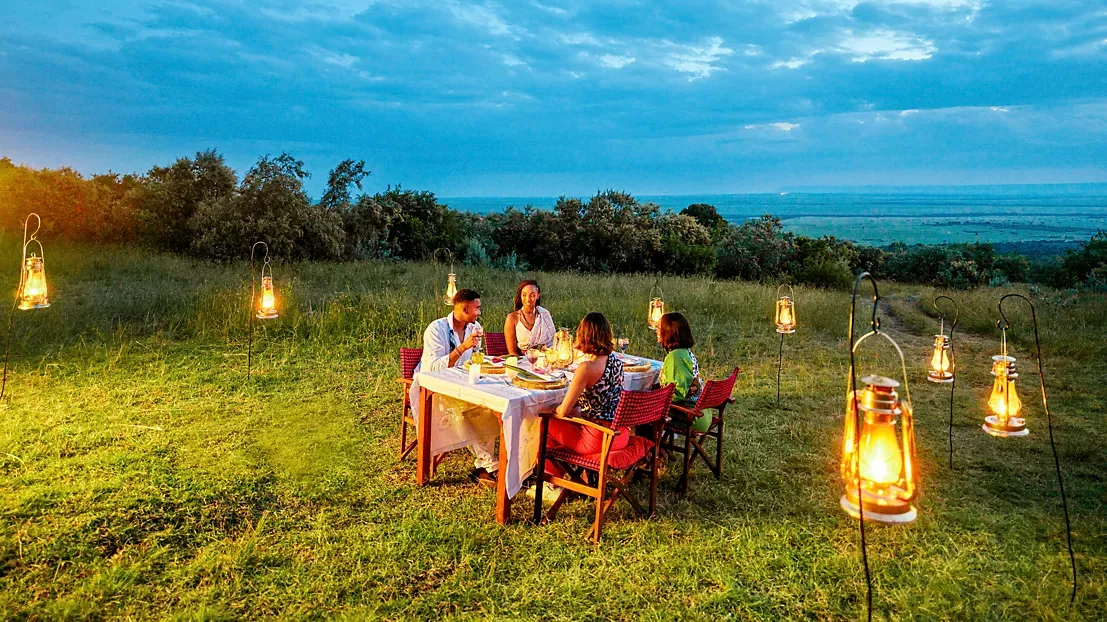
The Kiboko Restaurant serves breakfast, lunch, and dinner from a menu built substantially on produce grown in the camp’s organic garden — an uncommon degree of kitchen self-sufficiency for a property of this scale in the Mara, and one that the daily-changing menu makes tangible. The Hippo Terrace, positioned directly above the river, is where most guests gravitate for sundowners and for the late-afternoon ritual of watching the hippos below without needing to make any decision about where to go or how long to stay. The Kifaru Bar carries the register of a classic safari club lounge: Maasai artifacts and beaded curtains against a backdrop of plush seating and wooden floors, with a drinks list that covers the full range from fine wine to the kind of cold local beer that a hot game drive morning makes compelling. Bush dinners at the Boma — the outdoor dining space built in the Maasai architectural tradition — are a regular feature of the evening programme, with Maasai cultural performances accompanying them on select nights. Bush breakfasts taken on morning game drive are among the camp’s most consistently praised experiences: the guide selects the position, the kitchen prepares the setup, and the meal becomes a function of wherever the morning’s wildlife has led.
Fairmont Mara Safari Club is open year-round. July through October is the Great Migration period, when wildebeest and zebra herds move through the Ol Choro Oiroua Conservancy’s plains and cross the Mara River at points accessible within a short drive from the camp. August and September are the peak crossing months; October offers lighter visitor volumes as the main herds begin to thin. The camp’s position within the migration corridor means the conservancy receives the herds directly, without the transit time to the river crossing zones that camps positioned further inside the reserve require. January through March delivers the Mara’s most concentrated big cat viewing outside the migration: resident lion, cheetah, and leopard populations are undistracted by the herds, the short dry season is beginning, and visitor numbers across the ecosystem are considerably lower. June is excellent for general game viewing as the dry season consolidates wildlife around water sources. November and December bring the short rains, fresh grass, and arriving calves — among the most photogenic conditions the Mara produces in any season.
Explore handcrafted itineraries where Fairmont Mara forms part of the journey.
Please share your name and email so we can follow up with you.