From
$7,221

Start Planning Your Tailor-Made Journey
🔒 Your details are kept private and never shared with third parties.
Kenya's oldest national park, its finest camp — set around Kilimanjaro's own springs with 30 years of pioneering luxury safari.
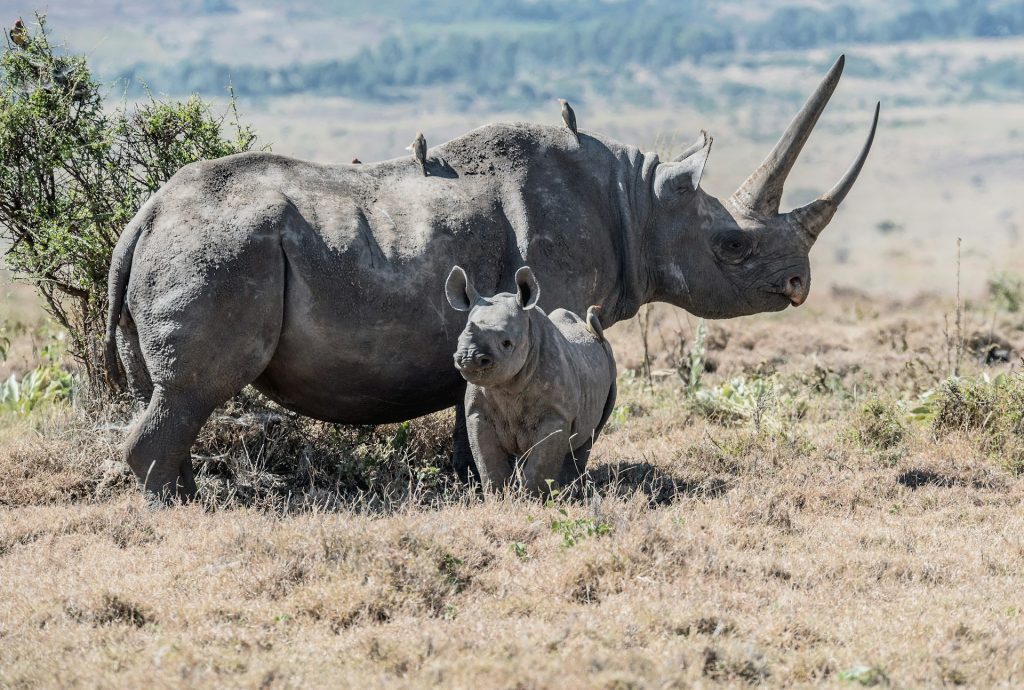
There is a particular gravity to the landscape that surrounds Finch Hattons. You feel it before you can fully explain it — the immensity of a national park that covers 10 million acres of southern Kenya, the silence that accumulates at this scale, and then the springs: three clear pools of freshwater that have been flowing directly from the snows of Mount Kilimanjaro since long before the camp existed, drawing wildlife to this exact point every hour of every day with the implacable logic of thirst. Elephant. Buffalo. Hippo. Lion. All of them come here. You simply wait.
Finch Hattons was built in 1993 on a 35-acre private concession around those springs, and in more than thirty years it has never lost the conviction that drove its creation: that the greatest luxury a safari camp can offer is not the quality of its beds — though these are exceptional — but the quality of the wilderness it places you in. Tsavo West is Kenya’s oldest and largest national park, and it is dramatically, stubbornly different from the parks that occupy most of the tourist imagination.
There is no traffic here. No convoys of minivans converging on a lion sighting. No gridlock at a leopard in a tree. There are 10 million acres of volcanic landscape, ancient lava flows, cloud forest, open savanna and riverine thicket, and on any given game drive the chances of encountering another vehicle approach zero.
The 17 tented suites are arranged along elevated walkways above the spring pools, each one open-plan and facing the water, built from canvas, wood and stone in a design that owes something to the era of Denys Finch Hatton himself — the British aristocrat-explorer and safari pioneer whose love for this exact landscape gave the camp its name.
The interiors blend that historical reference with contemporary refinement: polished floors, vintage fittings, leather furniture, a fully stocked maxibar, claw-foot or slate-walled showers and a private deck positioned directly above the animal highway below. It is not uncommon to watch elephants drinking from your bath.
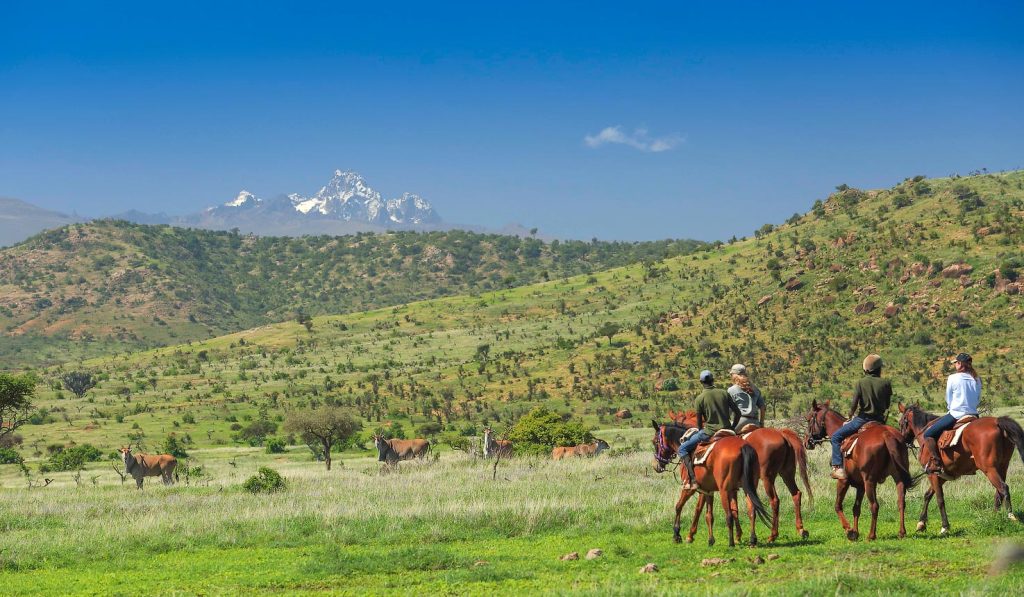
The backdrop always is Kilimanjaro. On clear mornings, the mountain fills the western horizon with a presence so vast and so white that it seems impossible that it is simply there, always there, fifty kilometres away and perfectly indifferent to your awe.
17 tented suites built around natural freshwater springs in Kenya's largest national park — with Kilimanjaro on the horizon, hippos at your doorstep and 30 years of award-winning safari excellence behind the name.
Finch Hattons operates within Tsavo West National Park under a private concession model that contributes directly to the park's conservation budget through park fees and community partnerships. The camp uses organic products throughout its spa and wellness centre, sources food from local farms and its own kitchen garden, and is designed to maintain a minimal physical footprint on its 35-acre conce
The 17 suites at Finch Hattons are arranged in a loose arc along elevated wooden walkways above the spring pools, each one positioned to maximise the view — of the water, of the Chyulu Hills rising in tiers to the north, and of Kilimanjaro’s snow-capped summit to the west.
Fourteen standard luxury suites sleep two adults, each measuring approximately 105 square metres and built on an open-plan that removes every barrier between guest and landscape: canvas walls that roll back to the bush, floor-to-ceiling window panels facing the springs, a large private deck with daybed and armchairs positioned directly above the animal activity below.
The interiors draw from the aesthetic of the early safari era while delivering the appointments of a contemporary five-star hotel — vintage fittings alongside Bose audio, antique writing desks alongside Nespresso machines, Swahili hardwood chests alongside in-room WiFi and smart televisions. En-suite bathrooms are generously proportioned, with both a rainfall shower and either a claw-foot soaking tub or slate-walled wet room.
Every suite is fully air-conditioned, which matters in Tsavo’s lowland heat.Every maxibar is stocked with homemade snacks and spirits as well as complimentary wine, beer and soft drinks. Maasai security patrols the camp perimeter around the clock, and the springs — and whatever is drinking from them — are never far from view.
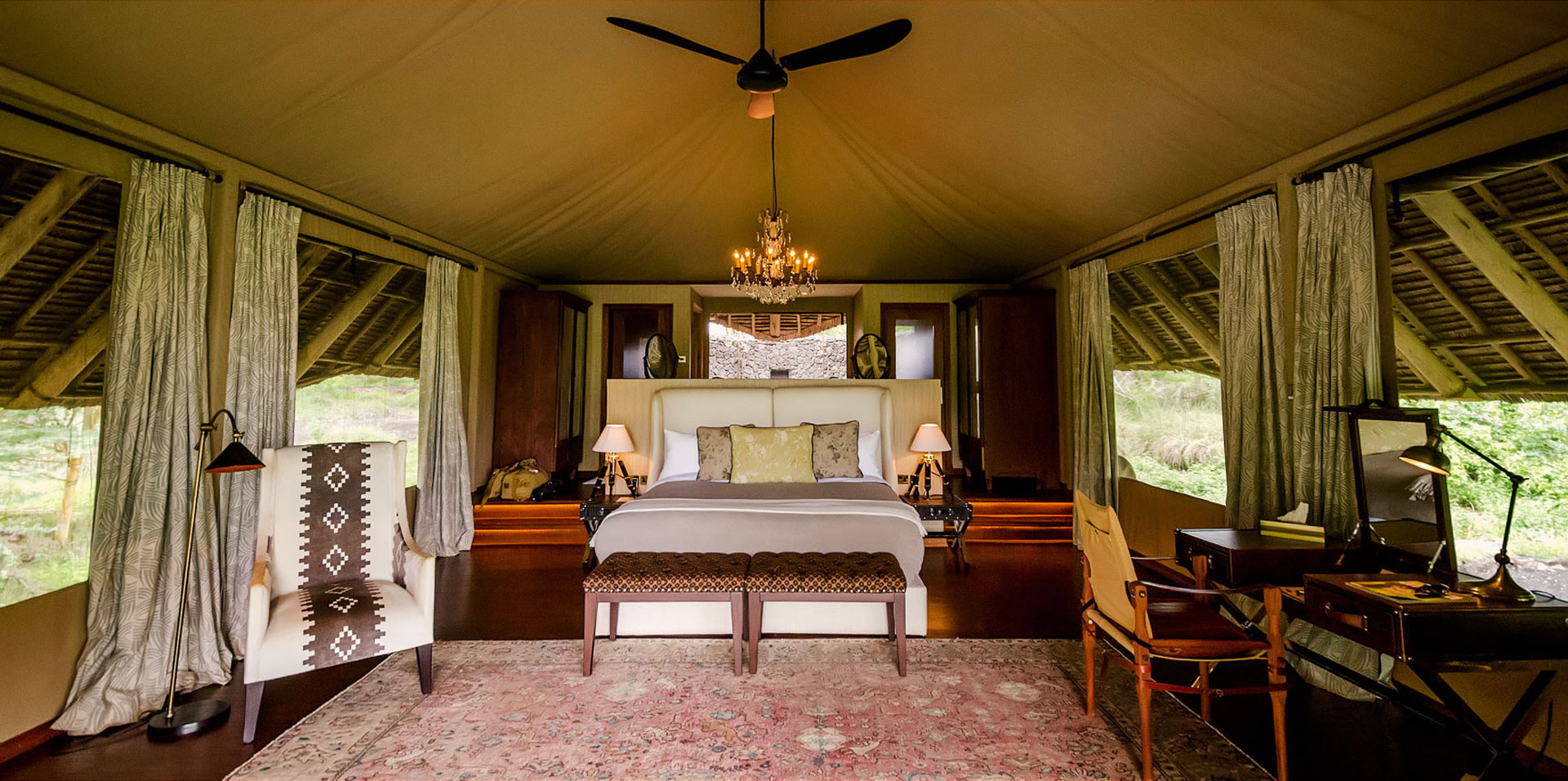
Full open-plan design with canvas walls that invite the breeze off the water, polished stone or hardwood floors, vintage safari furnishings, en-suite bathroom with rainfall shower and soaking tub, large private deck with daybed and armchairs directly facing the springs, Kilimanjaro and the Chyulu Hills. Fully air-conditioned.
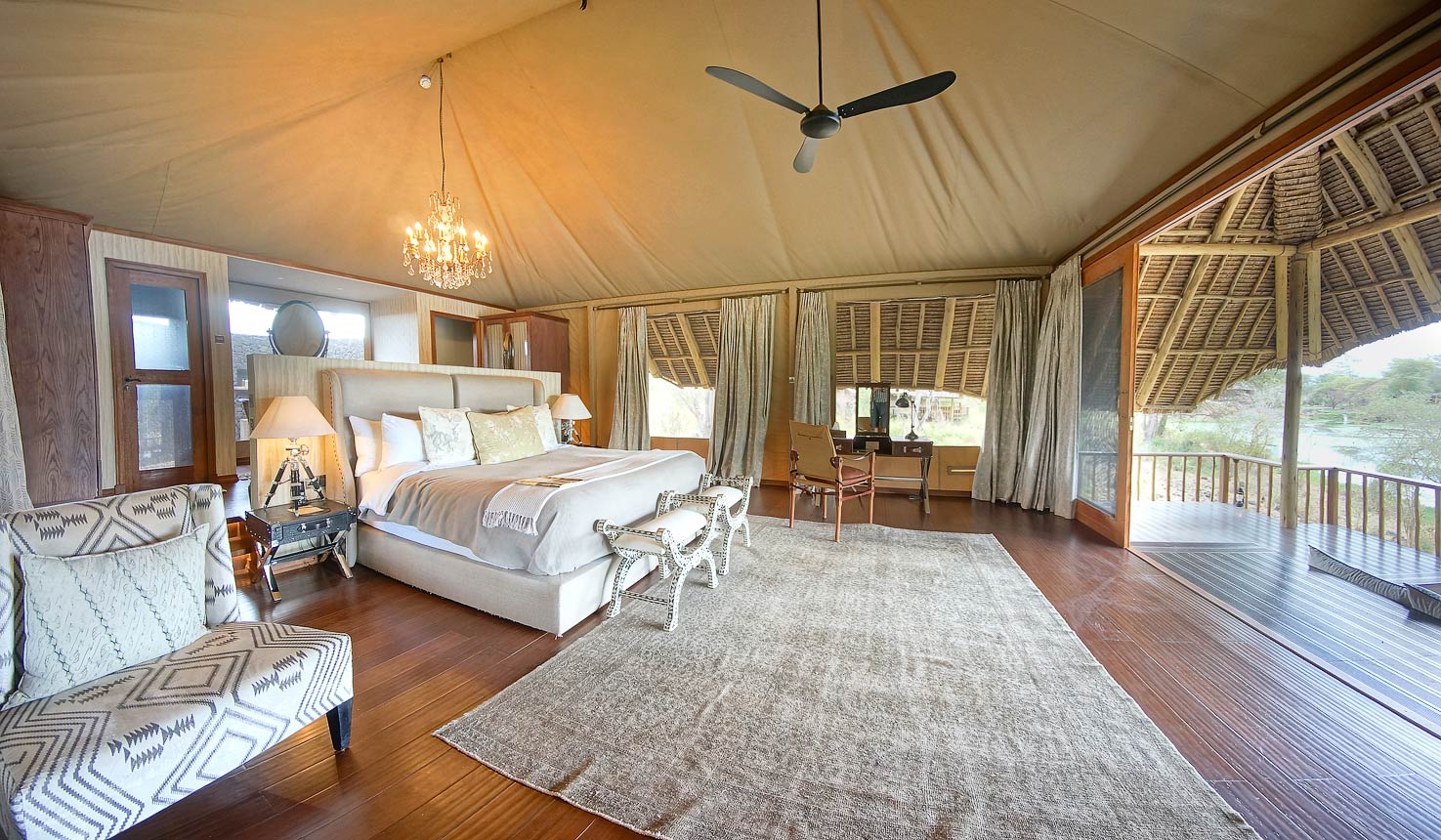
Two of Finch Hattons' suites significantly larger than the standard tents, with an enclosed sitting area equipped with fold-out sofa beds to accommodate two children. Situated close to the main camp areas and pool. Children benefit from the Little Explorers Club and dedicated children's activities
Every moment at Finch Hattons is crafted to immerse you deeper in the wild.
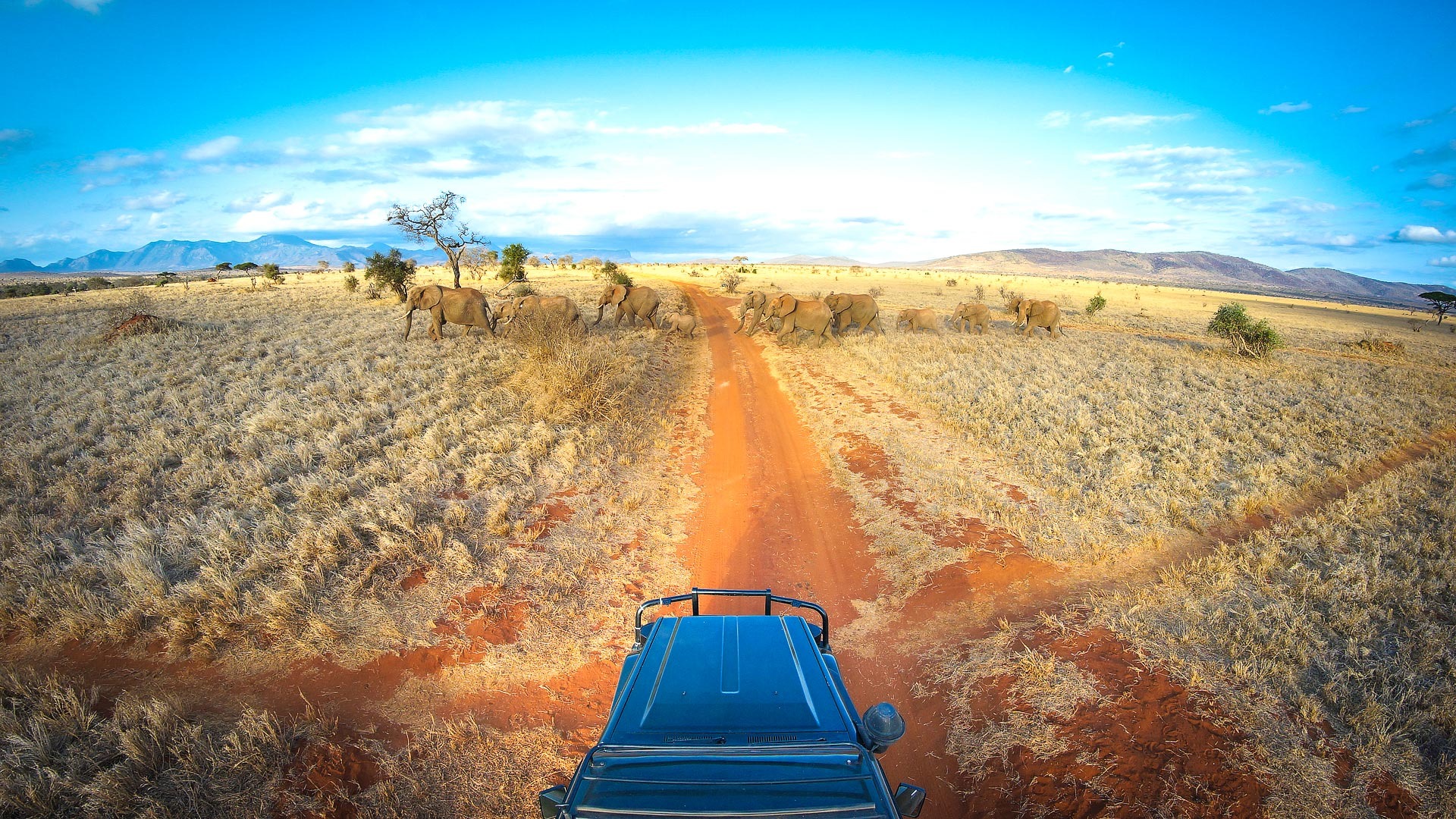
Open 4x4 Land Cruiser game drives through Tsavo West day and night, led by the camp's professional resident guides. Guests will rarely encounter another vehicle. This is Tsavo as it was always meant to be experienced. The park is home to the largest elephant population in Kenya
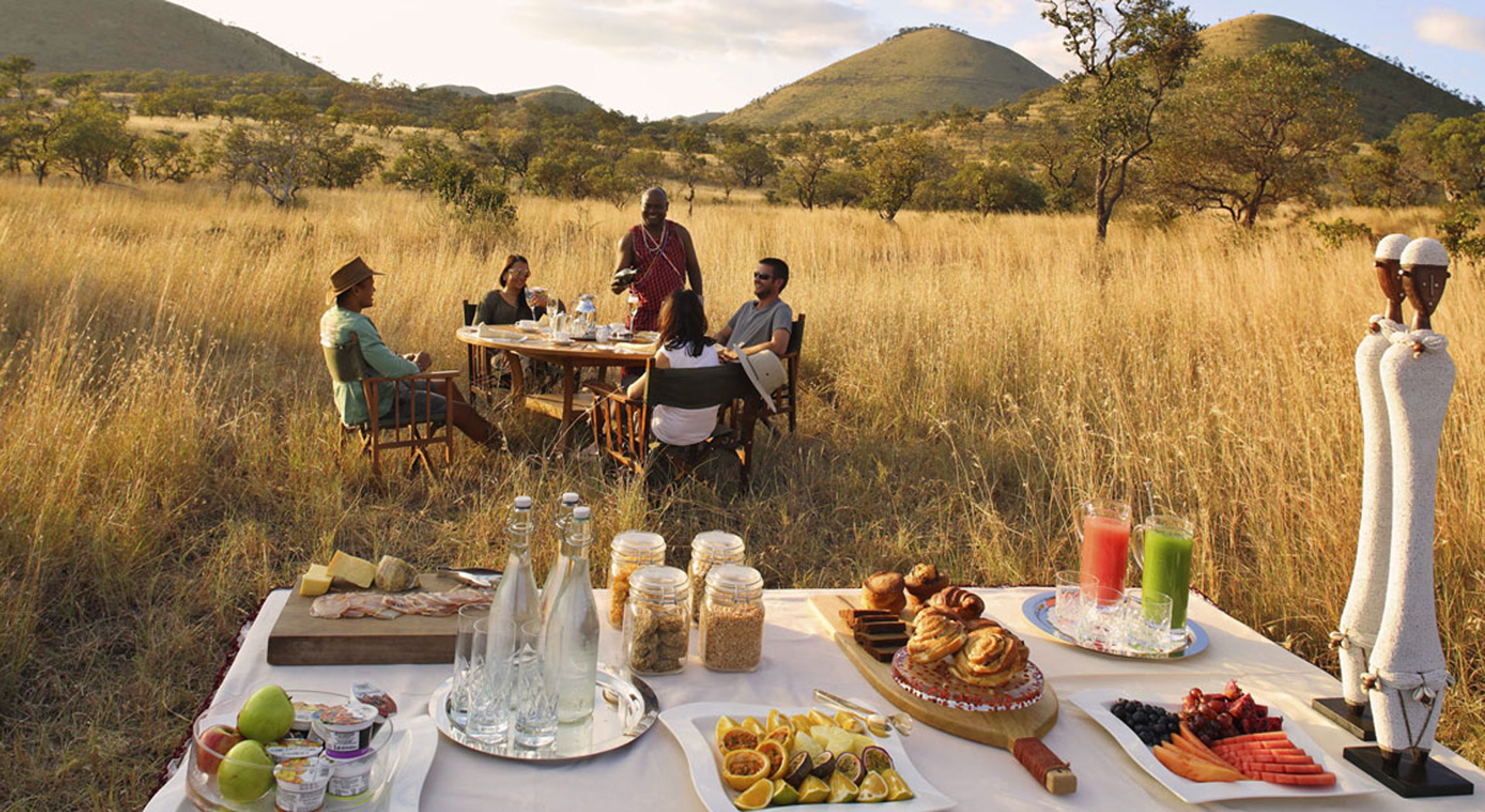
Among the most atmospheric outdoor dining experiences in Kenya. Finch Hattons' guides arrange bush breakfasts on the Chyulu Hills ridgeline after the morning drive — a full set table on the escarpment with the Tsavo plain and Kilimanjaro spread below.
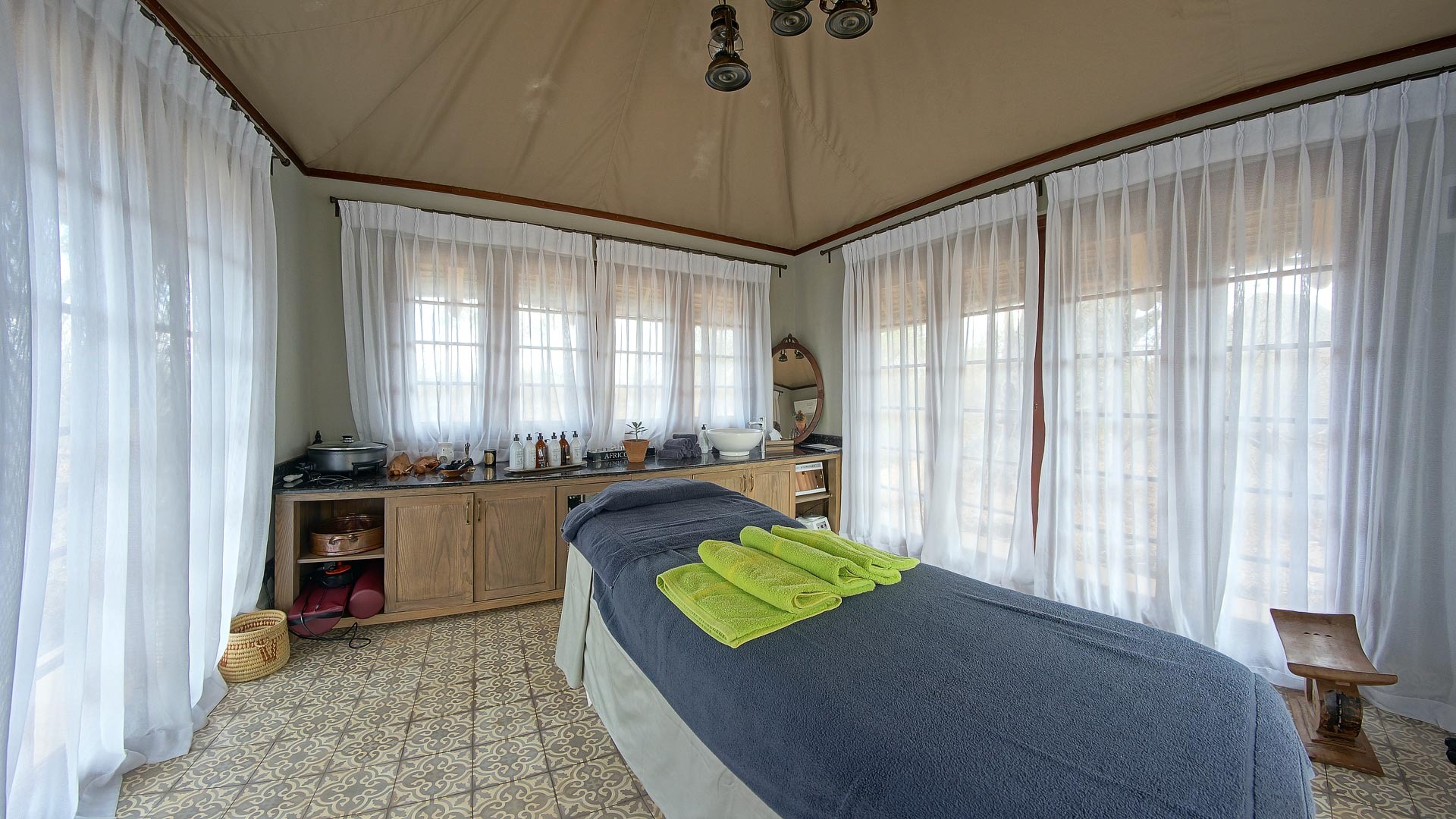
The Health & Wellness Centre is one of the most comprehensive spa facilities at any Kenyan safari camp — two outdoor massage pavilions, an adults-only spa pool, a hammam, a fully equipped gym, and an elevated yoga pavilion with Chyulu Hills views.
Ready to plan your stay?
Finch Hatton’s kitchen has always taken the position that dining in the Tsavo bush should be an event, not a transaction. The camp’s chefs work with locally sourced produce and a kitchen garden of fresh herbs to produce menus that rotate with the season and accommodate every dietary requirement without reducing any guest’s meal to an afterthought.
The style is broadly contemporary Kenyan,fresh fish from the coast, slow-braised game meats, tropical fruit, Swahili spice influences — with a particular pride in the multi-course dinner service that the camp is known for. A full Swahili feast, prepared on request and served on the camp’s rooftop deck, is among the most memorable meals on the Kenyan safari circuit.
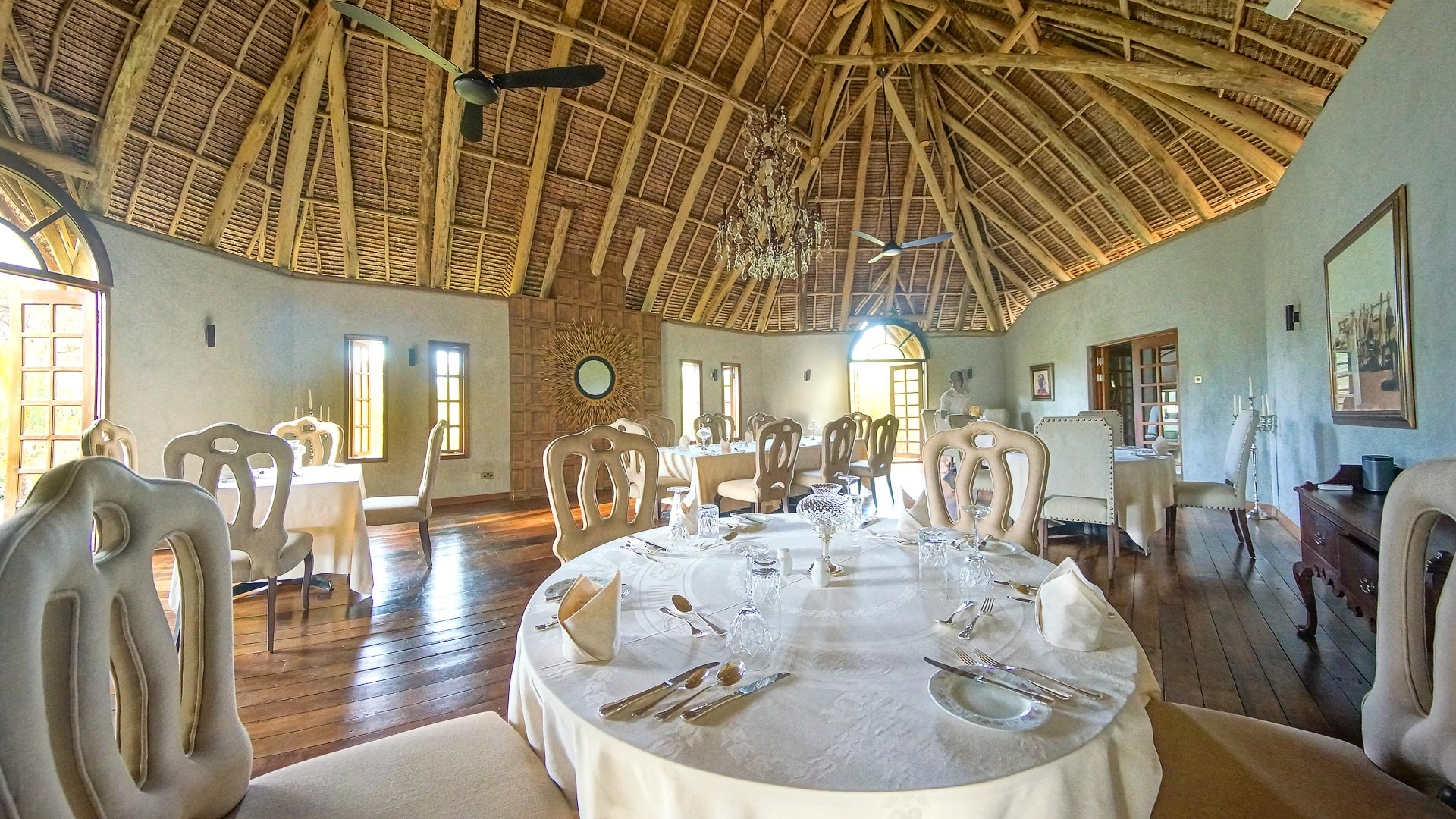
The number of places to eat at Finch Hattons is part of the point. The resplendent dining tent for formal evenings. The open-air terrace for breakfast and leisurely lunches in the Tsavo light. The private deck of your own suite for room service at whatever hour feels right.
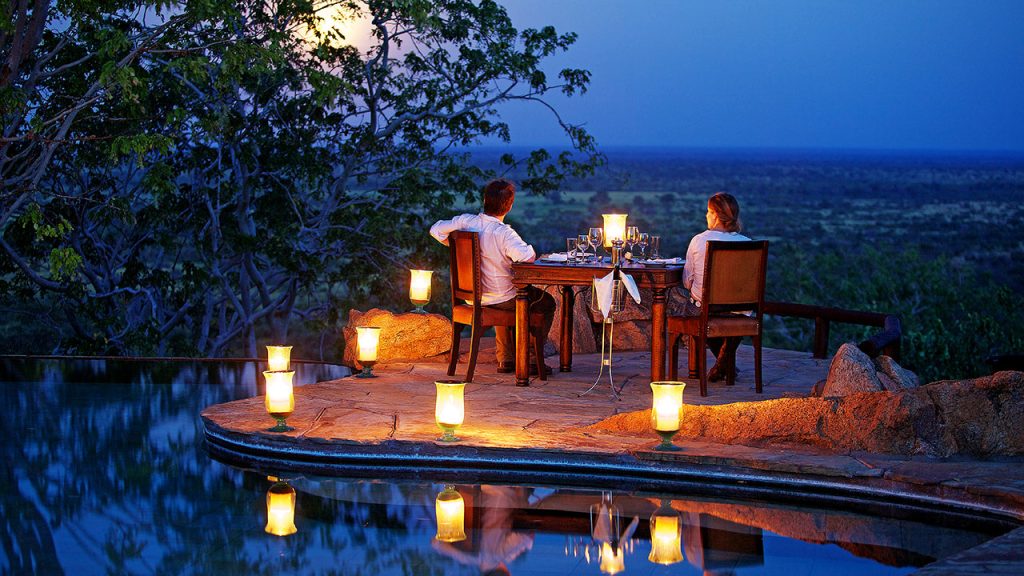
The bush: a full set table on the Chyulu Hills ridgeline for breakfast after the morning drive, or a candlelit dinner under a sky that seems, at this altitude and with this absence of light pollution, to have been placed there specifically for the occasion.
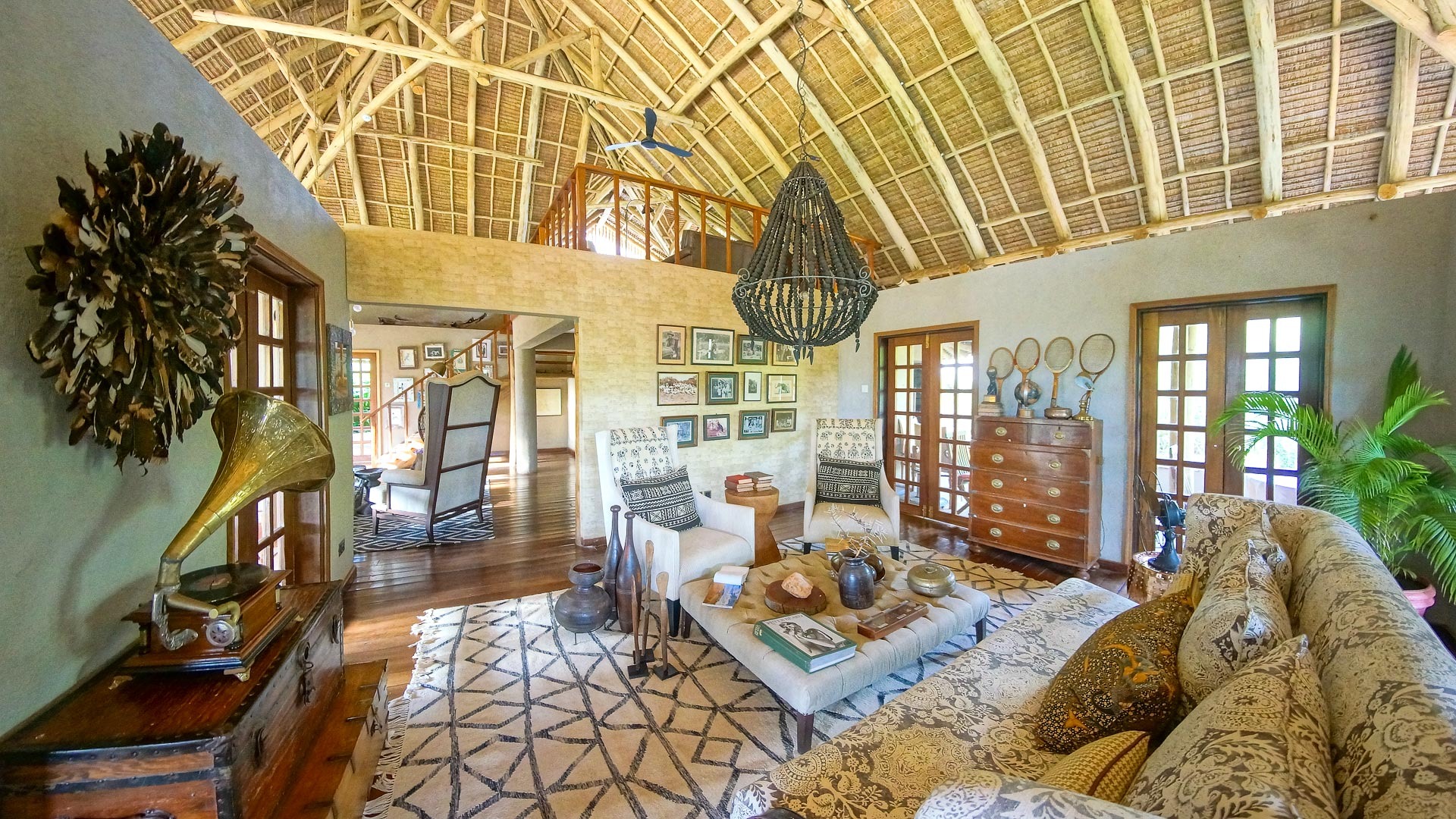
The Karen Blixen Lounge Bar — lined with old safari photographs documenting Kenya’s early safari history and a well-curated wine cellar — serves sundowners and nightcaps with a library and a fireplace for the evenings that call for staying in.The maxibar in every suite is stocked with homemade snacks and house spirits in generously sized bottles — gin, rum, whisky, each with its own designated mixer — and is complimentary throughout the stay.

Tsavo West is not a seasonal park in the way that migration-dependent destinations like the Mara are. Because Finch Hattons’ spring pools draw wildlife year-round regardless of rainfall patterns, and because the national park’s vast size means wildlife densities are sustained even in the wetter months, there is genuinely good game viewing in every month of the year. The question, rather, is one of landscape character, activity availability and personal preference.
June through October is the dry season and the peak of conventional safari wisdom, vegetation thinning to reveal wildlife that would otherwise be obscured, game concentrating around water sources, the Tsavo plain turning to gold and ochre under clear skies and the most reliable photography light.
The spring pools at this time are at their most active: elephant herds arriving at dusk, lion spending the cool of the morning in the open, the full drama of Tsavo’s wildlife compressed around the water.
Mt. Kilimanjaro, with less atmospheric moisture to obscure it, is at its most consistently visible. July through September represents the sweet spot of conditions without the Mara’s migration-season crowding.
January and February bring a dry interlude between the rains, excellent game viewing, brilliant clarity, and rates below the June–October peak. These months offer some of the best big cat sightings of the year as lion and leopard are conspicuous in the open landscape.
December is atmospheric and festive — the short rains have greened the Chyulu Hills and brought wildflowers to the lava flow margins, the camp has a particularly warm character and the landscape offers a lush counterpoint to the dry-season Tsavo. Kilimanjaro with its snow-cap above a greening Tsavo plain is one of the great views in East Africa.
March through May (the long rains) brings dense vegetation that makes game viewing harder and some tracks impassable. The Shetani Lava Flow and Chyulu Forest hikes remain excellent in this period , indeed the cloud forest is most alive in the wet season — and rates are at their lowest. For birding enthusiasts, the wet season concentrates an extraordinary diversity of species around the springs and this is Tsavo’s ornithological peak.
Explore handcrafted itineraries where Finch Hattons forms part of the journey.
Please share your name and email so we can follow up with you.