From
$2,424

Start Planning Your Tailor-Made Journey
🔒 Your details are kept private and never shared with third parties.
Seventy self-contained tents on the equator at Ol Pejeta Conservancy, Mount Kenya on the horizon, and the world's last two northern white rhinos next door.
Ol Pejeta Conservancy covers 360 square kilometres of Kenya’s Laikipia plateau — 110,000 acres of acacia grassland and riverine forest that has become one of the most important wildlife conservation projects in Africa. It holds the highest predator density in Kenya, a significant population of both black and southern white rhino, East Africa’s only chimpanzee sanctuary, and, under round-the-clock armed protection, the last two northern white rhinos on the planet: Najin and her daughter Fatu, the final living representatives of a subspecies whose males are gone. Staying beside Ol Pejeta is not like staying beside a national park. The stakes here are higher, the conservation story more immediate, and the wildlife encounters it produces more viscerally meaningful than most safari destinations can claim.
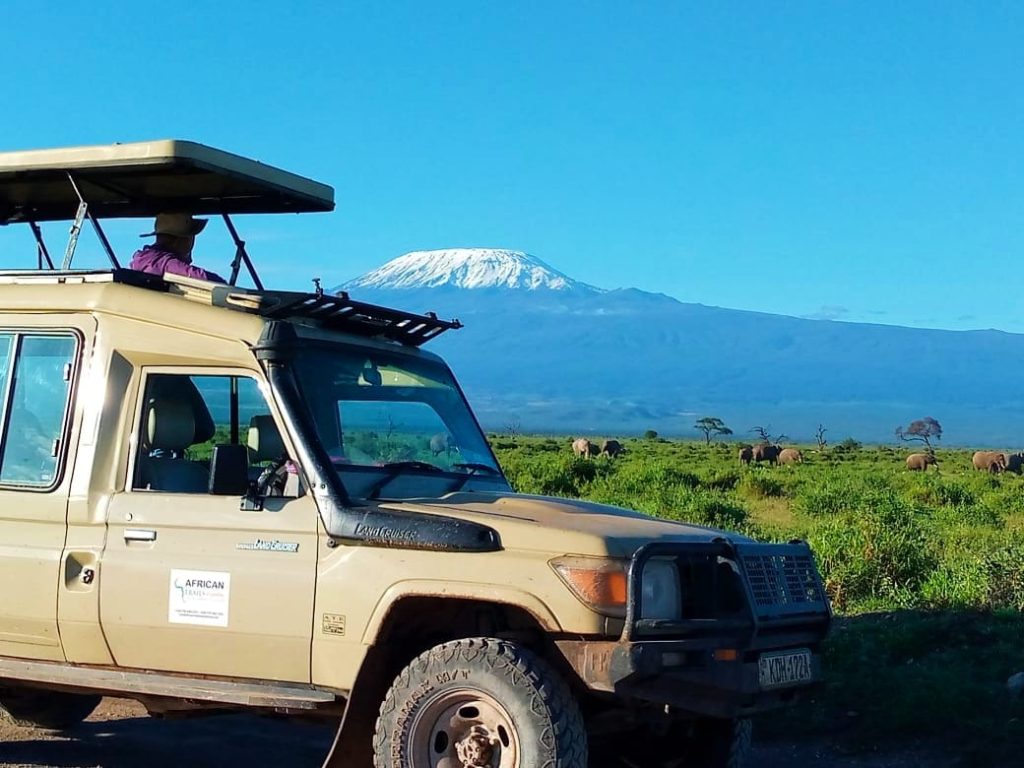
Maisha Sweetwaters Camp opened in June 2024 near the Rongai Gate of the conservancy, bringing 70 luxury self-contained tents to a setting that had previously been served by a single established property. The camp is positioned on the Laikipia plain at precisely the point where the equator crosses Kenya — a detail that the camp marks with a signpost guests photograph on arrival — with Mount Kenya’s snow-capped twin peaks rising on the eastern horizon and the open conservancy grassland stretching away on all sides. Maisha means “life” in Swahili. The name fits a camp built in a place where the definition of life’s fragility — two northern white rhinos, forty rescued chimpanzees, the last of their respective populations — is on vivid daily display.
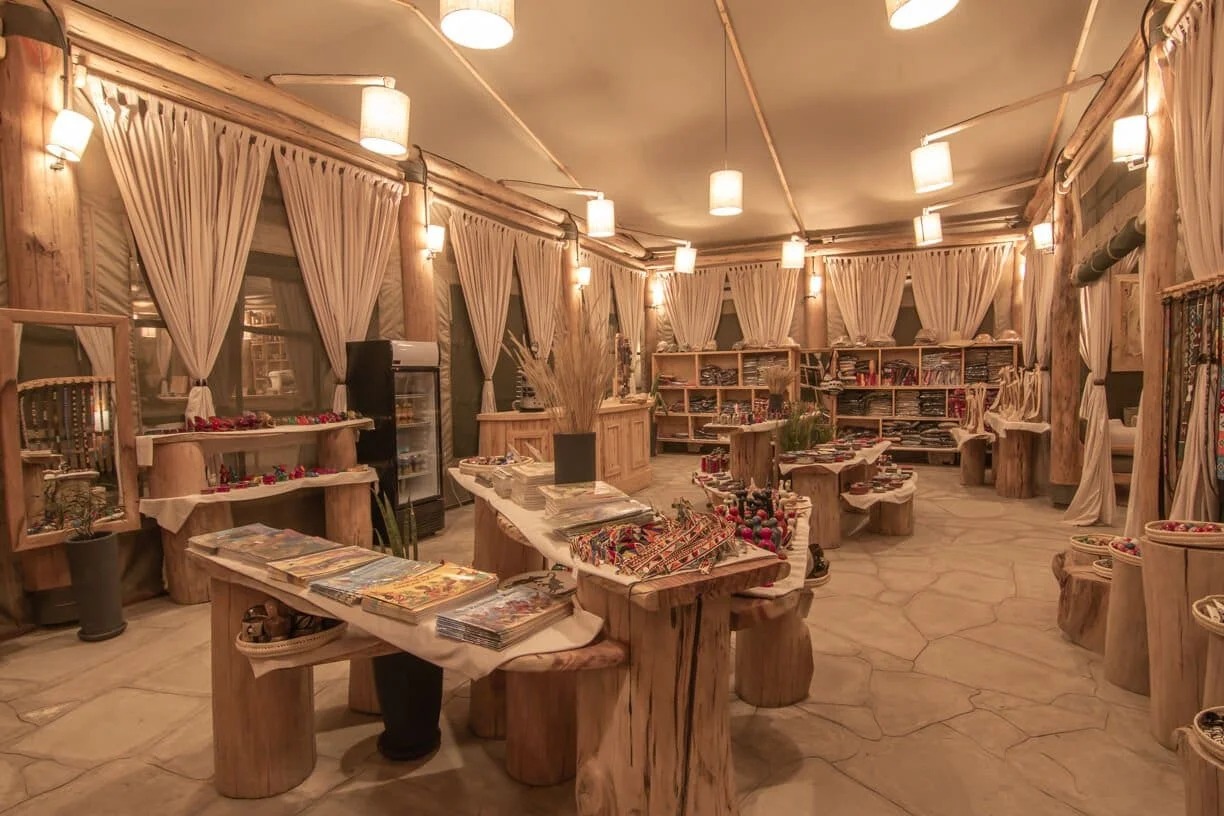
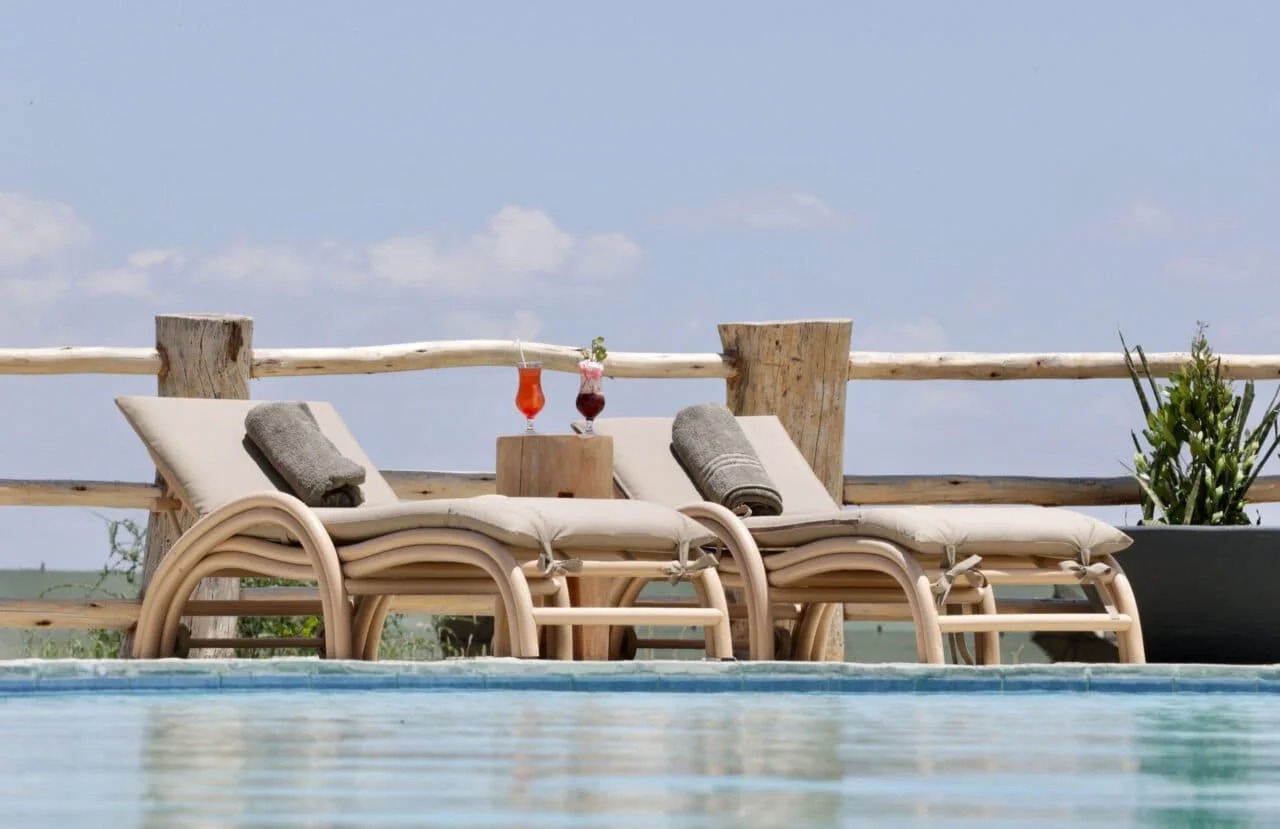
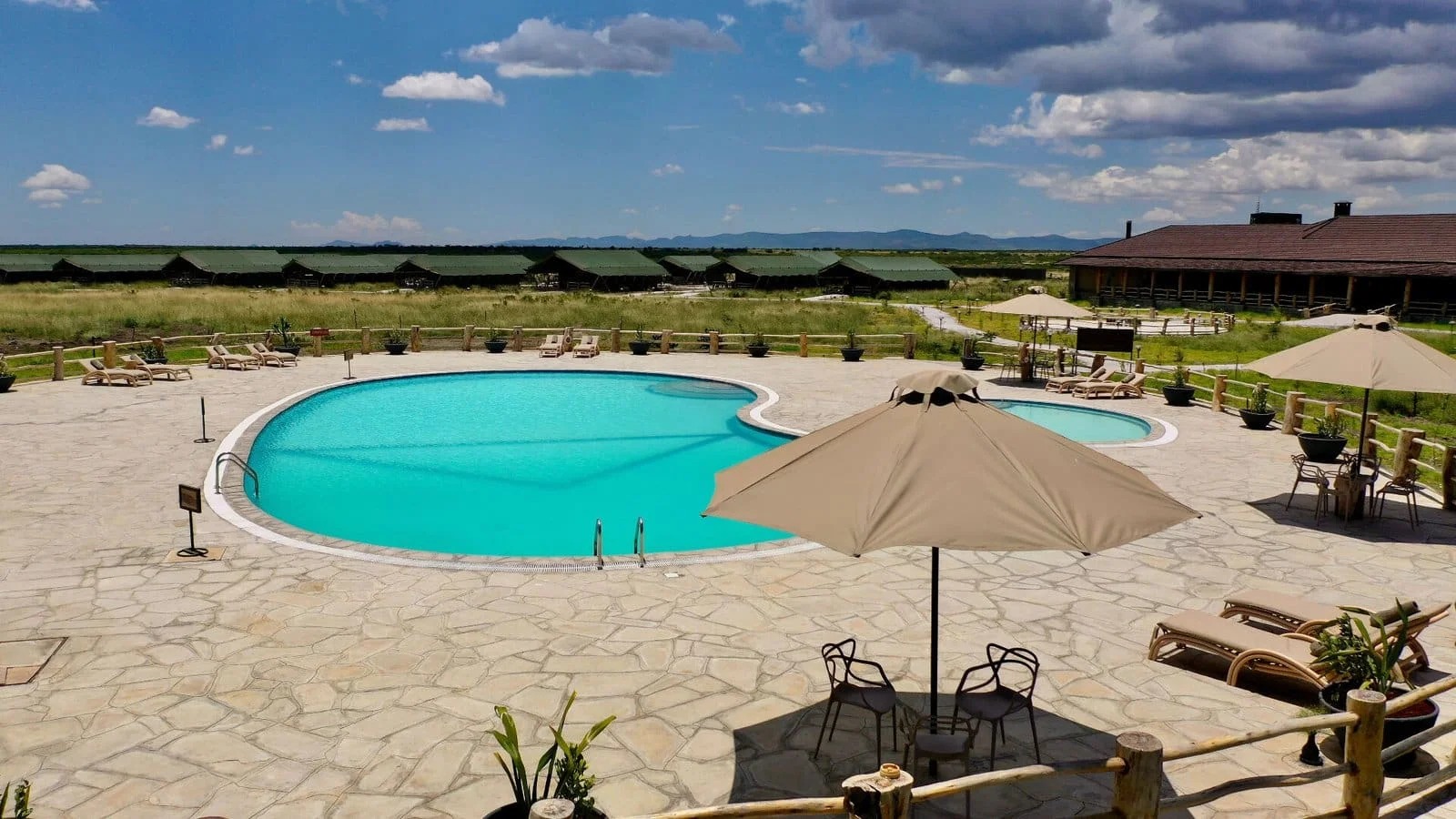
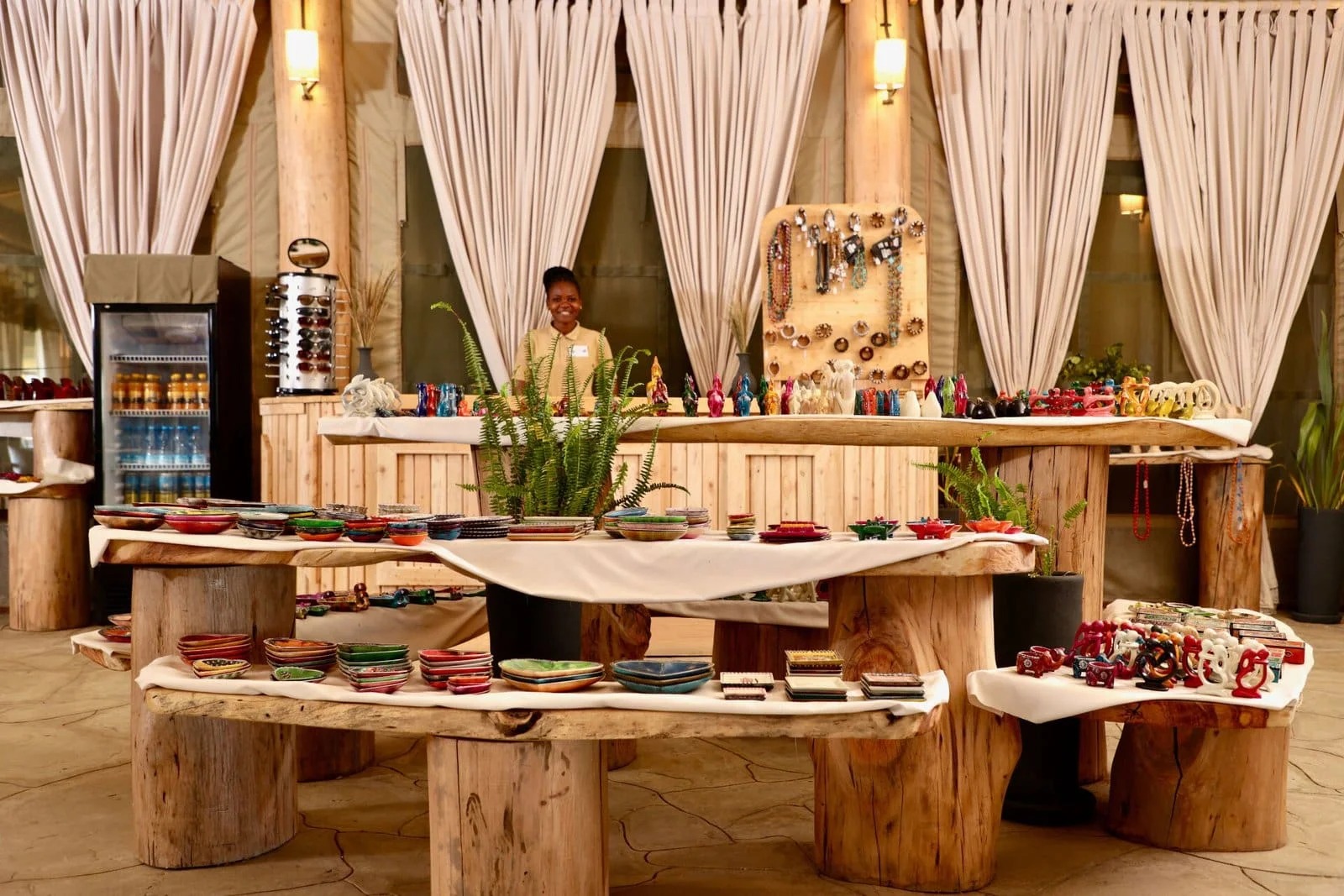
The tents are well appointed and genuinely spacious, the Morani Deluxe tier positioned to face an active waterhole where buffalo, elephant, and plains game drink throughout the day. A swimming pool, spa and massage parlour, restaurant, bar, gift shop, and 24-hour security round out a full-service camp that suits families, couples, wildlife enthusiasts, and conservation travellers in equal measure. The access road from Nanyuki crosses the equator line — a brief, memorable geography lesson before the camp’s gate — and the drive into Ol Pejeta each morning produces sightings that the camp’s position at the conservancy’s edge makes available within minutes of departure.
Opened June 2024. Seventy luxury tents beside Ol Pejeta Conservancy, with a waterhole-facing Morani tier, Mount Kenya views, spa, and pool. Big Five, black and white rhino, the Sweetwaters Chimpanzee Sanctuary, and Solio Game Reserve all accessible from a single base.
Adjacent to Ol Pejeta, whose tourism revenue funds anti-poaching, community programmes, and rhino protection. A portion of conservancy fees flows directly into these initiatives. Staff drawn from surrounding Laikipia communities; cultural visits connect guests to the Samburu and Turkana communities central to the conservancy model.
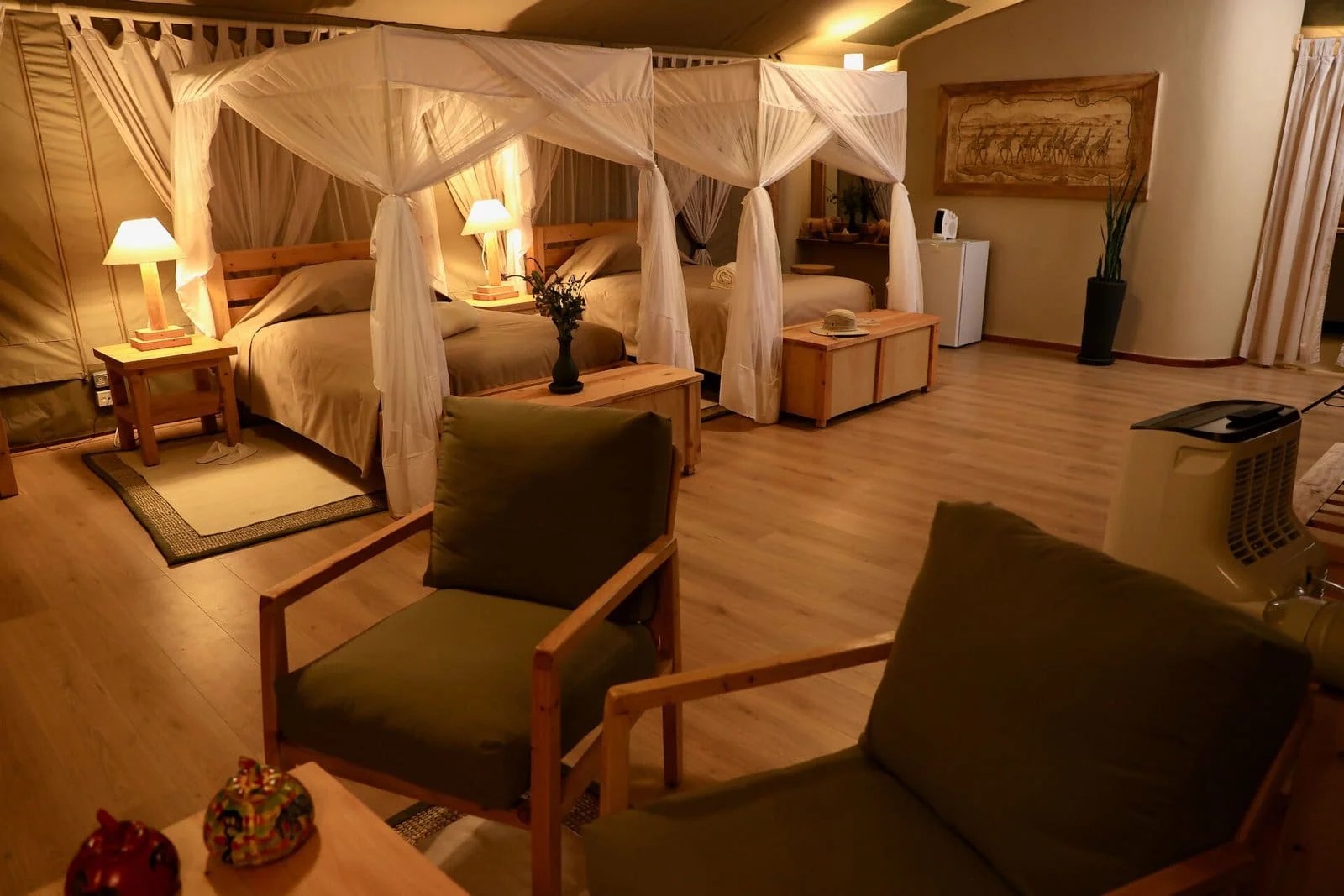
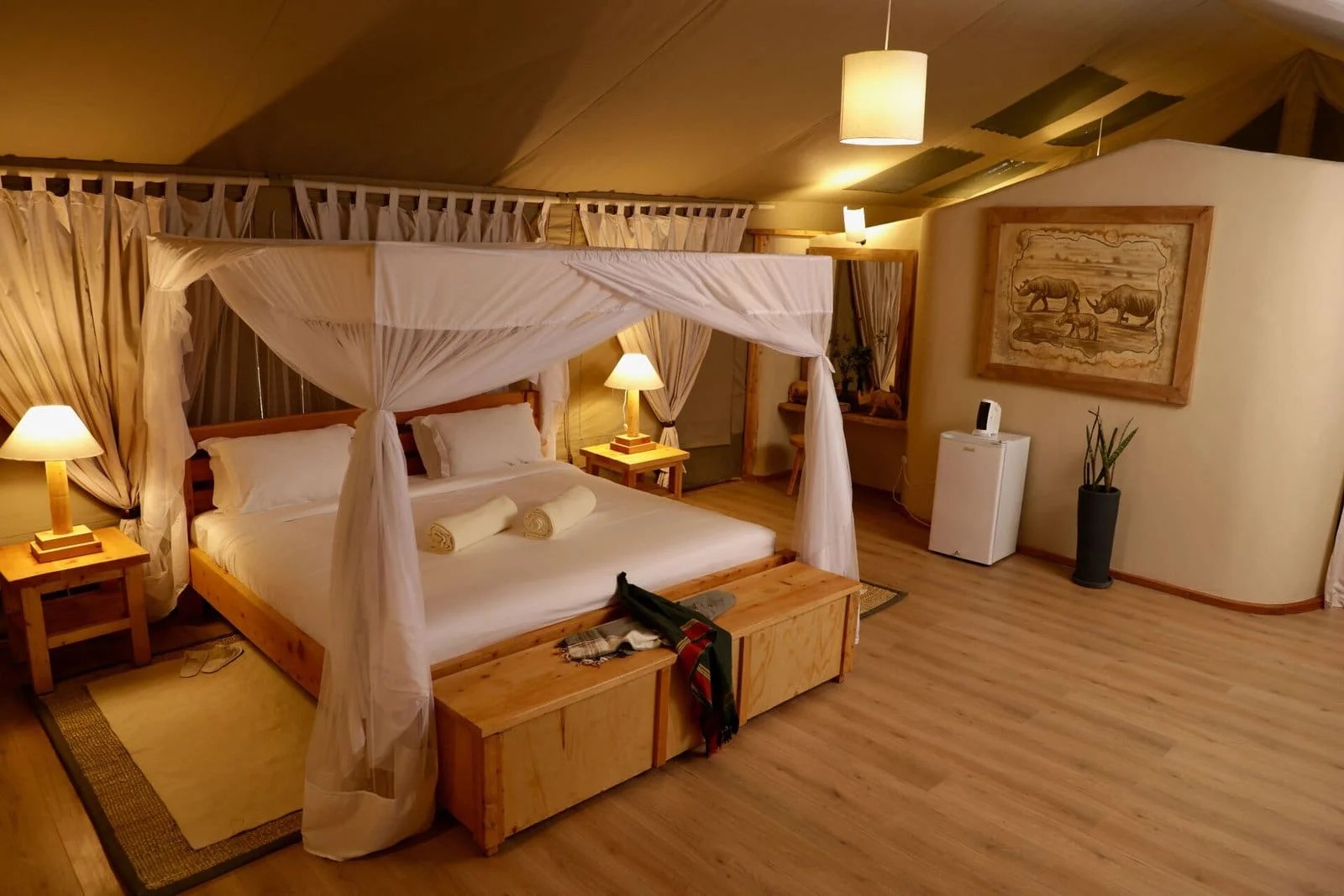
Maisha Sweetwaters Camp’s 70 self-contained tents are distributed across the camp grounds in four configurations, each furnished with custom-designed beds, en-suite bathrooms with hot and cold shower, mosquito netting, Wi-Fi, complimentary mineral water, and essential toiletries. The design vocabulary is consistent throughout: tropical wooden furniture, warm Laikipia tones, verandas and private sitting areas that open the tent to the surrounding landscape. The Morani Deluxe tier occupies the premium waterhole-facing position; Standard tents are arranged across the broader grounds with conservancy and mountain views; Family and Honeymoon configurations serve specific group profiles. All tents are connected to 24-hour power and maintained to the standards of a property opened in 2024.
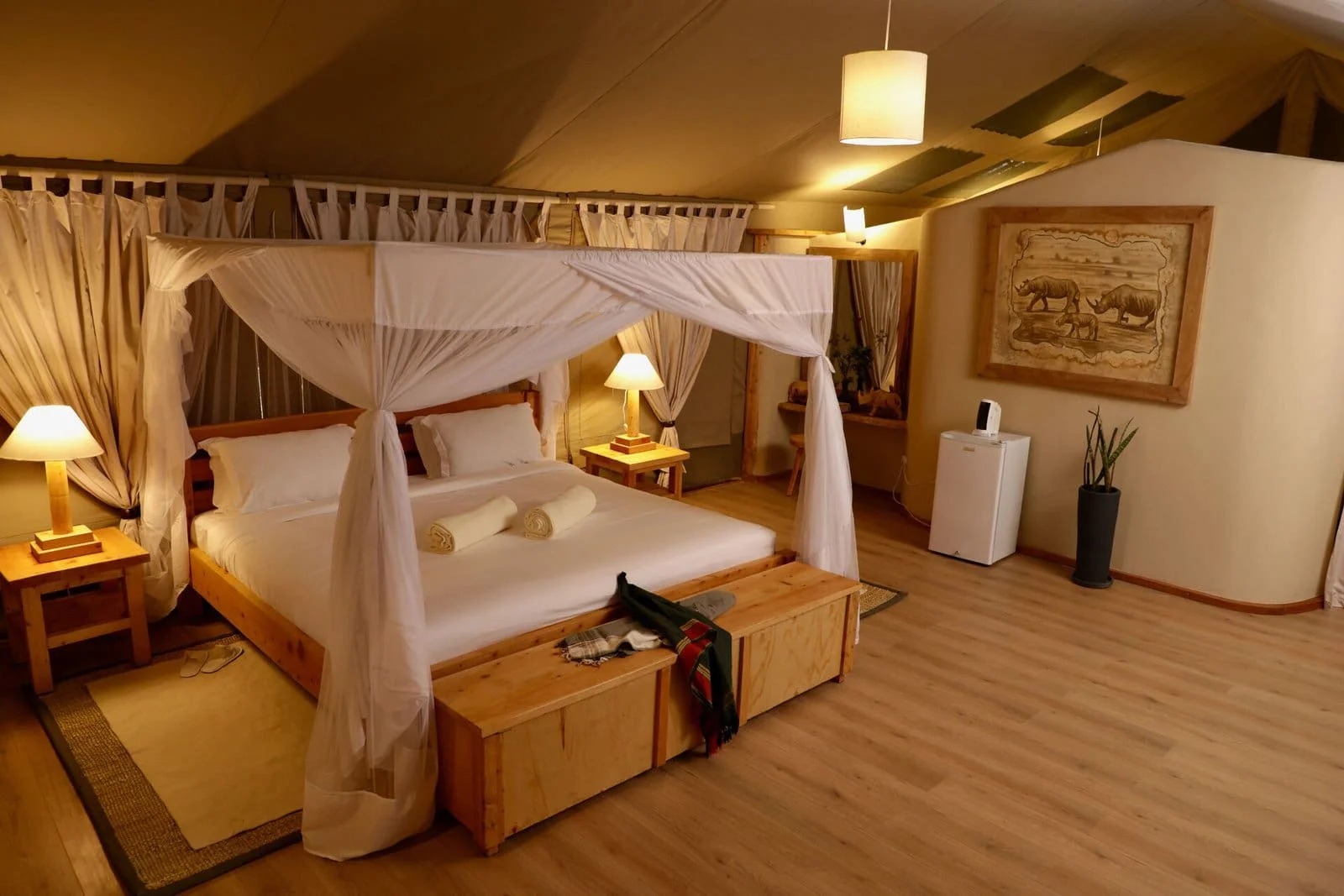
Queen or twin beds, en-suite shower, air conditioning, overhead fan, and mosquito net. Large balcony with sofa and chairs. Study table, dressing table, twin handwash basins, hair dryer, tea and coffee facilities, mini fridge on request, safe deposit box, water dispenser, ironing facilities, and intercom.
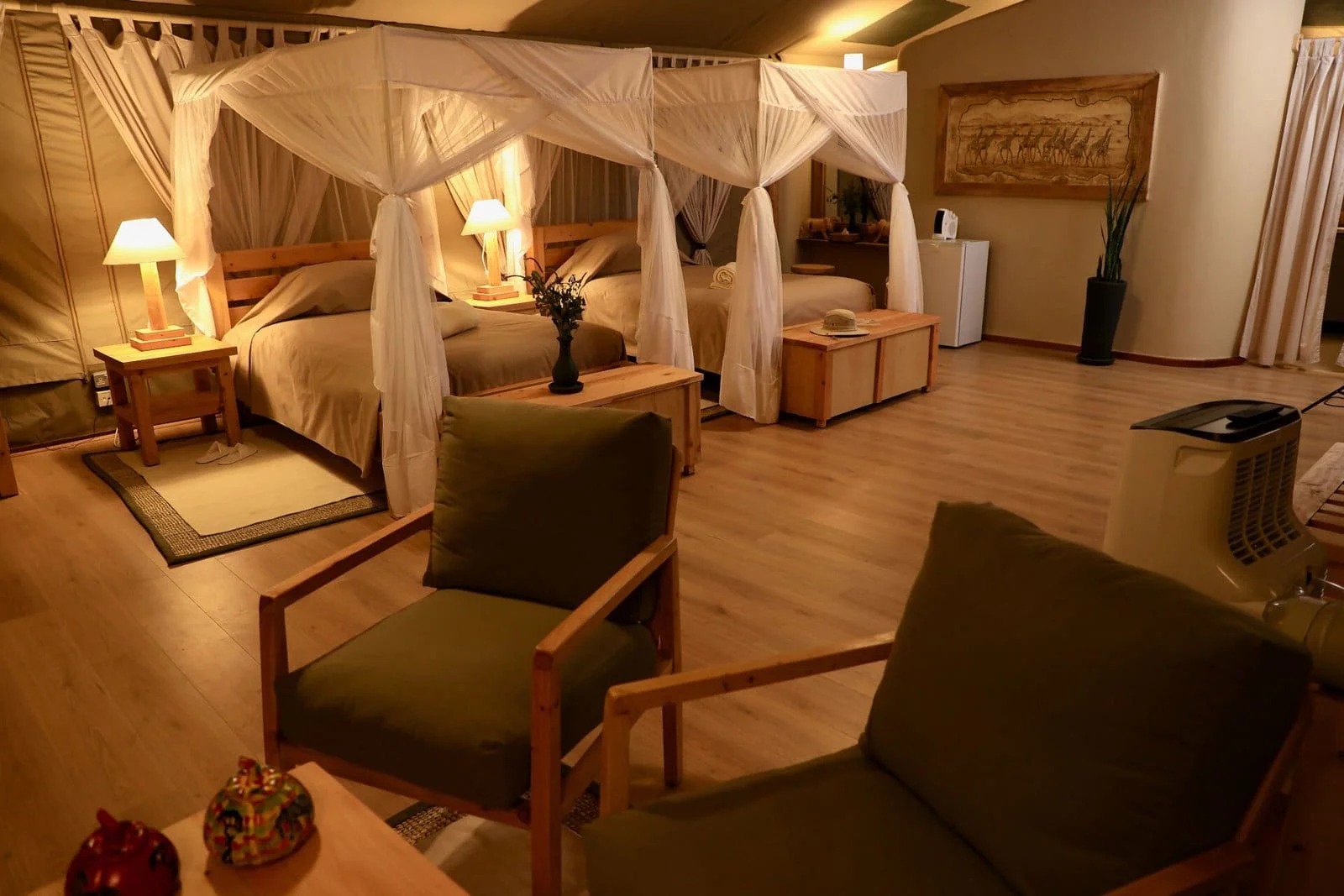
Queen or twin beds, en-suite shower, mosquito net, overhead fan, balcony with sofa and chairs, study table, dressing table, water dispenser, and safe deposit box
Every moment at Maisha Sweetwaters Camp is crafted to immerse you deeper in the wild.
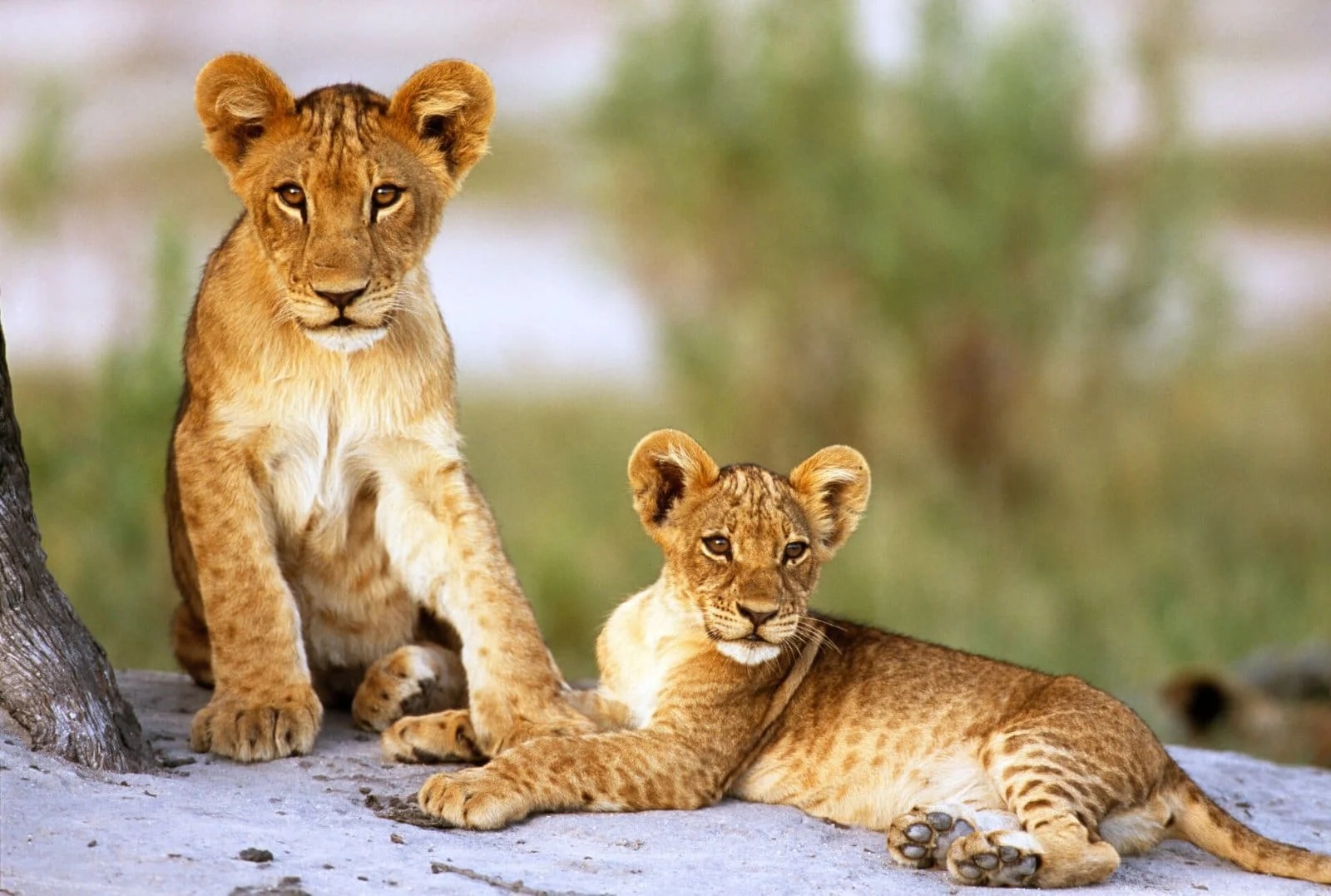
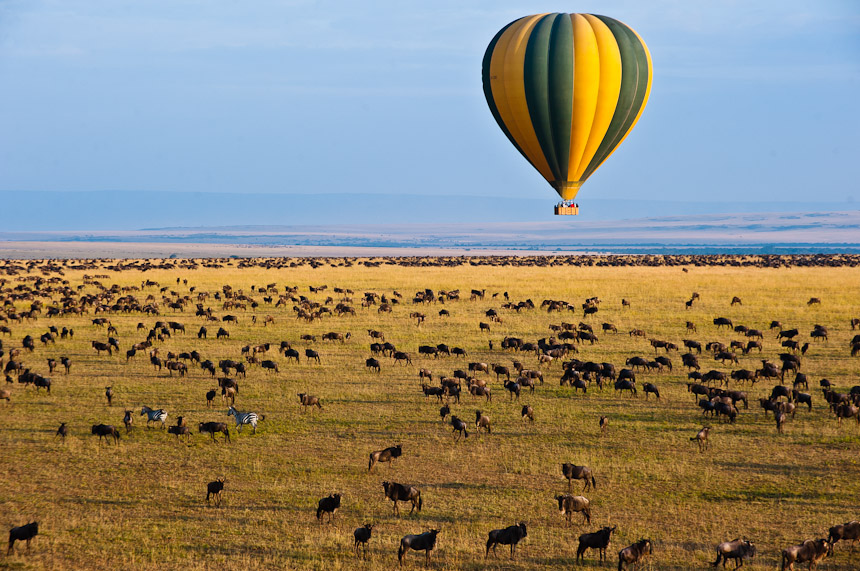
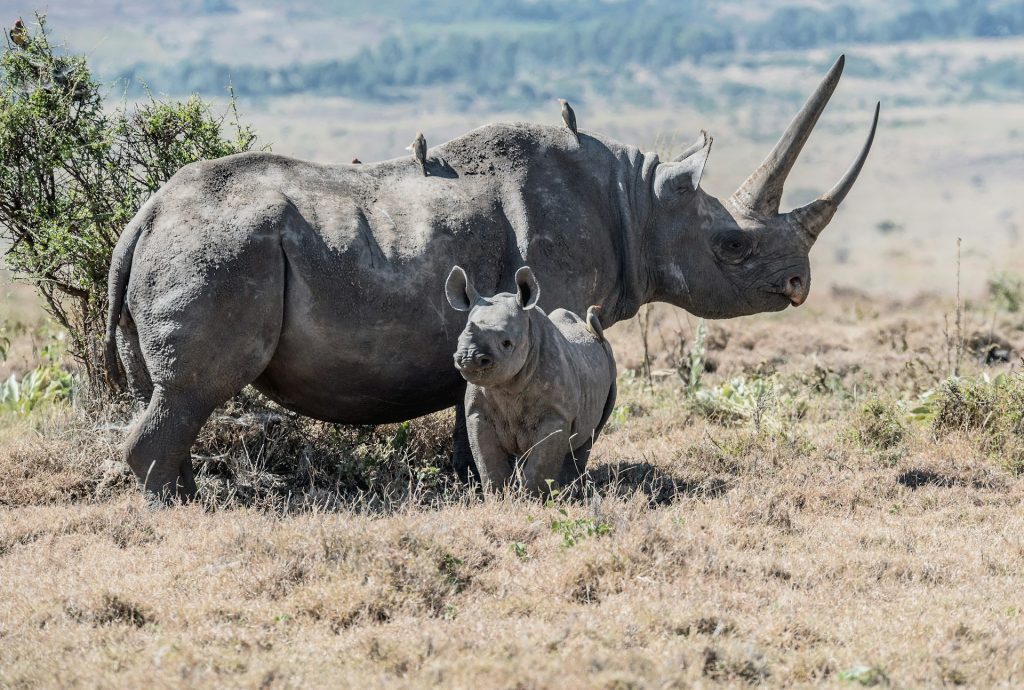
Morning and afternoon drives into Ol Pejeta's 110,000 acres. Lion, leopard, and cheetah sightings among the most reliable in Kenya. The largest black rhino population in East Africa. Dedicated rhino tracking drives available. Over 300 bird species.
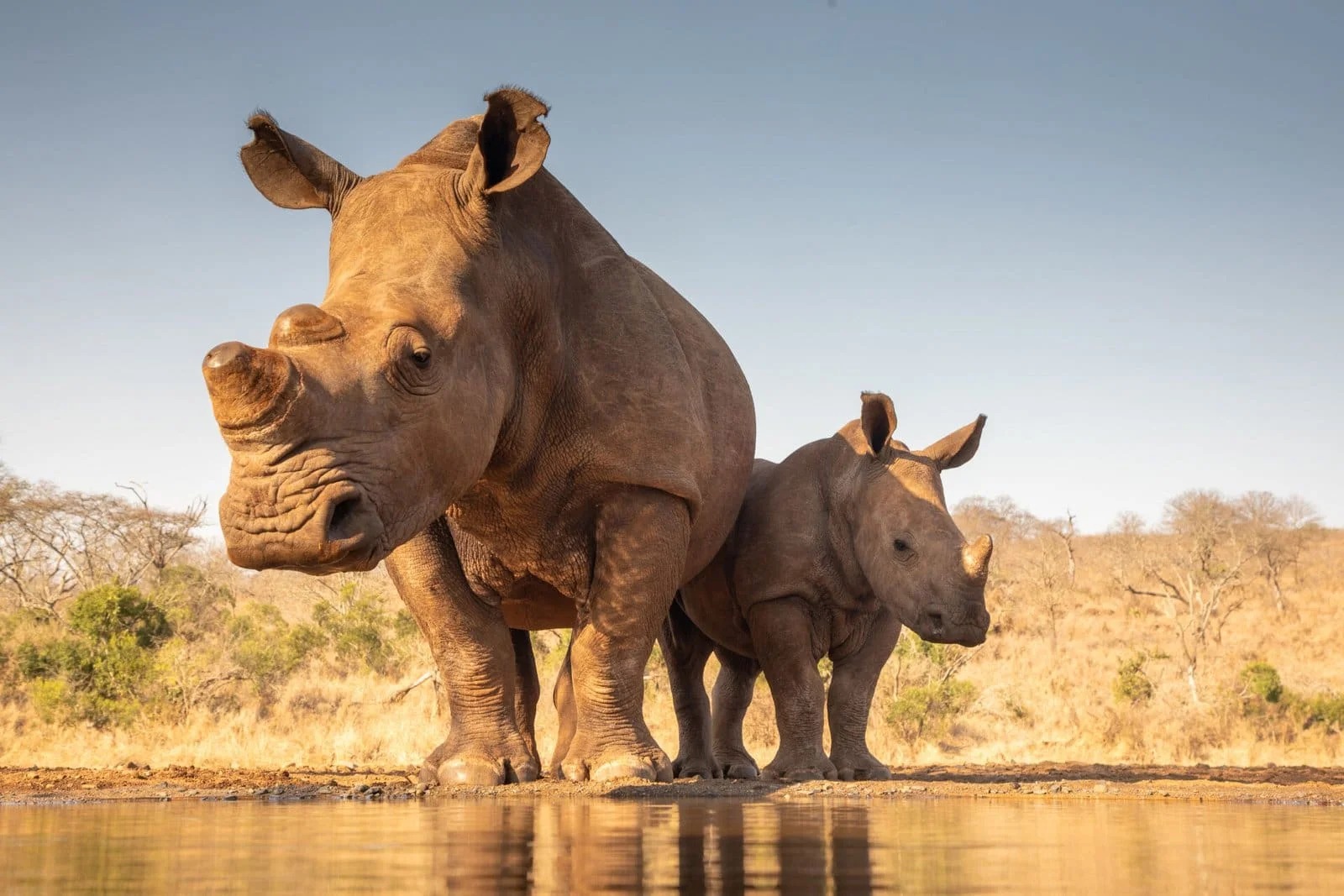
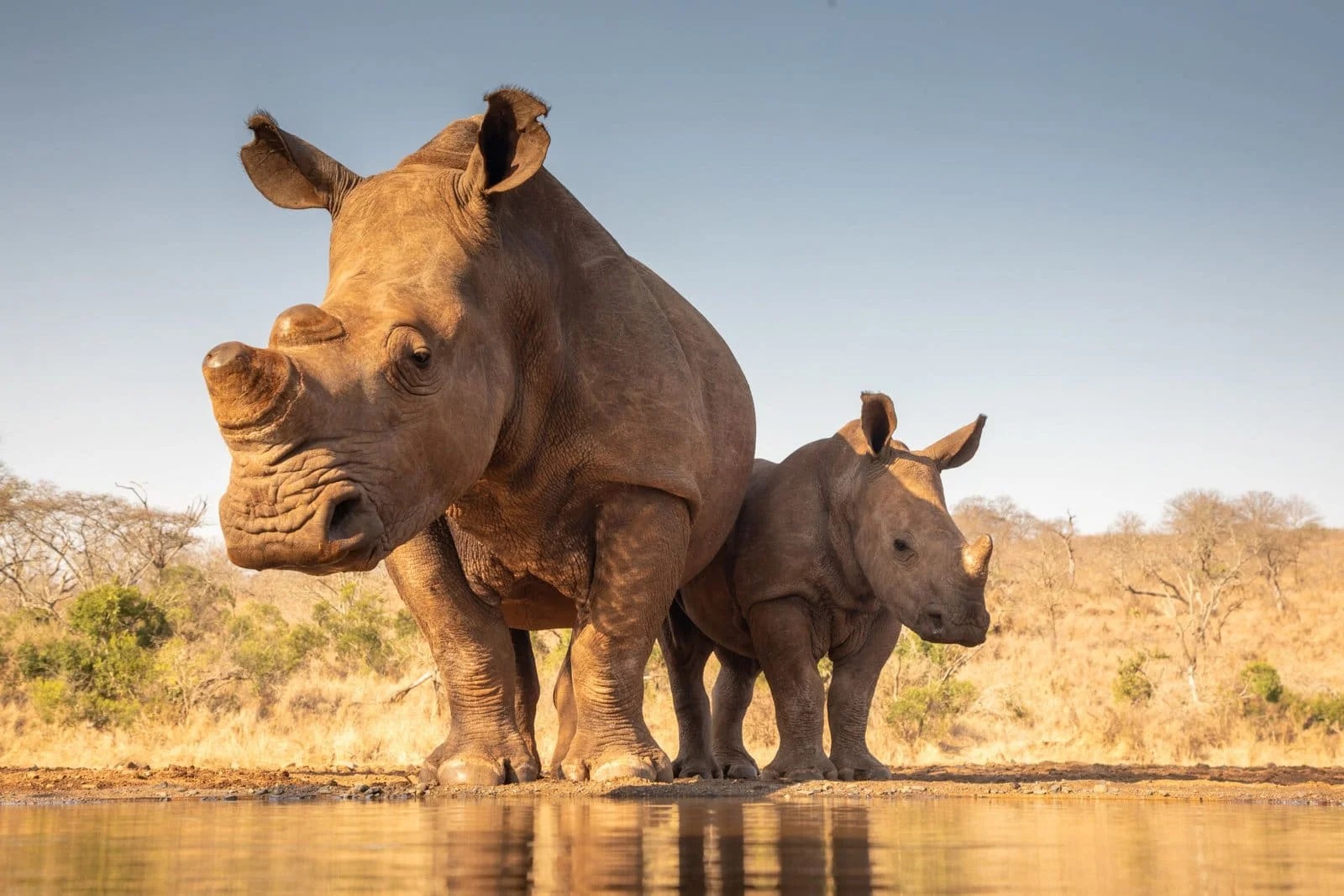
Najin and Fatu, the last two northern white rhinos on earth, live at Ol Pejeta under armed guard. A guided visit to the Endangered Species Enclosure offers a structured encounter with the animals and the scientists working to secure the subspecies' future. Unique to Ol Pejeta and unlike anything els
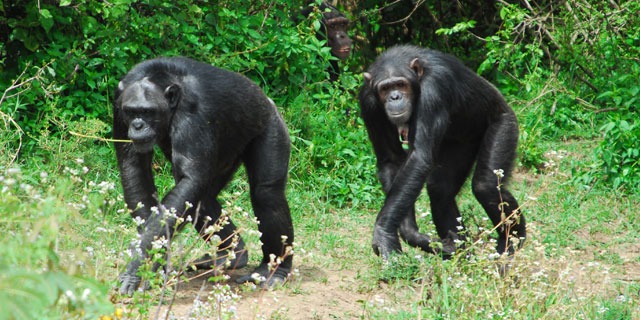
East Africa's only chimpanzee refuge, with around 40 rescued animals in a semi-wild setting. Educational guided tours cover individual histories, the rescue programme, and conservation significance. Consistently among the experiences guests describe most vividly long after their safari.
Ready to plan your stay?
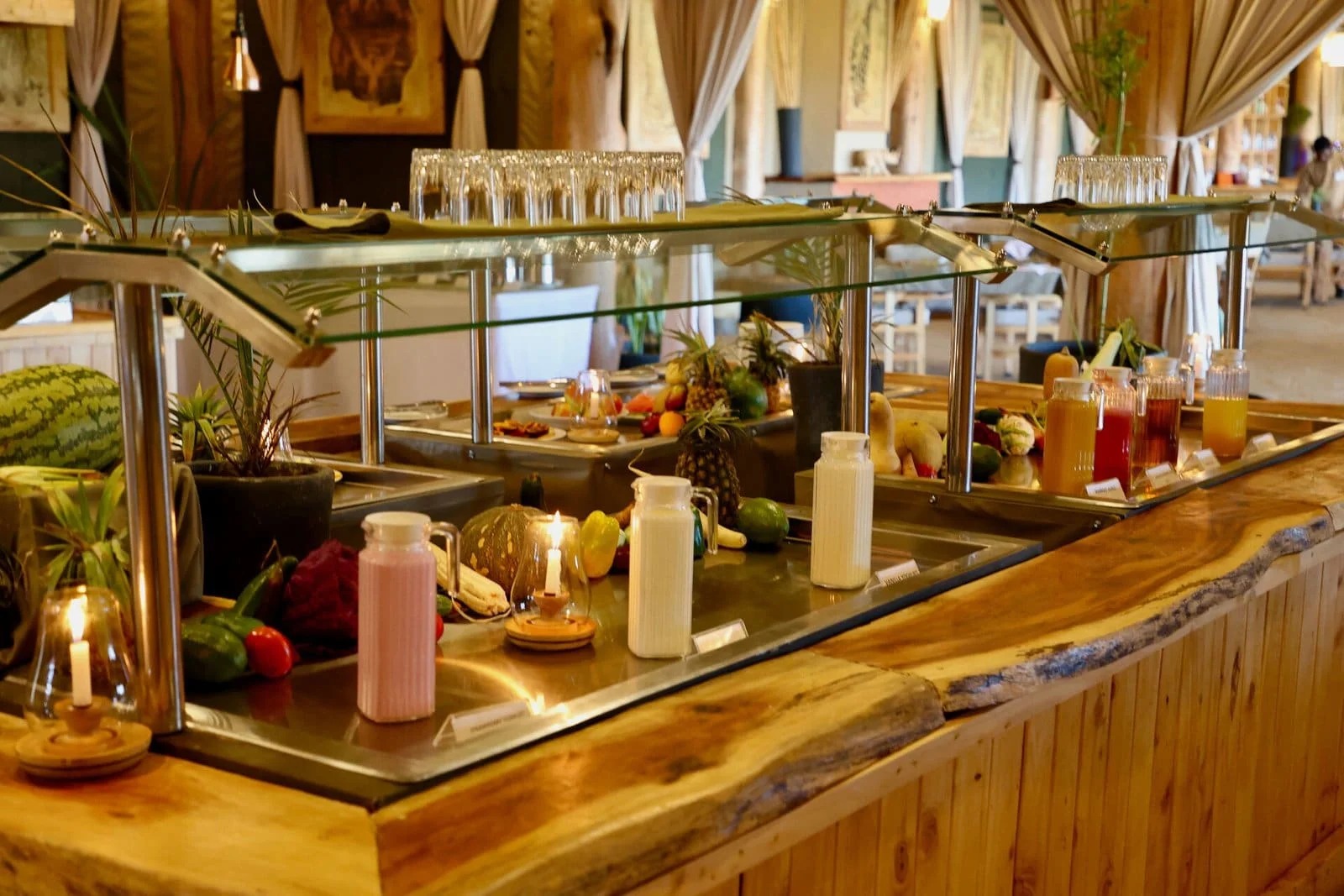
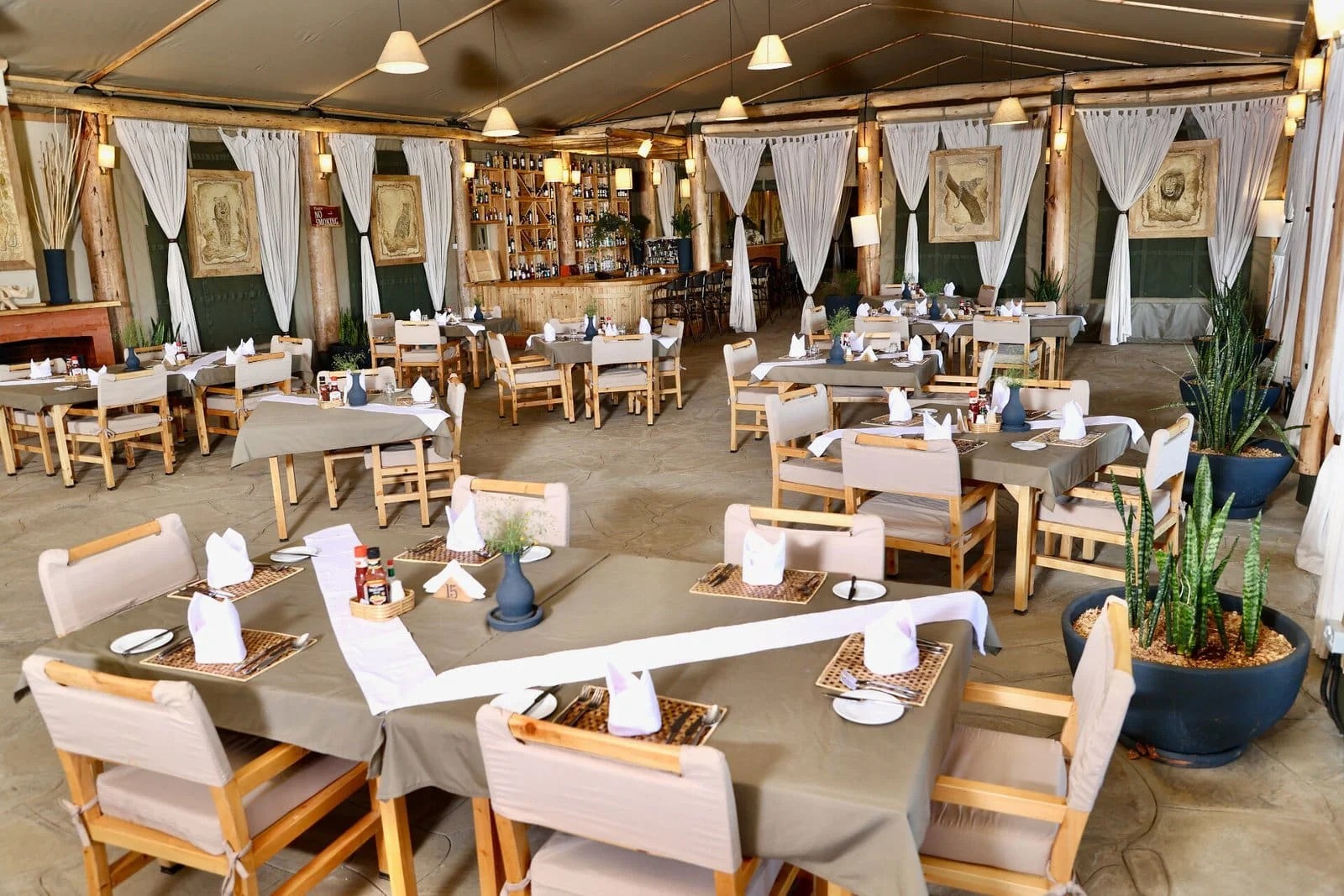
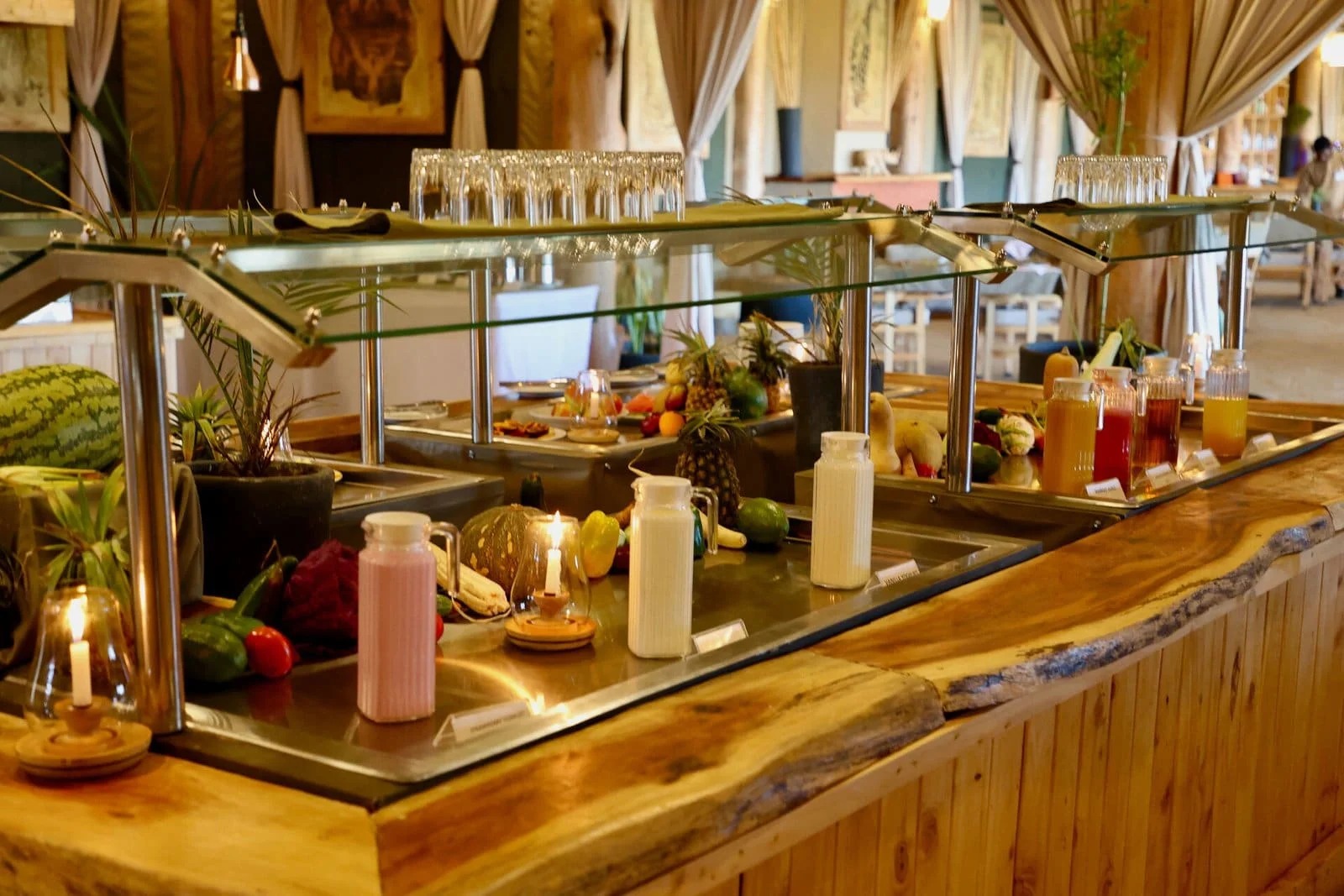
The restaurant at Maisha Sweetwaters Camp serves a full menu of local and international cuisine from fresh, largely organic ingredients, producing three meals a day alongside a bar that stocks cocktails, wines, spirits, and soft drinks. The kitchen operates with an attentiveness to dietary requirements — vegetarian, vegan, and child-friendly options are available on request — and guest reviews consistently highlight the food quality as a genuine strength of the camp rather than a functional afterthought. The pizzas, specifically, draw repeated mention from families as a wildly disproportionate highlight for younger guests in the context of a Big Five safari.
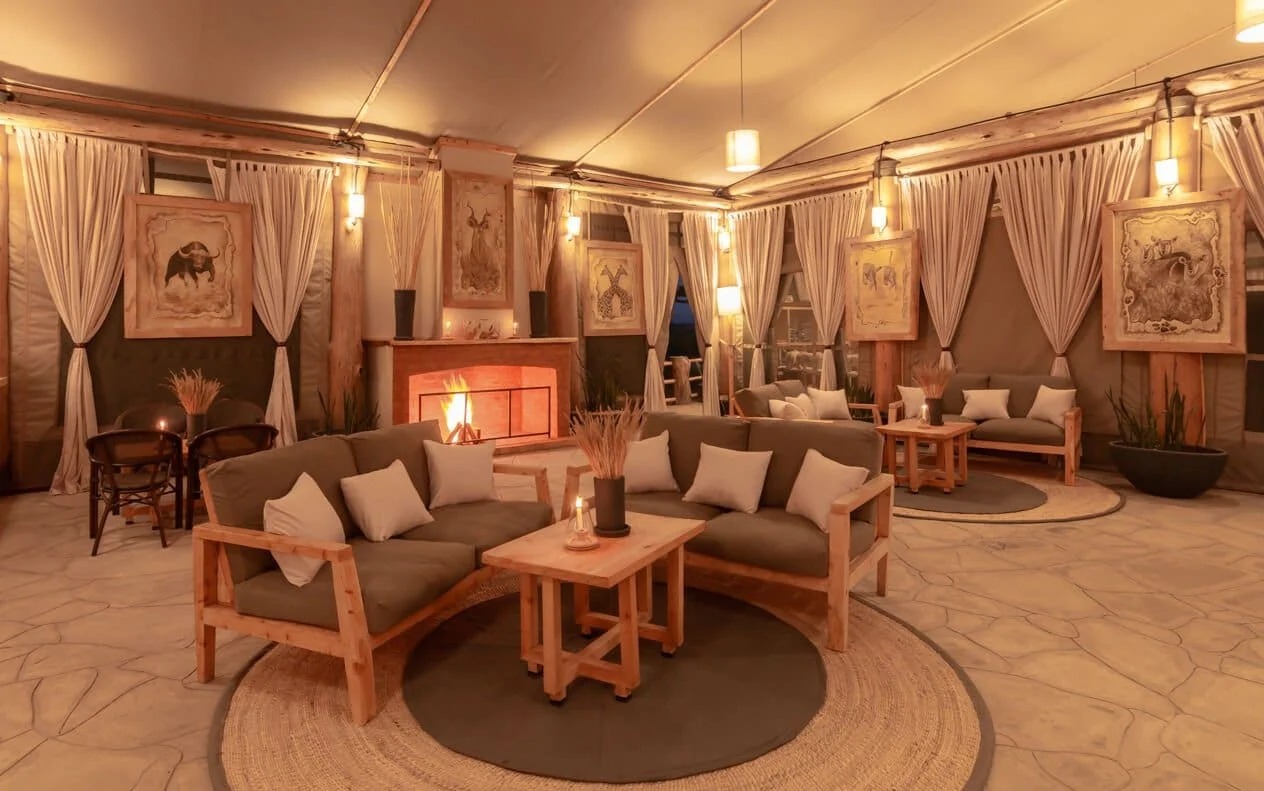
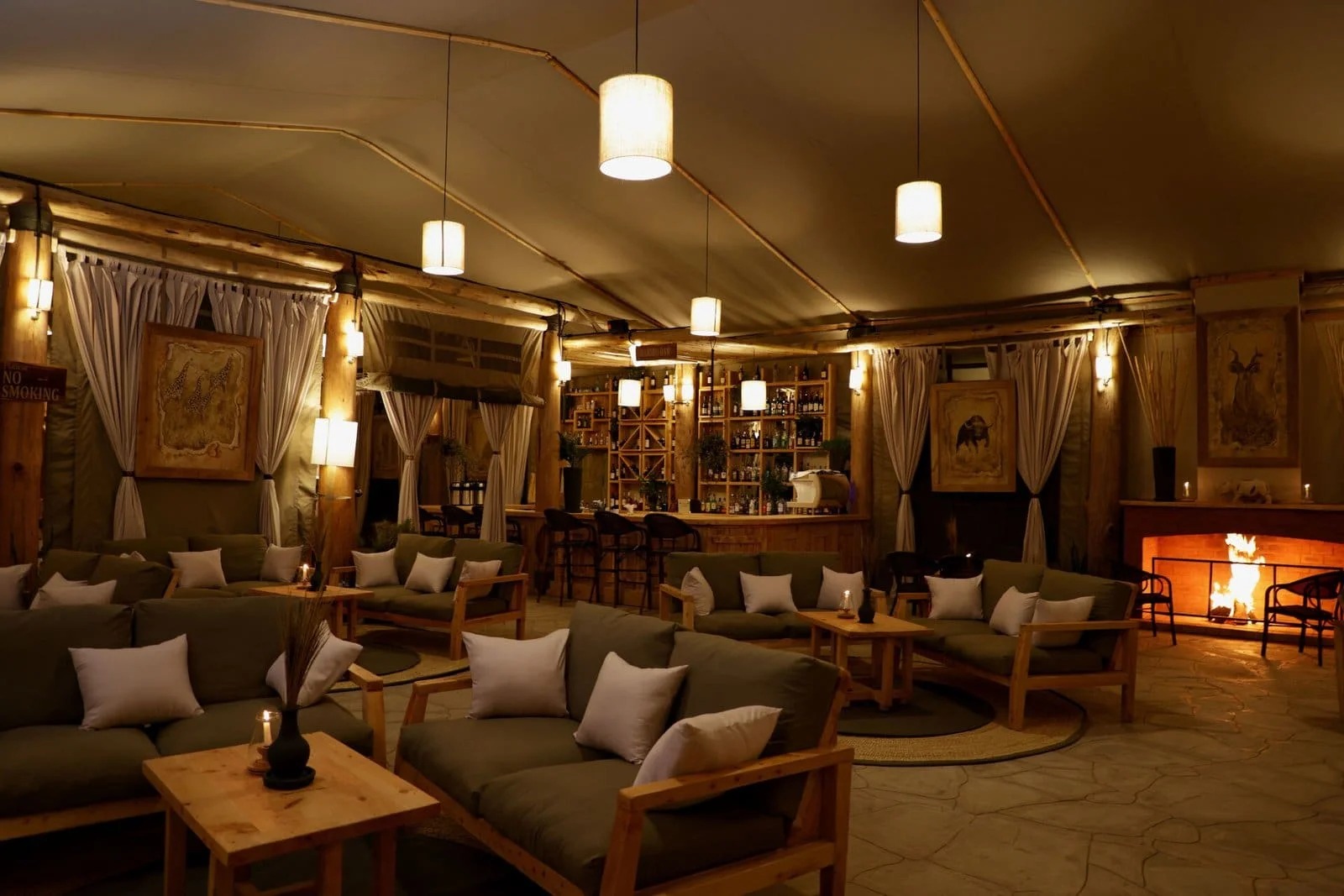
Breakfasts are substantial and served as the morning game drives return; lunches are taken at the restaurant or, for guests extending their drives, as a packed hamper in the field at an additional cost. Dinners in the main restaurant face the camp’s grounds, with fireplace seating available for the cool Laikipia evenings that the altitude reliably produces. Private bush dinners under the open sky — arranged with advance notice through the camp concierge — are the evening’s most memorable dining option, particularly in the moonlit dry season months. A bar overlooking the waterhole area provides the sundowner position before dinner. Drinks are charged separately across all board plans; conservancy fees are an additional per-person daily cost.
Ol Pejeta and Maisha Sweetwaters Camp are open and productive year-round. The conservancy’s managed game density and reliable water infrastructure mean that wildlife viewing is consistently excellent regardless of season — unlike drier, more rainfall-dependent safari destinations where the dry season is essential for good sightings.
The dry seasons — January to March and June to October — deliver the clearest Mount Kenya views, the most concentrated game around the conservancy’s water sources, and the best conditions for rhino tracking and predator sightings in the short dry grass. July through October aligns the Laikipia circuit with Kenya’s broader peak safari season; the camp is particularly well-suited as an opening leg before the Maasai Mara, or as a standalone destination for guests whose primary interest is rhino and chimpanzee conservation rather than the wildebeest migration.
December to March is noted specifically for its pleasant weather and exceptional birdwatching — the dry conditions produce clear skies, cool mornings, and the migratory species that arrive at the Laikipia plain from November onwards. The northern white rhino visit and chimpanzee sanctuary tours operate year-round and are not seasonal.
The long rains from April to May bring lush green landscapes, dramatically reduced visitor numbers, and the most accessible rates of the year. The conservancy remains open; game drives remain productive; and the camp’s smaller occupancy during this period produces a more intimate experience than the high season allows.
Explore handcrafted itineraries where Maisha Sweetwaters Camp forms part of the journey.
Please share your name and email so we can follow up with you.