From
$2,424

Start Planning Your Tailor-Made Journey
🔒 Your details are kept private and never shared with third parties.
Inside Africa's most significant rhino conservancy. Lion tracking, horse riding beside black rhino, and the last two northern white rhinos on earth.
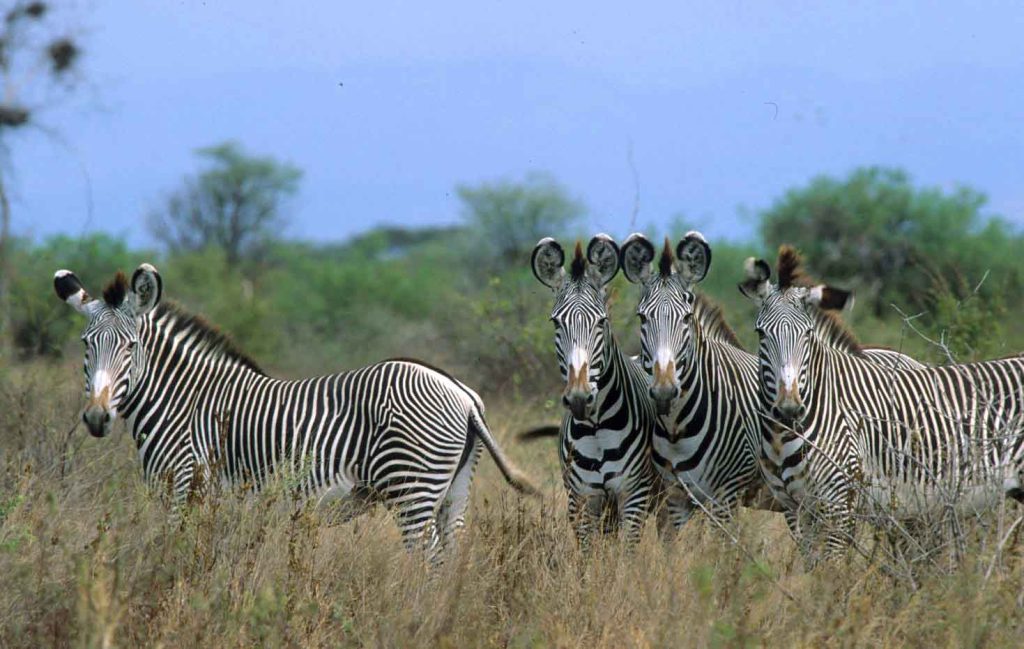
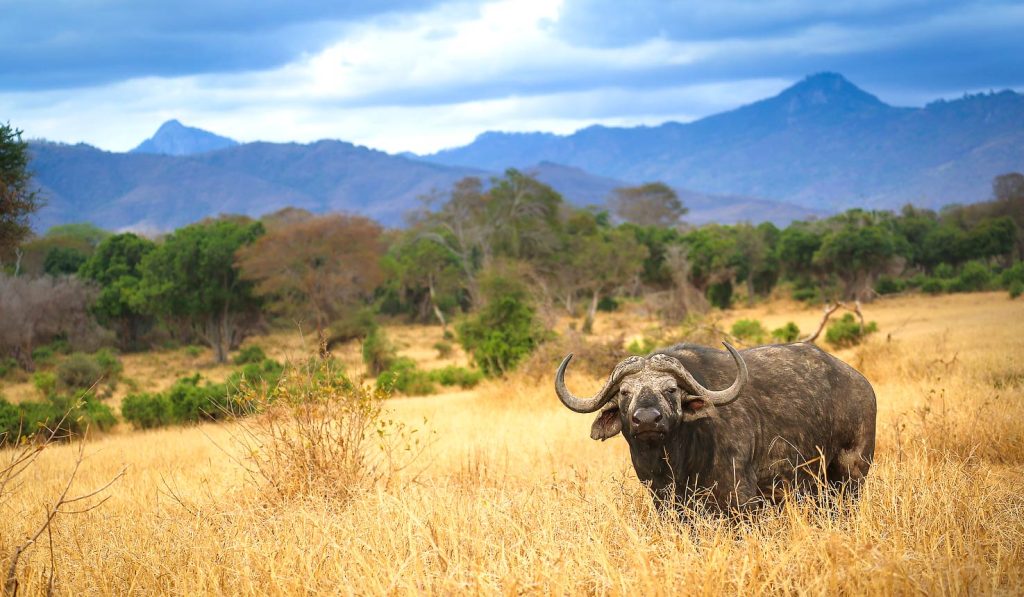
Ol Pejeta Conservancy began as a cattle ranch. The transition from livestock operation to Africa’s most significant black rhino sanctuary — carried out over three decades of sustained conservation investment — is one of the most documented land-use transformations on the continent, and it gives a stay at Ol Pejeta a context that no other conservancy in Kenya quite matches. The 90,000-acre property holds over 100 critically endangered black rhino, 26 southern white rhino, and Najin and Fatu: the last two northern white rhinos alive on earth, each under 24-hour armed guard while the conservancy pursues assisted reproduction technology as the only remaining path to the species’ survival. Big Five, Grevy’s zebra, Beisa oryx, Jackson’s hartebeest, cheetah, and wild dog complete a wildlife inventory that most Kenya safari itineraries spend two weeks trying to accumulate.
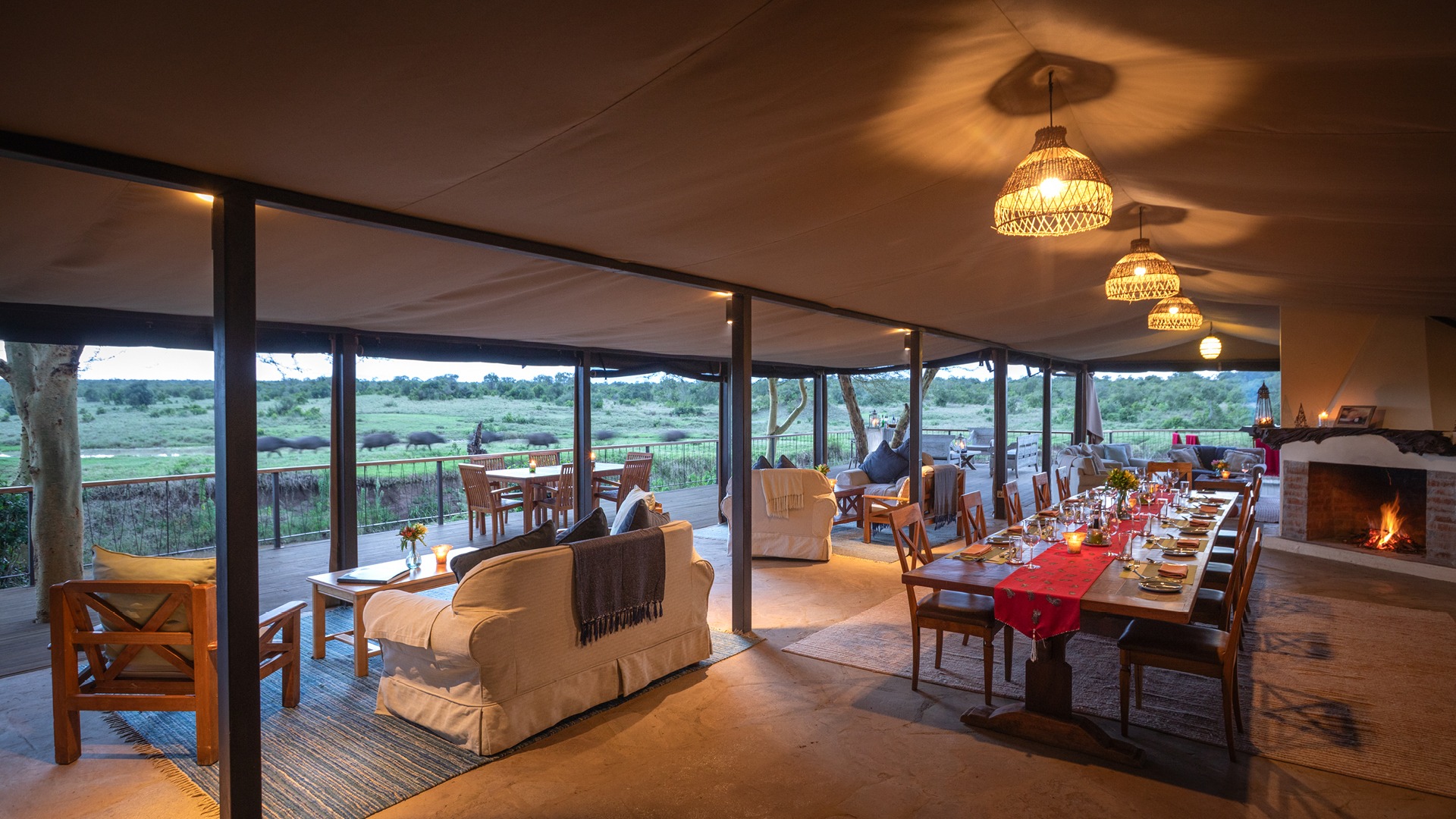
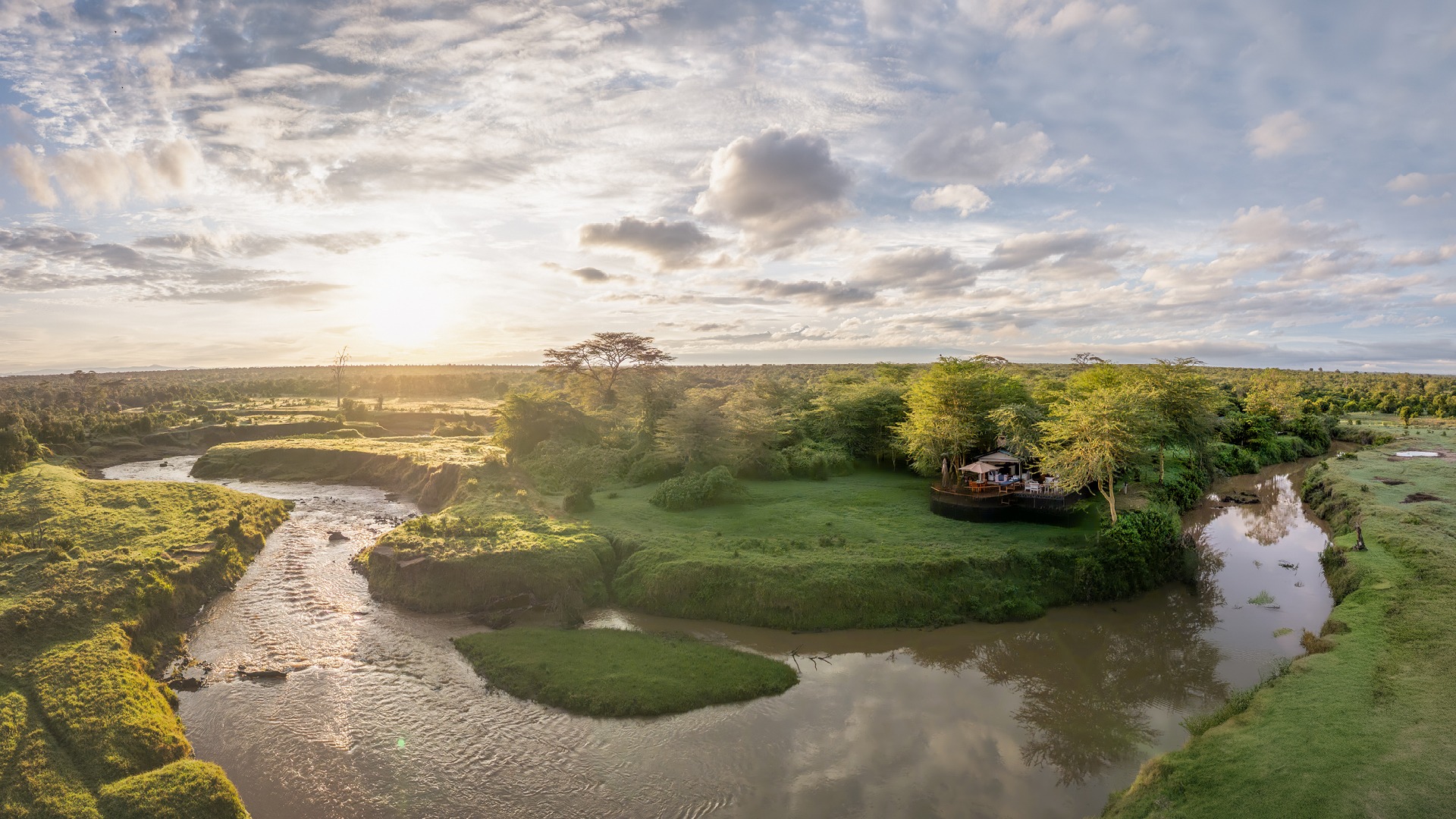
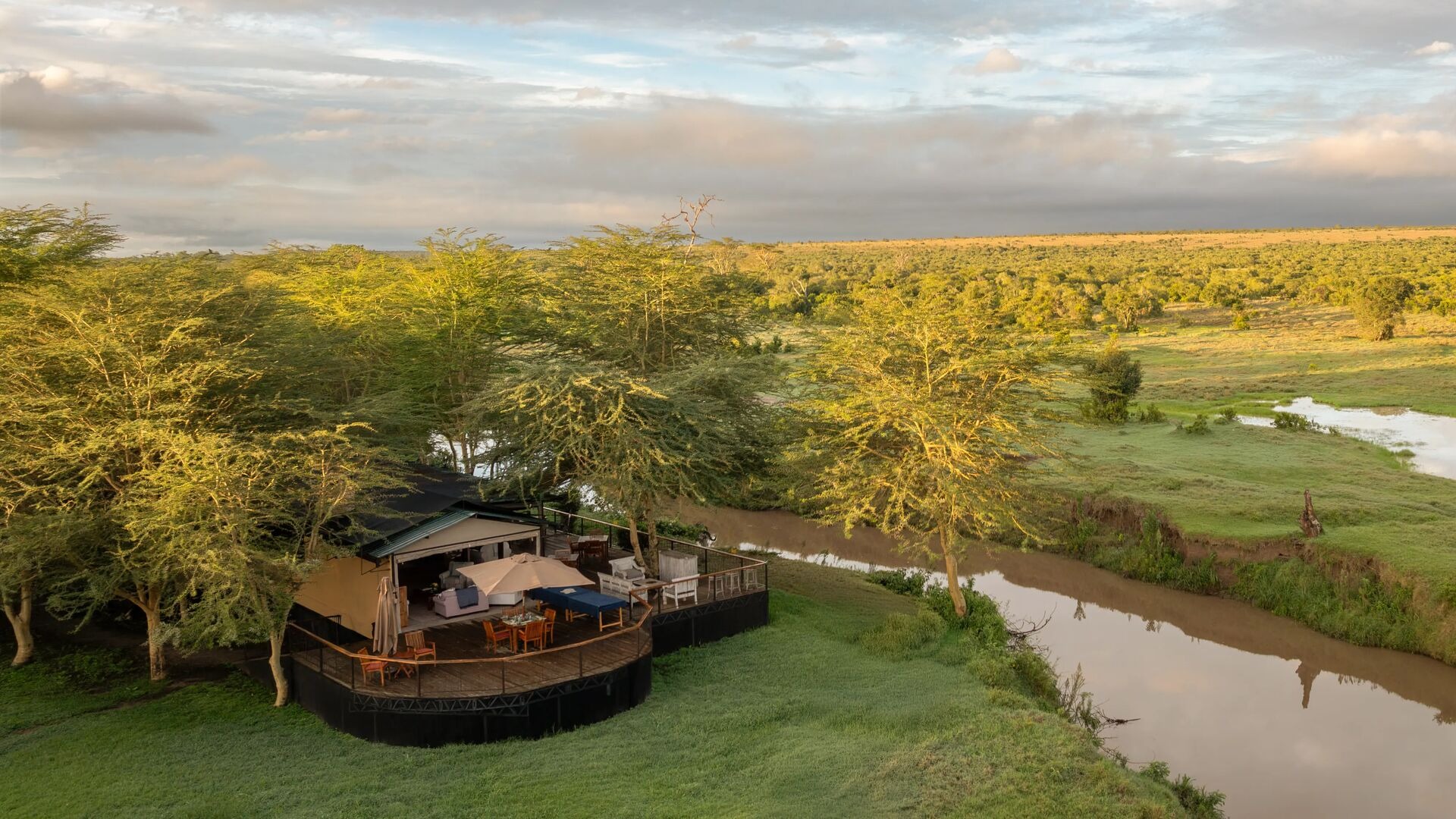
Ol Pejeta Bush Camp is Asilia Africa’s home on the conservancy — eight tented suites positioned on the south bank of the Ewaso Nyiro River, where elephants cross in the afternoon and hippos sleep audible from the mess tent through the night. The camp runs entirely on solar power, holds Asilia’s Gold Eco-Rating, and operates as part of a certified B Corp operator whose conservation charge per guest funds anti-poaching operations, wildlife research, and community development programmes in the villages surrounding the conservancy. The accommodation is deliberate in what it provides and honest about what it does not: no swimming pool, no spa, bucket showers, and a communal dining setup at the fire pit that produces the kind of shared conversation between guests and guides that more formal dining arrangements systematically prevent.
What the camp provides instead is the most active conservation programme of any tented property in Laikipia. The activity list at Ol Pejeta Bush Camp is not a menu of experiences assembled to fill a brochure. It is a set of programmes that the conservancy’s operations team runs for genuine conservation purposes and that guests are invited to join: lion collar monitoring with the research team, anti-poaching canine unit training sessions, running alongside the conservancy’s ranger patrol, and horse riding across terrain where black rhino move freely and close contact is a regular outcome. No other tented camp in Kenya offers this specific combination, because no other tented camp is embedded in a conservancy managing this volume and variety of active conservation work.
Eight tented suites inside Ol Pejeta Conservancy. Africa's largest black rhino sanctuary, the last two northern white rhinos, horse riding beside black rhino, lion tracking with the research team. Carbon neutral, B Corp certified.
Solar powered, carbon neutral, and operated by Asilia Africa, a certified B Corp. A conservation charge on every stay funds anti-poaching, northern white rhino protection, lion research, and community development in six bordering villages. Kitchen produce sourced from a local women's cooperative and nearby farms.
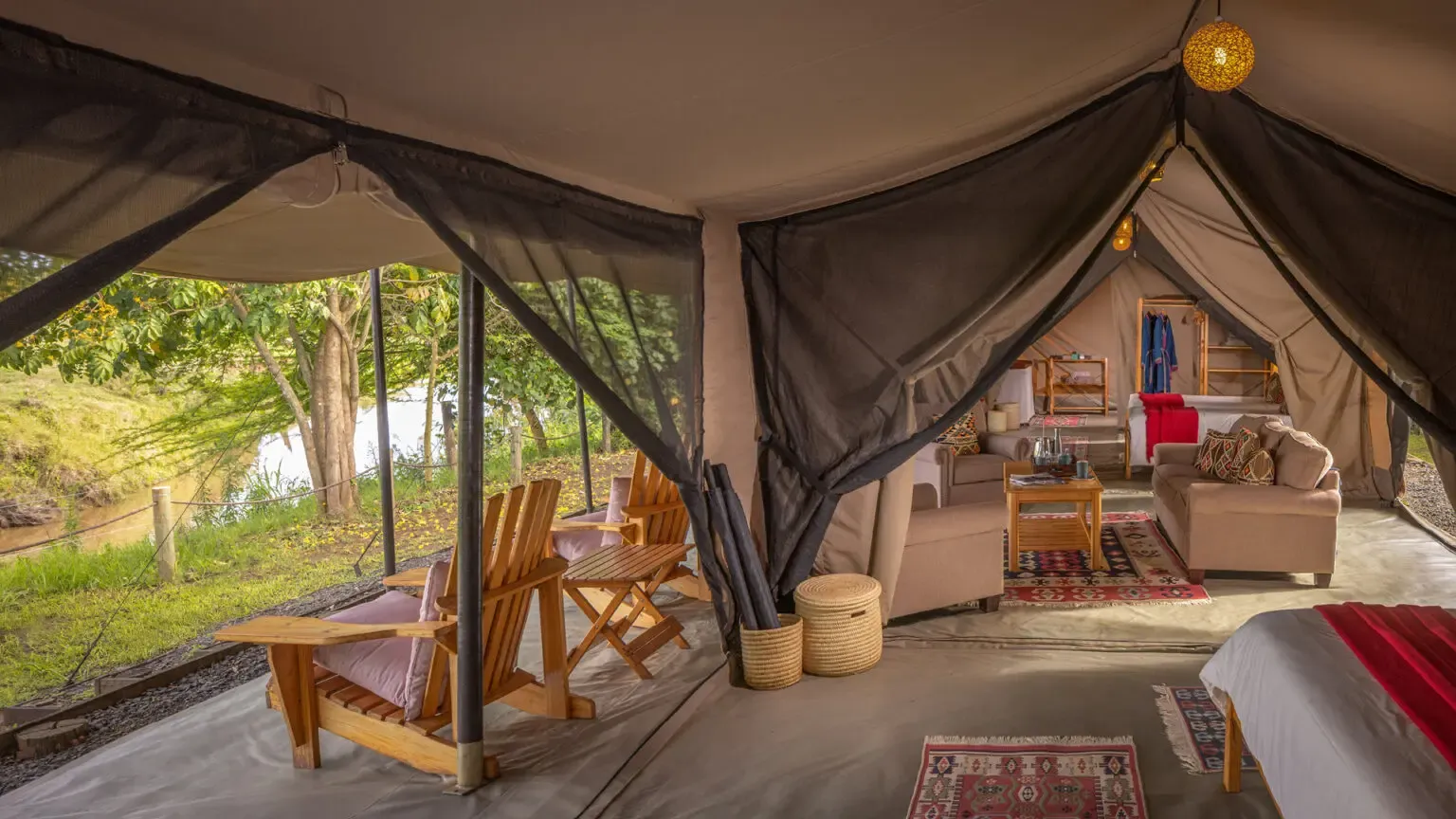
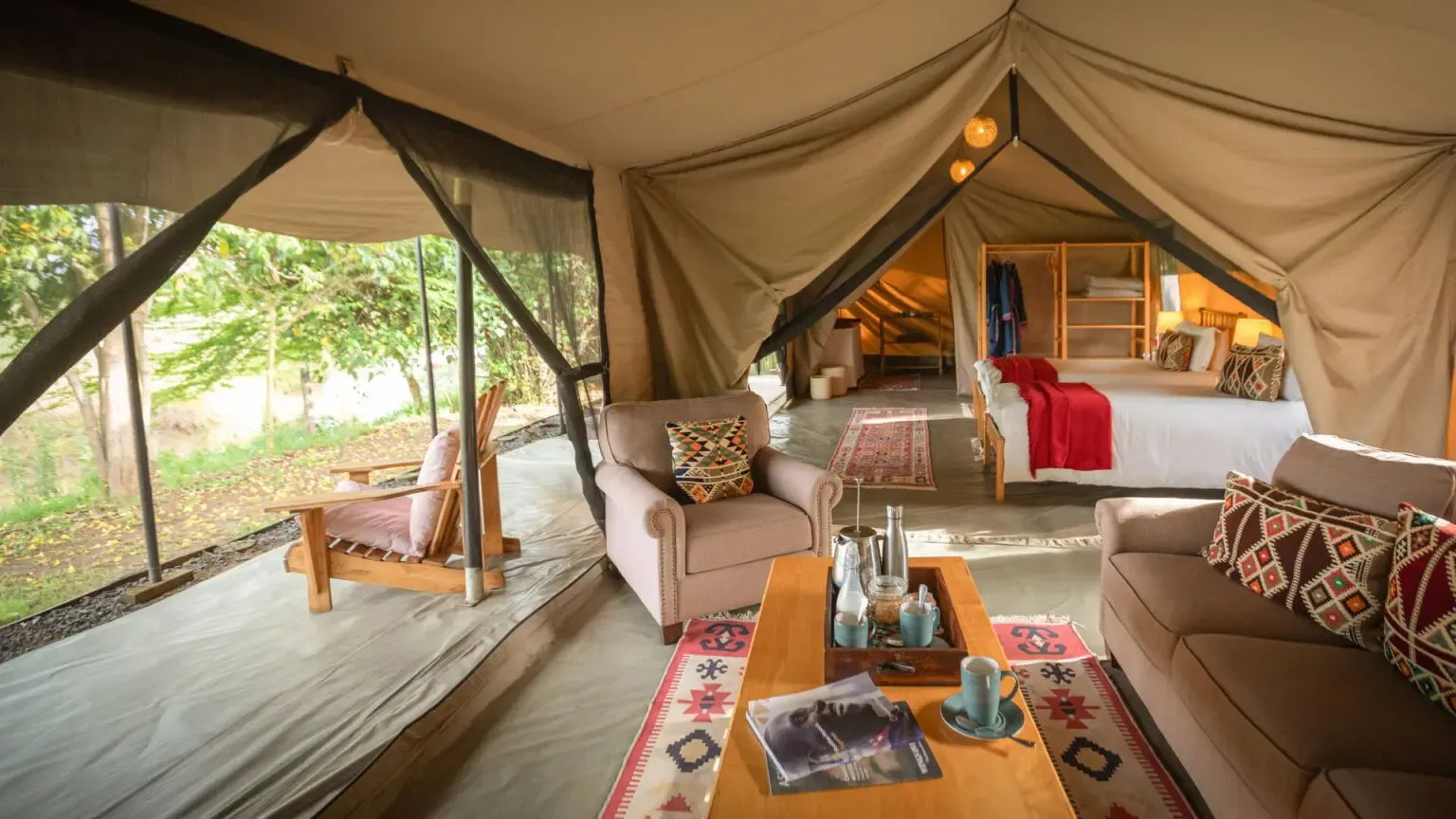
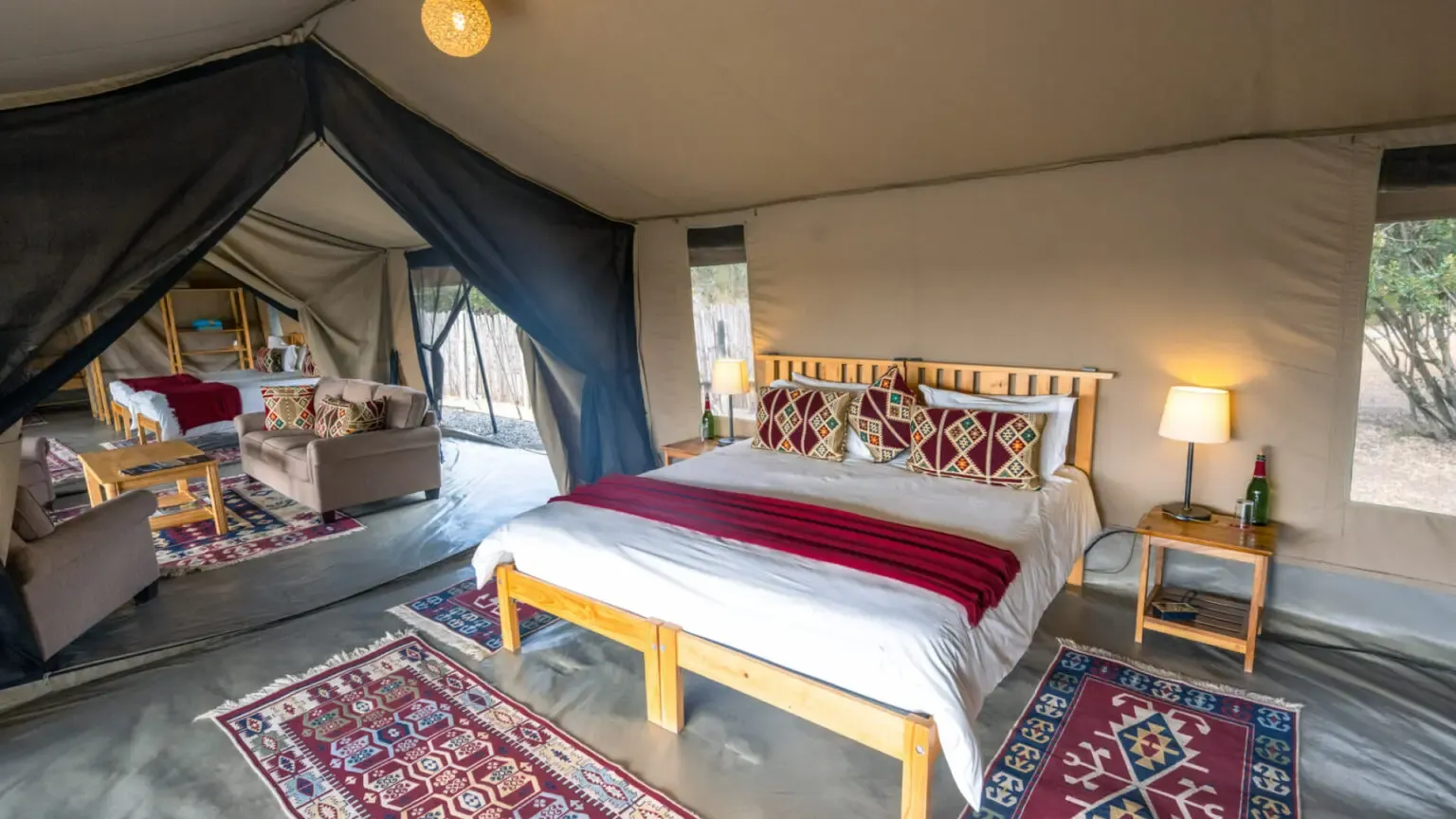
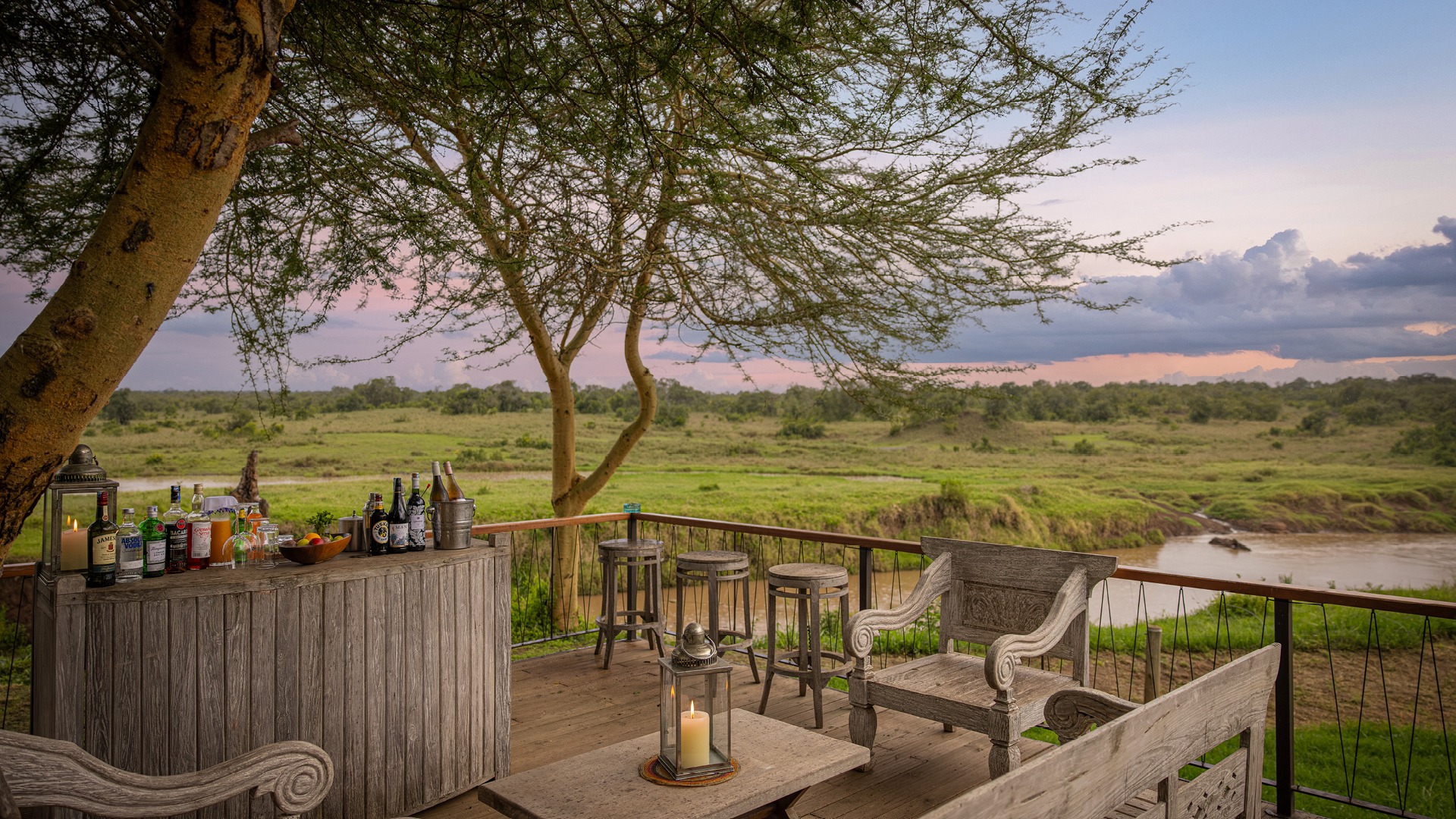
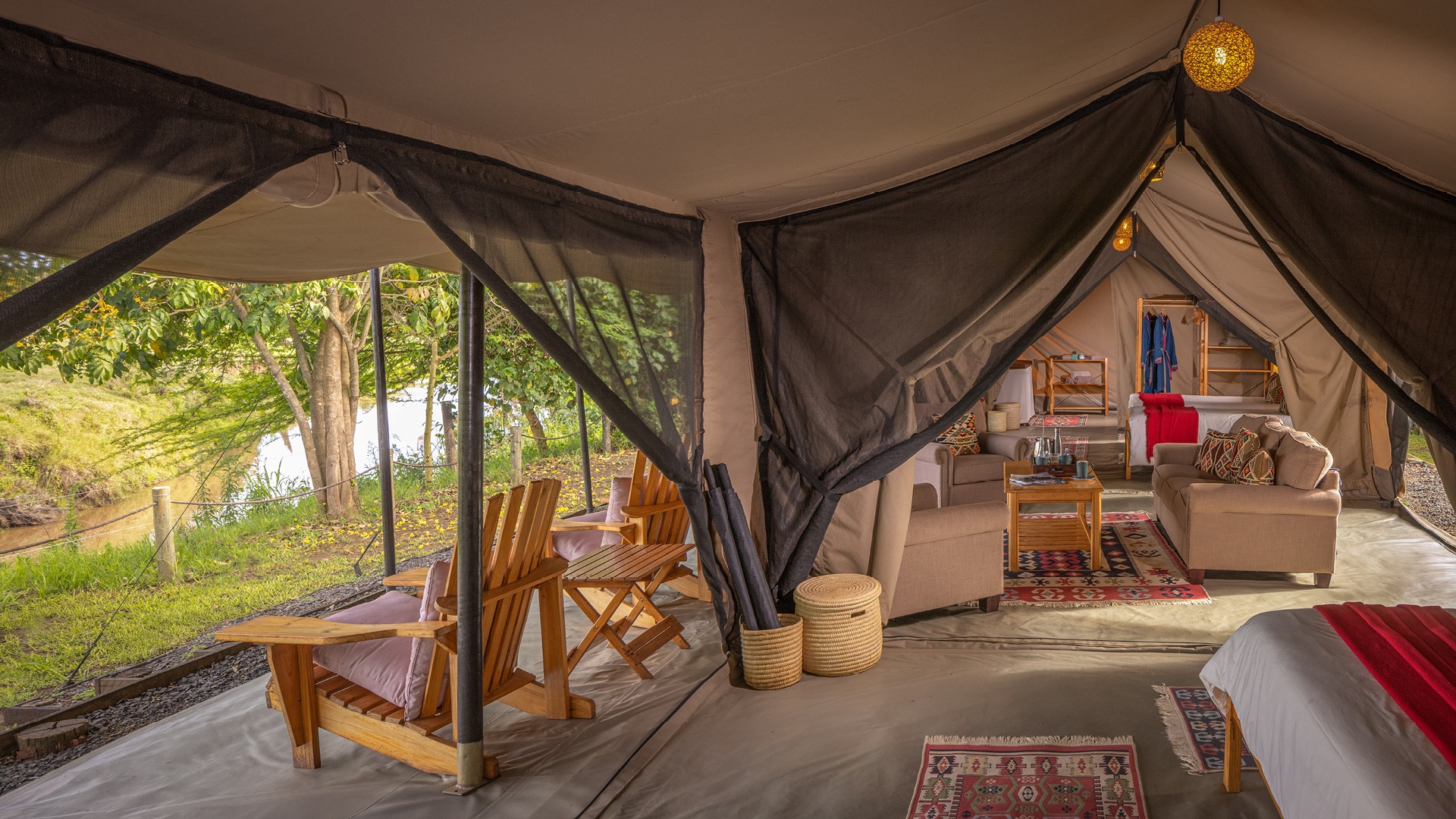
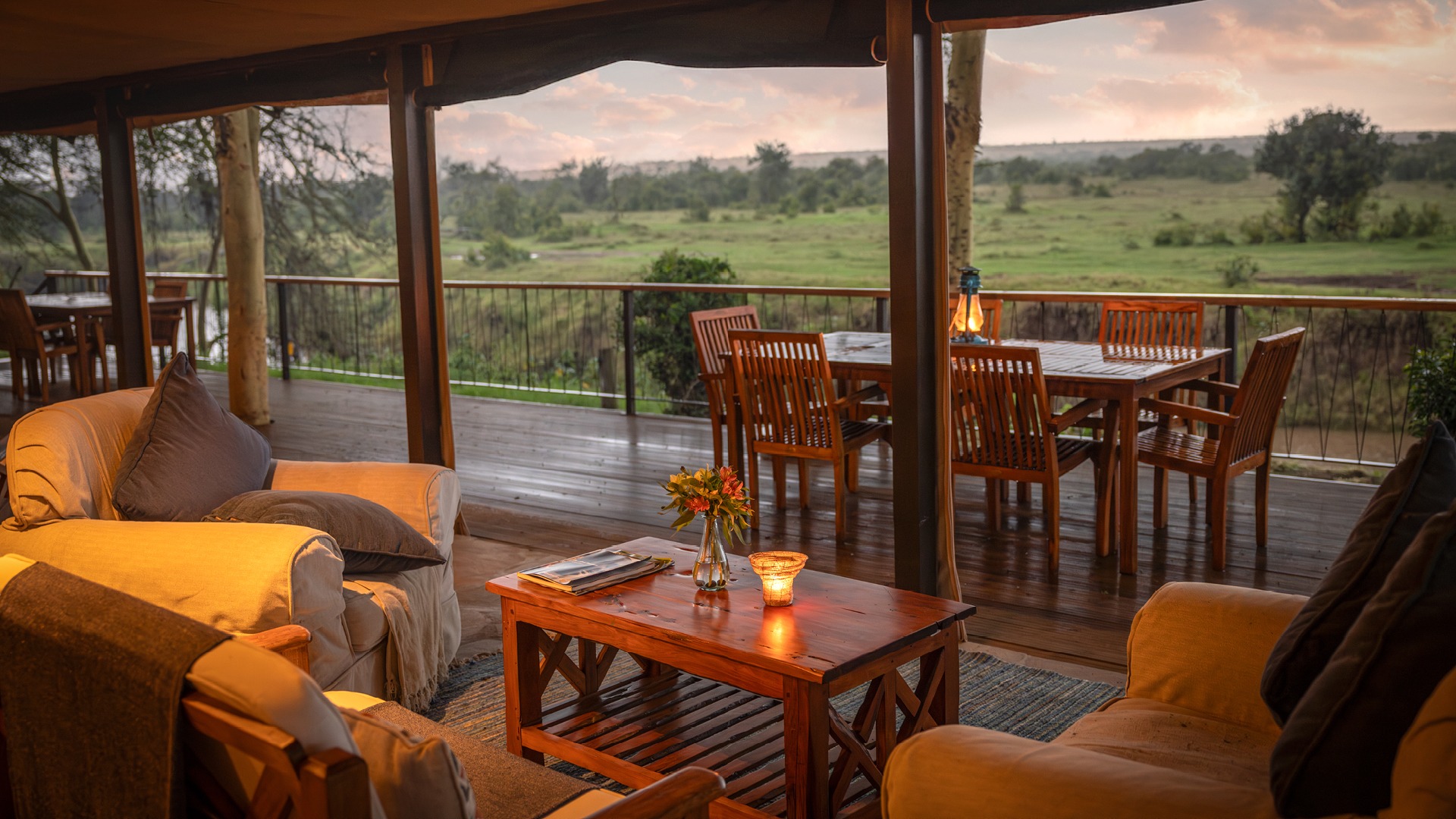
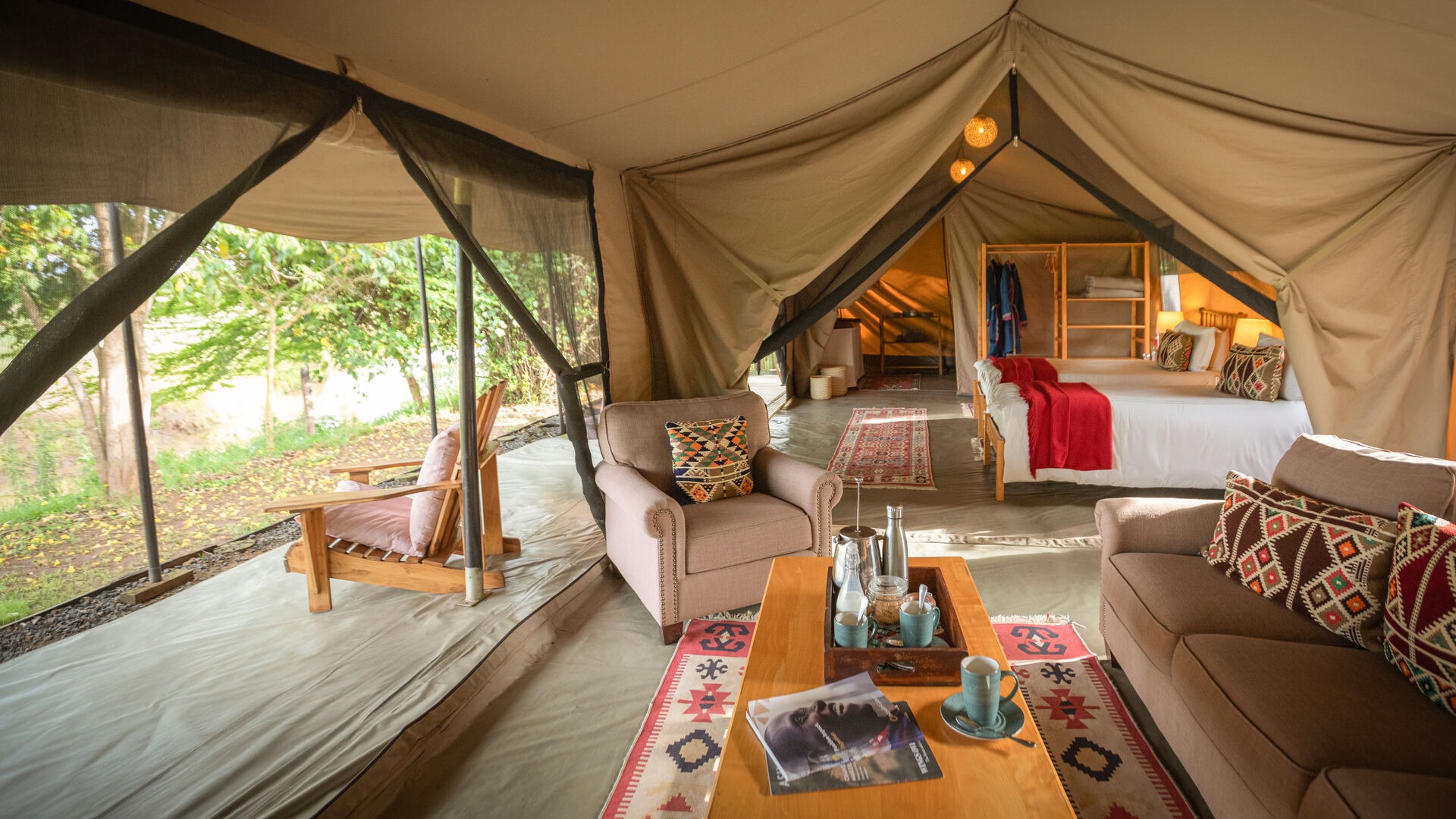
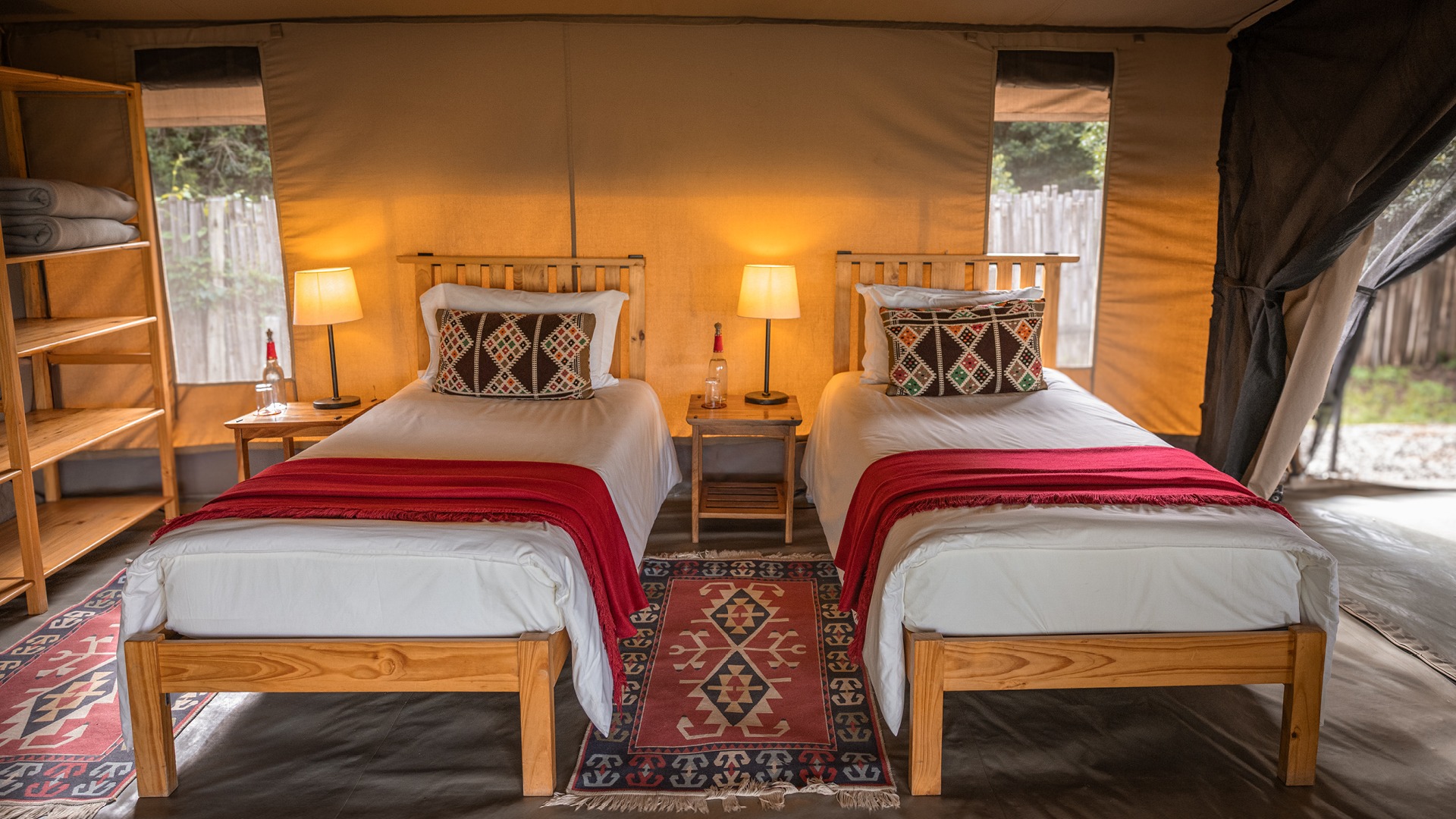
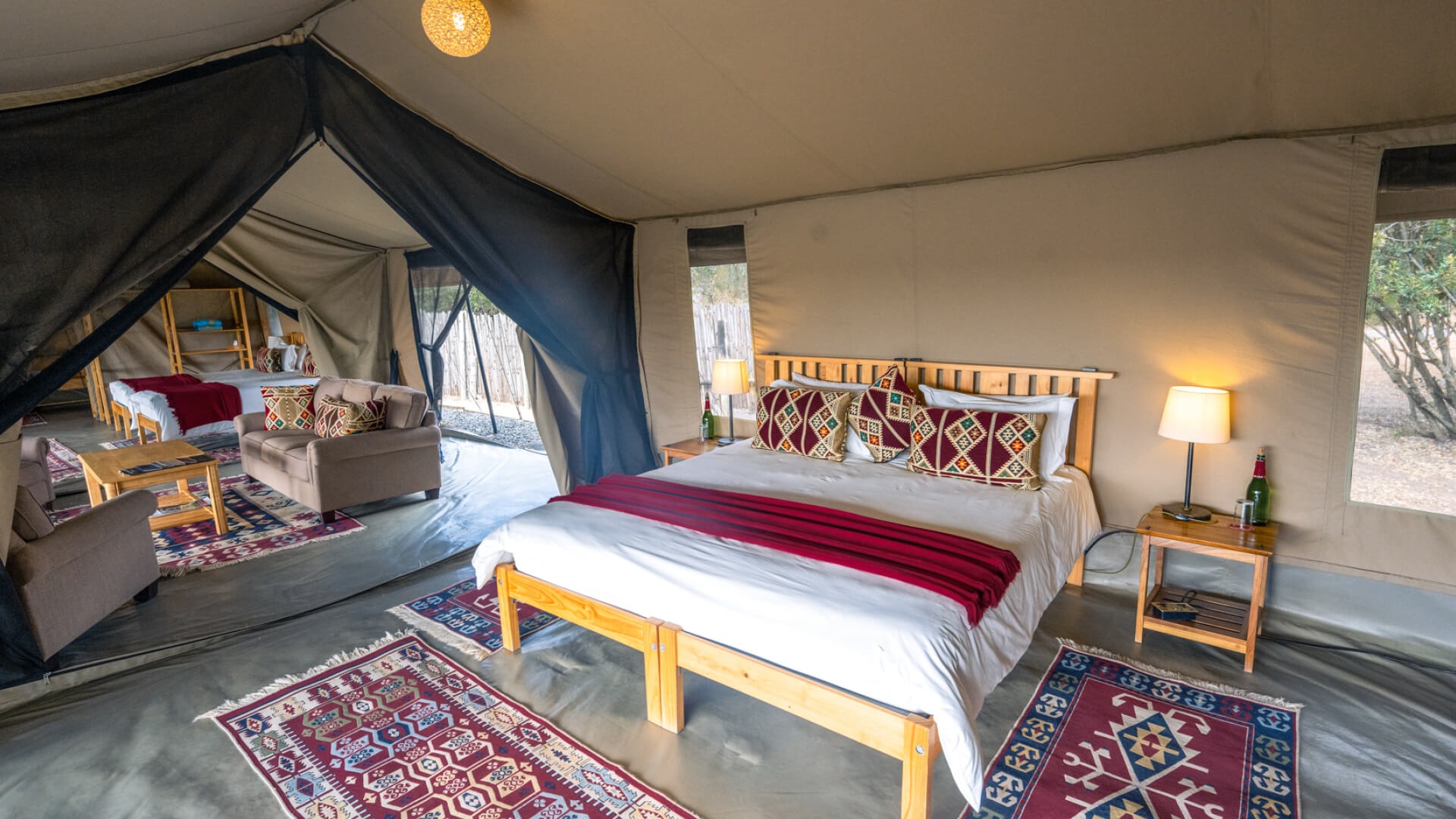
Eight canvas tented suites are positioned along the Ewaso Nyiro River bank, shaded by riverine trees that carry vervet monkeys and weaver birds through the day and the sound of roosting birds through the evening. Each tent sits on a raised platform with a private wooden viewing deck — the deck looks across the river to the plains beyond, where giraffe browse the fever trees and elephant arrive at the water in the afternoon light. Interiors are furnished in classic East African safari style: proper beds, mosquito netting, and the unhurried comfort that comes from a camp that has chosen character over cosmetic luxury. En-suite bathrooms carry flush toilets and hot-water bucket showers — a format that the camp does not apologise for and that guests who arrive expecting it find entirely adequate for the experience it supports. The family suite expands the standard footprint with two separate en-suite bedrooms, a connecting lounge area, and a larger shared deck — a configuration that gives a family of four meaningful separation without requiring a separate tent. The main mess tent and communal fire pit are positioned on the riverside with views across the water and direct sightlines to the hippo pool in the bend below.
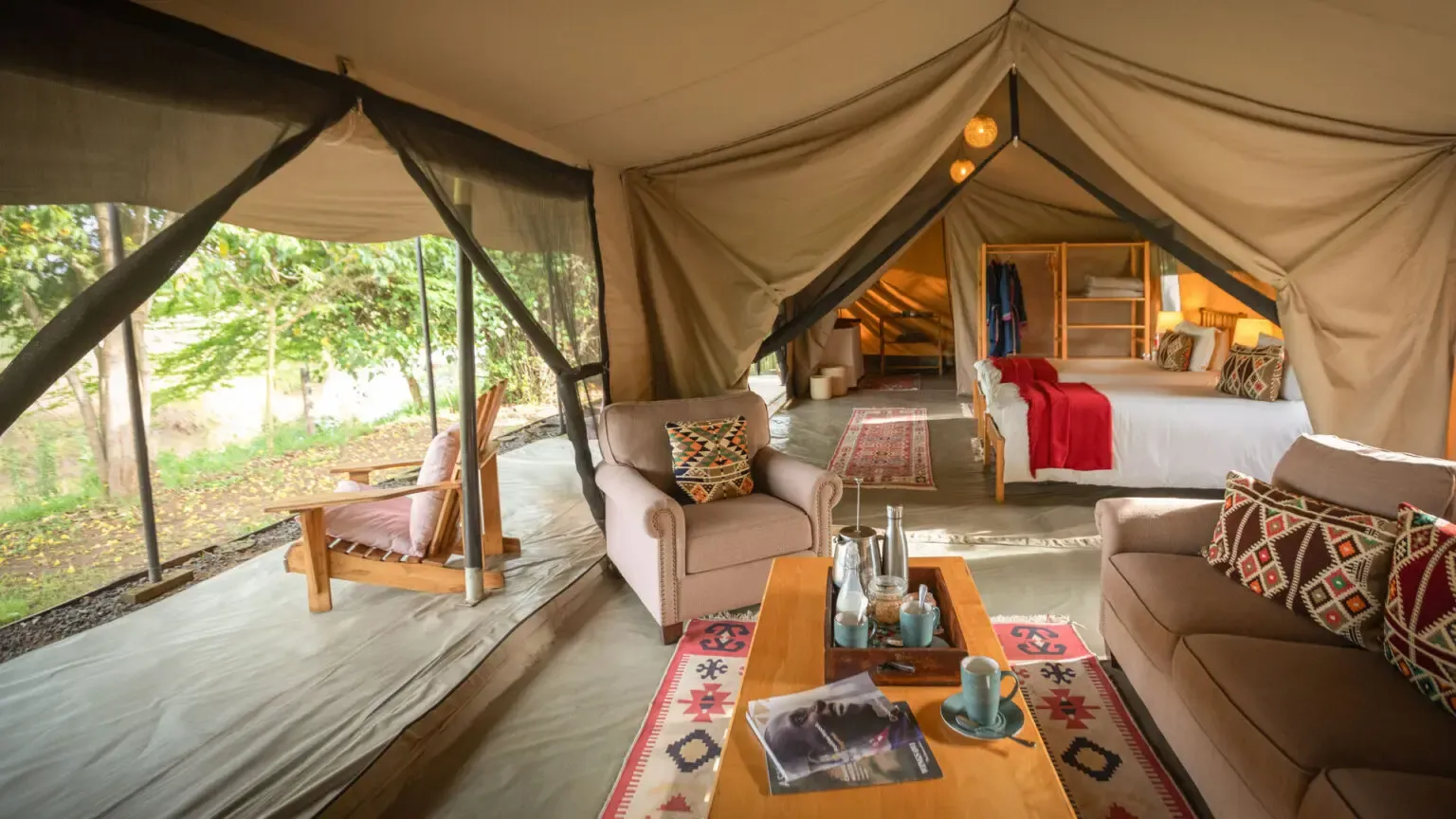
Seven tented suites on raised platforms above the Ewaso Nyiro, each with a private deck facing the river. Solid wood furniture, proper beds, flush toilets, and Asilia's hot-water bucket shower. The deck delivers the wildlife: elephants crossing in the afternoon, hippos below, and occasional leopard in the fever trees at first light.
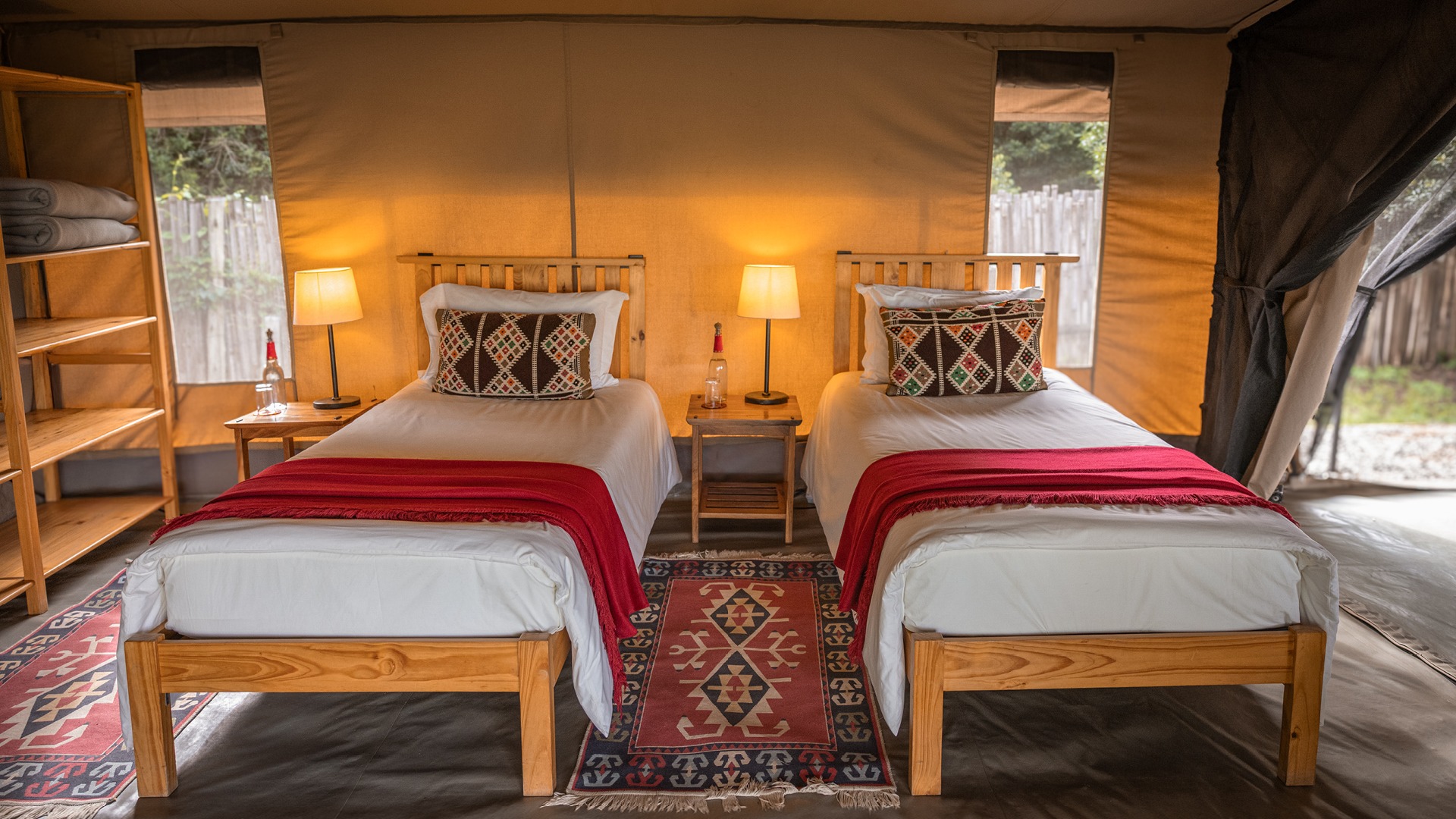
The family suite connects two en-suite bedrooms via a shared lounge and single river-facing deck. Each bedroom has its own flush toilet and bucket shower. Comfortably fits four, can stretch to five. Asilia's Junior Ranger Programme runs dedicated children's activities alongside the adult safari schedule.
Every moment at Ol Pejeta Bush Camp (Asilia) is crafted to immerse you deeper in the wild.
Ready to plan your stay?
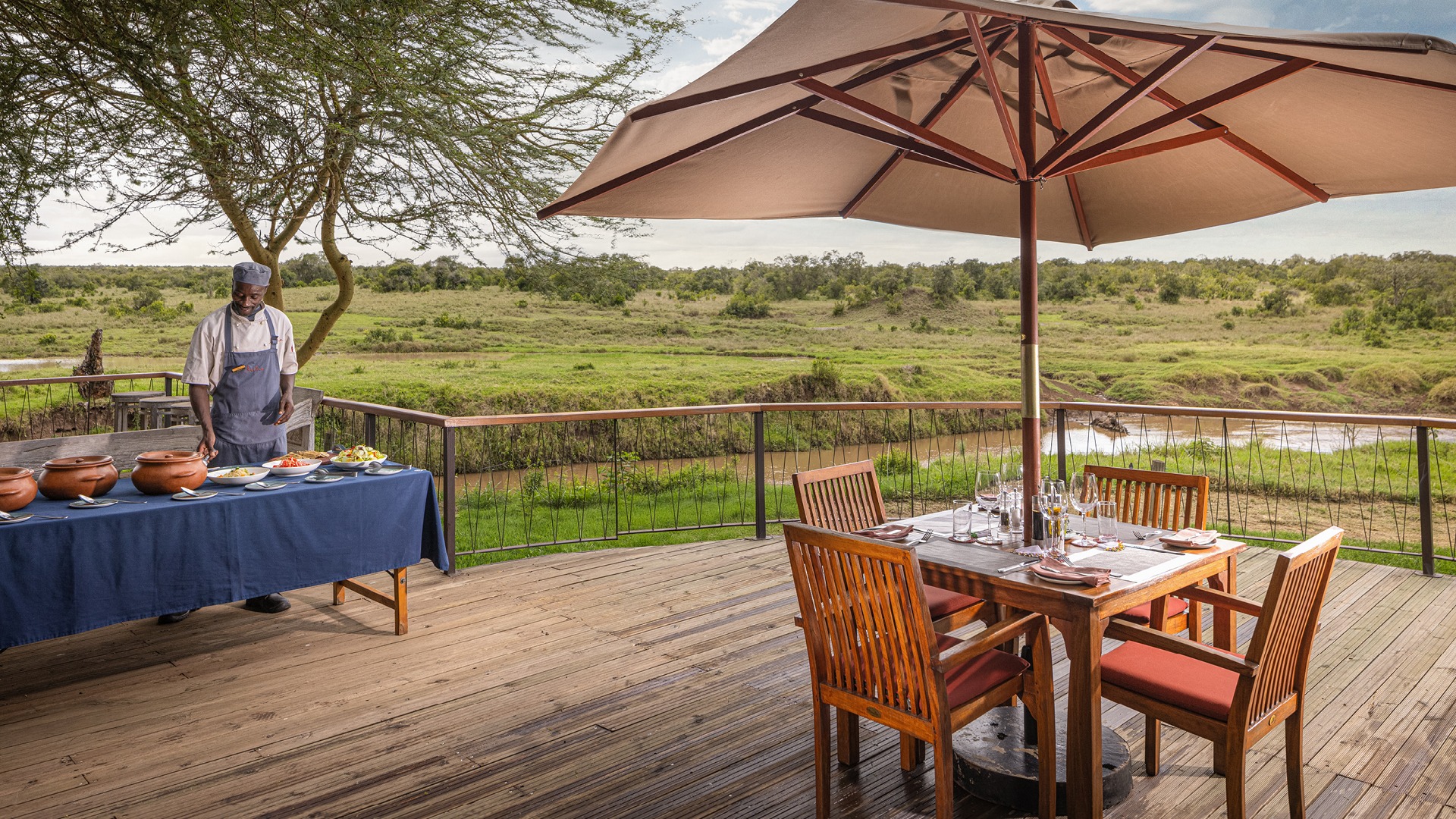
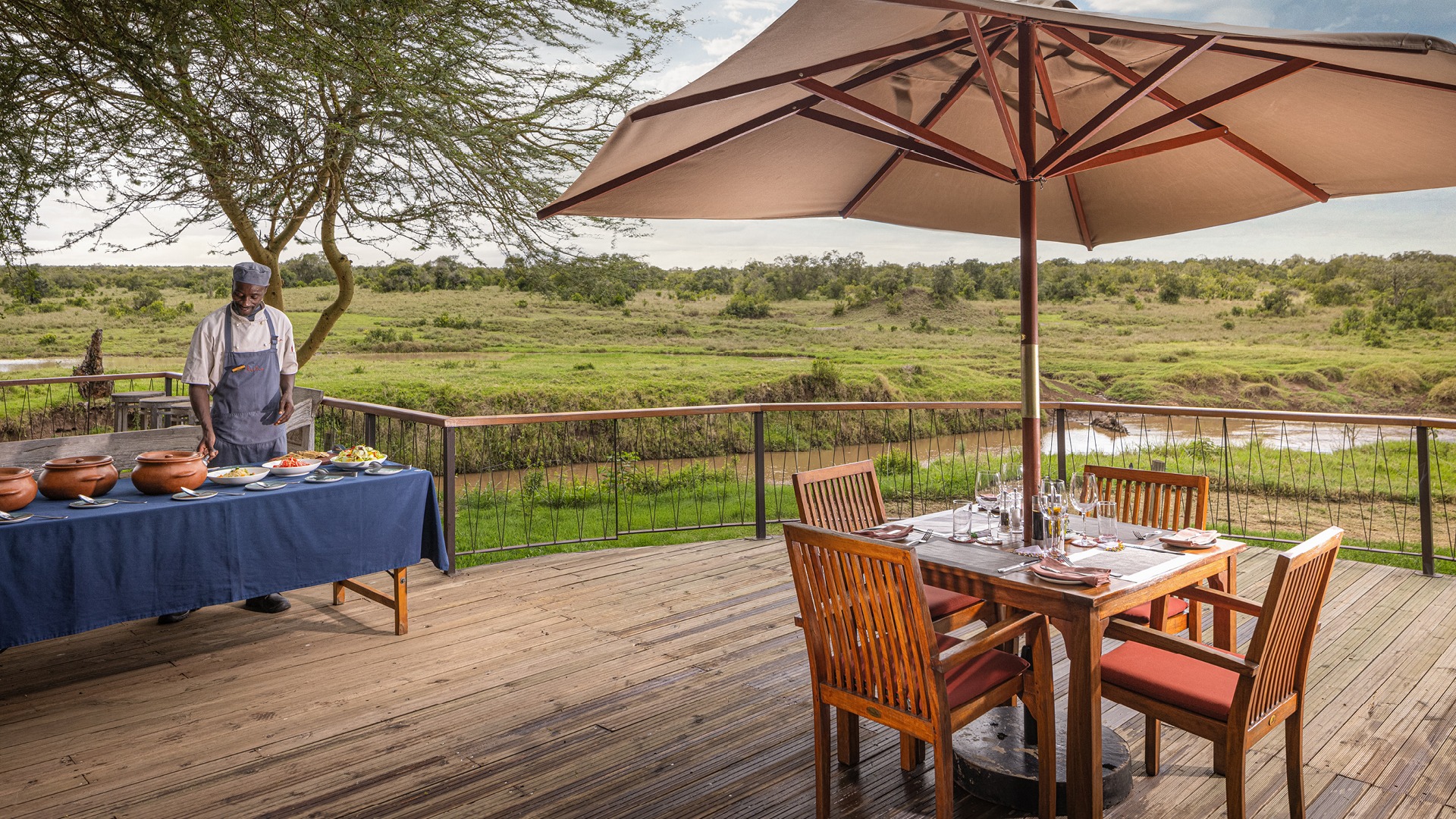
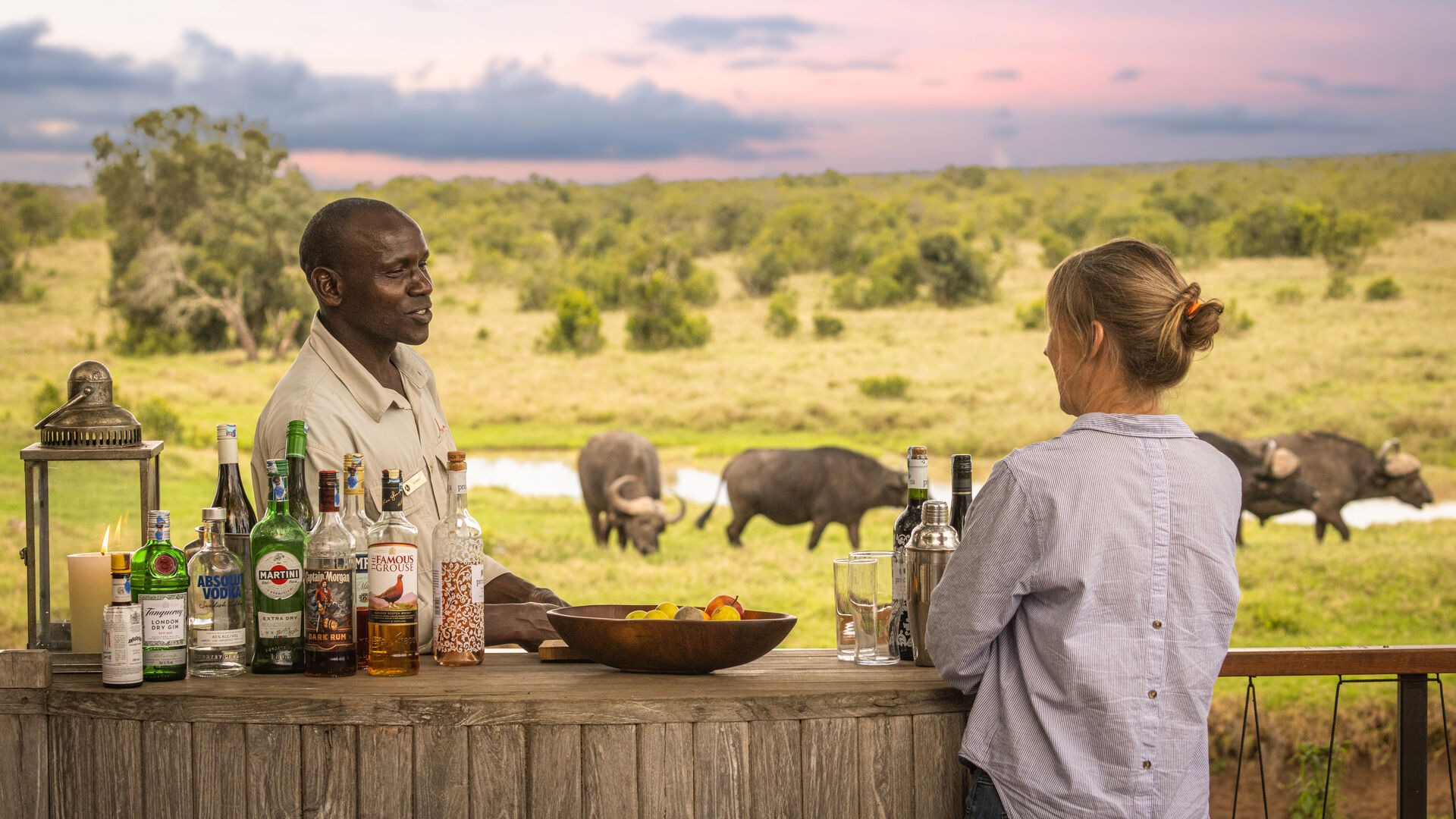
Meals at Ol Pejeta Bush Camp are communal by design. The mess tent and fire pit bring guests and guides together at a shared table — an arrangement that produces conversations about what was seen on the morning drive, what the research team has found this week, and what the guide expects to find tomorrow, in a way that individual tent dining or formal table service systematically prevents. The kitchen produces a hearty range built on fresh, locally sourced ingredients — produce from a local women’s cooperative and nearby farms ensures that the food revenue circulates within the community rather than disappearing into a centralised supply chain. Breakfast runs to continental or full English options before the morning drive departs; bush breakfasts in the conservancy at a site chosen by the guide are available on request and are among the most consistently recalled experiences by returning guests. Lunch is a lighter buffet-style spread of salads, pasta, and fresh bread. Dinner is a full three-course affair around the fire, after which the hippo pool below provides its own unofficial entertainment programme for the remainder of the evening.
Ol Pejeta operates year-round under a mild Laikipia climate moderated by its equatorial position and 1,600-metre elevation, which keeps daytime temperatures consistently warm and mornings and evenings reliably cool. The conservancy’s wildlife viewing is strong in every month — the resident Big Five, black rhino population, and Grevy’s zebra are not migratory, and the research and conservation activities that distinguish the Bush Camp programme run on the conservancy’s own operational schedule regardless of season. September and October are Asilia’s recommended peak for quality: the dry season’s vegetation thins for optimal sightings, the summer holiday crowd has dispersed, and the weather is at its clearest for Mount Kenya photography from the camp. July and August bring the busiest occupancy. January and February deliver a second dry window of consistently excellent game drives alongside the February arrival of white stork flocks from Europe. The long rains of April and May soften game drive conditions but produce the conservancy’s most dramatic green-season landscapes, when the Ewaso Nyiro runs full and the riverbank below the camp carries the most varied birdlife of the year.
Explore handcrafted itineraries where Ol Pejeta Bush Camp (Asilia) forms part of the journey.
Please share your name and email so we can follow up with you.