From
$2,424

Start Planning Your Tailor-Made Journey
🔒 Your details are kept private and never shared with third parties.
On the Talek River, 150 metres from a main crossing point — the camp where Big Cat Diary guides first earned their reputations and Disney filmed African Cats
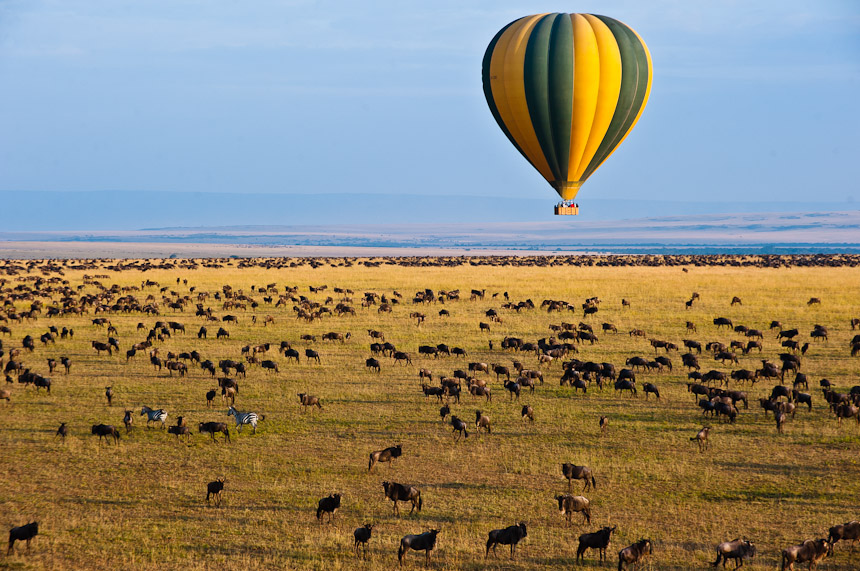
The Maasai Mara National Reserve occupies the northern arc of the Serengeti-Mara ecosystem — 1,510 square kilometres that represent Kenya’s most celebrated and most studied wildlife landscape. Its reputation rests on two foundations: the year-round concentration of resident big cats, elephant, and plains game that makes it consistently extraordinary regardless of season, and the Great Migration that arrives from Tanzania between July and November, adding the most visually dramatic wildlife spectacle on the continent to an ecosystem already operating at the upper limit of game density.
Rekero Camp’s position within that landscape is specific and deliberately chosen: on the Talek River near its confluence with the Mara, inside the Musiara sector, with the dining deck placed 150 metres from one of the Talek’s most reliably used crossing points. During the July–October migration peak, wildebeest and zebra gather on the far bank with the camp watching; when the herds commit to the crossing, the event unfolds at a distance that removes the need for a game drive vehicle and the half-hour transit to find a crossing already in progress. Guests have witnessed crossings from the deck, from the mess tent over lunch, and from their tent verandas. The camp’s proximity to this crossing is not approximate — it is the defining fact of its location.
The Beatons, one of the original pioneering safari families whose African presence dates to 1889, established Rekero in the classic mobile tented camp tradition — and that character has been carefully maintained through the Asilia Africa operation. The camp does not attempt the contemporary boutique hotel aesthetic that newer Mara properties pursue. It is instead a deeply atmospheric, classically styled camp that reads as a genuine continuation of the East African safari tradition rather than a designed reference to it. The connection to television and film is not incidental: Jackson Looseyia of BBC’s Big Cat Diary first learned his trade here, and Disney’s African Cats used the camp as its primary base during filming — a double endorsement from two of the most discerning wildlife filmmaking productions in the world. The guiding standard that earned both is still what guests experience today.
Rekero Camp: nine tents on the Talek River, steps from a wildebeest crossing. Year‑round, the Mara–Talek confluence delivers big cats and plains game. With guiding heritage from Big Cat Diary and Disney’s African Cats, Asilia Africa continues an authentic safari legacy
Rekero runs on solar power, holds Asilia’s Gold Eco‑Rating, and as part of a certified B Corp funds anti‑poaching, research, and community programmes. Strong ties with the Maa Trust support education, healthcare, and enterprise in surrounding Maasai villages, with cultural visit fees contributing directly
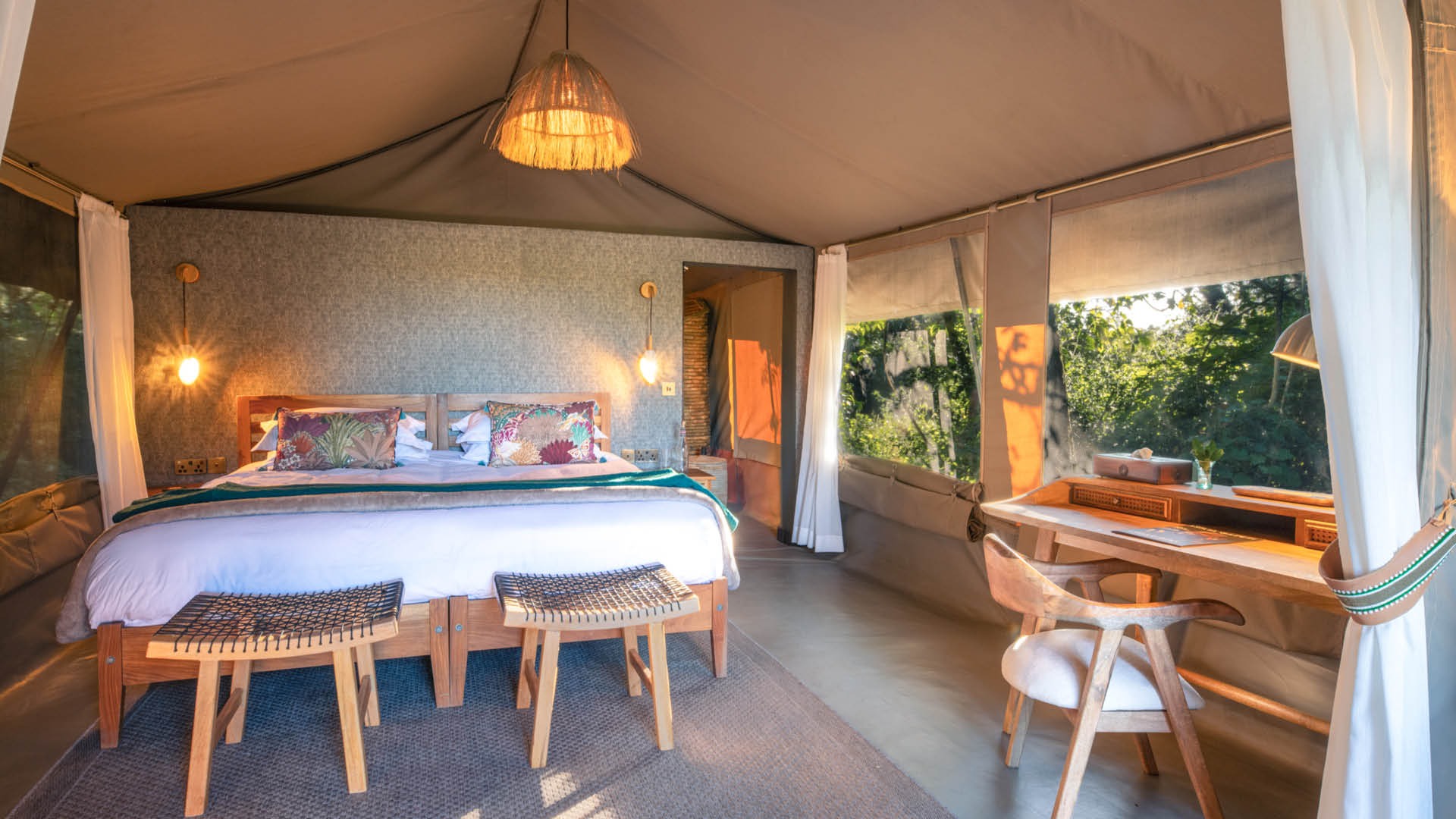
Nine canvas tented suites are positioned along the Talek River bank, each in the classic East African configuration: a large tent on a raised platform, private veranda facing the river and the plains beyond it, a small interior lounge area, and an en-suite bathroom with flush toilet and hot-water bucket shower. The furniture and detailing are traditional rather than contemporary — this is a camp that has chosen character over cosmetic renovation, and the guests who return to Rekero specifically are those who have decided that the position and the guiding are what matter and that the interiors are sufficient for the purpose they serve. Tents four and five are positioned to catch the best sightlines across the Talek; both are sought after on return visits. The two family suites extend the standard tent configuration with a second bedroom and a second en-suite bathroom — a meaningful addition for families where the single-bathroom arrangement of the standard tent would create friction. The main mess tent and its large wooden deck are positioned directly above the river at the crossing-point sightline, making the communal area a wildlife-watching position in its own right throughout the day.
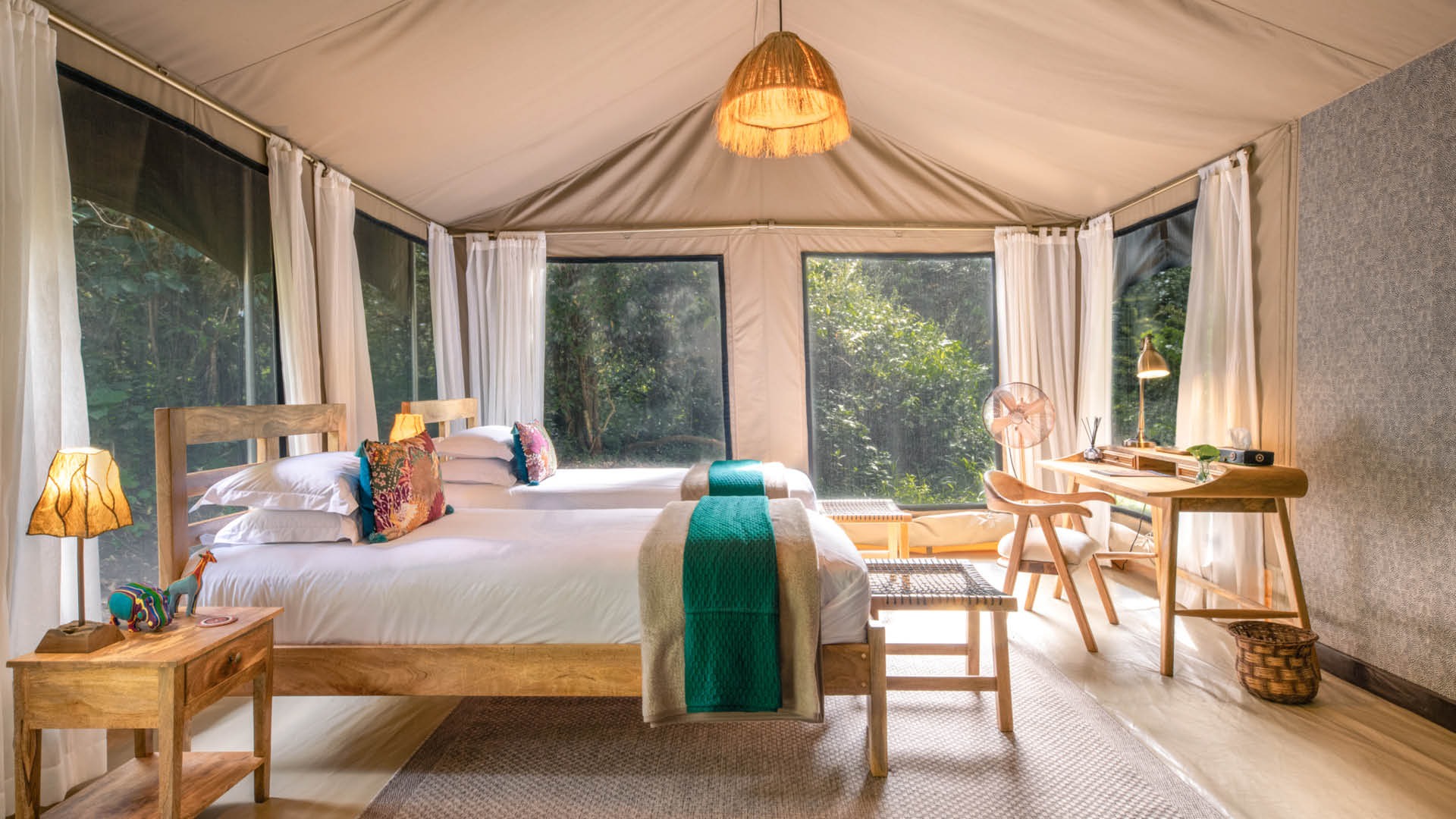
Seven suites along the Talek River with raised platforms, canvas walls, and private verandas. Interiors feature king or twin beds, lounge chairs, and en‑suite bathrooms with flush toilet and hot‑water bucket shower. Tents four and five overlook the crossing point, while USB charging, bottled water, and Cinnabar Green amenities reflect Asilia’s stewardship
“Two of Rekero’s nine tents are family suites with two bedrooms and two en‑suite bathrooms under one canvas roof. Shared veranda and lounge keep the camp’s character, while separate bathrooms ensure comfort for families. Children over five are welcomed with orientation, and supervision is required outside the unfenced tents
Every moment at Rekero Camp is crafted to immerse you deeper in the wild.
Ready to plan your stay?
Meals at Rekero are communal and deliberately relaxed. Buffet breakfasts and lunches are served in the mess tent or on the wooden deck above the river — the deck being the preferred setting when the weather and wildlife activity permit, which in the Maasai Mara means most of the time. Three-course silver service dinners are a nightly occasion: enough formality to mark the end of the day properly, enough informality to keep the atmosphere convivial rather than ceremonious. Two meals carry a specific cultural dimension throughout the week: a Swahili-themed lunch on Wednesdays and a Swahili dinner on Sundays, both spotlighting local culinary traditions that the kitchen team clearly takes seriously. The kitchen adapts daily menus to dietary preferences and requirements with advance notice. Picnic breakfasts in the bush — packed and taken on the morning game drive to a site chosen by the guide — are among the most consistently recommended dining experiences at the camp; the combination of the Mara dawn, the chosen vantage point, and the guide’s particular knowledge of where to stop makes each one different from the last. Sundowners at the hippo pool or at a position in the reserve selected for the evening light are a standard feature of the afternoon drive programme.
Rekero Camp is open from June to March and closes during the rainy season in April and May. July through October is peak season and the period for which the camp’s position is most specifically optimised: the wildebeest herds arrive from the Serengeti in late June and build through July, with the main migration period and river crossing activity peaking in August and September. October brings the final herds and lighter visitor volumes than the main peak. January through March deliver the reserve’s best big cat viewing outside the migration: resident lion, cheetah, and leopard populations are undistracted by the migration herds, the landscape is beginning to dry, and the absence of the summer crowds makes this arguably the most rewarding period at Rekero for guests who know the reserve well. June provides good game viewing in a greener landscape as the dry season begins, with increasing visitor numbers as the migration approaches. The camp’s Musiara sector position gives access to the reserve’s western wetlands and the Marsh throughout the year, making it a productive destination for big cat encounters in every season it operates.
Explore handcrafted itineraries where Rekero Camp forms part of the journey.
Please share your name and email so we can follow up with you.