From
$6,519

Start Planning Your Tailor-Made Journey
🔒 Your details are kept private and never shared with third parties.
Nine tents on the Sand River, where the Great Migration first enters Kenya’s Maasai Mara.
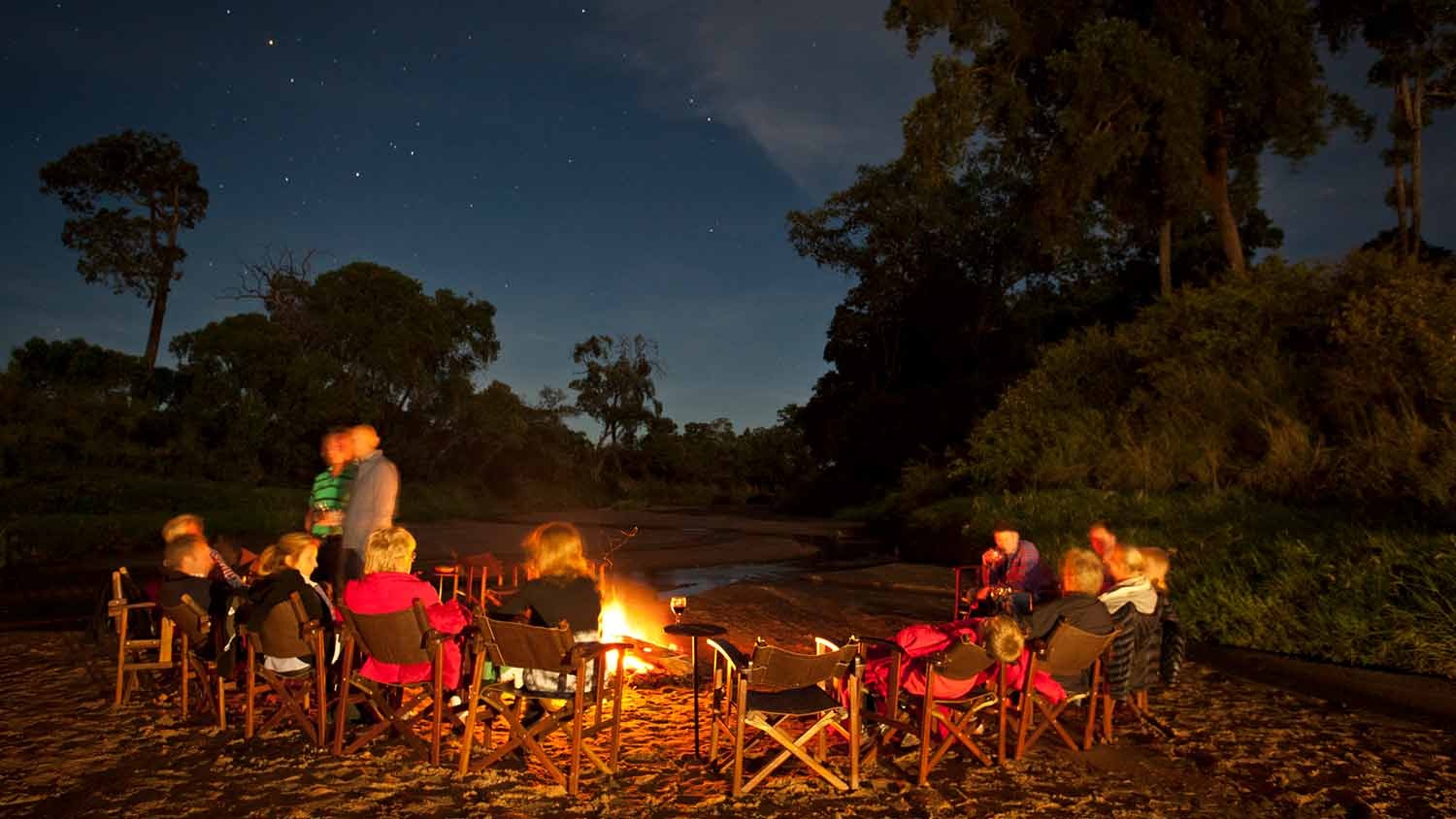
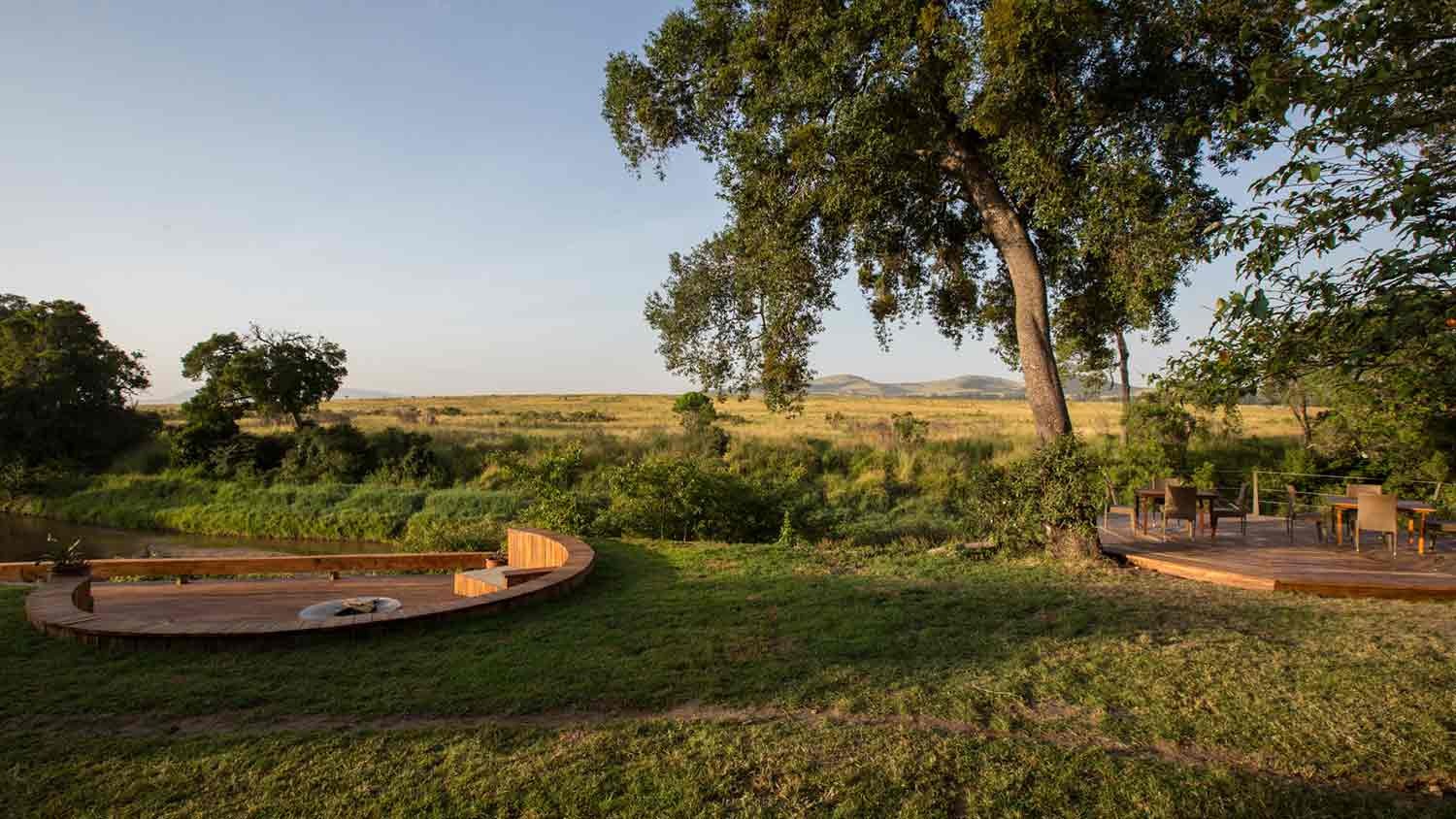
The Sand River does not advertise itself. It runs quietly along the southern boundary of the Maasai Mara National Reserve — shallow in the dry season, amber-coloured, fringed with croton and fig and the dense riverine vegetation that gives the camps along its banks their particular quality of seclusion. On the far bank: Tanzania. On the near bank: nine tents, a fire circle, and the knowledge that when the Migration arrives from the south, it arrives here first.
That geography is Sala’s Camp’s central fact and its primary distinction. The wildebeest and zebra that make up the two-million-strong Migration travel north from Tanzania’s Serengeti across the border and into Kenya through the Sand River corridor — the same stretch of water that the camp looks onto. In the weeks when the herds are moving, guests at Sala’s wake to a sound that has no parallel in the wildlife world: the low, continuous groan of wildebeest in their hundreds of thousands, audible from the tent before the morning drive has even begun. The crossings here are not the famous Mara River spectacle of the north — they are quieter, wider, less concentrated, and in their own way more primally affecting. The animals are still arriving, still uncertain, still moving in the compressed urgency of a journey they do not understand and cannot stop.
Alex Walker established his Serian camps with a specific operating philosophy: small, highly skilled, deeply committed to the landscape and the guiding rather than the infrastructure. Sala’s Camp is the clearest expression of that philosophy within the Mara ecosystem. Nine tents means nine sets of guests, which means a guide-to-guest ratio that allows the kind of nuanced, unhurried game viewing that larger camps — however well run — cannot consistently deliver. Drives at Sala’s are conversations, not commentary. The ranger reads the morning and follows what it offers, without a schedule pressing behind.
The camp’s riverine setting produces a quality of light and atmosphere that open-plains camps do not share — dappled shade through the fig canopy at midday, the sound of water through the night, the kingfishers and bee-eaters that work the Sand River margins at first and last light. It is, in the language of those who have stayed at both kinds of camp, a different kind of quiet.
Sala’s Camp sits at the southern edge of the Maasai Mara, where the Sand River marks the Tanzania border and the Great Migration first enters Kenya. With just nine riverine tents, it offers an intimate, expertly guided front‑row seat to the Migration’s dramatic opening act.
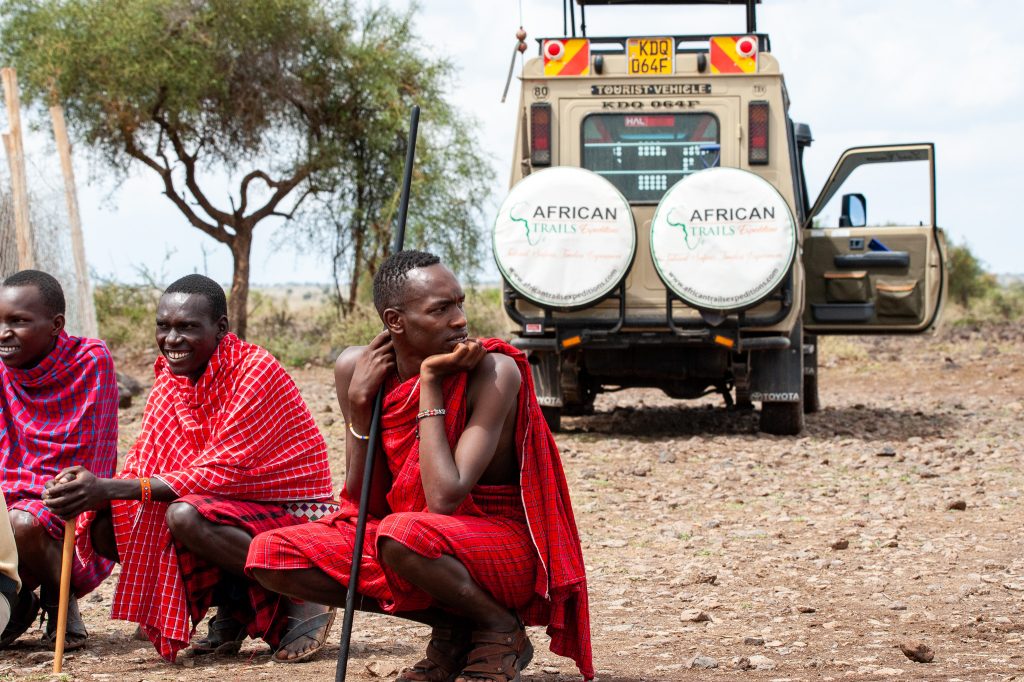
Alex Walker’s Serian runs on a conservation model where land is the asset and guest stays protect it. At Sala’s, nine tents cap impact, revenues support Maasai programmes, guest fees fund KWS anti‑poaching, and the camp’s footprint is managed to safeguard the Sand River ecology—even under peak Migration pressure.
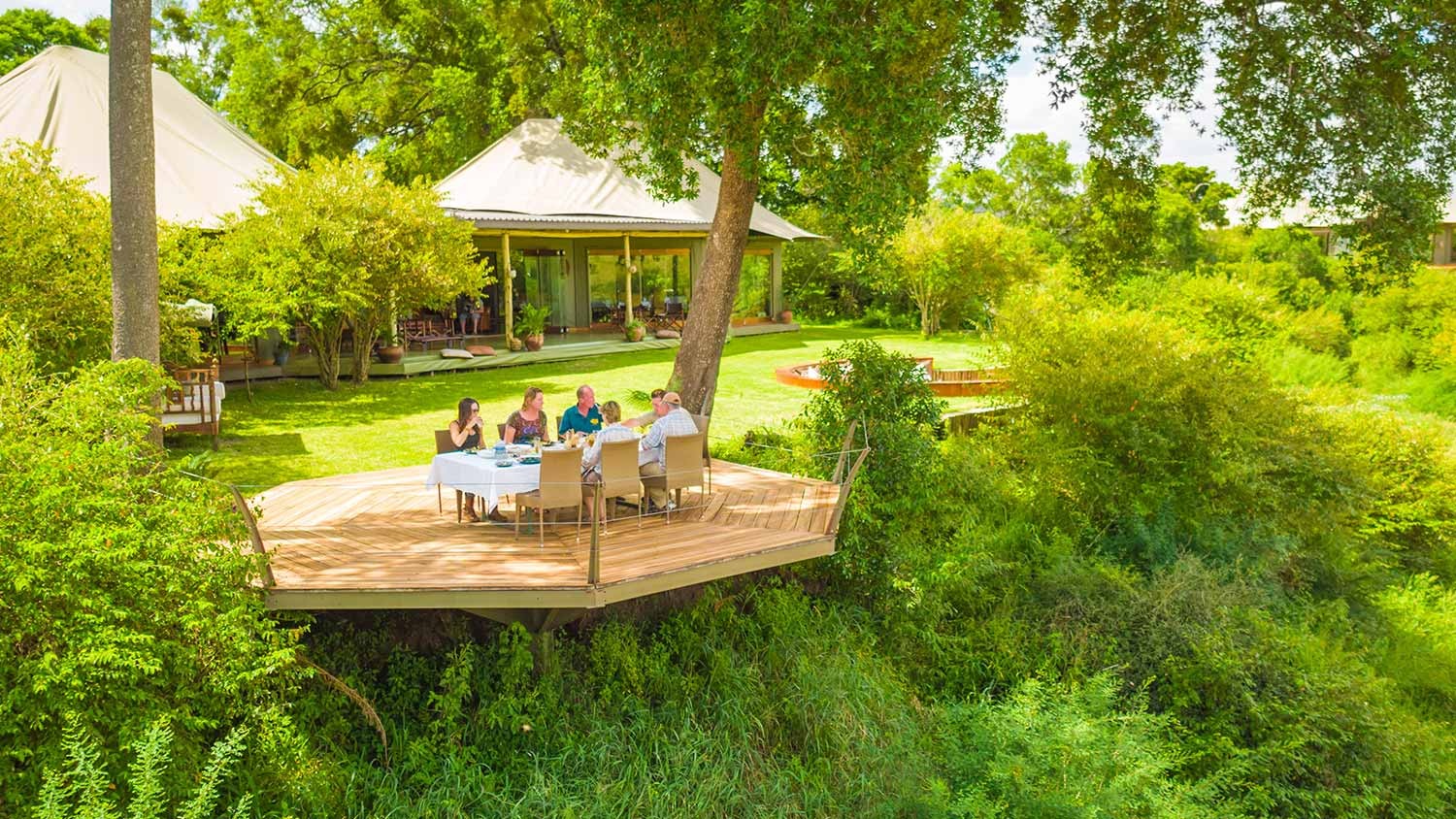
The nine tents at Sala’s Camp are set within the riverine woodland on raised platforms that keep them above the seasonal fluctuations of the Sand River and within the canopy line that gives the camp its particular quality of enclosure. Canvas and timber, copper fittings, hand-stitched linens and the kind of en-suite bathrooms — indoor and outdoor shower, double vanity, deep soaking tub in select tents — that make the return from a long morning drive genuinely restorative rather than merely functional. Each tent has its own private deck facing the river, a reading chair, evening turndown with a hot water bottle against the cool southern Mara nights, and a level of housekeeping that belies how remote the location feels. The camp’s small scale means that the physical distance between tents is generous; privacy is not manufactured by screening but by the simple fact of there being very few of you.
Dotted along the riverbank with views over the plains and across to the Tanzanian hills, our double tents provide tranquil spaces in which to relax and soak up the surrounding nature. Plunge pools, wooden decks, bathtubs and comfy seating make relaxation easy.
Sala’s premier tent offers extra space, a freestanding soaking tub, and the most private river‑facing deck, with refined furnishings that set it apart as the honeymoon suite. Ideal for special occasions or guests seeking the fullest Sala’s experience—availability and details should be confirmed directly with Serian at booking.
Every moment at Sala’s Camp is crafted to immerse you deeper in the wild.
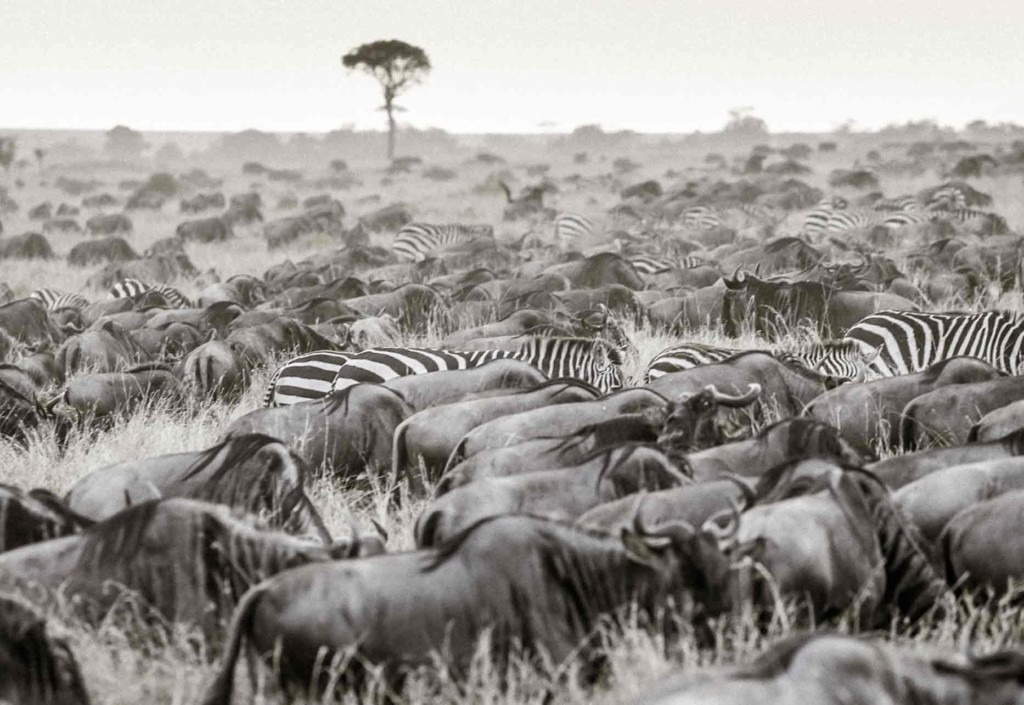
Sala’s sits on the Sand River, where the herds enter Kenya with raw urgency before dispersing
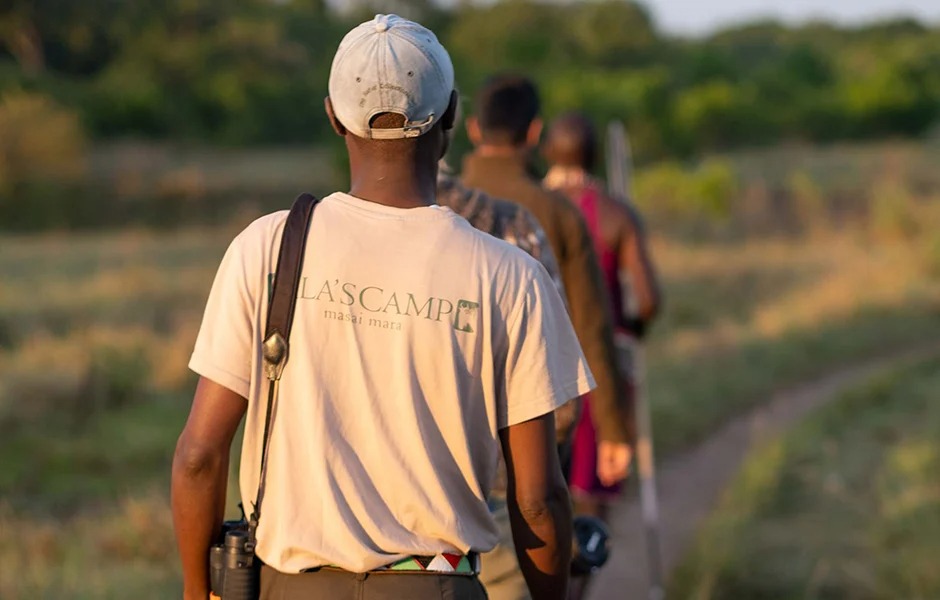
Explore the Sand River corridor on foot with Serian rangers—lion spoor, leopard signs, and morning birdsong.
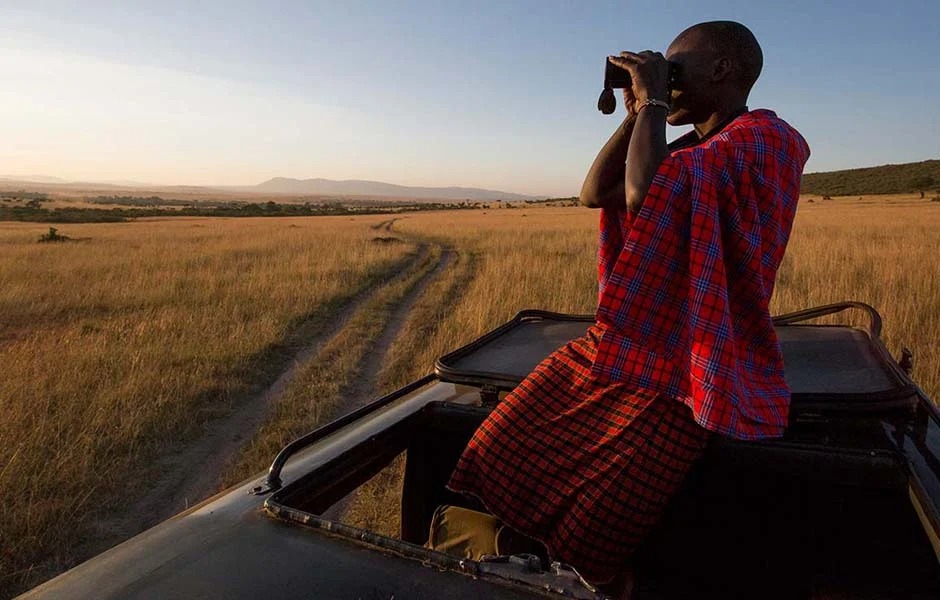
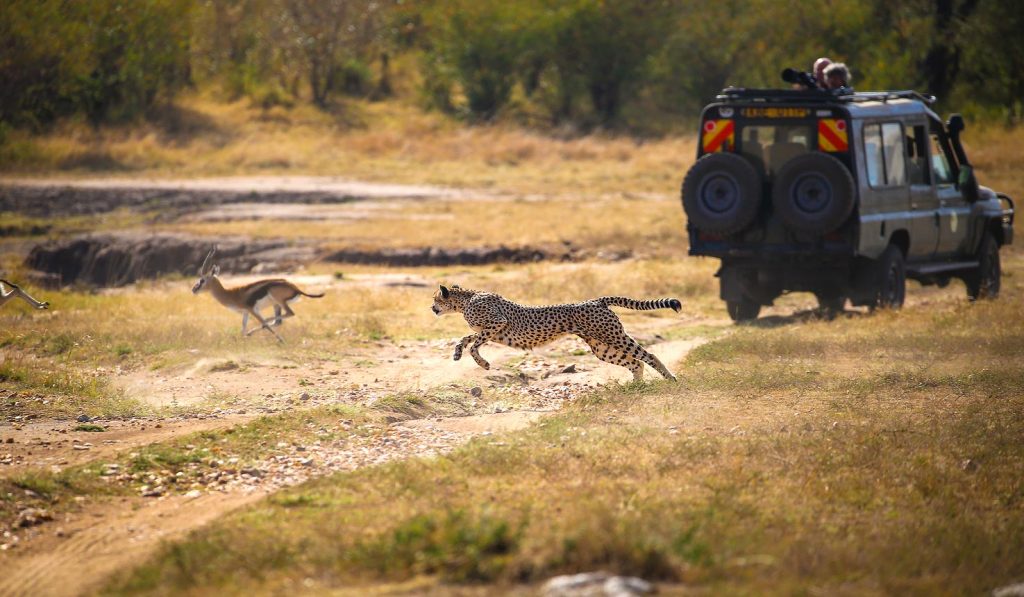
Year‑round lions, leopards, and cheetah—tracked by signs and behaviour, not radio chatter.
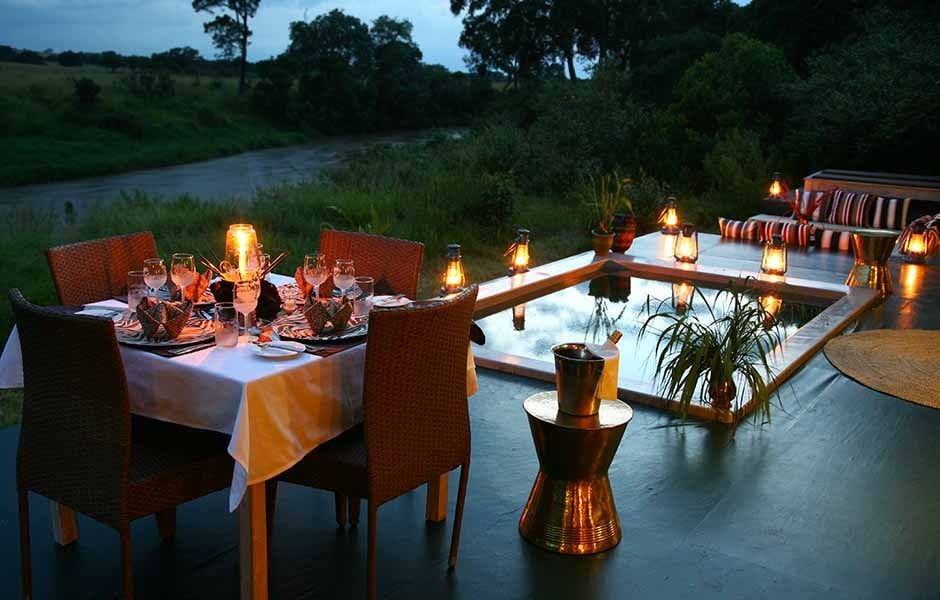
Copper light, border views, and wildlife at dusk—an evening that feels entirely your own.
Ready to plan your stay?
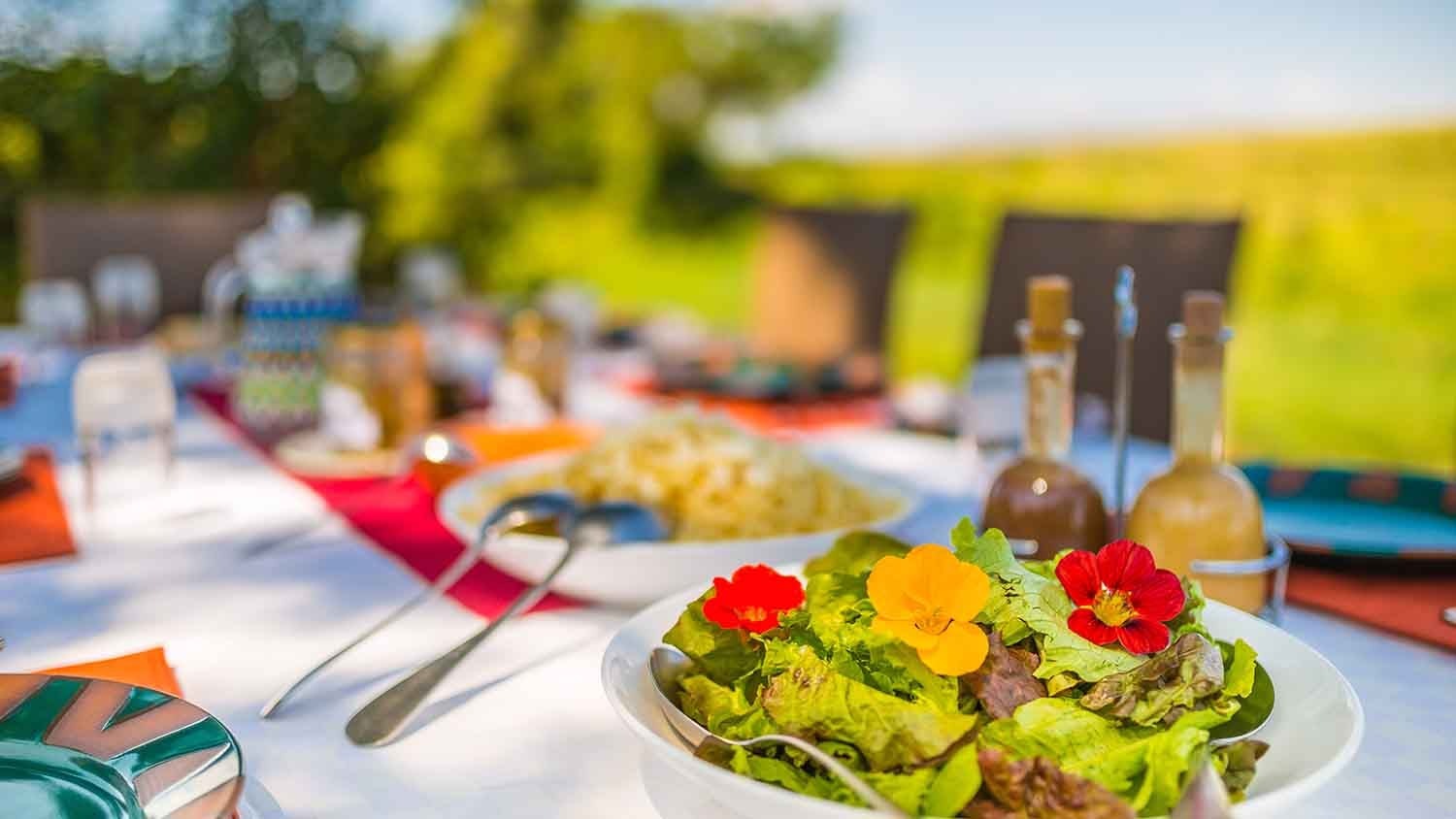
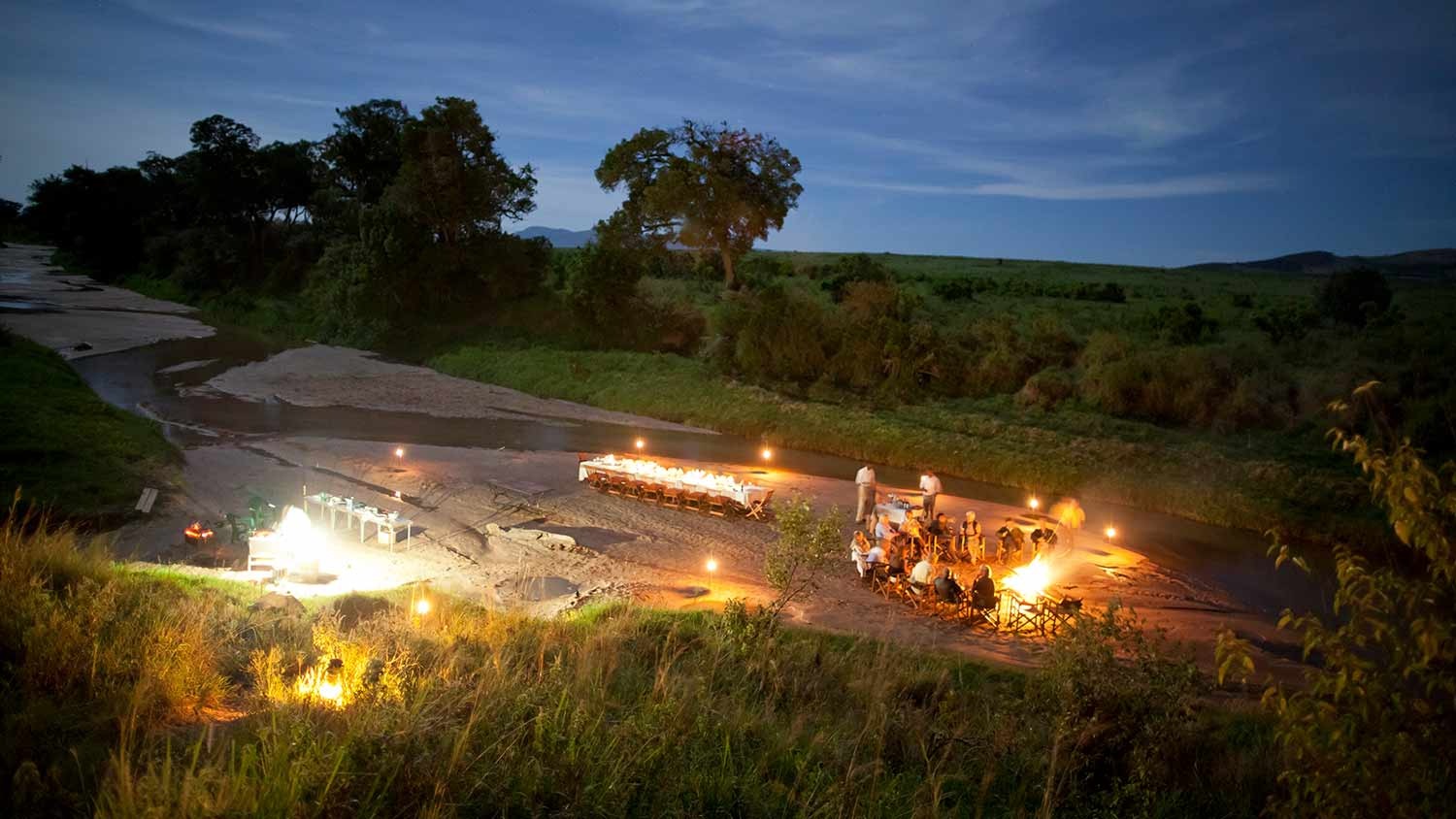
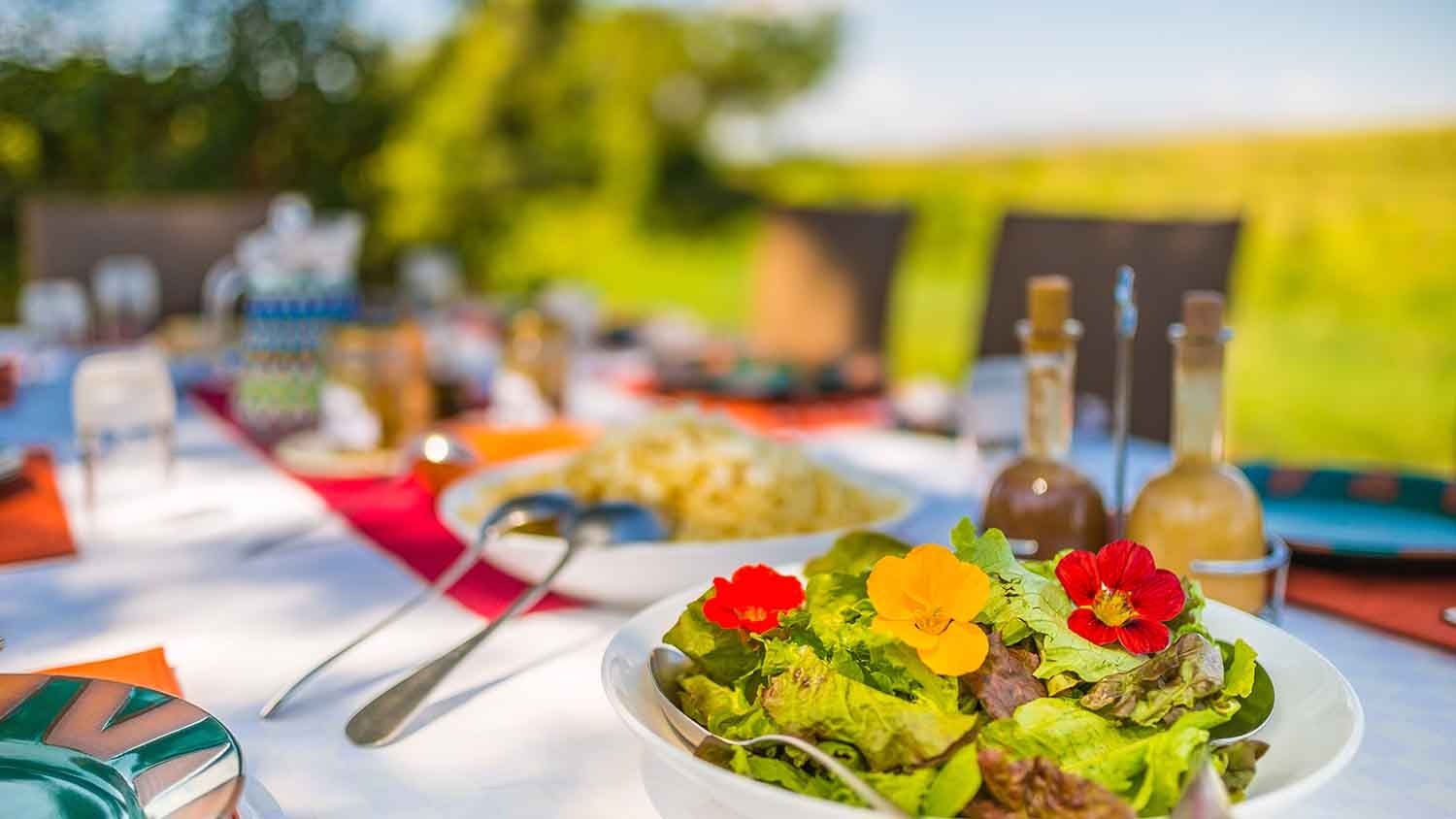
With nine tents and rarely more than eighteen guests in camp at any one time, meals at Sala’s have the character of a well-run private house rather than a safari lodge restaurant. The table is the same table every night, the conversation crosses it, and the kitchen — aware of exactly who is eating and what drove them out since before dawn — adjusts accordingly. Breakfasts are early and proper: hot food, strong coffee, the kind of spread that makes a pre-dawn departure feel less like a sacrifice. Lunches back in camp after a long morning are served with the unhurried pace that a small camp and a hot Mara midday naturally produce. Dinners are by the fire or in the open mess tent, depending on the night, and they run as late as the conversation carries them. Bush breakfasts taken in the field — the vehicle pulled up beside a lugga, the folding table dressed properly, the kettle on — are arranged on request and are, for many guests, the meal they describe first when they get home.
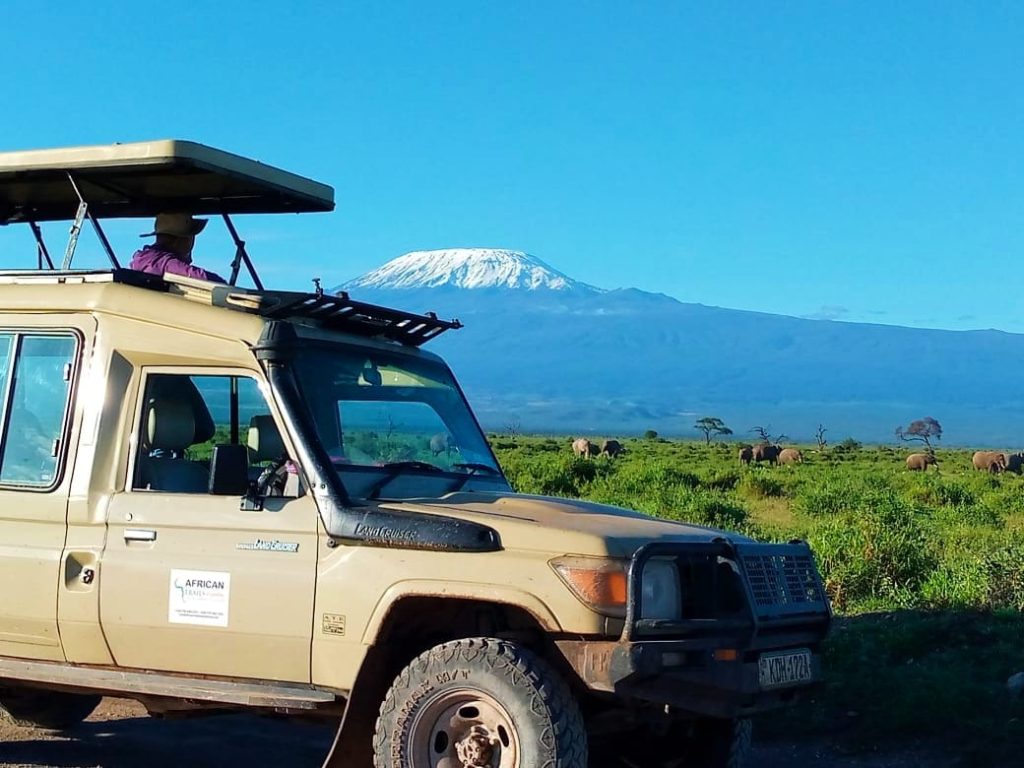
The southern Maasai Mara around Sala’s Camp delivers compelling game viewing across all twelve months, anchored by resident wildlife populations that are independent of the Migration’s seasonal movement. Lion, leopard, cheetah, elephant, buffalo and the full complement of plains game are present year-round in the national reserve.
The Great Migration’s arrival in the southern Mara — the crossing of the Sand River from Tanzania — typically begins in June and July, with the herds building in density through August and September before the southward return begins in October and November. Sala’s Camp’s Sand River position means that it receives the Migration before it disperses northward across the wider Mara ecosystem: guests here in late June or early July often experience the first crossings of the season, which carry a particular intensity that the later, more established crossing events of the central Mara can occasionally lack.
January and February are excellent months — dry conditions, low vehicle pressure in the southern reserve and strong predator activity as the resident prides take advantage of the calving season in the Serengeti to the south. June marks the transition into Migration season and combines good predator viewing with the early movements of the advancing herds. December, with the short rains finished and the grass freshly green, is among the most beautiful months in the southern Mara and one of the most underbooked.
Explore handcrafted itineraries where Sala’s Camp forms part of the journey.
Please share your name and email so we can follow up with you.