From
$2,424

Start Planning Your Tailor-Made Journey
🔒 Your details are kept private and never shared with third parties.
Ten minimalist suites on a Naboisho escarpment, with mesh walls open to the savannah and a waterhole below the deck drawing wildlife throughout the day.
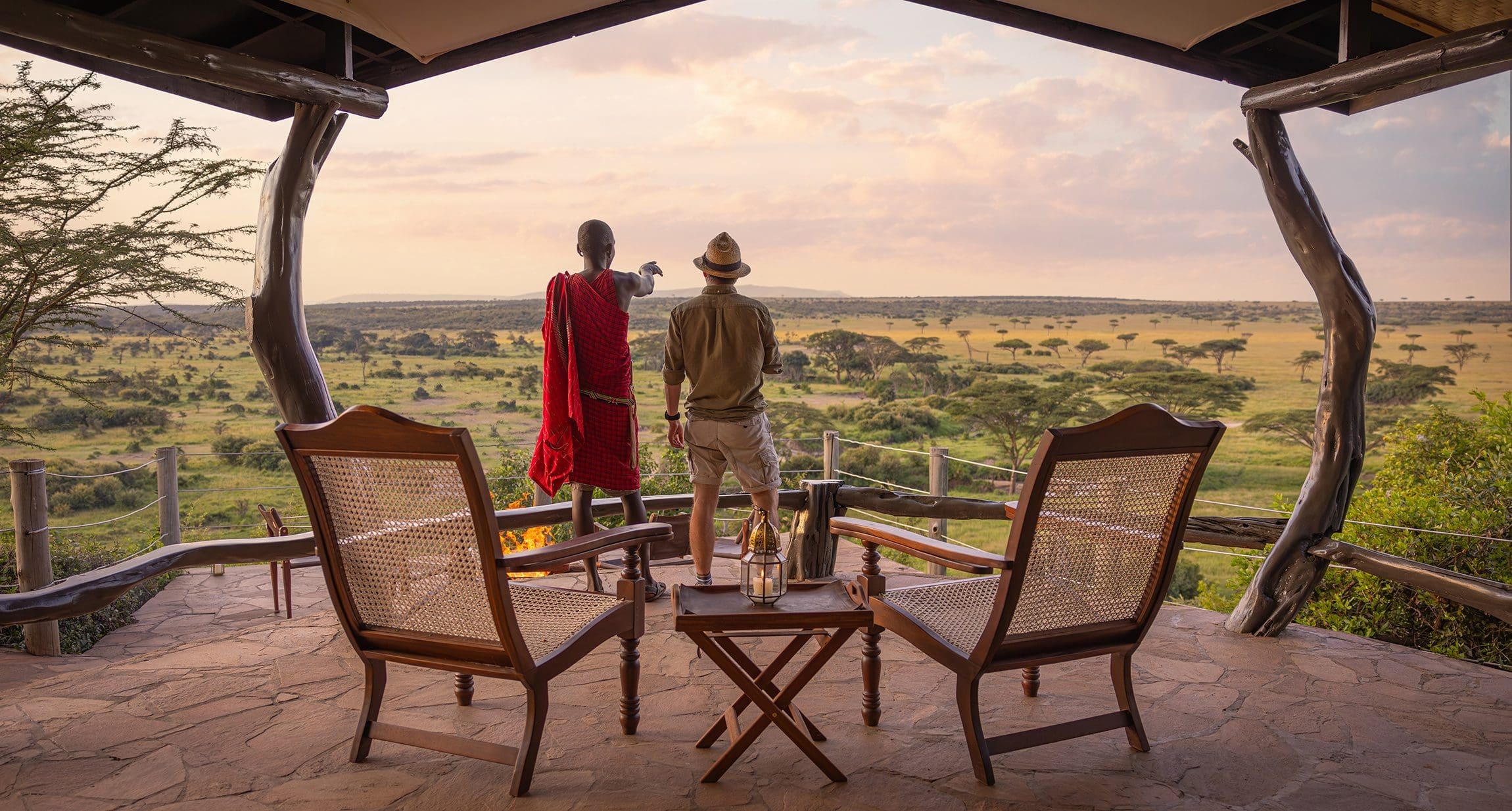
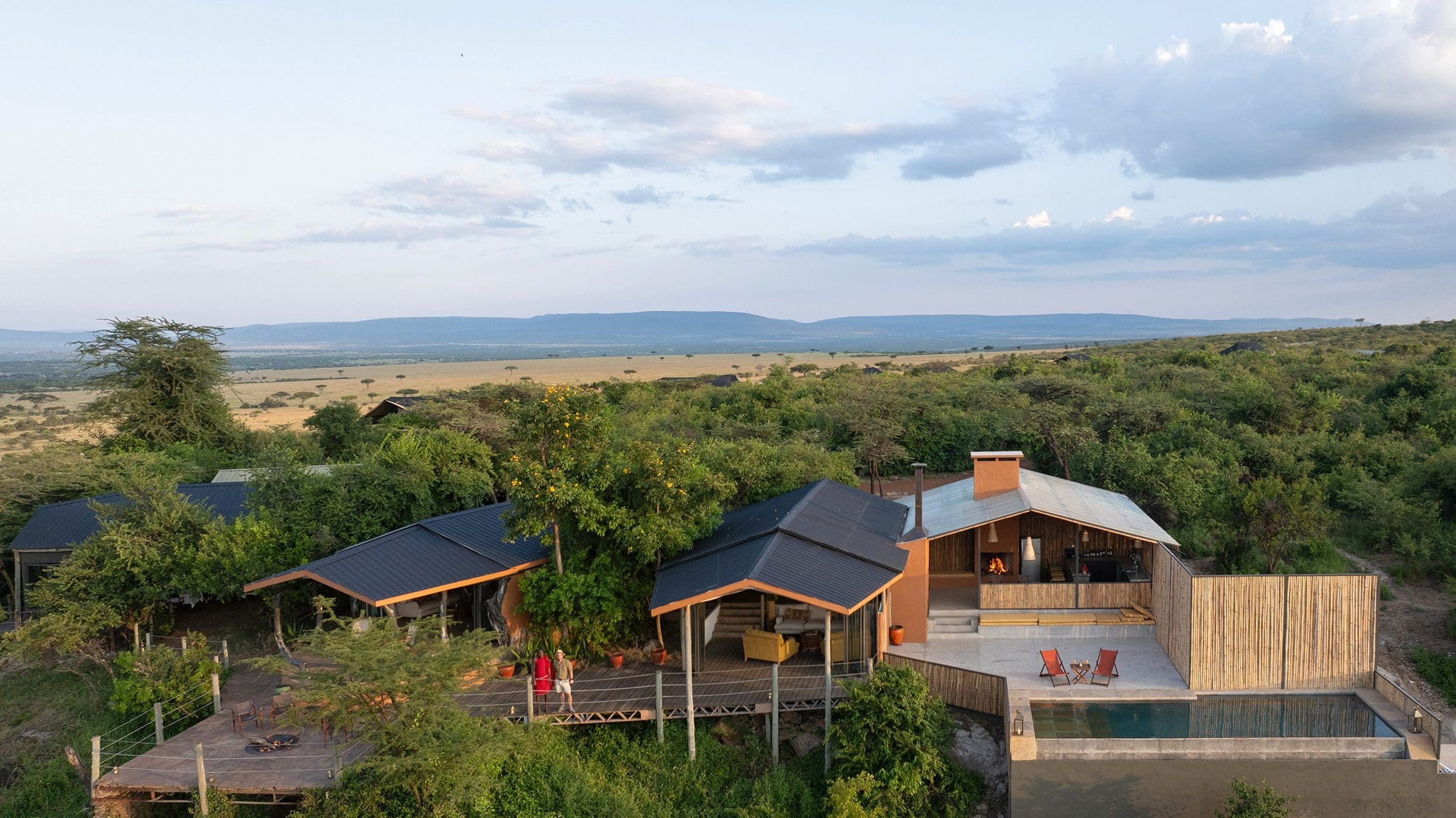
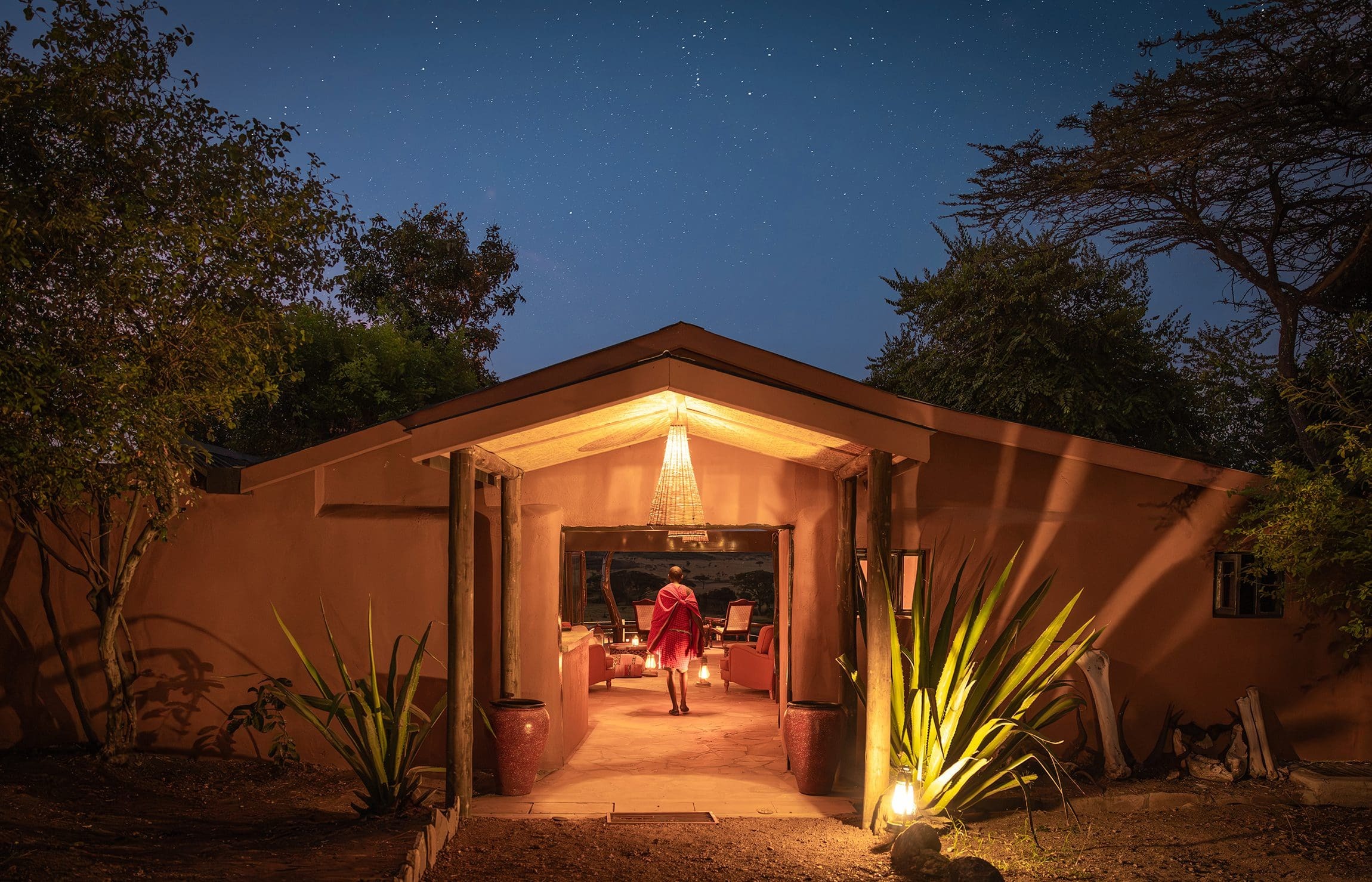
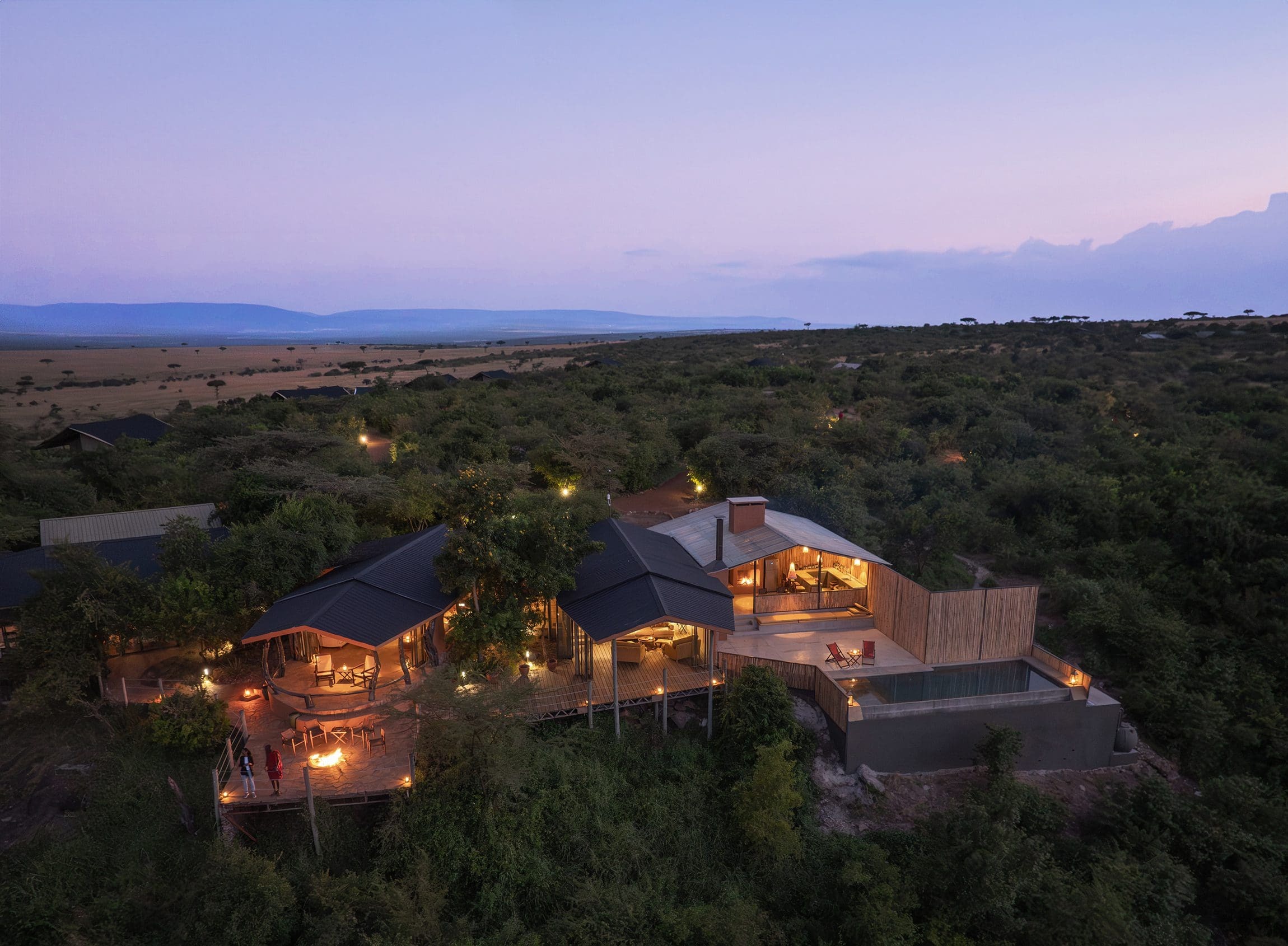
The founding design principle at Saruni Eagle View is the removal of everything that stands between the guest and the view. The camp sits on a natural hilltop — an escarpment above the Koiyaki plains in the Mara Naboisho Conservancy — and every structural decision has been made in service of that position. The tented suites sit on raised platforms with floor-to-ceiling mesh walls. The dining deck is elevated above the main waterhole. The infinity plunge pool faces west across the plains. The palette throughout is muted: browns, ochres, and the natural textures of the materials used, because nothing in the camp’s visual register is allowed to compete with what is happening outside it.
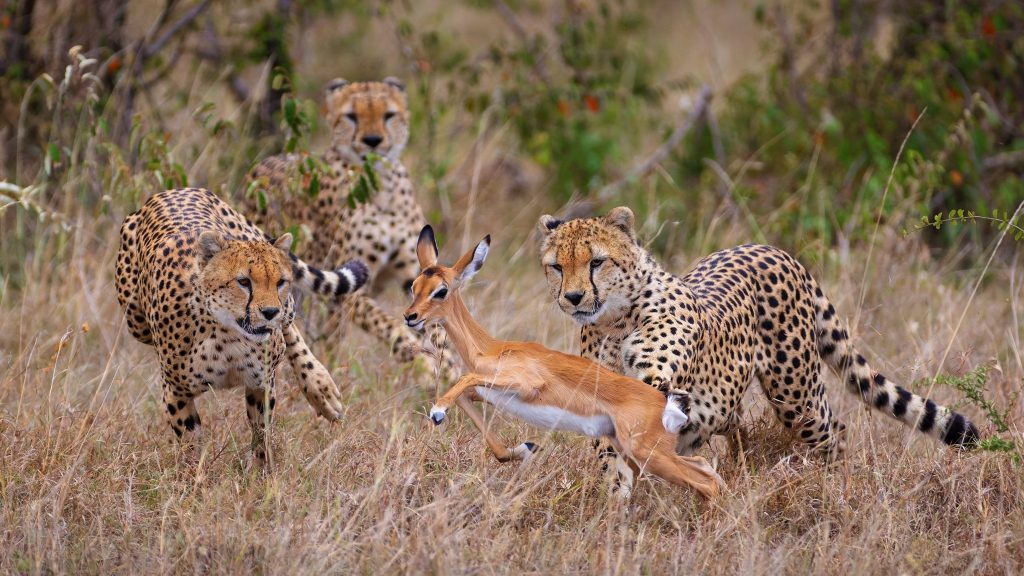
That commitment to position produces results that are not available to every property in the Mara ecosystem. The natural salt lick and waterhole directly below the main dining area draws wildlife through the day independently of game drive schedules: elephants, giraffe, buffalo, and predators arrive at their own rhythm, making the period between drives a continuous low-intensity wildlife experience that guests describe as one of the stays’s defining qualities. Naboisho’s lion density — over 70 identified individuals within the conservancy at any time — means the drive programme itself operates in one of the Mara’s most reliably productive big cat environments.
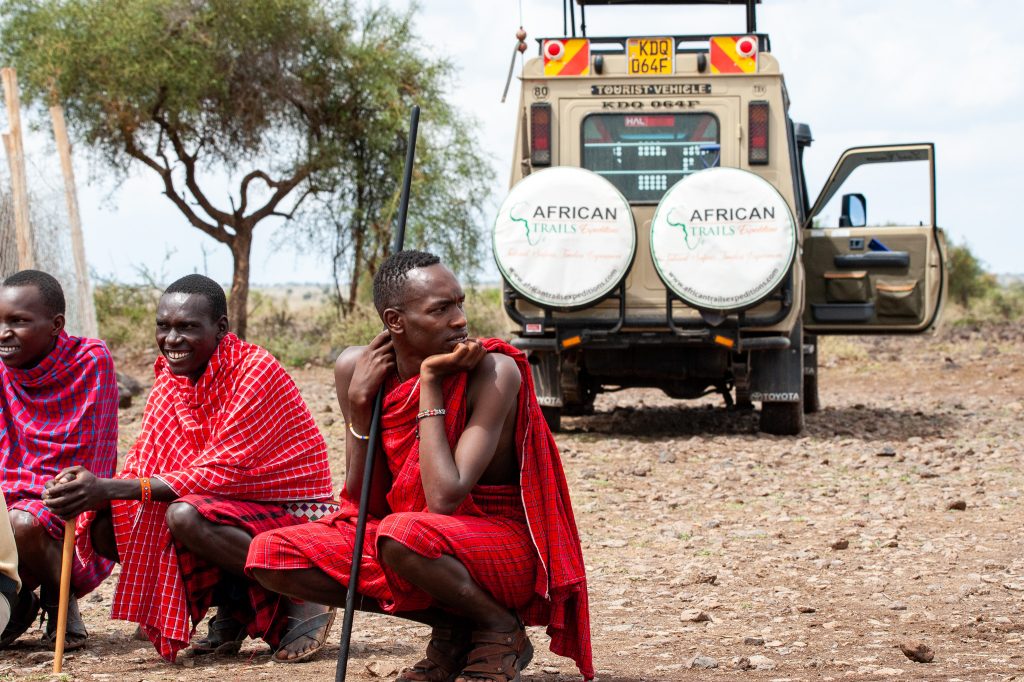
The National Geographic Traveller recognition of 2013 — top 25 eco-lodges in the world, sole Kenya nominee — reflected a specific set of criteria: ecological architecture, community integration, and the quality of the wilderness experience delivered within those constraints. The camp’s operating model has not shifted from those foundations. More than 80% of staff are Maasai from the surrounding landowner communities; land lease fees flow directly to over 500 Maasai families; and the conservancy’s daily fees fund the wildlife protection infrastructure that sustains the density of game that makes the drive programme worth taking.
Named one of National Geographic Traveller's top 25 eco-lodges globally, Saruni Eagle View sits on a Naboisho hilltop with a natural waterhole drawing elephants and predators to the deck throughout the day. Ten mesh-walled suites, night drives, bush walks, and a Maasai Wellness Spa.
Saruni Eagle View holds Ecotourism Kenya's Gold eco-rating, directs land lease fees to over 500 Maasai families, and recruits more than 80% of staff from those communities. Conservation fees fund the ranger programme that sustains the game density the entire experience depends on.
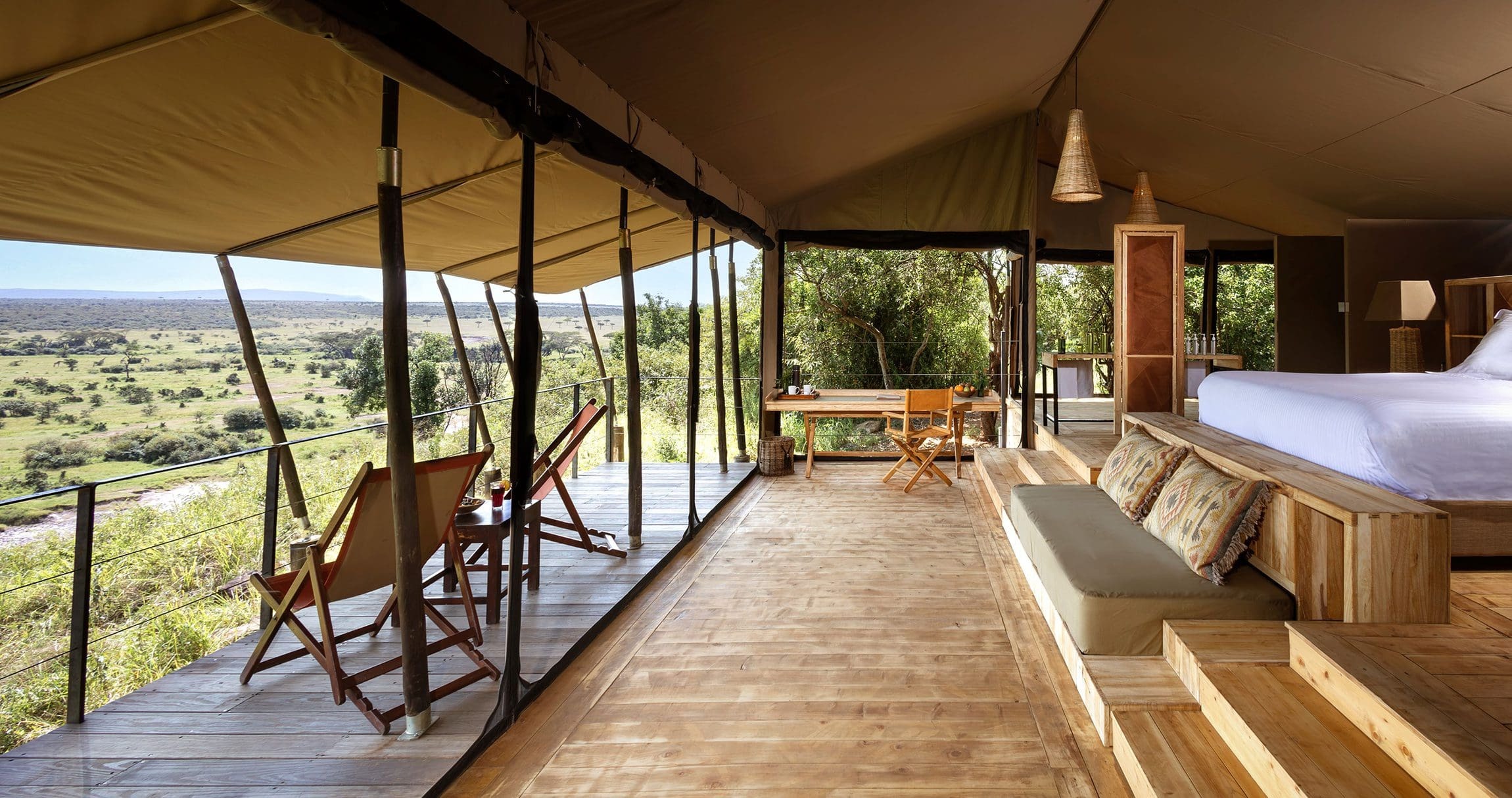
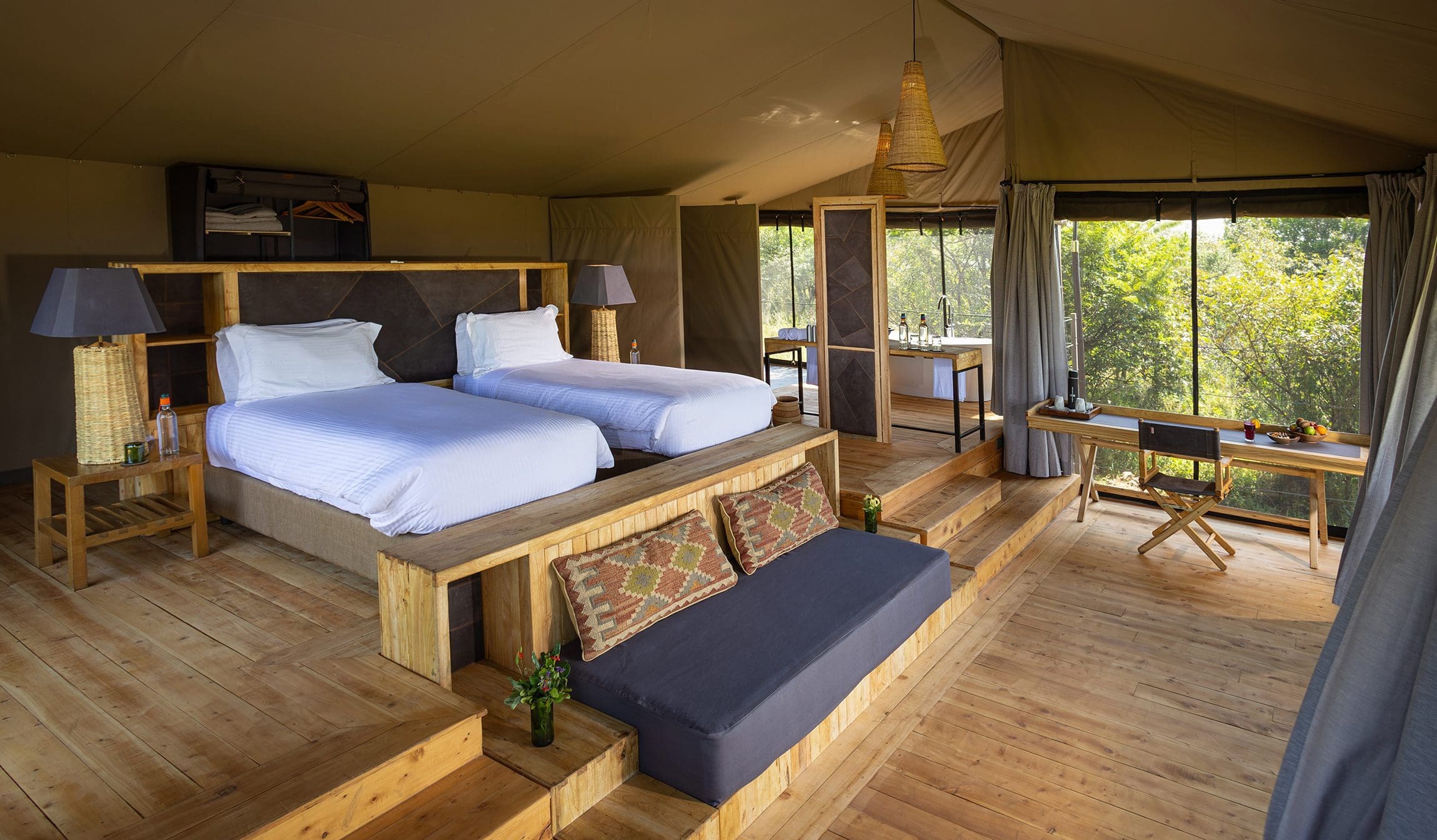
Ten Viewpoint Tents are positioned along the escarpment edge, each on a raised timber platform that places the private deck directly above the plains below. The floor-to-ceiling mesh walls are the defining architectural feature: they remove the visual break between the interior and the view, so that the Koiyaki plains and the waterhole activity below are present from the bed, from the sunken bathtub, and from every seated position in the tent. Raised canvas ceilings give the interiors a generous height that prevents the compressed feeling common to smaller tented camps; earth tones and natural materials throughout ensure the interior never competes with what is happening outside. Each tent has two shower configurations — indoor and an open-air safari shower — and a sunken bathtub positioned to face the view. Bio-flush toilets reflect the camp’s ecological operating standards. The two family tents carry the same footprint and fittings as the double tents with the addition of a second bedroom and a second bathroom under the same shared canvas roof, giving families the practical separation that multi-night stays with children require.
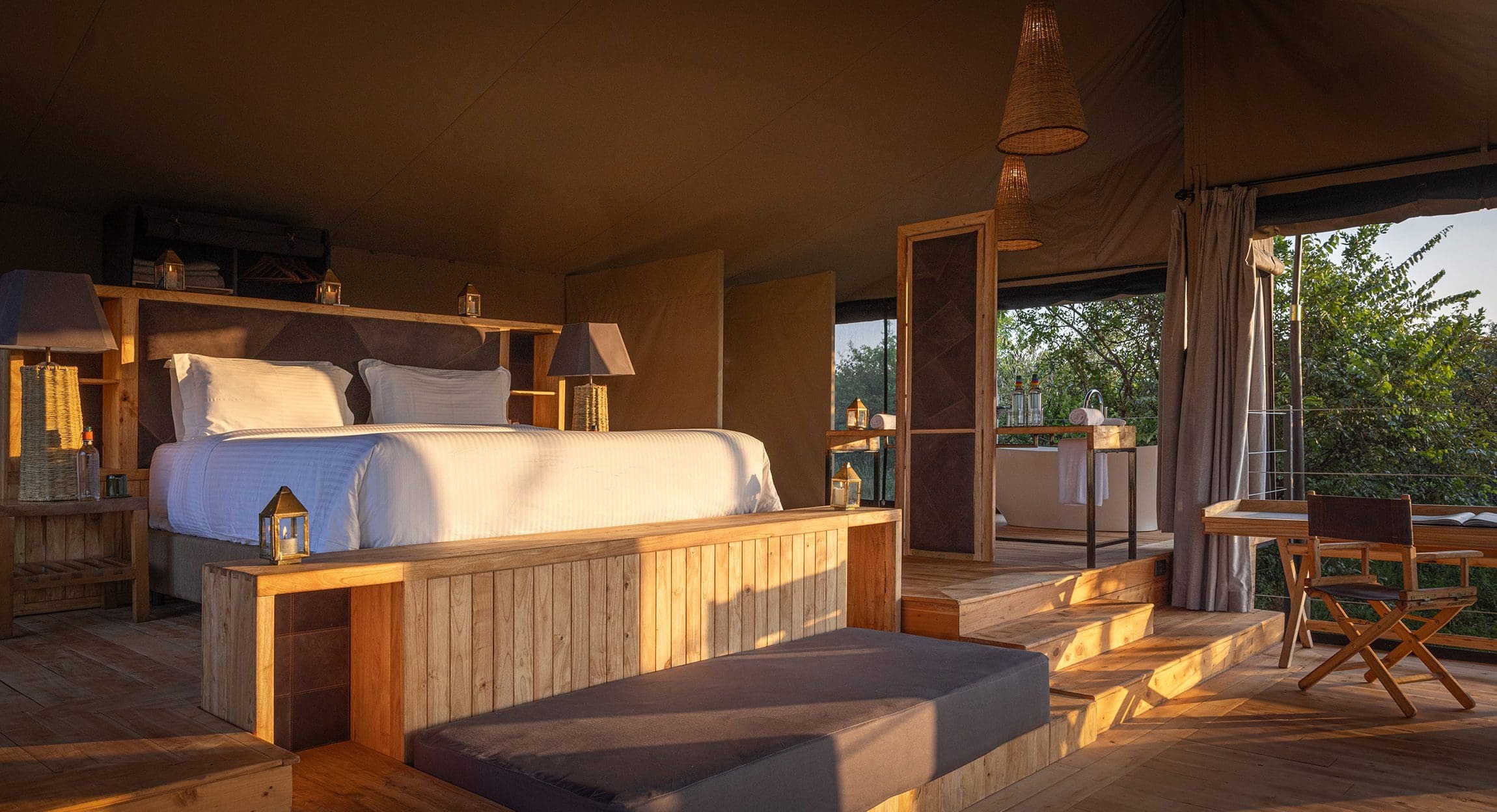
Eight escarpment suites with floor-to-ceiling mesh walls, raised canvas ceilings, sunken bathtubs, and indoor and outdoor showers. The private deck looks directly onto the waterhole below, where wildlife moves independently of any scheduled activity.
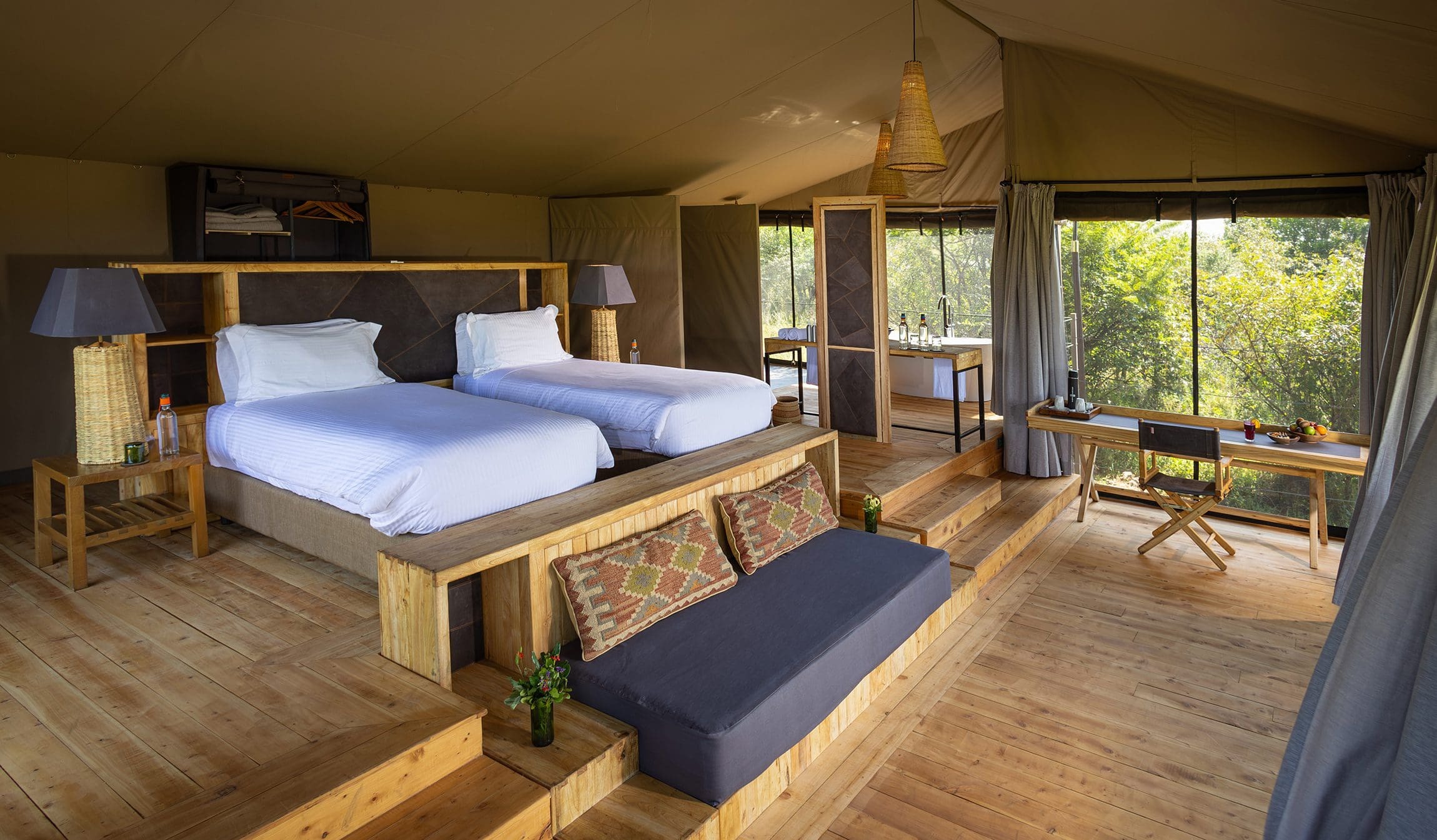
Two family suites connect two bedrooms and bathrooms under a shared canvas roof, with the same sunken bathtubs and mesh walls as the doubles, and a shared deck above the waterhole. Children above seven are welcomed, with a wildlife safety orientation on arrival.
Every moment at Saruni Eagle View is crafted to immerse you deeper in the wild.
Ready to plan your stay?
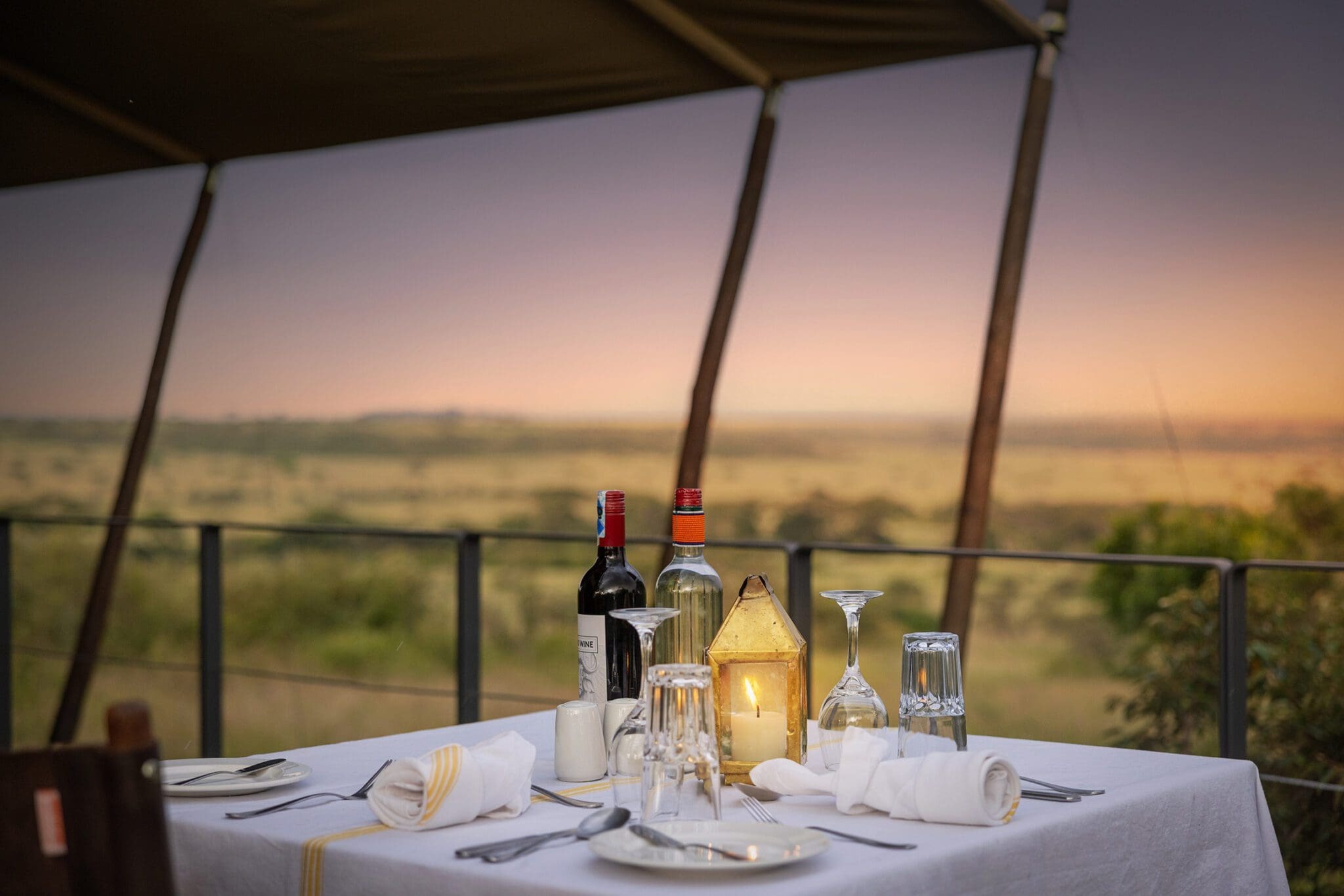
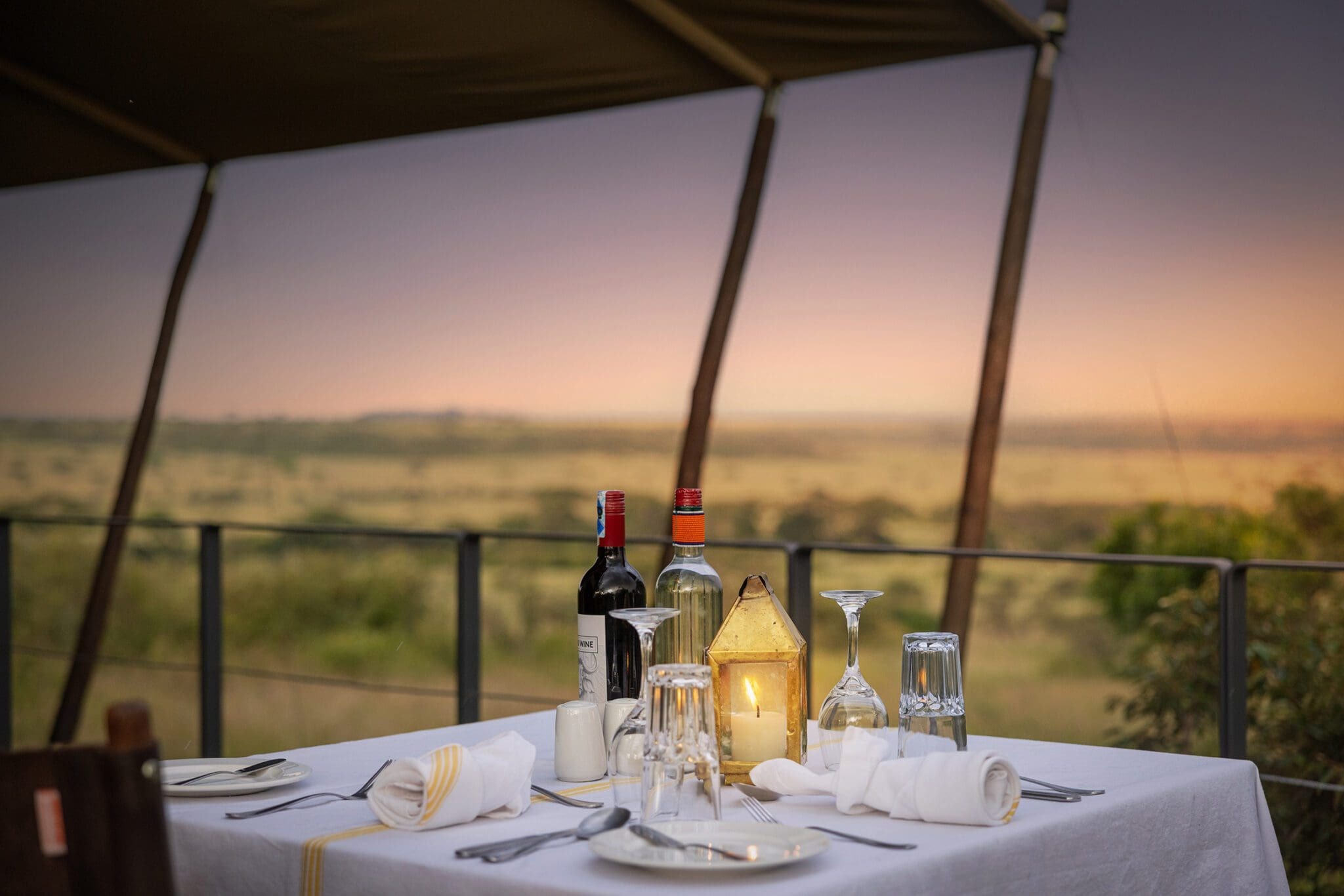
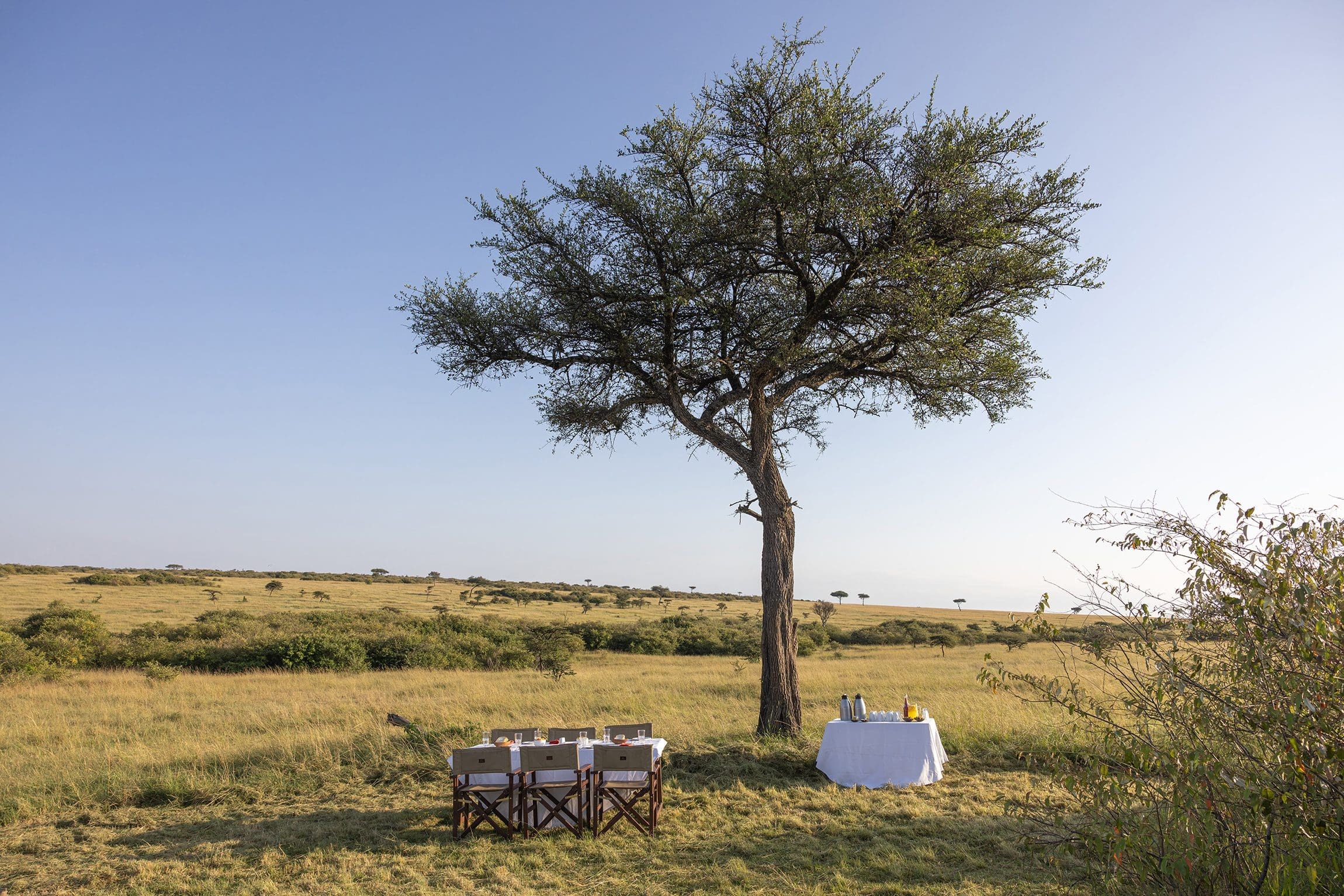
Meals are served on the elevated dining deck directly above the waterhole — the position is functional rather than decorative, because the waterhole traffic during lunch and dinner is a reliable enough feature of the day that the dining deck doubles as a game-viewing platform between courses. The kitchen uses fresh, locally sourced produce with a consistent emphasis on quality over spectacle; the cuisine is praised in guest reviews with the same frequency as the game drives, which at a camp of this scale is the relevant measure. Bush meals and sundowner drinks at a position in the conservancy selected by the guide for the evening light are a regular part of the afternoon drive programme. The bar and new lounging areas adjacent to the infinity plunge pool carry the same muted palette and natural materials as the rest of the camp, making the space between drives feel like a continuation of the outdoor experience rather than a retreat indoors.
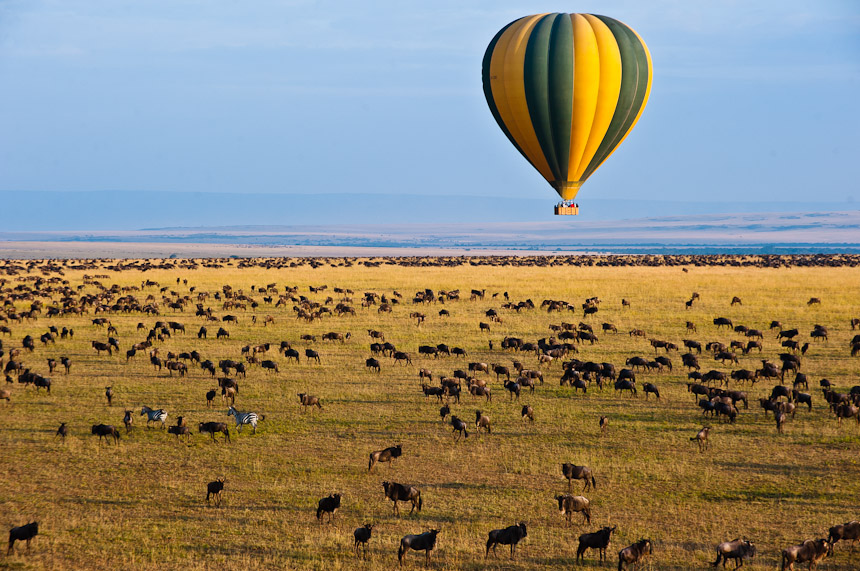
Saruni Eagle View is open year-round. July through October is the Great Migration period, when wildebeest and zebra herds move through the Naboisho Conservancy’s plains and the Mara River crossing zones become accessible on day excursions from the camp. August and September are peak migration months; October delivers lighter visitor volumes as the final herds thin. The hilltop position means that the Koiyaki plains panorama during the migration period — herds visible from the tent deck without a vehicle, moving in the distance across the open grassland — is a feature of the camp itself rather than an experience that requires a drive to access. January through March is the camp’s most productive period for resident big cat viewing outside the migration: the guides operate in a landscape undistracted by the herds, and the conservancy’s lion, cheetah, and leopard populations are the focus of a drive programme that benefits from the guides’ accumulated knowledge of individual animals over years of observation. June is excellent for game viewing in a greener landscape as the dry season consolidates wildlife. November and December bring the short rains, fresh grass, and the calving season.
Explore handcrafted itineraries where Saruni Eagle View forms part of the journey.
Please share your name and email so we can follow up with you.