
Saruni Samburu
6 villas carved into a volcanic rock face above 200,000 acres of private northern Kenya wilderness, the most dramatically positioned safari lodge in East Africa
The approach to Saruni Samburu gives nothing away. A road climbs into the rocky hills of the Kalama Conservancy through acacia scrub and red volcanic earth, and nothing prepares guests for what waits at the top. Then you walk into the main building, and the view arrives all at once: 200,000 acres of northern Kenya wilderness spreading to every horizon, the Kalama plains rolling toward the Matthews Range in the north, Ol Olokwe’s flat-topped volcanic mass to the southeast, and on clear mornings the unmistakable white crown of Mount Kenya gleaming on the distant southern skyline. It is one of the great arrival moments in African safari travel, and guests who have experienced it tend to describe it in the same terms: they weren’t prepared.
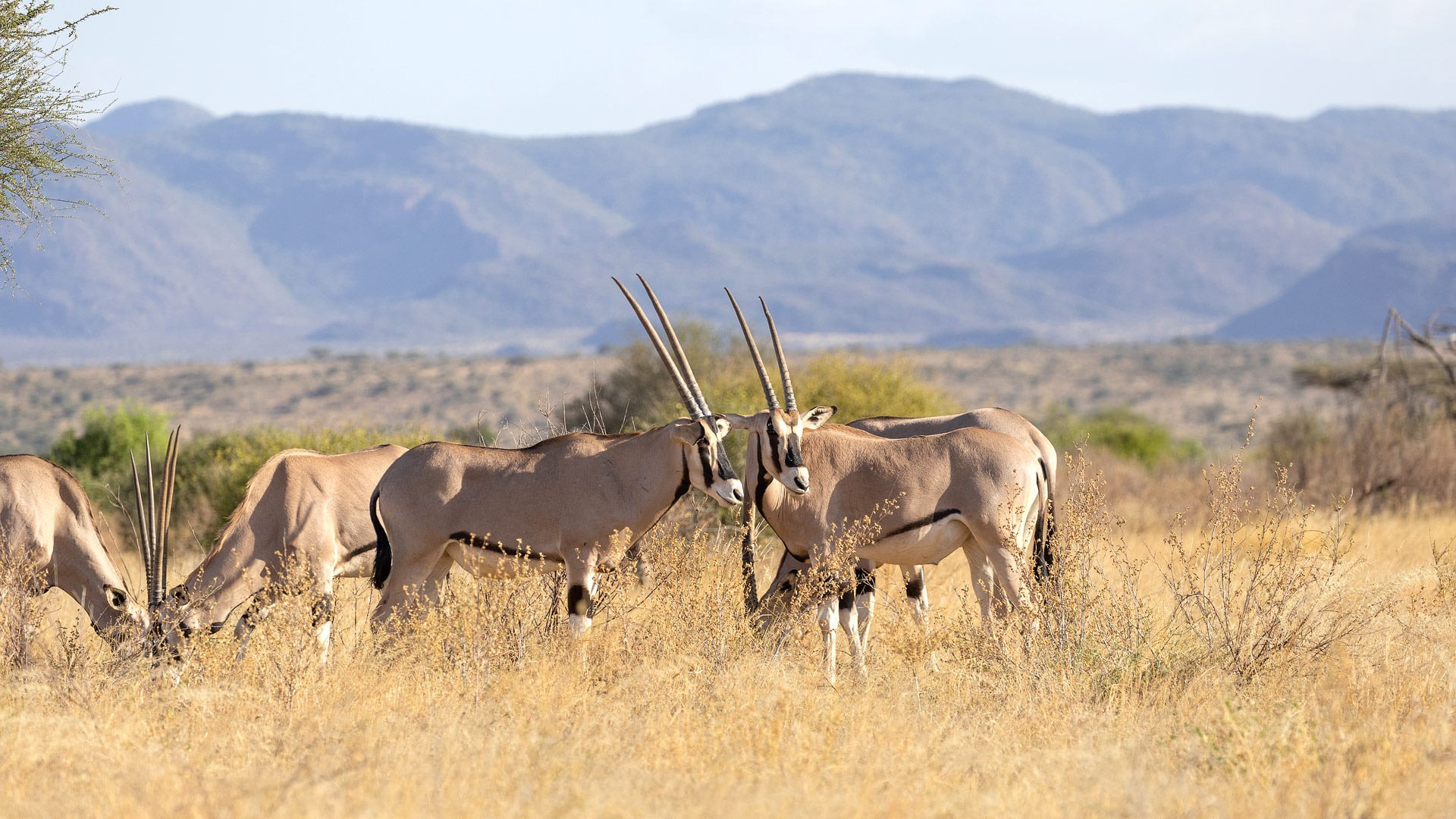
Saruni Samburu is the only lodge in the Kalama Wildlife Conservancy, a 240,000-acre community-owned private wilderness seven kilometres from the northern border of Samburu National Reserve. This distinction matters enormously. Guests have exclusive access to an area of pristine, unfenced northern Kenya that no other lodge can access. The wildlife moves through it freely, elephant herds on ancient migratory routes between conservancies, lion and leopard making use of rocky outcrops and acacia thickets that have never seen a tourist vehicle from another property. The sense of having a landscape of this scale entirely to yourself is the defining characteristic of a Saruni Samburu stay, and it is not manufactured: it is simply the arithmetic of one lodge in 200,000 acres.
The lodge itself is an architectural statement of considerable ambition. Built into and around the natural volcanic rock of the clifftop — so that the rock face forms interior walls, exterior surfaces, and in some cases the bathroom of a villa — it achieves a relationship with its setting that is genuinely organic rather than aspirational. The six villas vary in configuration, but all share the same qualities: whitewashed interiors, open-fronted verandas catching the breeze across the plains, wrought-iron beds, outdoor showers with views that stop conversation, and the particular quality of light and air that only altitude and rock and an absence of anything man-made in any direction can produce.
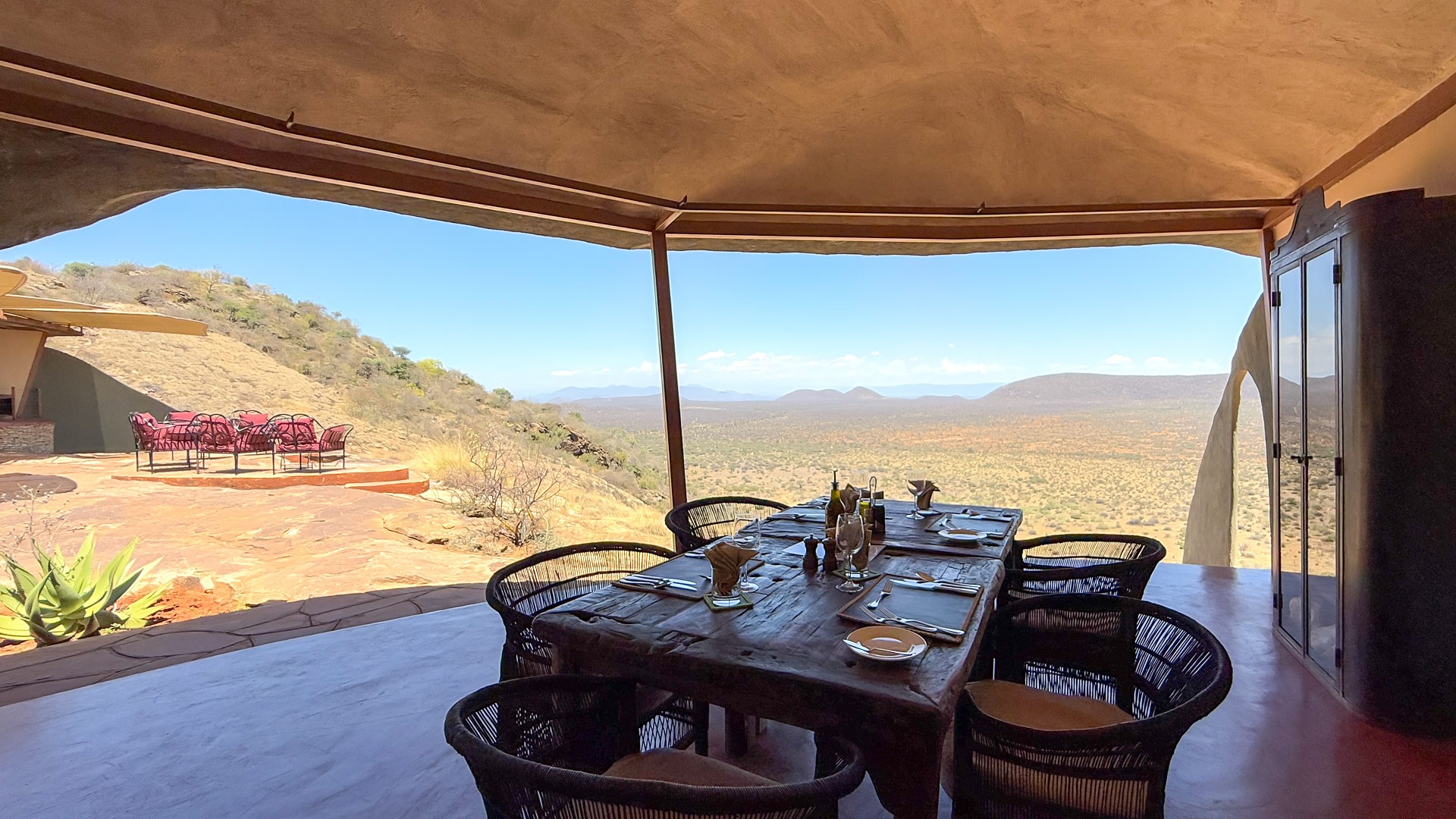
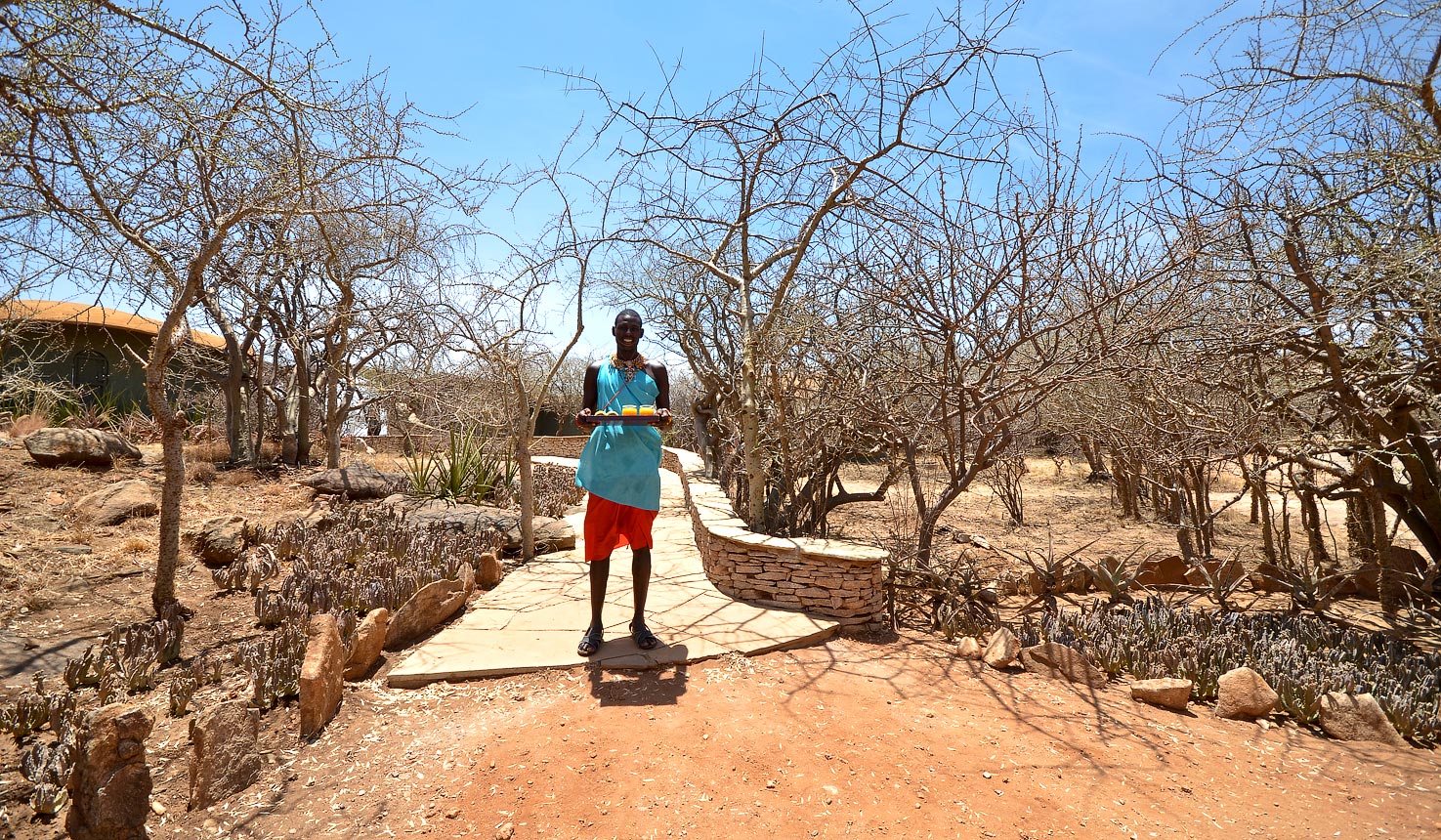
The lodge’s Samburu staff, 80% recruited from the local community, many of whom helped build the lodge, bring a warmth, charisma, and depth of local knowledge that guests consistently describe as one of the most memorable aspects of the experience. The cuisine runs to Italian-influenced menus of surprising sophistication. Two infinity pools are carved into the rock at different elevations, both overlooking the waterholes where elephant, giraffe, and oryx gather to drink in the afternoon heat. And when the Samburu night sky unfolds above the lodge’s open-fronted dining area, free of any light pollution in every direction, it becomes clear why guests return here with unusual frequency for a single property.
Perched on a clifftop escarpment within the community-owned Kalama Wildlife Conservancy, Saruni Samburu is one of Kenya's most celebrated and architecturally extraordinary safari lodges. Six open villas built into and around the natural rock; with 360-degree views stretching from the Kalama plains
Why Stay Here
- The only lodge in the 240,000-acre Kalama Conservancy — 200,000 acres of exclusive private wilderness
- Clifftop villas carved into volcanic rock — 360-degree views from the Kalama plains to Mount Kenya
- Two rock-hewn infinity pools overlooking waterholes where elephant, giraffe, and big cats drink daily
- Samburu Special Five game drives across both Kalama Conservancy and Samburu National Reserve
- 80% Samburu staff, Italian-influenced cuisine, and the Warriors Academy cultural immersion programme
- Climb sacred Mount Ololokwe, visit prehistoric rock art caves, and track big cats on foot in Kalama
Saruni Samburu is the pioneer lodge of the Kalama Wildlife Conservancy — the first safari property to open on this community-owned land, and for many years its sole source of tourism income. The lodge's financial contribution covers a significant percentage of the conservancy's annual operating budget, directly funding wildlife protection, anti-poaching patrols, and habitat management.
Rooms & Accommodation
All six villas at Saruni Samburu are built directly into the volcanic rock of the clifftop escarpment, each one uniquely shaped by the natural contours of the rock face it occupies. Whitewashed interiors, wrought-iron beds with quality linens and mosquito netting, Zanzibari carved chests, freestanding fans, generous storage, and large open-fronted verandas with cushioned seating are common throughout. En-suite bathrooms vary by villa but include combinations of indoor and outdoor showers and a bathtub — all with views across the Kalama wilderness that make washing feel like a significant event. The Honeymoon Villa, Villa 5, is built furthest onto the cliff edge, with its own secluded dining deck and the most vertigo-inducing views in the lodge. Family Villas offer two en-suite bedrooms sharing a lounge, dining area, and multiple verandas, with flexible configurations for families or groups.
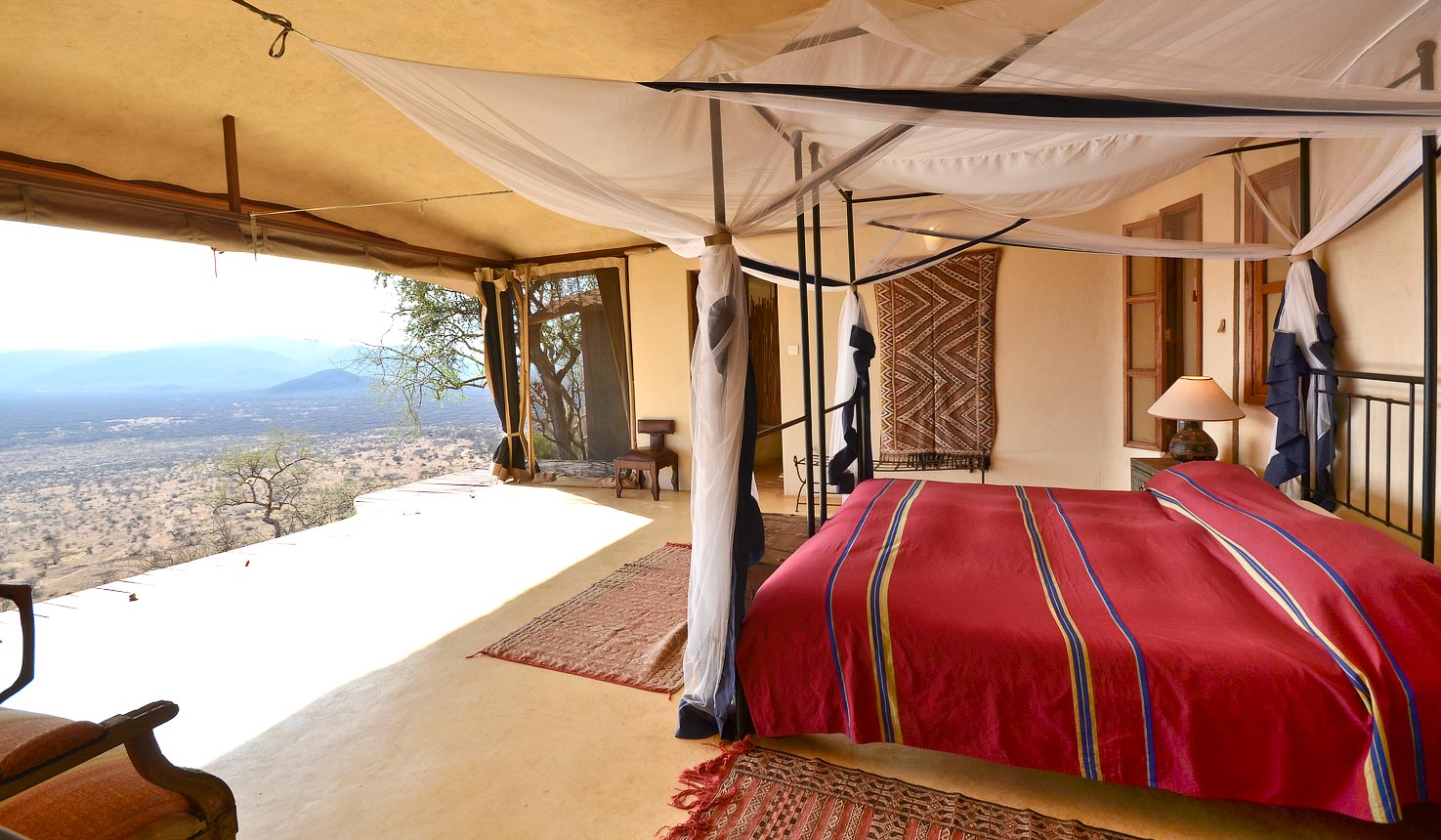
Single Villa
Two single villas offering the purest expression of the Saruni Samburu experience for couples or solo travellers. One en-suite bedroom opening onto a spacious living and dining area, with an open veranda cantilevered above the Kalama plains. The bathroom offers indoor and outdoor shower options
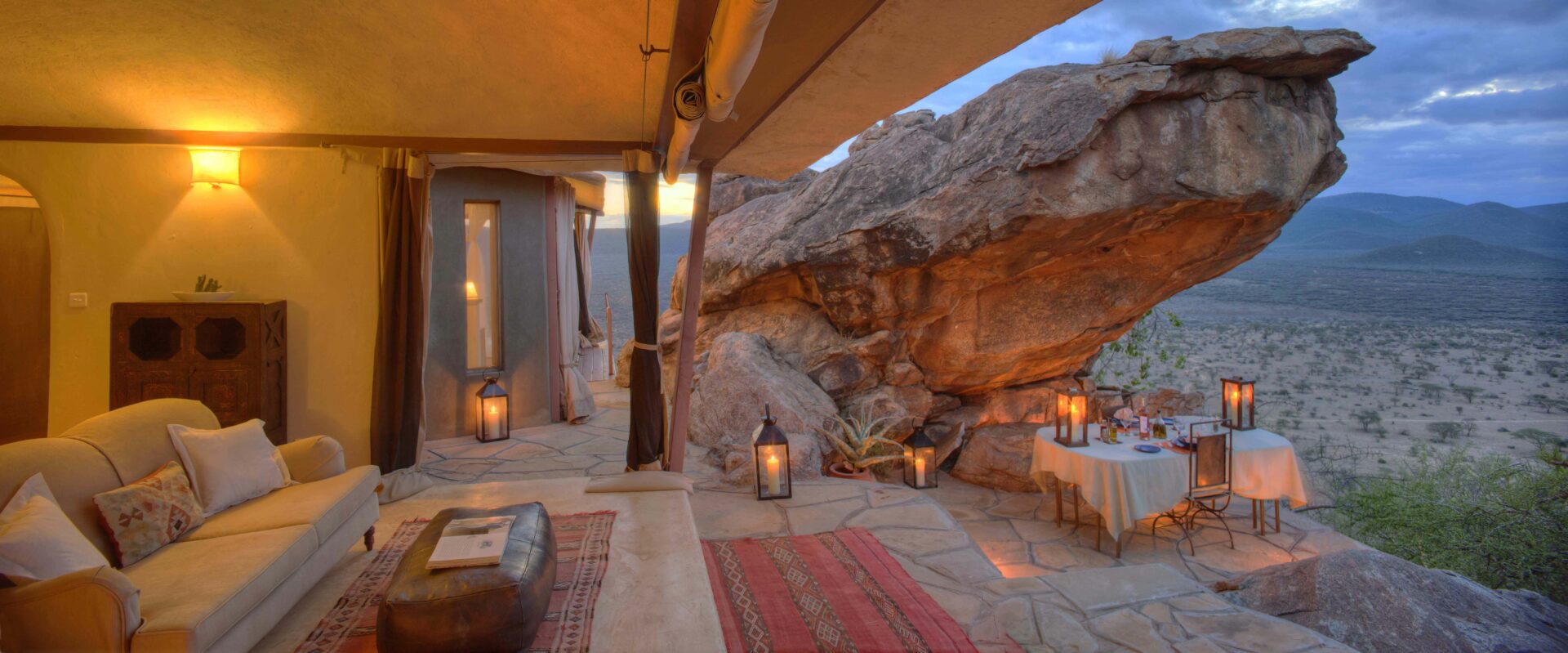
Honeymoon Villa
Built furthest onto the cliff edge, Villa 5 is Saruni Samburu's most intimate and celebrated room — a single en-suite villa that has been described, without obvious hyperbole, as one of the most remarkable rooms in Africa. The natural rock formations become the villa's walls and floor on multiple levels
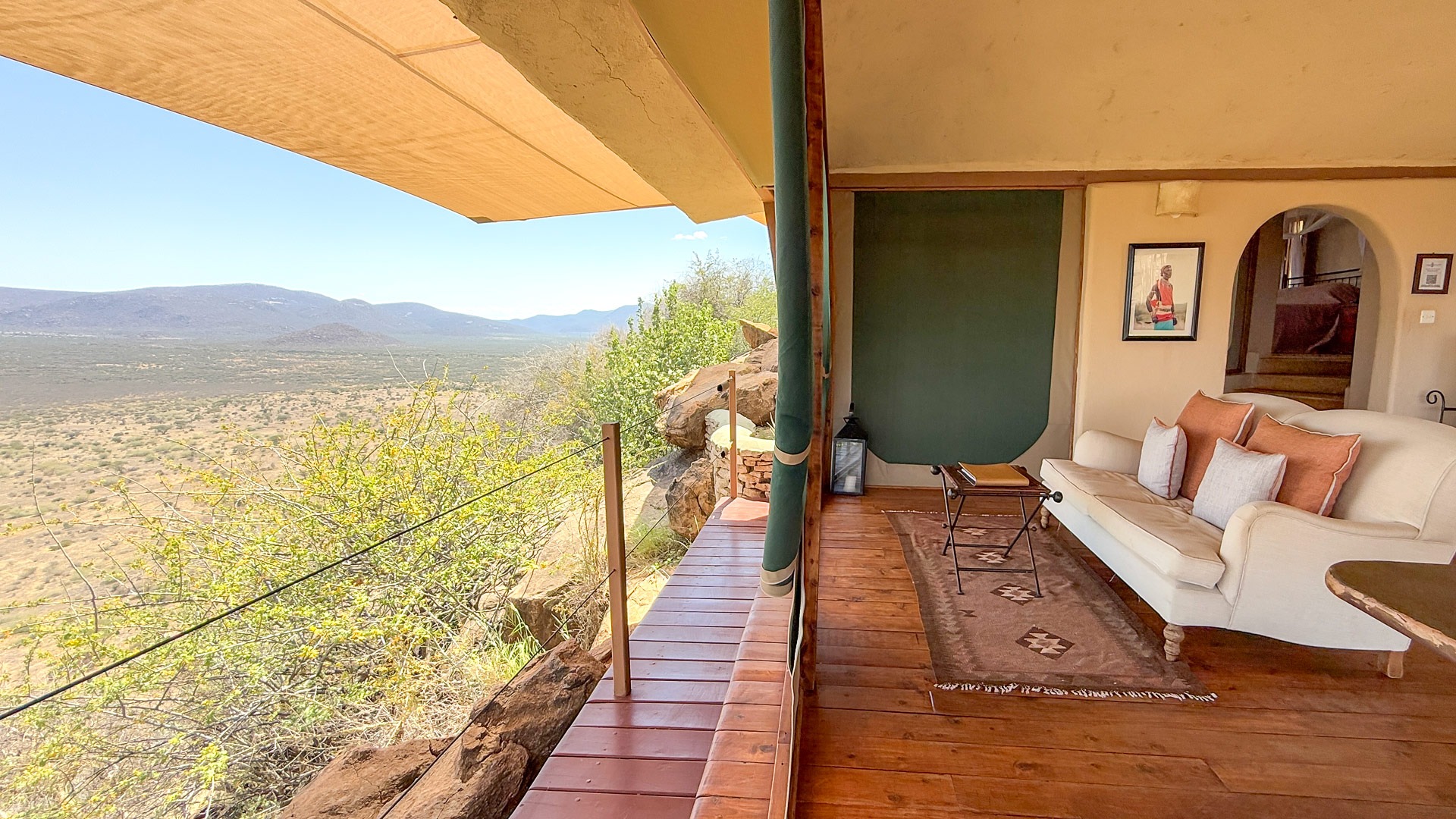
Family Villa
Four family villas — two of which can be booked individually or joined as a single exclusive unit — each with two en-suite bedrooms, a shared lounge and dining area, multiple verandas, and the same rock-carved architecture that defines the lodge throughout. Each bedroom has its own outdoor shower and dressing room; the shared living space opens entirely to the Kalama view.
Experiences & Activities
Every moment at Saruni Samburu is crafted to immerse you deeper in the wild.
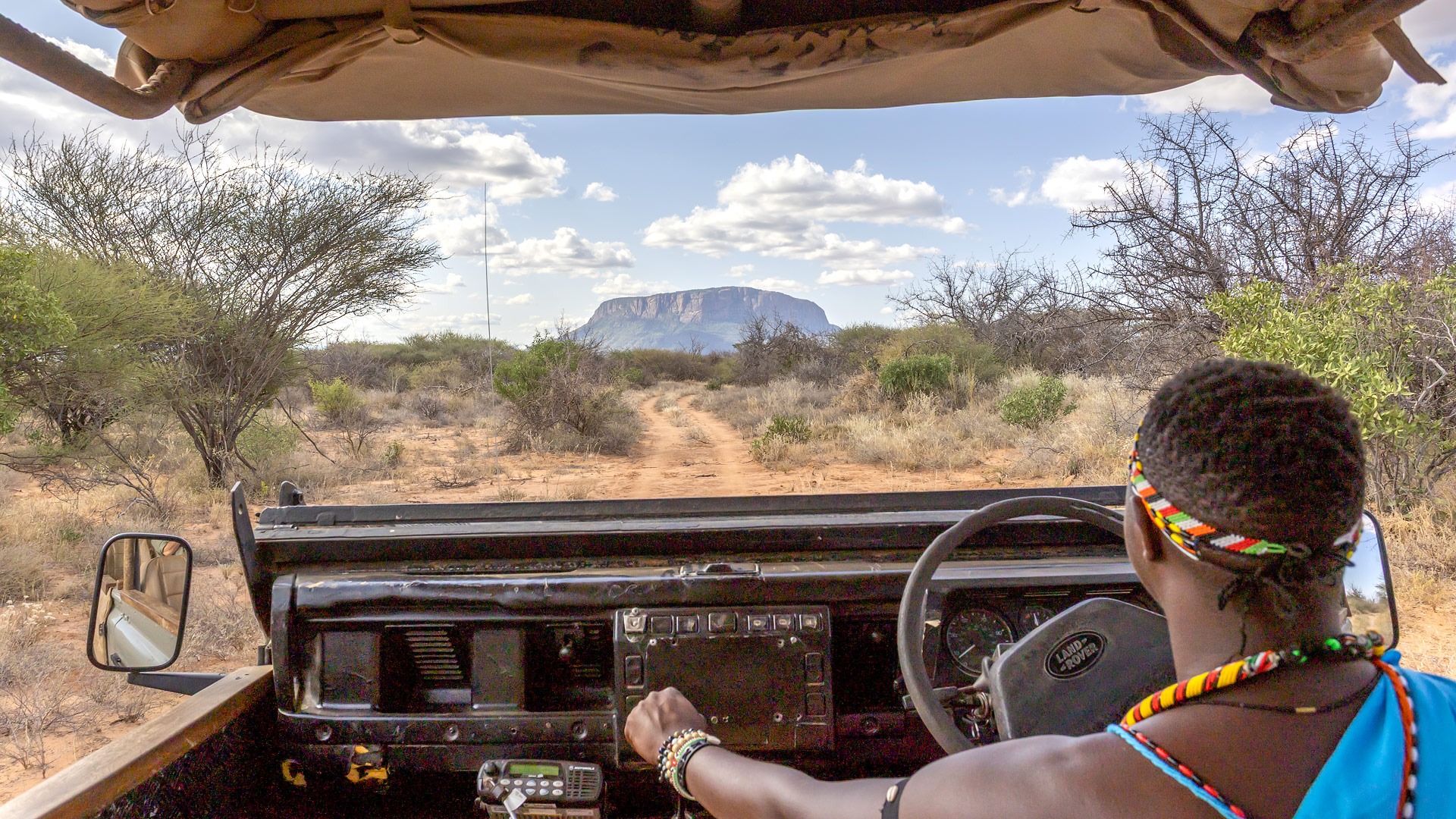
Kalama Conservancy Game Drives
Exclusive morning and evening drives across the 240,000-acre Kalama Conservancy in open 4×4 vehicles, led by Samburu guides whose knowledge of the terrain, its animals, and its ecology is both professional and inherited. With no other lodge in the conservancy, guests have this vast wilderness
Samburu National Reserve Game Drives
Seven kilometres from the conservancy's northern boundary, Samburu National Reserve offers a different and complementary game-viewing environment along the Ewaso Nyiro River. Drives into the reserve provide access to its famous river-dependent wildlife
Warriors Academy
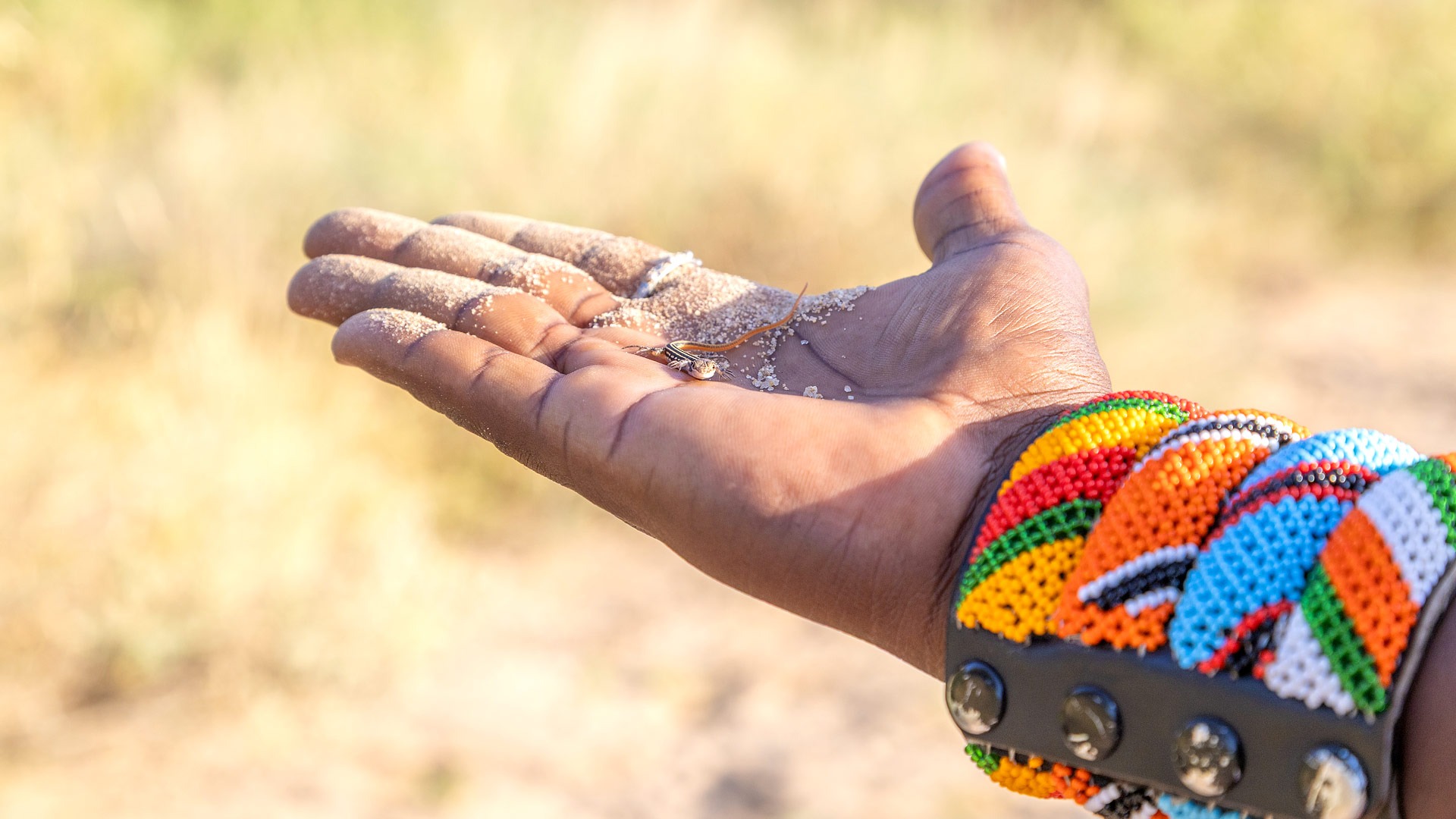
One of the most genuinely immersive cultural programmes available at any safari lodge in East Africa. Guided by Samburu warriors who serve as the lodge's guides and staff, guests spend time learning the practical survival skills of the semi-nomadic Samburu life
Ready to plan your stay?
Our specialists are available 24 hours, 7 days a week.
Dining
The cuisine at Saruni Samburu takes its cue from the lodge’s Italian ownership and management — menus that are Mediterranean in sensibility, built from locally sourced Kenyan produce and served with the kind of care that surprises guests who weren’t expecting fine dining at this altitude and remoteness. Freshly baked breads, farm-to-table ingredients, handmade pastas, and an excellent wine selection make meals a genuine event rather than a nutritional interlude between game drives. Dining takes place at the communal table in the open-fronted main area, a social format that the Samburu staff preside over with warmth and characteristic charisma, or privately on villa verandas, by the pool, or at bush breakfast and dinner settings within the conservancy. The open-fronted dining area’s lack of a complete roof means that clear nights become stargazing occasions of genuine magnificence, the Milky Way unobstructed by any light pollution in any direction.
Gallery
Best Time to Visit
Saruni Samburu and the Kalama Conservancy reward visitors year-round, and the lodge operates without seasonal closure. The dry seasons — January to March and June to October — offer the most reliable game viewing in Kalama and Samburu National Reserve, with shorter vegetation and wildlife concentrated around the conservancy’s waterholes and the Ewaso Nyiro River. The long dry season from July to October is the most popular period; the conservancy’s clear skies and low humidity during these months make Mount Kenya consistently visible from the lodge’s villas — one of the most atmospheric visual experiences the Samburu region offers.
The short rains of November and December are brief and rarely disruptive. April and May bring heavier rainfall and a dramatic greening of the Kalama plains; visitor numbers drop significantly, rates are typically more accessible, and the sense of exclusive possession of 200,000 private acres reaches its most absolute. The Samburu Special Five and the conservancy’s resident lion, leopard, and elephant populations are present year-round. Mount Ololokwe is accessible for climbing in all dry months; the Warriors Academy and cave art visits operate year-round regardless of season.