From
$2,809

Start Planning Your Tailor-Made Journey
🔒 Your details are kept private and never shared with third parties.
A 100-metre cliff face, 180-degree views of a Rift Valley soda lake, and ten suites designed to make the view the furniture — Lake Nakuru's most singular addres
Lake Nakuru National Park is a compact and often underestimated destination — 188 square kilometres of volcanic cliffs, yellow fever tree woodland, acacia savanna, and the alkaline soda lake that gives the park both its name and its identity. The flamingo population that gathers on the lake’s surface has made it one of Kenya’s most photographed landscapes for decades; the wildlife that the woodland and grassland carry — all of the Big Five, including both black and white rhino, alongside giraffe, hippo, waterbuck, eland, and over 450 recorded bird species — makes a game drive here genuinely rewarding rather than merely a prelude to the flamingo photographs. It is also 160 kilometres from Nairobi — closer to the capital than any other park on the Kenya safari circuit of comparable wildlife density, and reachable in two and a half hours on a road that passes through some of the Rift Valley’s most dramatic scenery.
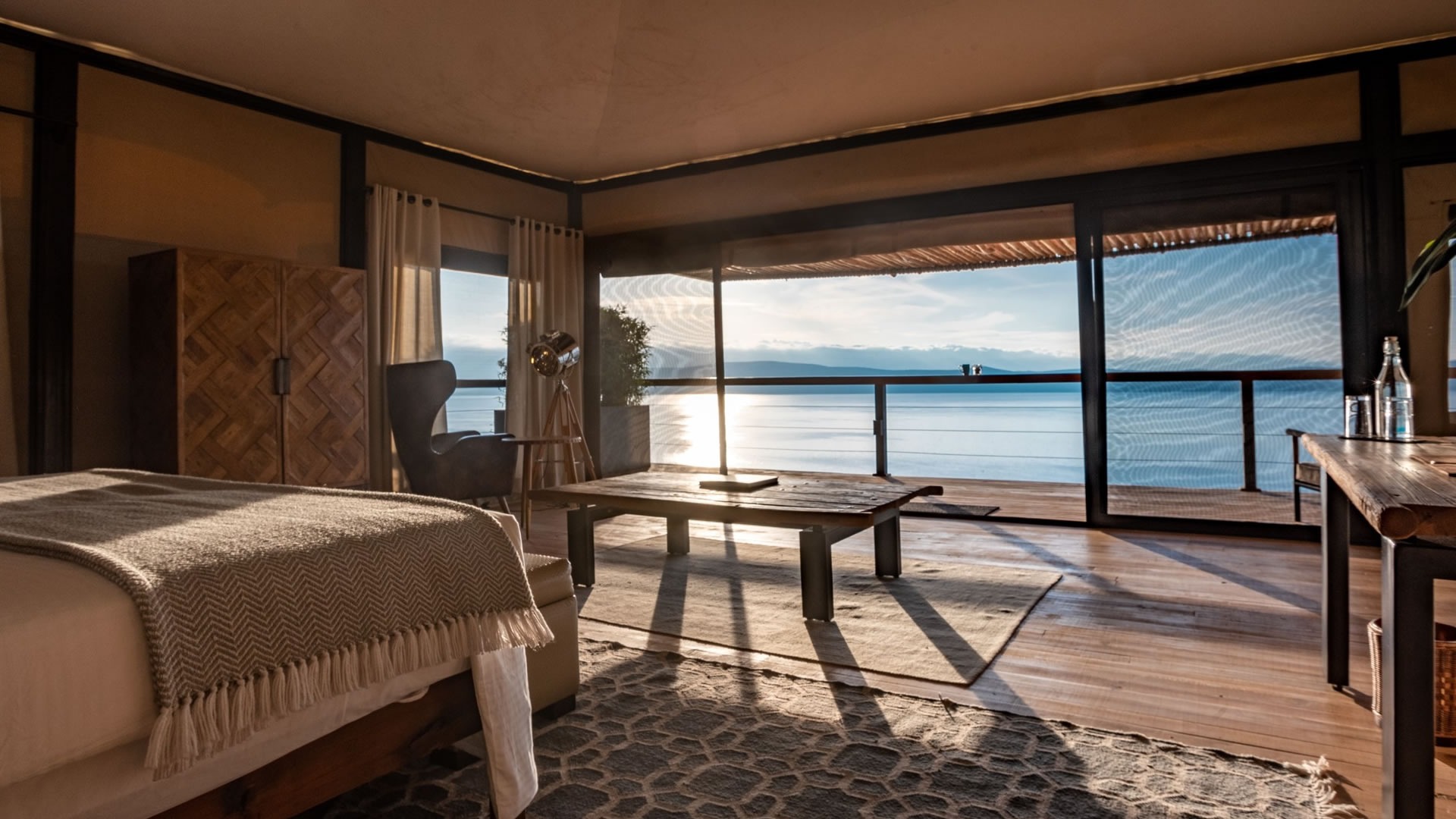
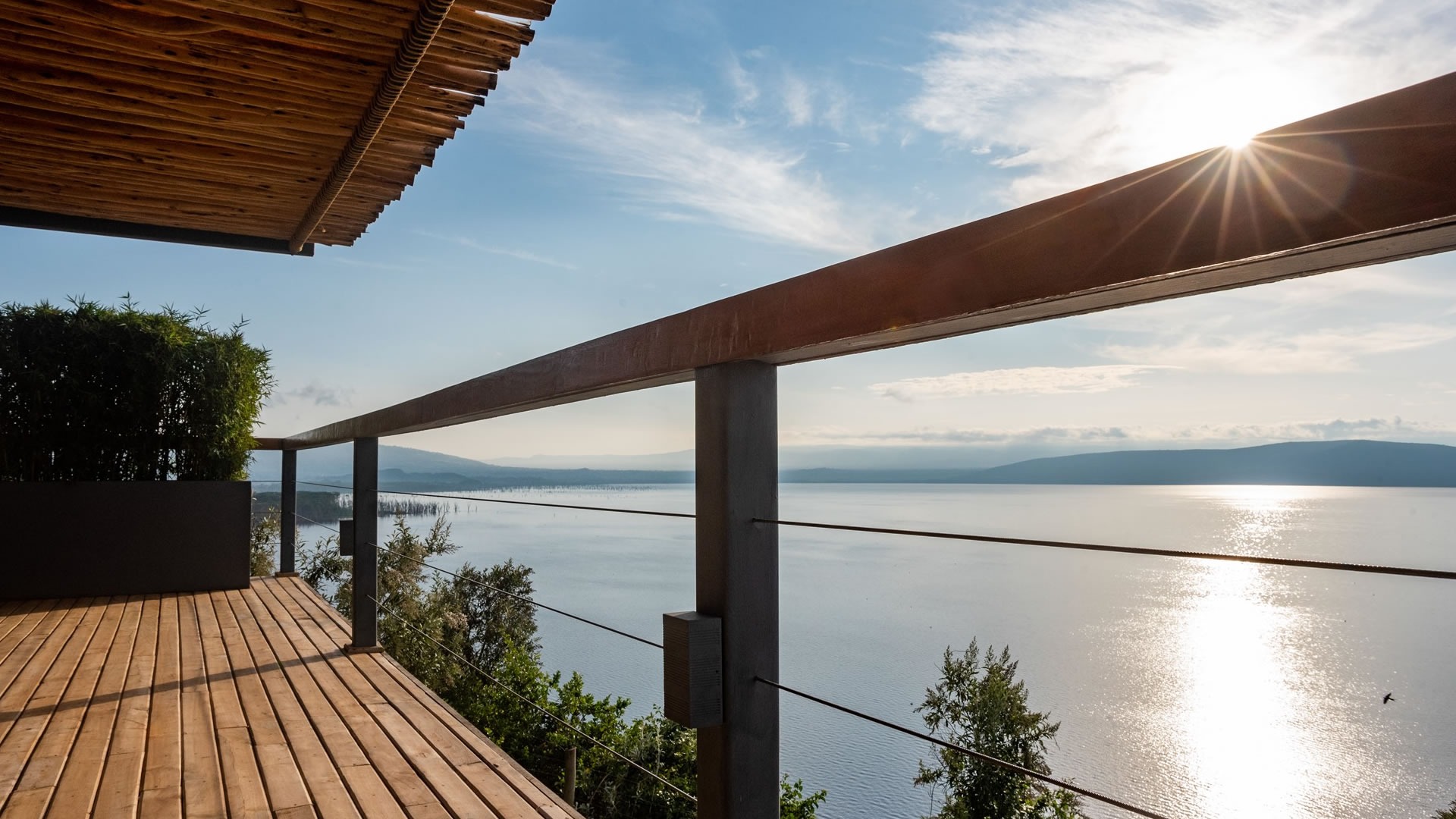
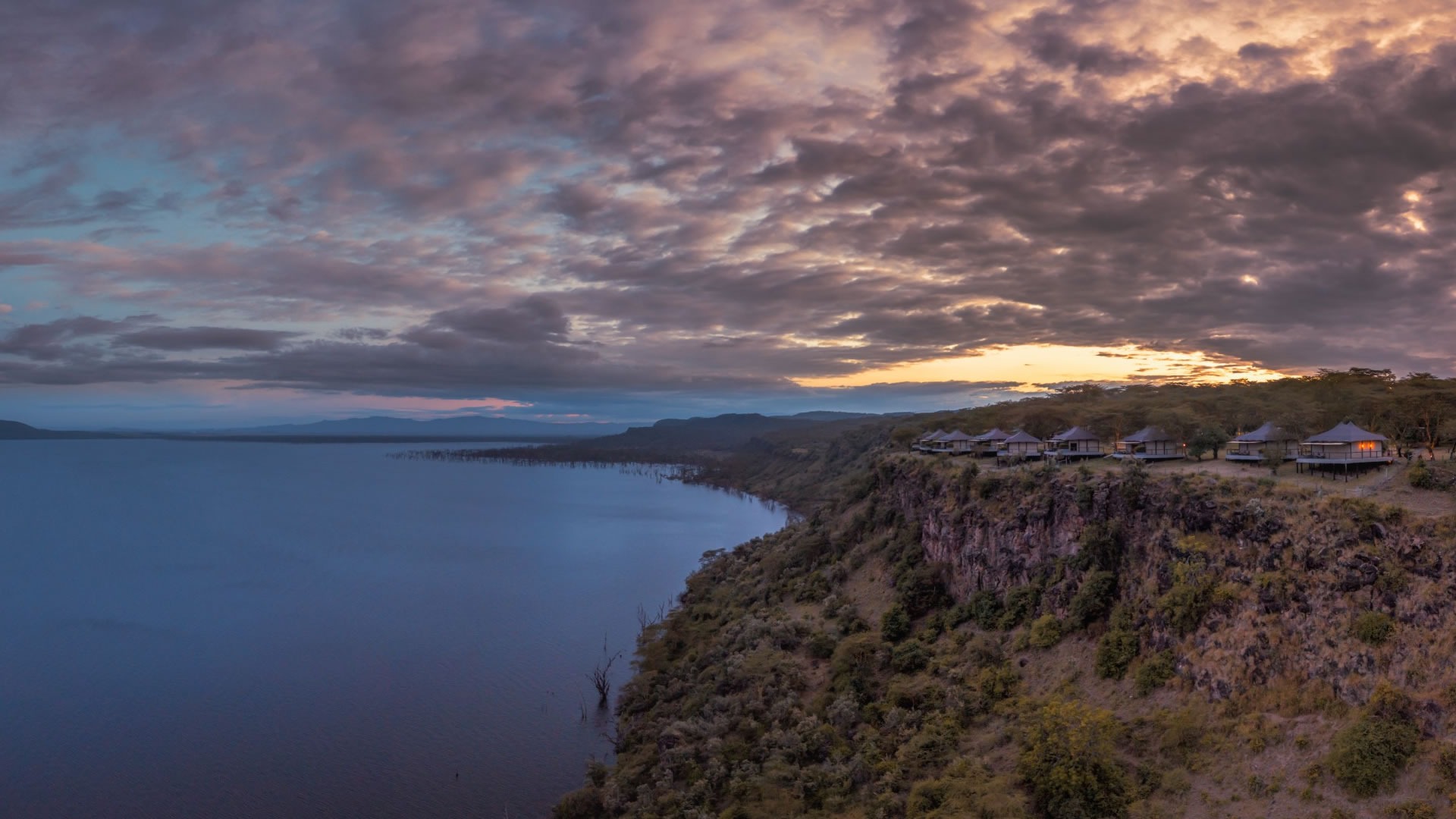
The Cliff occupies the most dramatic position inside the park: a clifftop site 100 metres above the lake’s eastern shore, where the rock face drops vertically to the water’s edge and the views are not a feature of the property but the entire reason for its existence. Ten tented suites are positioned along the clifftop in a configuration that gives each one an unobstructed 180-degree panorama across the lake, the Rift Valley escarpment, and the horizon beyond it. The suites measure 100 square metres each — among the most generous footprints of any tented accommodation in Kenya — and are designed with a deliberate simplicity: Japanese-influenced restraint in the interior, with the visual emphasis directed outward through pull-away canvas flaps that open the entire front wall to the view. The freestanding bathtub is positioned beside the window facing the lake. The king bed faces east, so that sunrise requires no adjustment of position to witness.
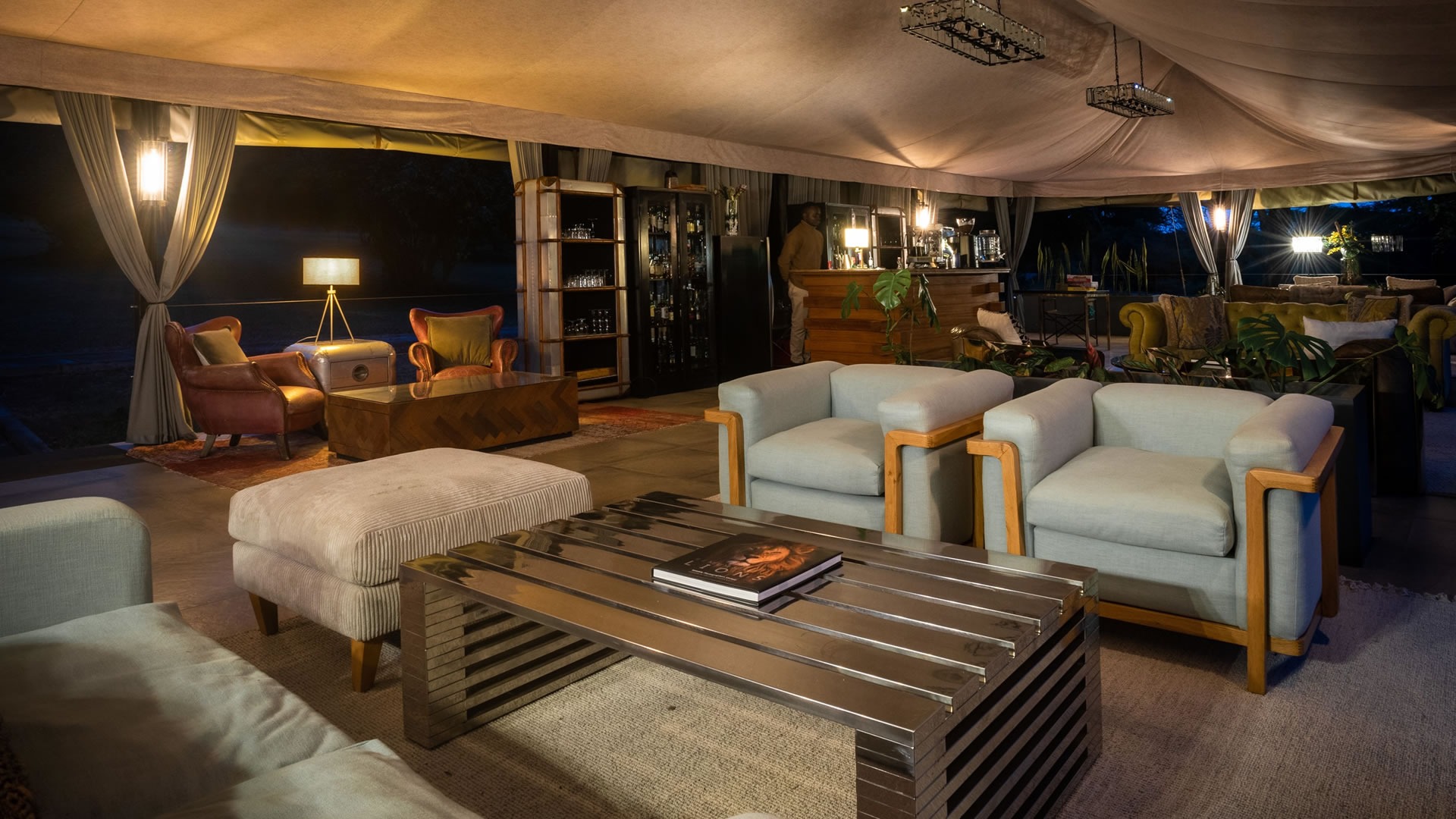
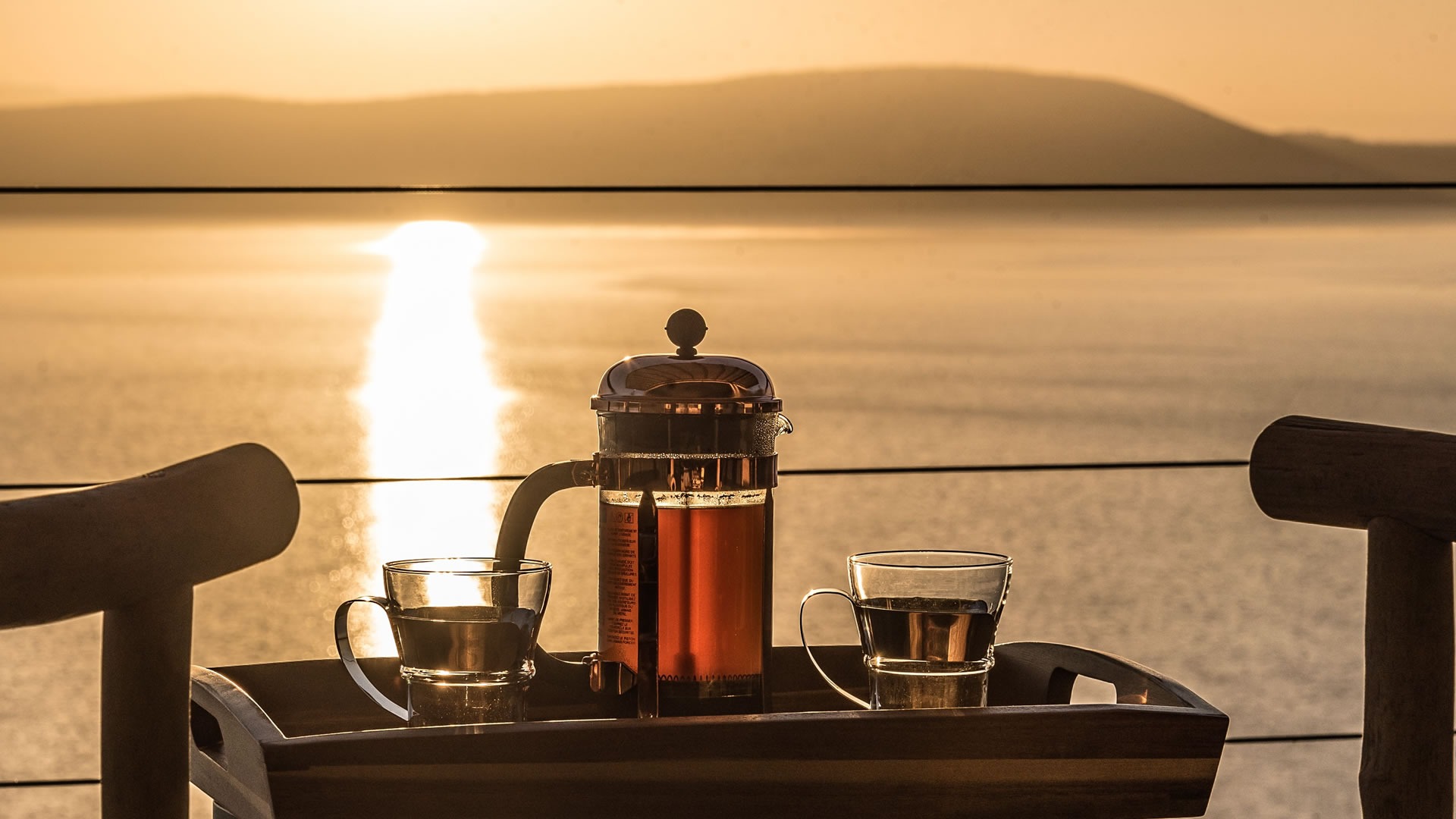
The communal area — a broad main tent with staggered chandeliers, leather armchairs, cushioned chaises, and a long bar where an in-house barista operates alongside the cocktail menu — carries the European boutique hotel aesthetic that the property’s designers applied consistently from the tents outward. The effect is a property that should create cognitive dissonance and somehow does not: the precision of the interior and the scale of the landscape outside it are in a productive conversation rather than a contradiction.
Ten tented suites on a cliff edge 100 metres above Lake Nakuru, inside the national park. Every room faces the same 180-degree panorama: flamingo shoreline, alkaline lake, Rift Valley escarpment. Contemporary boutique interiors as deliberate counterpoint to the view outside.
Guest park fees fund Kenya Wildlife Service’s conservation and anti‑poaching work. The Cliff sources produce locally, maintains a minimal clifftop footprint, and hosts just 20 guests across ten suites—keeping its impact light and the ecosystem intact.
Ten tented suites sit in a row along the clifftop, each on a solid foundation built into the rock face with canvas walls designed to open fully and pull-away flaps that eliminate the barrier between interior and view when the morning permits. The 100-square-metre footprint makes these among the largest tented suites in Kenya: enough space for a king bed facing the lake, a private lounge with seating, a dressing area, and an en-suite bathroom where the freestanding bathtub is positioned beside the window as a deliberate design choice rather than a spatial afterthought. Twin vanity basins and a separate shower complete the bathroom. The Japanese-influenced interior aesthetic keeps surfaces clear and furniture considered — heavy drapery frames the canvas opening, high-backed chairs flank the window, and the colour palette draws from the muted tones of the lake’s edge rather than the warm earth colours that most safari camps default to. No mosquito nets — at this altitude and in this climate, they are unnecessary. The camp does not accept children under 11 years of age, which keeps the atmosphere consistent with the property’s character.
Ten cliff‑edge suites with full‑canvas fronts opening to a 180° panorama. King bed, lake‑view bath, private lounge. At this elevation, hot water bottles truly matter.
Every moment at The Cliff Lake Nakuru is crafted to immerse you deeper in the wild.
Ready to plan your stay?
The main restaurant at The Cliff is positioned in the broad central tent at the cliff’s edge, where the dining tables — long communal configurations and intimate tables for two — share the same 180-degree lake view that the suites face from their platforms above. The kitchen works across a Mediterranean and international range that the sources describe consistently as exceptional in quality and presentation, with multi-course dinners carrying the kind of variety — starters, mains, and desserts across different daily menus — that justifies the property’s claim to boutique hotel standard. Locally sourced ingredients and an apparent attention to dietary requirements round out a dining programme that earns specific praise in guest reviews. The long bar in the communal tent is the camp’s social anchor: an in-house barista operates for morning espresso and afternoon flat whites while the cocktail list takes over at sundowner hour. Freshly baked biscuits are the arrival greeting, and the turndown chocolate is the punctuation mark on the day.
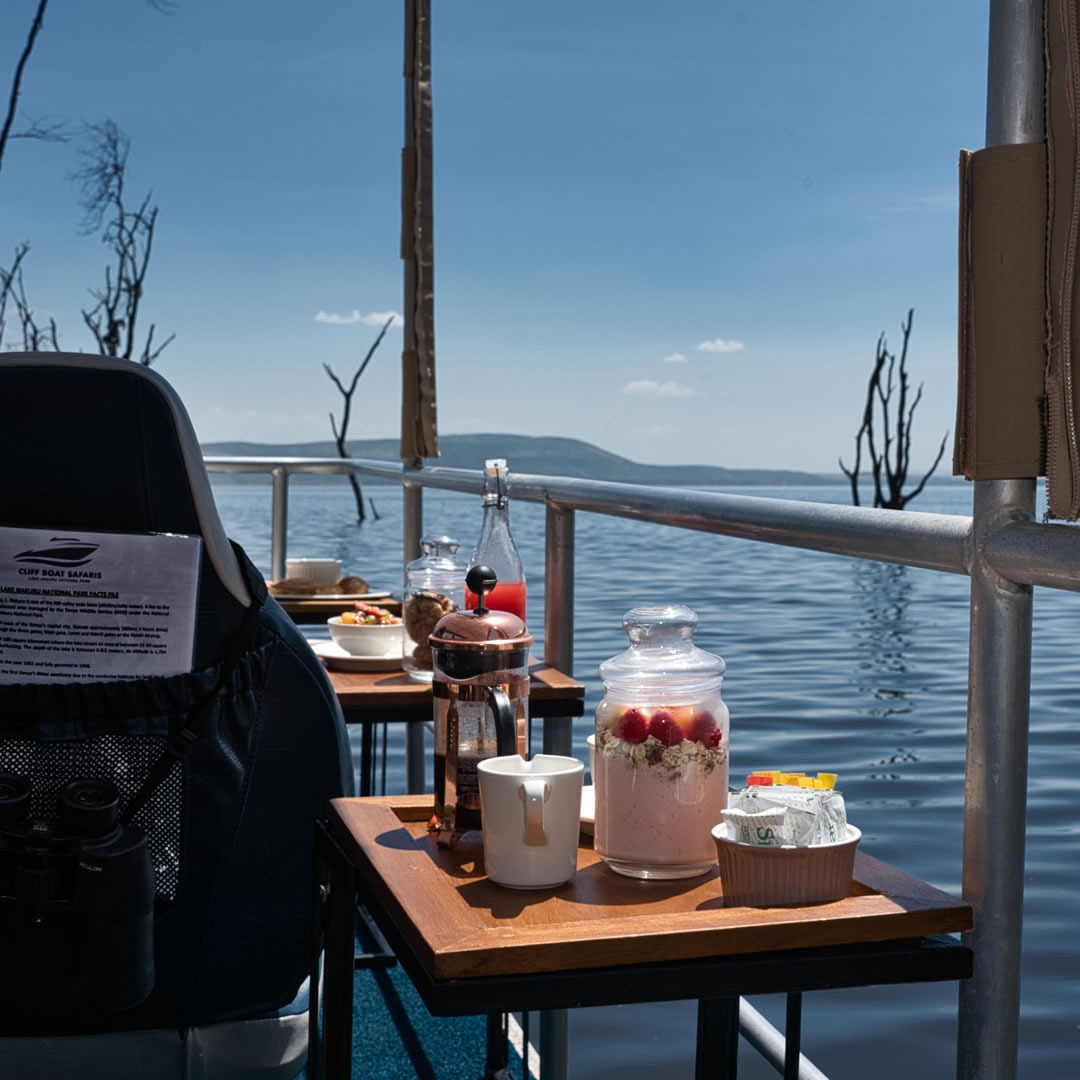
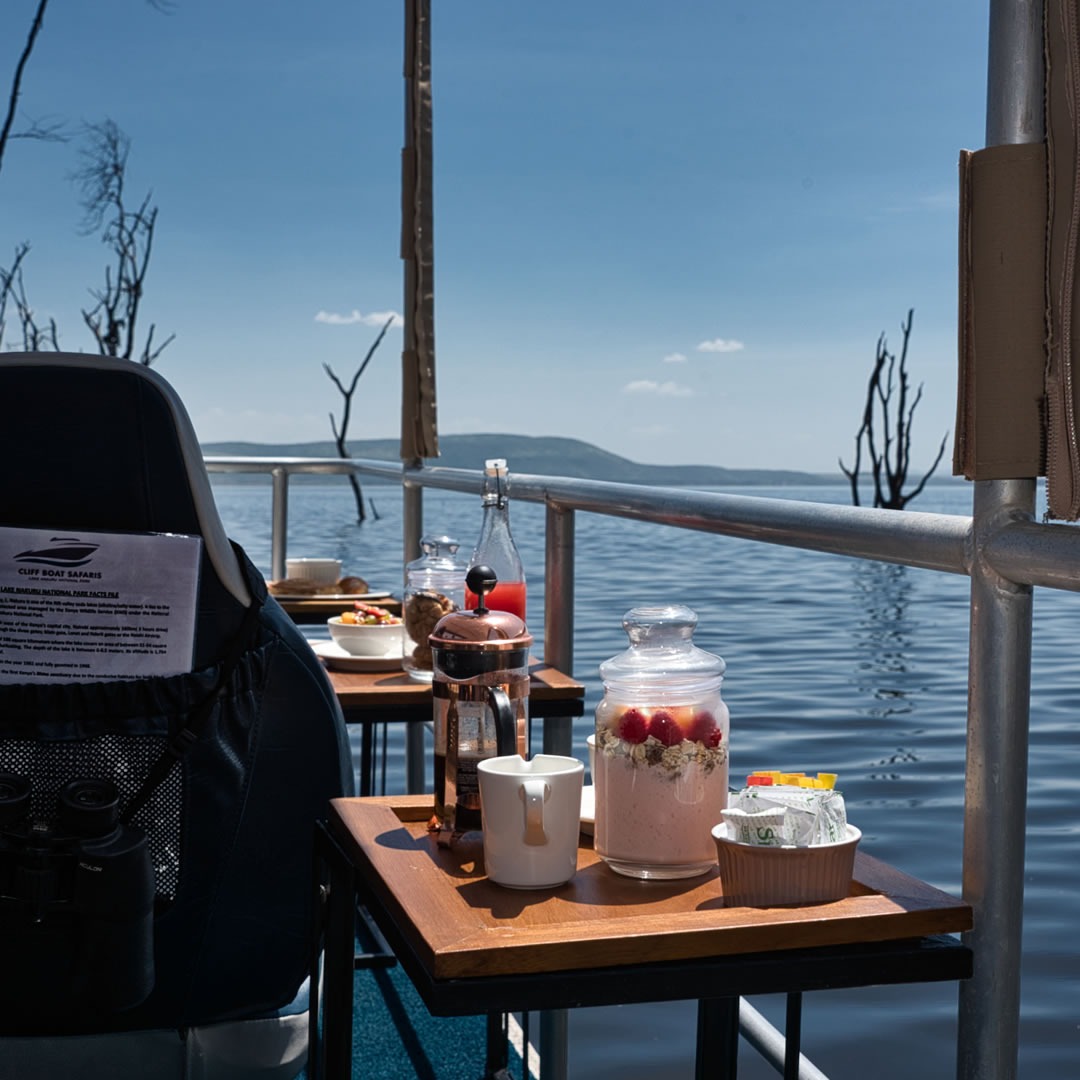
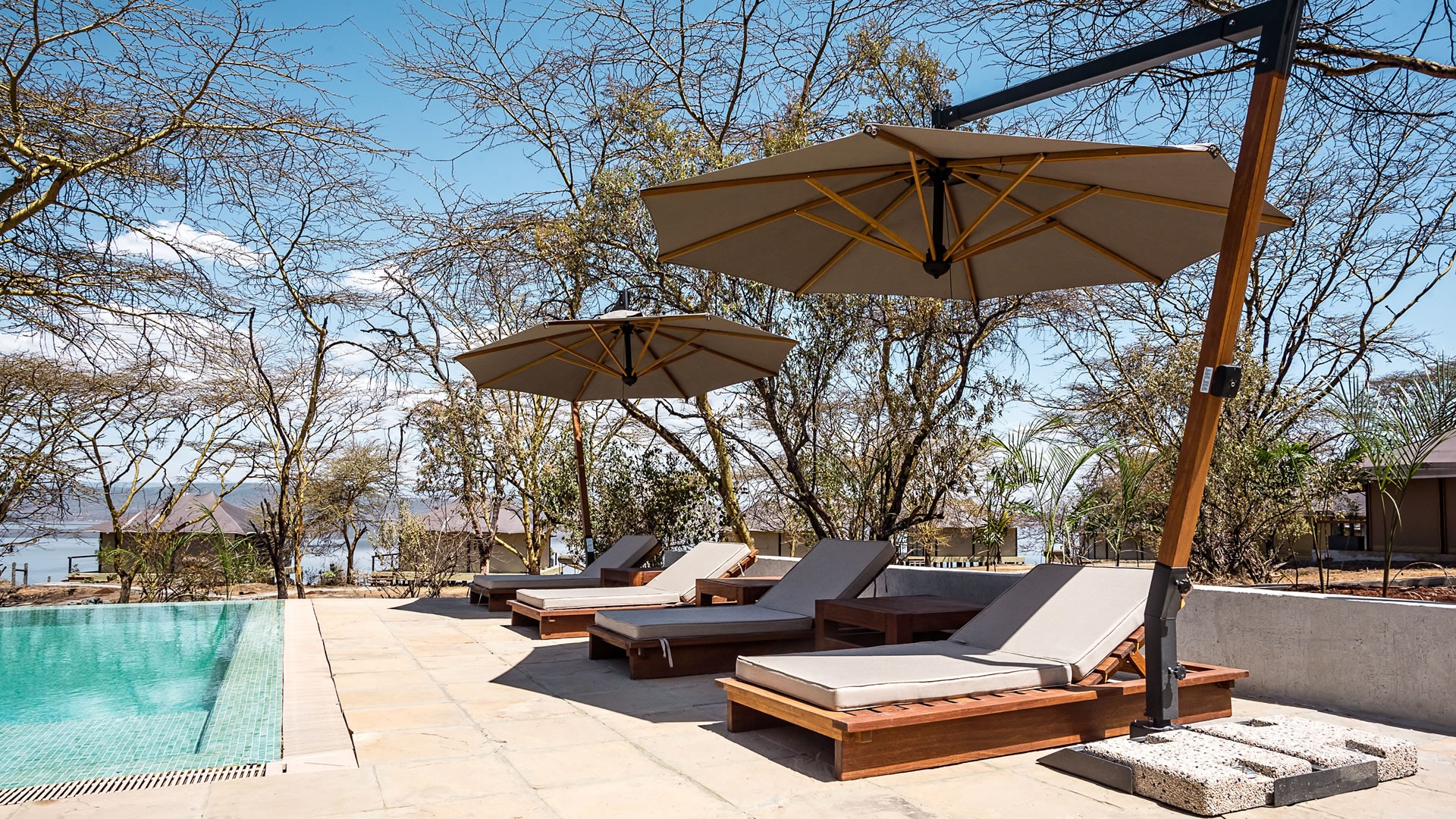
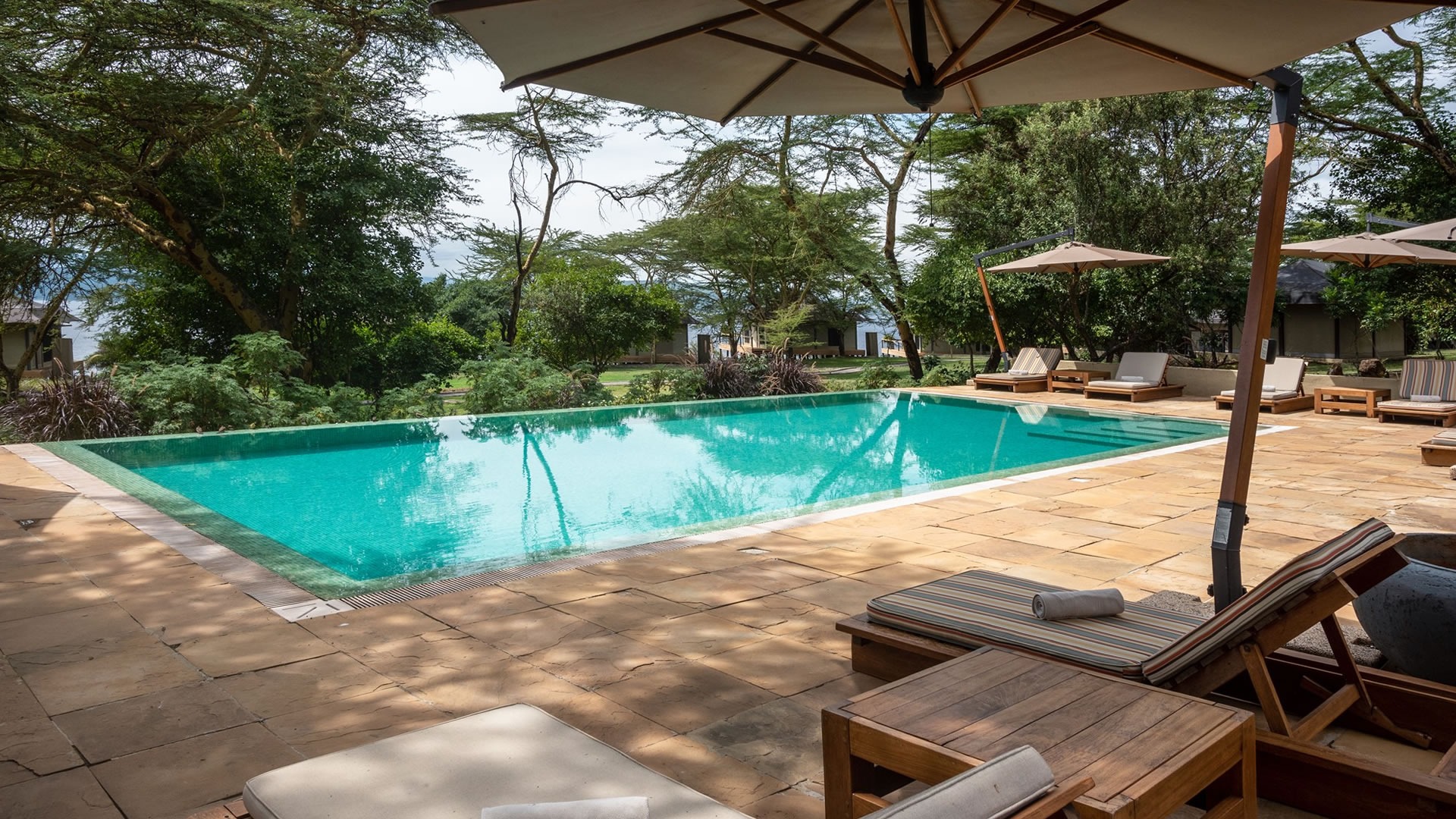
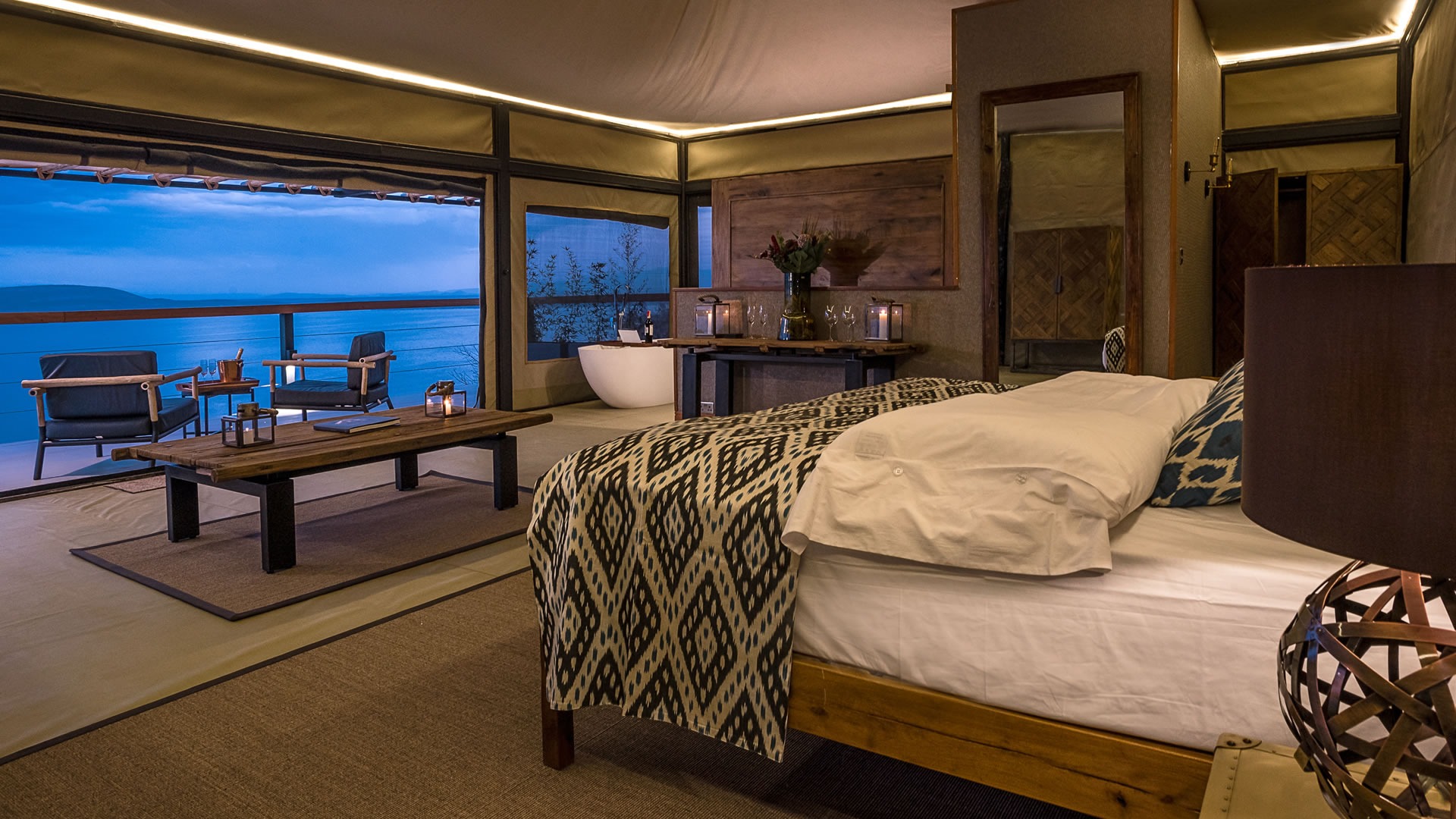
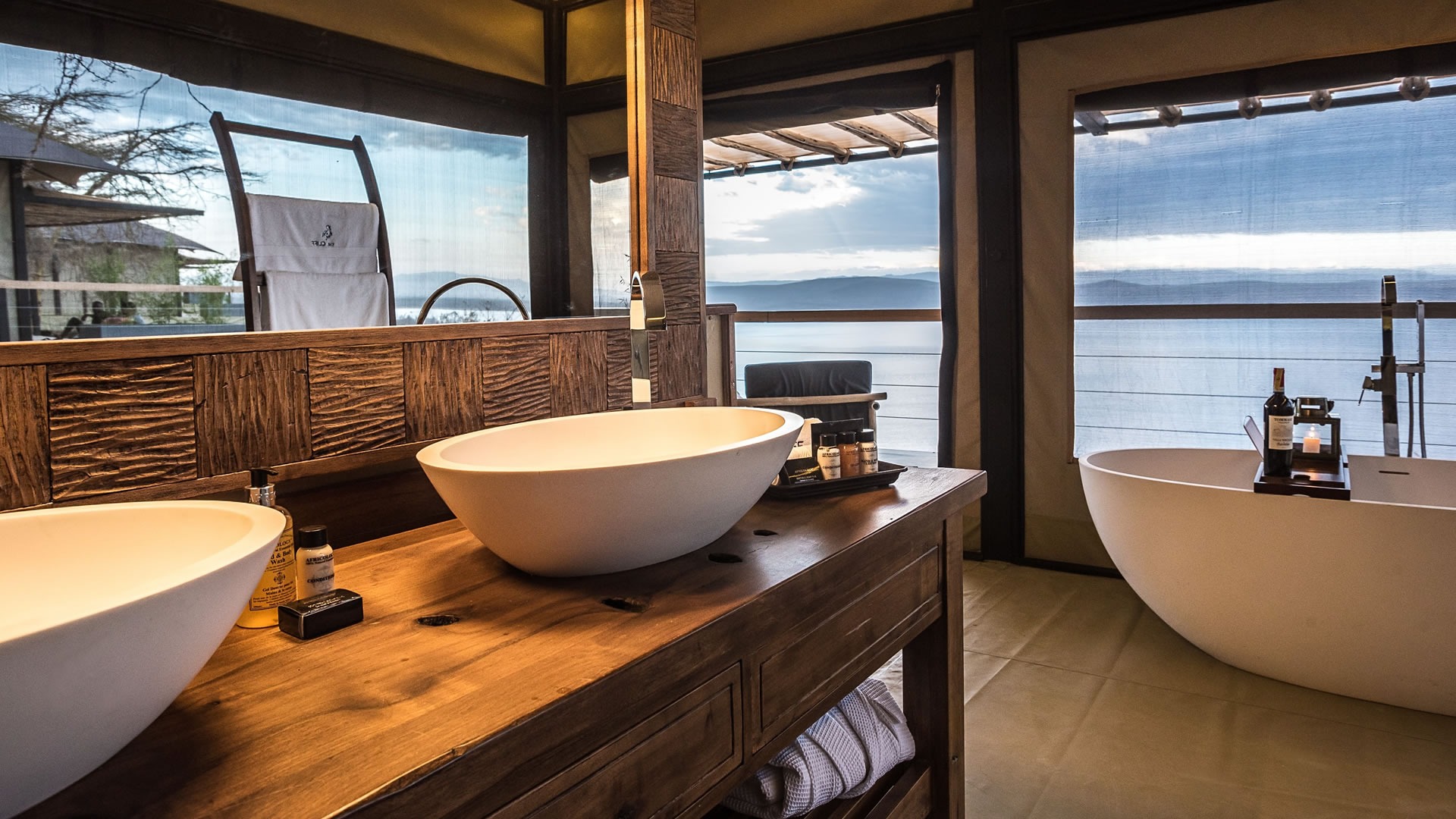
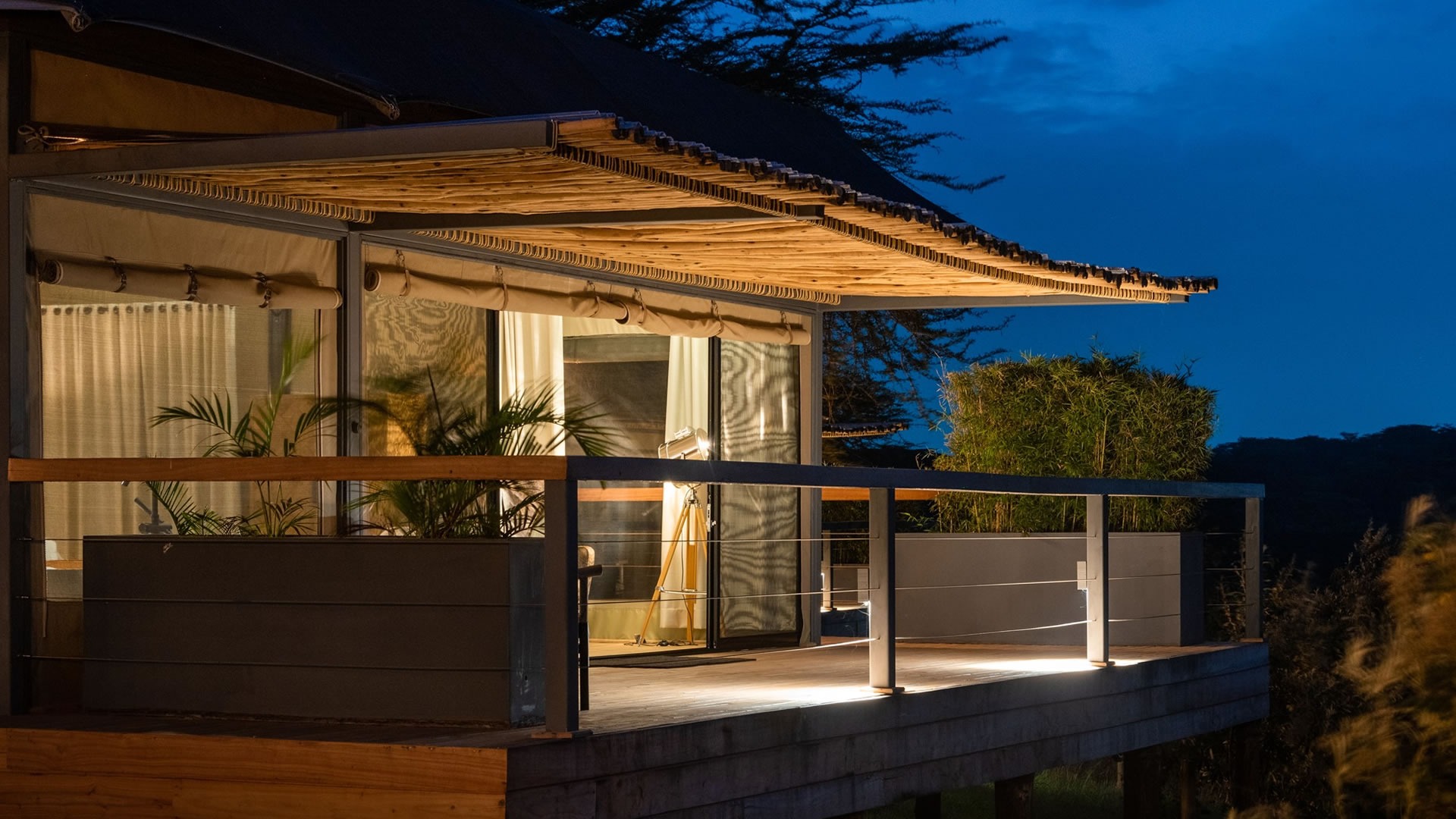
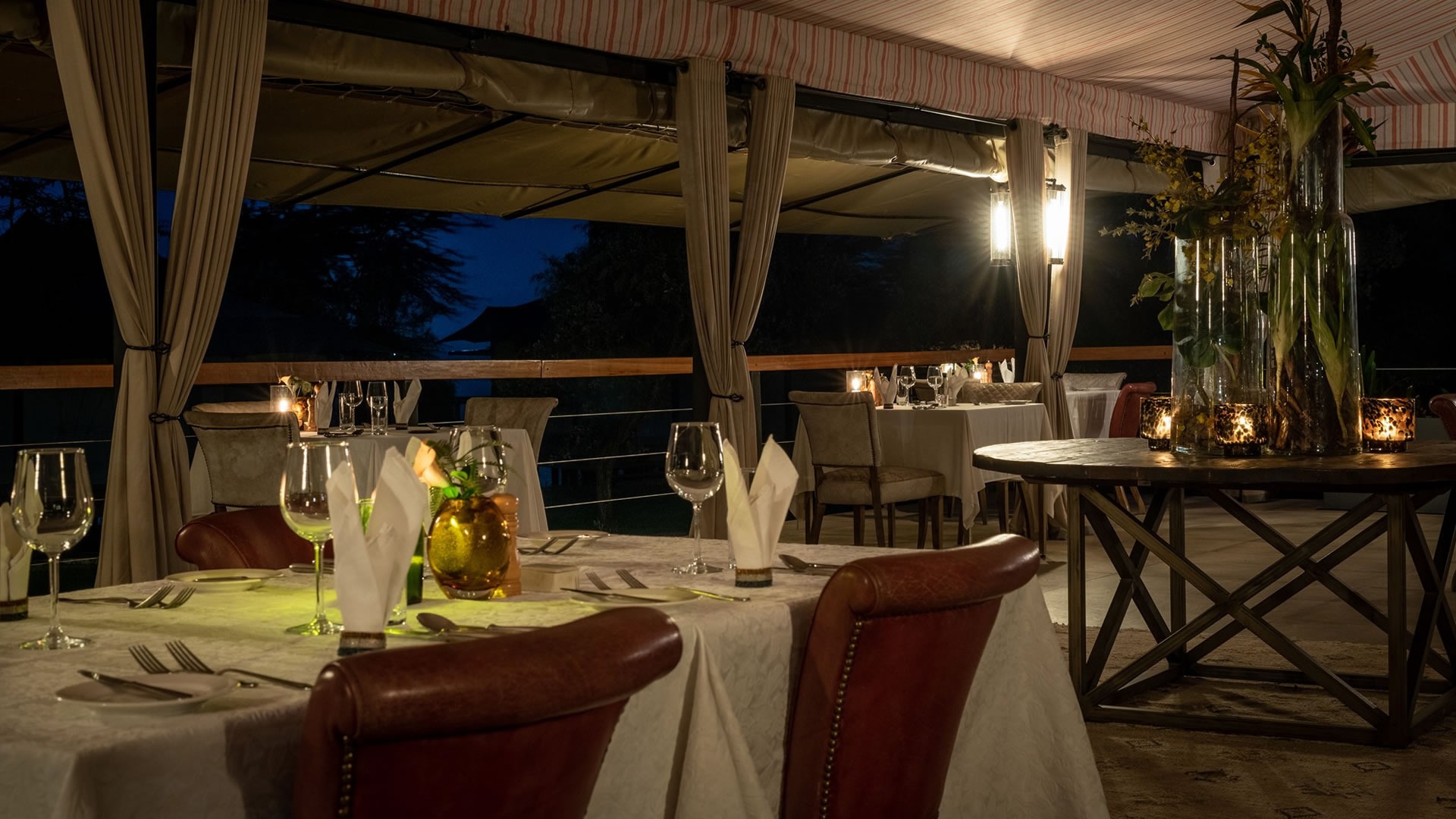
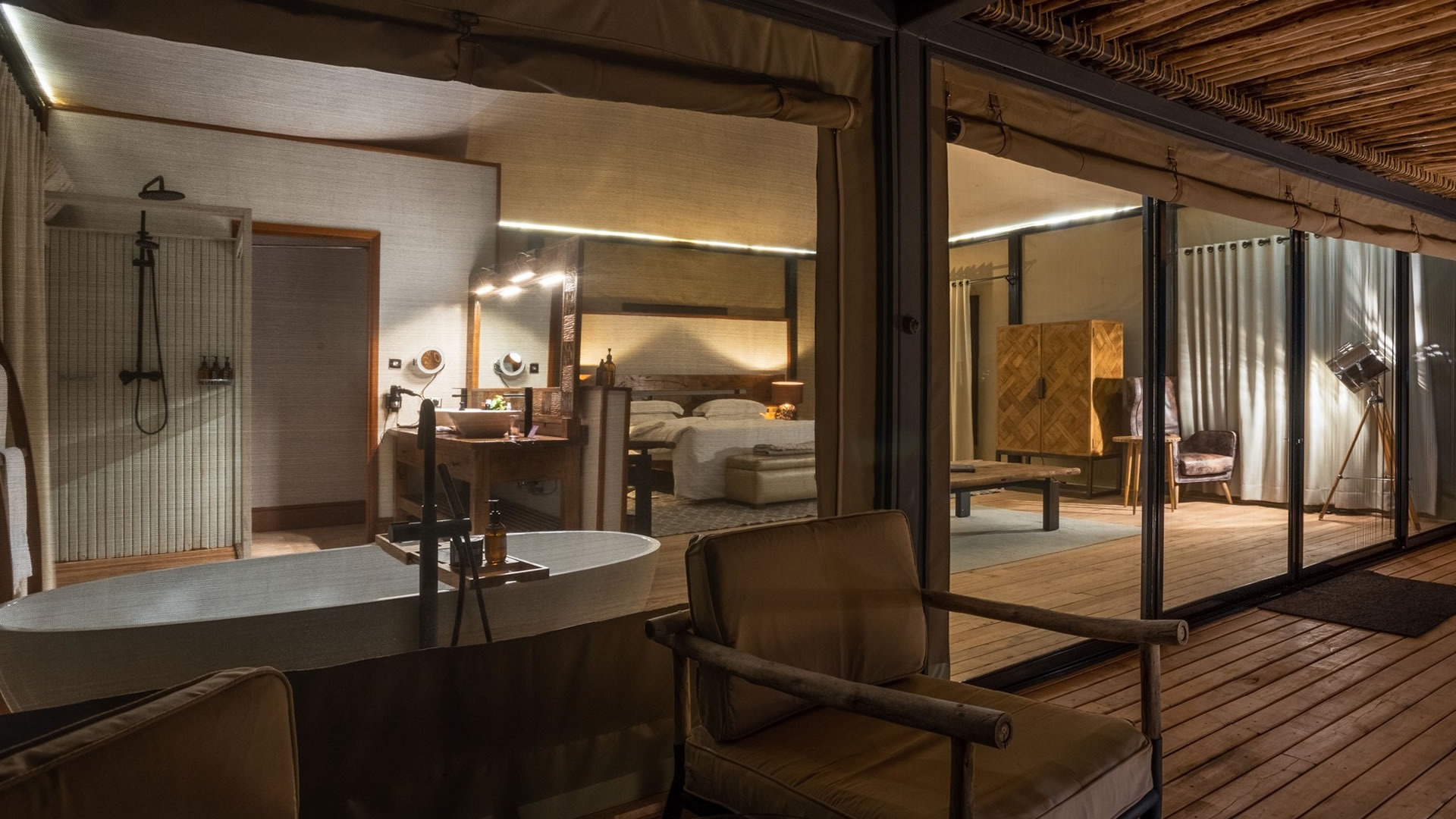
Lake Nakuru National Park is open and productive year-round, and The Cliff’s clifftop position above the lake means the view — the property’s primary proposition — is compelling in every season. The dry months of June through October and January through February deliver the best game drive visibility: vegetation thins, the lake’s wildlife concentrates, and the leopard population on the rocky escarpment is most reliably spotted during the dry-season hours when it uses the clifftops as daylight resting positions. The flamingo population is less predictable by season than by the lake’s alkalinity levels, which fluctuate with rainfall; the best flamingo concentrations can occur in any month when conditions on the lake surface are optimal. The camp’s altitude and cliff position make it noticeably cooler than surrounding areas — evenings require a warm layer throughout the year, and the camp is not in a malaria zone, making it suitable for guests who prefer to avoid prophylactics. The short and long rains of November and April–May bring photographic conditions — clean air, green fever tree woodland, and moody lake light — that specifically reward guests whose interest runs to landscape photography alongside wildlife.
Explore handcrafted itineraries where The Cliff Lake Nakuru forms part of the journey.
Please share your name and email so we can follow up with you.