From
$2,809
🔒 Your details are kept private and never shared with third parties.
On the rim of Menengai Crater, Africa's second largest caldera, Maili Saba is an intimate camp with extraordinary views and a warmth guests remember longest
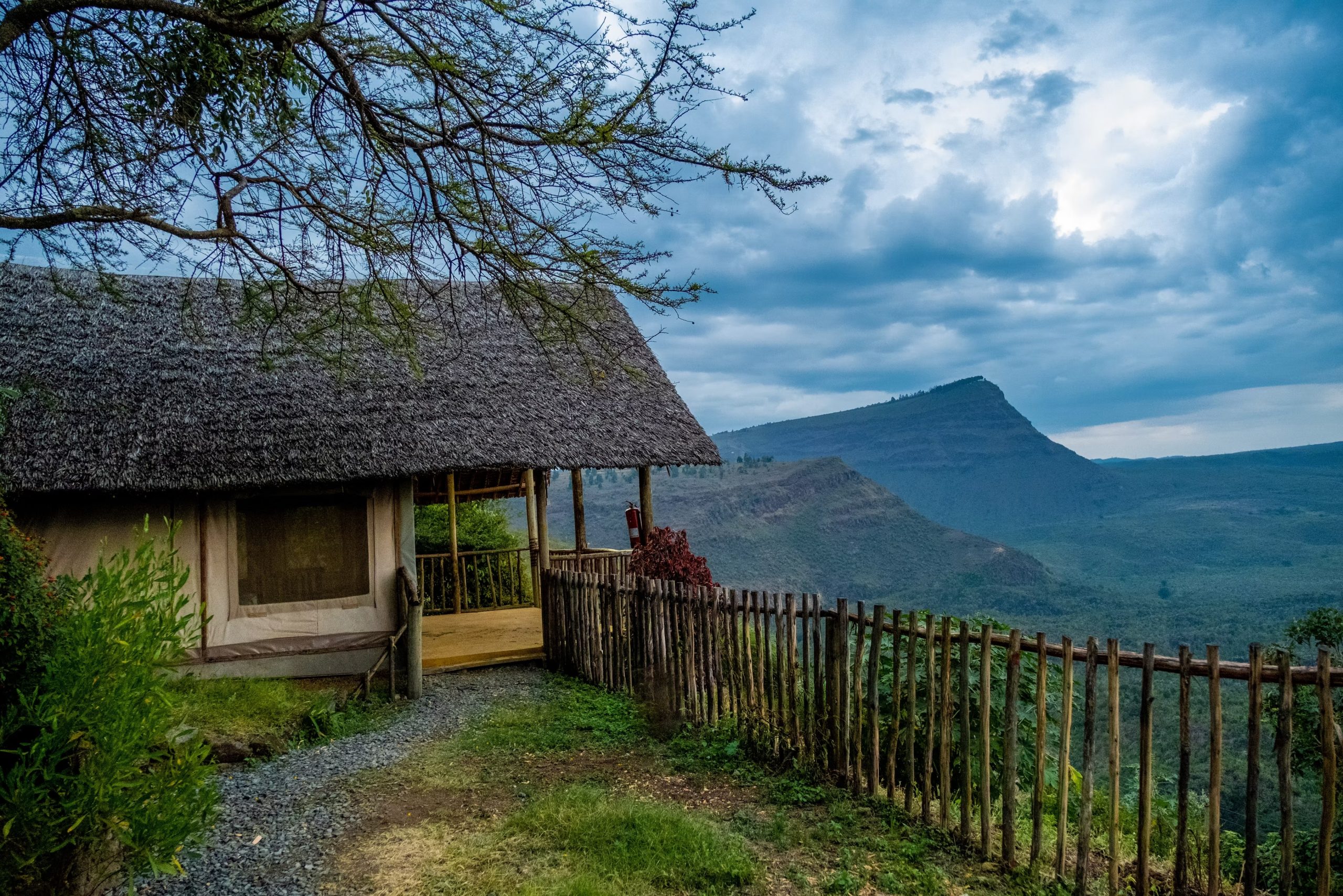
Maili Saba means “seven miles” in Swahili — the distance from Nakuru town along the Nakuru-Nyahururu road that separates the ordinary from the extraordinary. At the end of that road, perched on the rim of the Menengai Crater — the second largest caldera in Africa, twelve kilometres across and 483 metres deep — Maili Saba Camp occupies a position that very few properties anywhere on the continent can claim. The crater drops away below the camp’s veranda in a sweep of scale that silences conversation, and the bush stretching to the escarpment horizon beyond completes a view that guests return to repeatedly throughout the day.
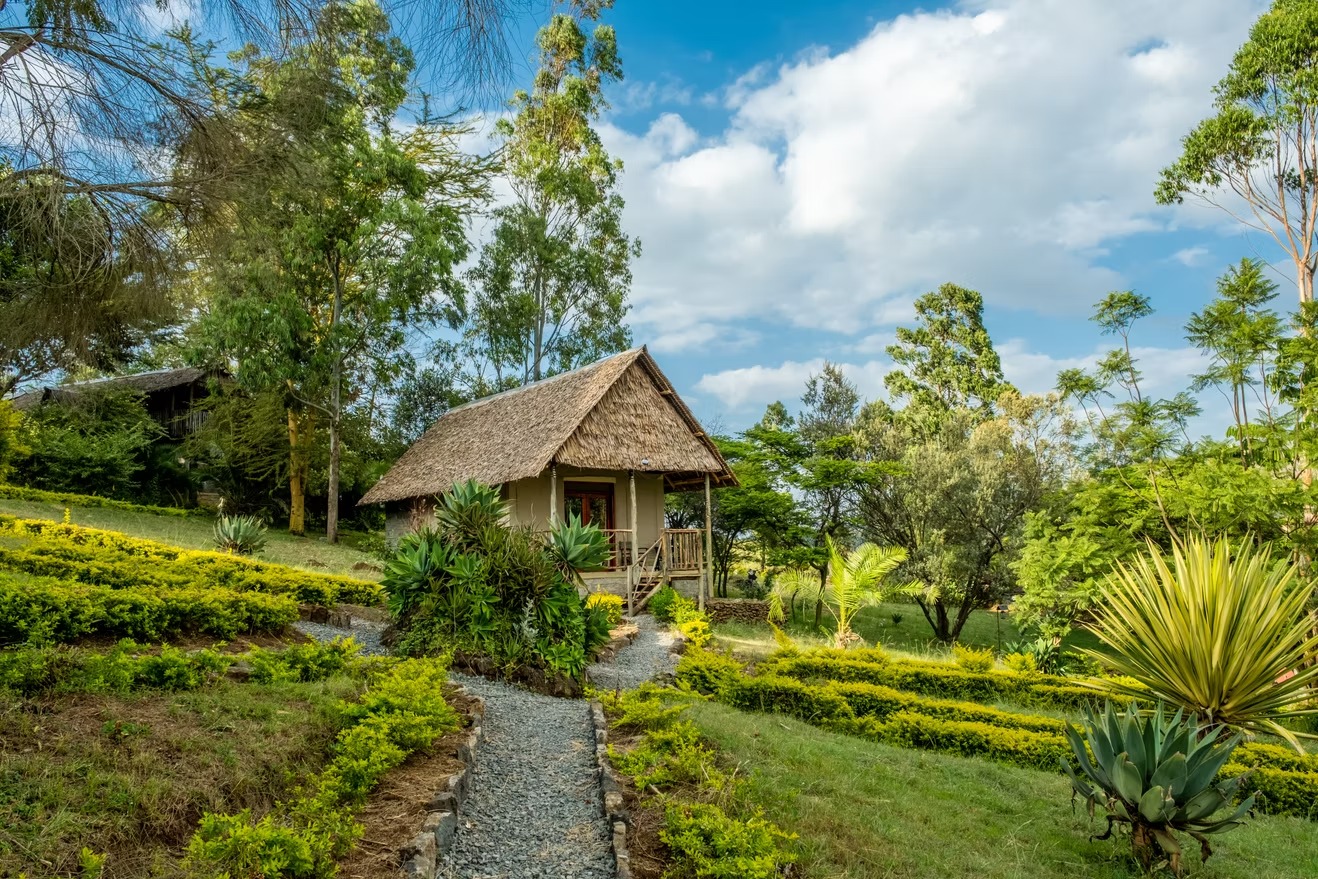
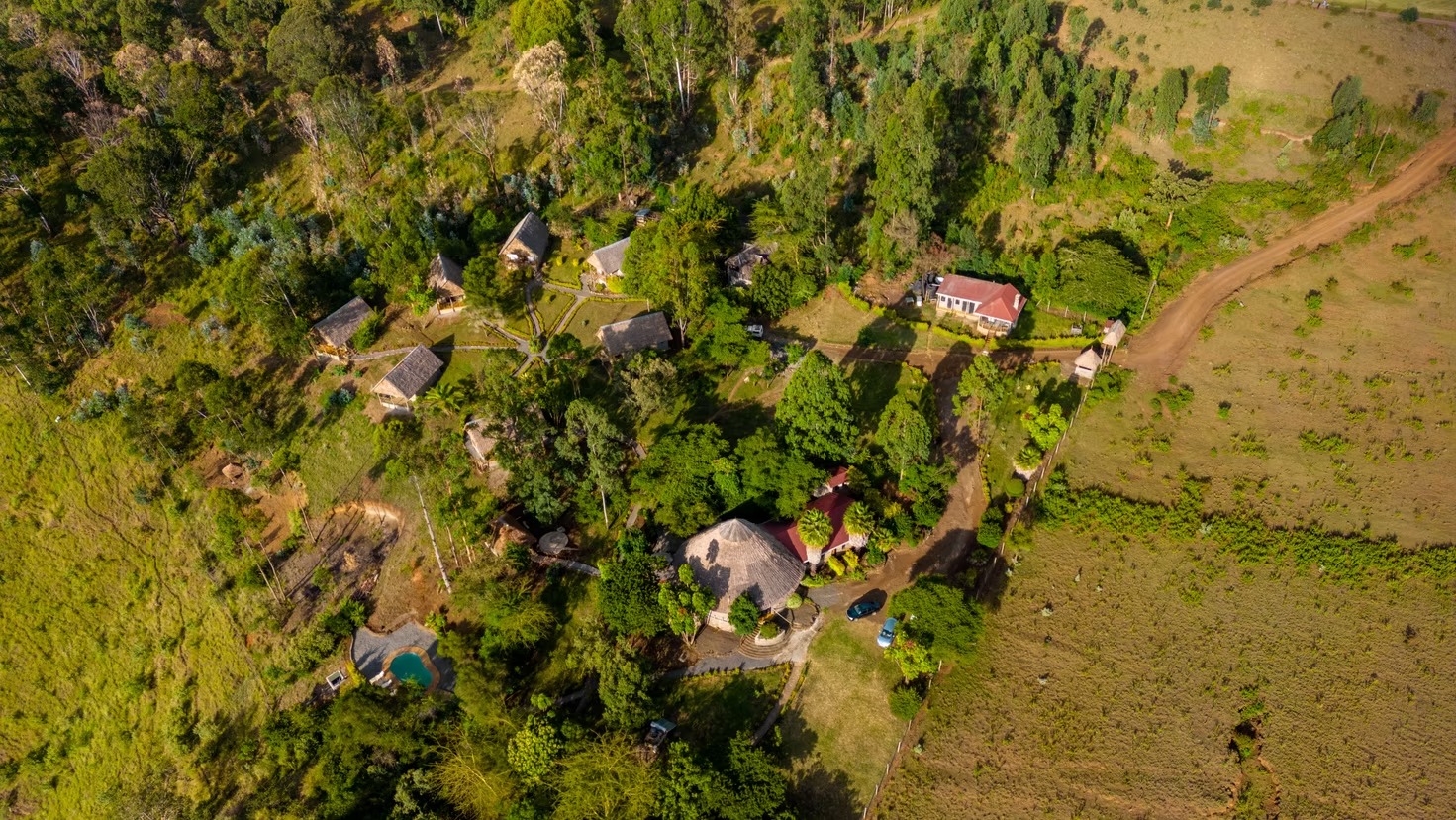
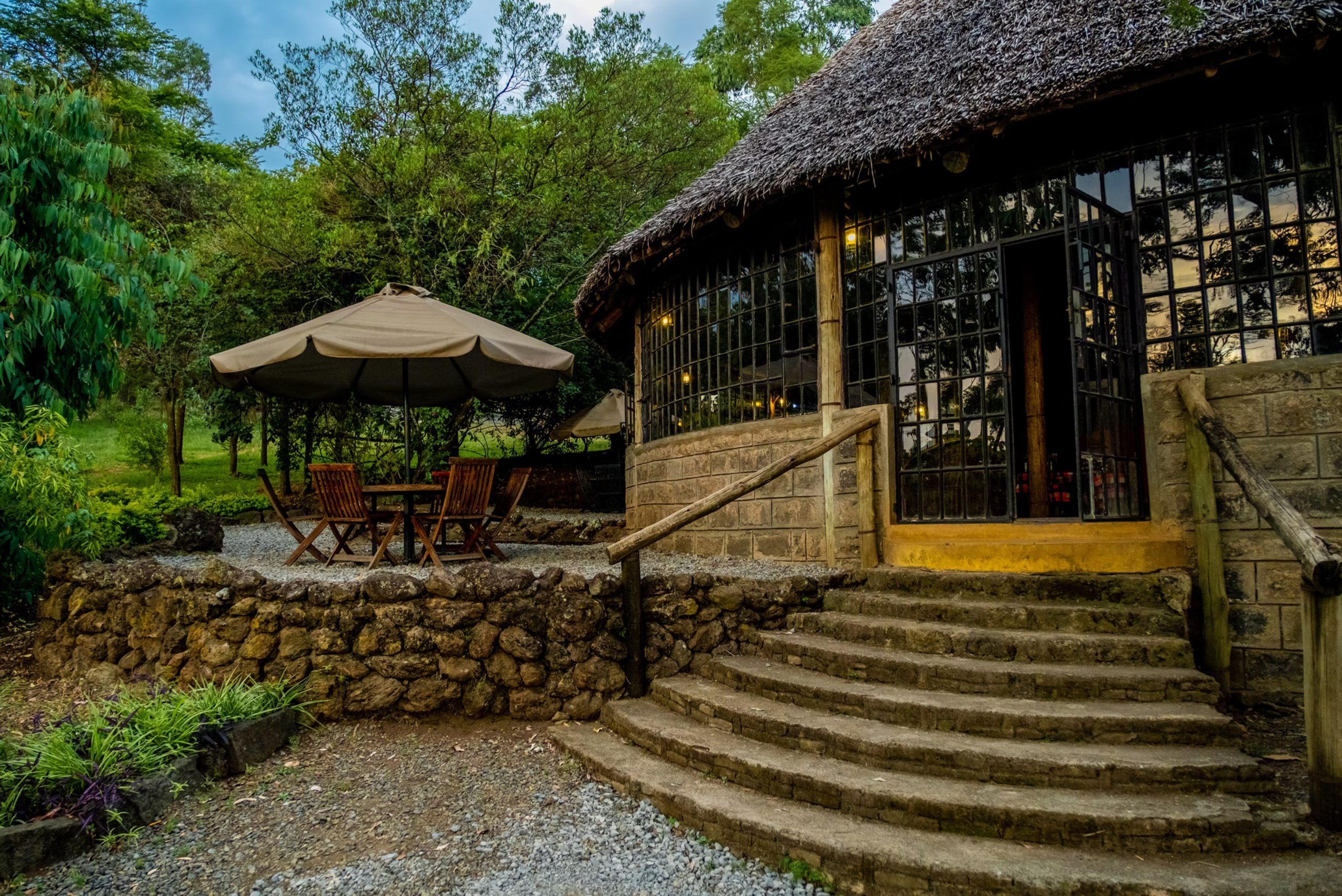
This is not a luxury tented camp in the conventional sense. Maili Saba is a place of ten thatched bandas, stone floors, kerosene-style lanterns, and the kind of unhurried personal attention that only a small property with a closely involved team can deliver. The camp maintains a maximum of twenty-four guests at any time — a deliberate choice that keeps the atmosphere intimate and ensures that every guest is known by name within hours of arrival. The staff, drawn from the local community, have been consistently singled out in guest reviews as the single feature that elevates a stay from memorable to defining.
The camp is connected to a local non-profit organisation focused on upskilling young Kenyans — a relationship that gives the Maili Saba stay a dimension beyond its physical beauty. Guests who take time to understand this context find that the camp’s warmth has roots that run deeper than hospitality training.
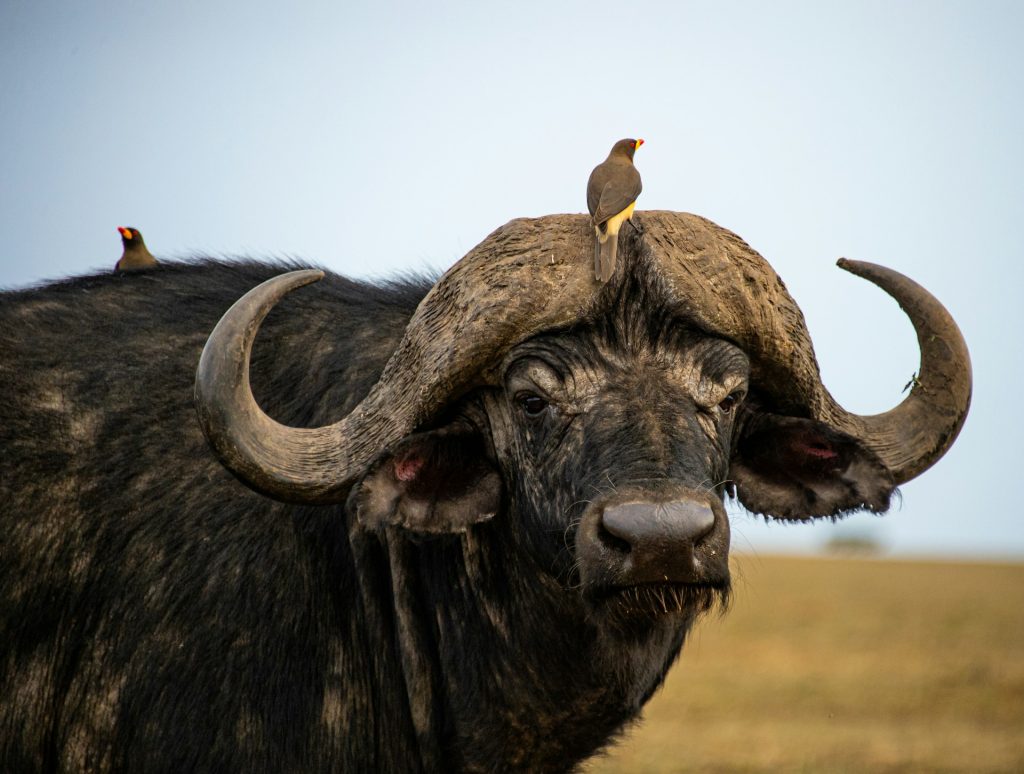
Lake Nakuru National Park is twenty minutes by road — home to one of Africa’s most spectacular concentrations of flamingo, and a reliable source of lion, white rhino, buffalo, leopard, giraffe, and the rare Rothschild giraffe. The Menengai Crater itself offers walking, cycling, cave exploration, and views that no park fee can improve. For guests travelling between Nairobi and the Maasai Mara or Samburu, Maili Saba makes a stop that frequently becomes the favourite night of the entire itinerary.
Ten thatched bandas on the Menengai Crater rim, seven miles from Nakuru and twenty minutes from Lake Nakuru National Park. Stone floors, kerosene lanterns, veranda views over the crater, and some of the warmest hospitality in the Rift Valley. Small, characterful, and community-rooted
Built from stone, thatch, and timber with kerosene lantern lighting. A partnership with a local non-profit channels employment and training directly to the surrounding community. Natural crater-rim vegetation is preserved within the grounds, and a maximum capacity of twenty-four guests keeps ecological pressure minimal.
bMaili Saba Camp’s ten thatched bandas are built in the African traditional style — stone floors, grass thatched roofs, natural wooden details, and kerosene-style lanterns that light the interiors after dark with a warmth that electric lights cannot replicate. Every banda has a private veranda facing the Menengai Crater, and the farthest bandas from the main lodge command the most unobstructed views. All units are fully en-suite with flushing toilet and hot shower. Four configurations — Double, Twin, Triple, and Family — accommodate guests from solo travellers and couples through to families with young children. An additional cottage sleeping up to six guests rounds out the inventory for groups.
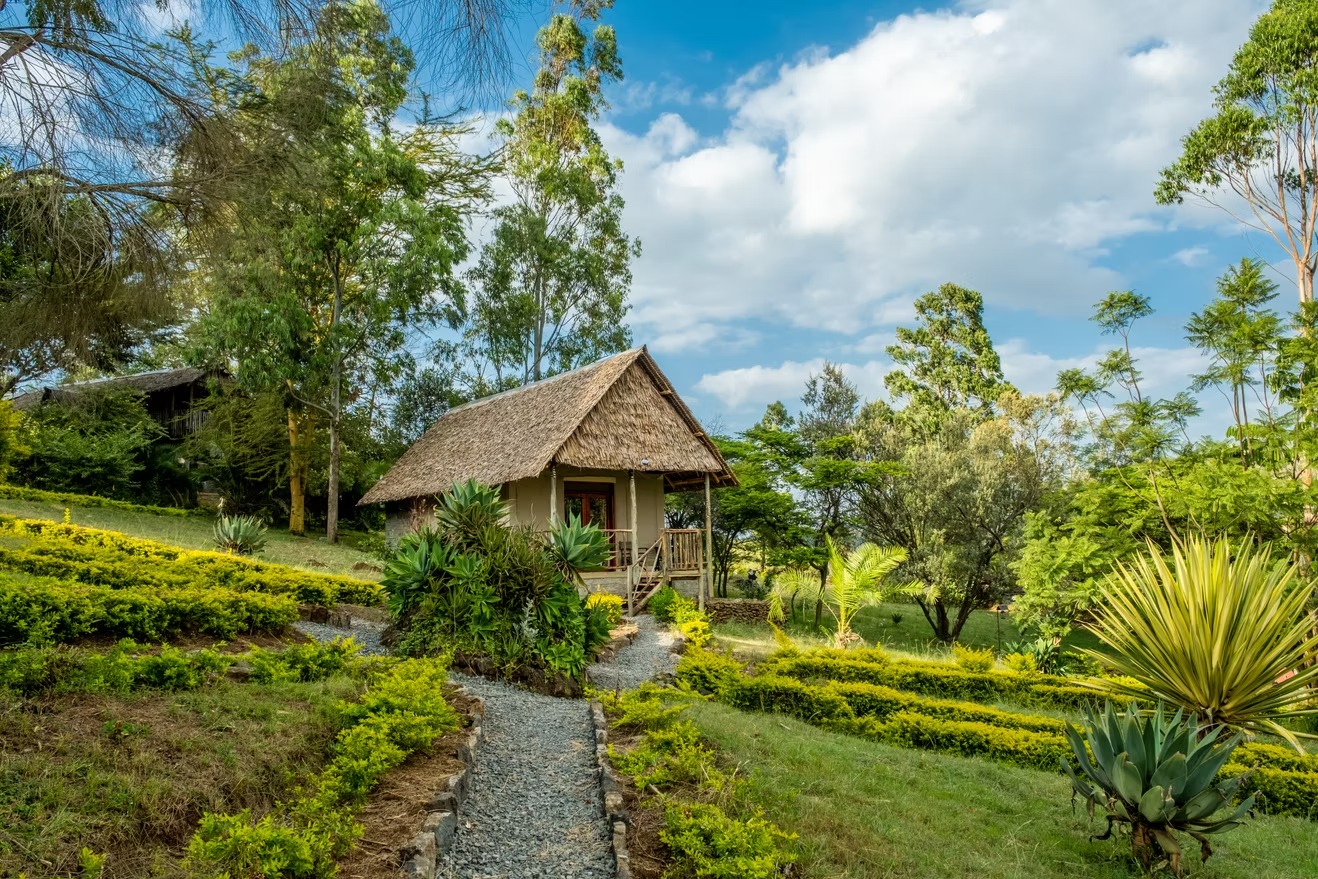
Thatched unit with double bed, stone floor, kerosene lanterns, and a private deck facing the Menengai Crater. The veranda is the heart of the banda: canvas chairs, the crater below, and absolute quiet. En-suite with hot shower and flushing toilet. Bandas furthest from the main lodge offer the greatest privacy and most uninterrupted crater views.
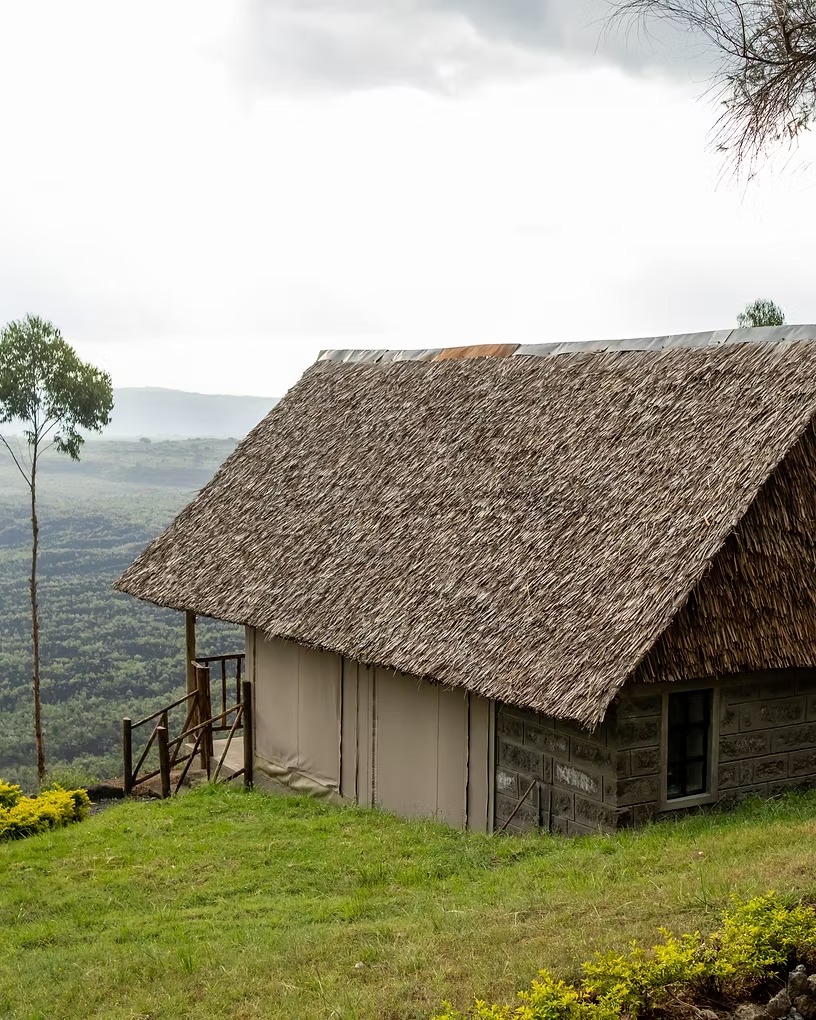
Identical to the Double Banda but with two single beds. Same thatched roof, stone floor, private veranda, and crater views. Natural materials and lantern lighting sit quietly within the crater-rim landscape. En-suite with hot shower and flushing toilet.
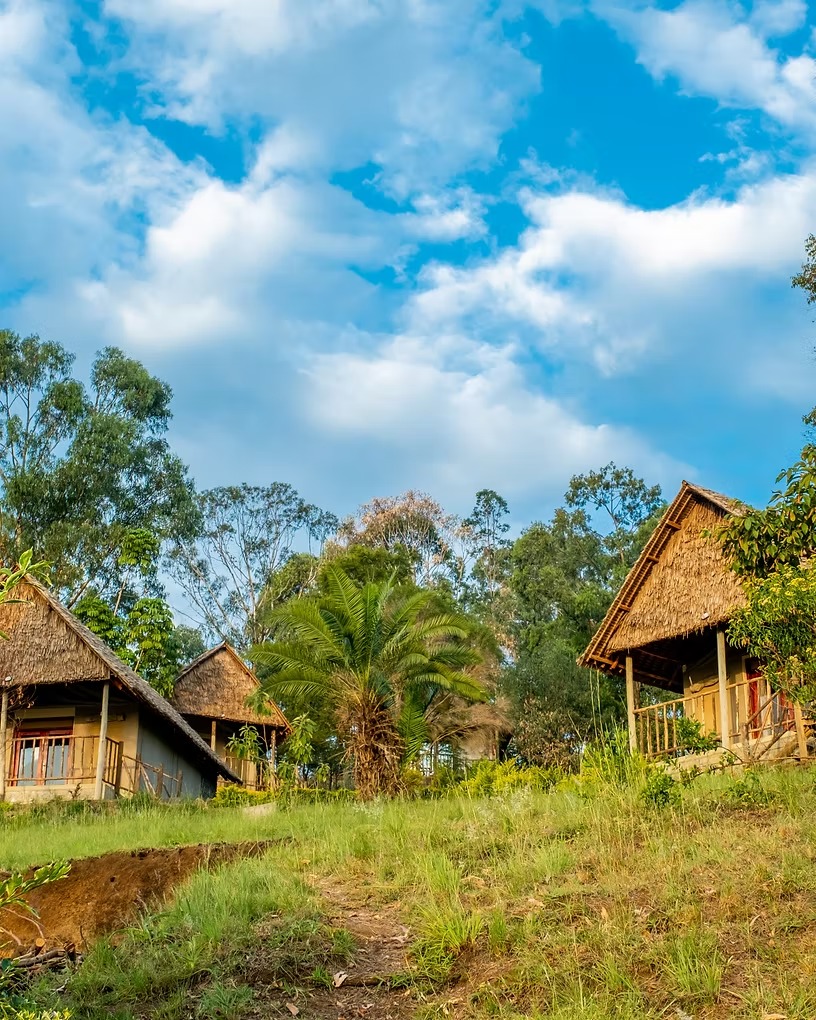
Larger than the standard bandas, the Triple accommodates three guests in a single space with a private deck and direct crater view. Suits three friends or a parent with two older children. Stone floor, thatched roof, kerosene lanterns, and en-suite with hot shower and flush toilet.
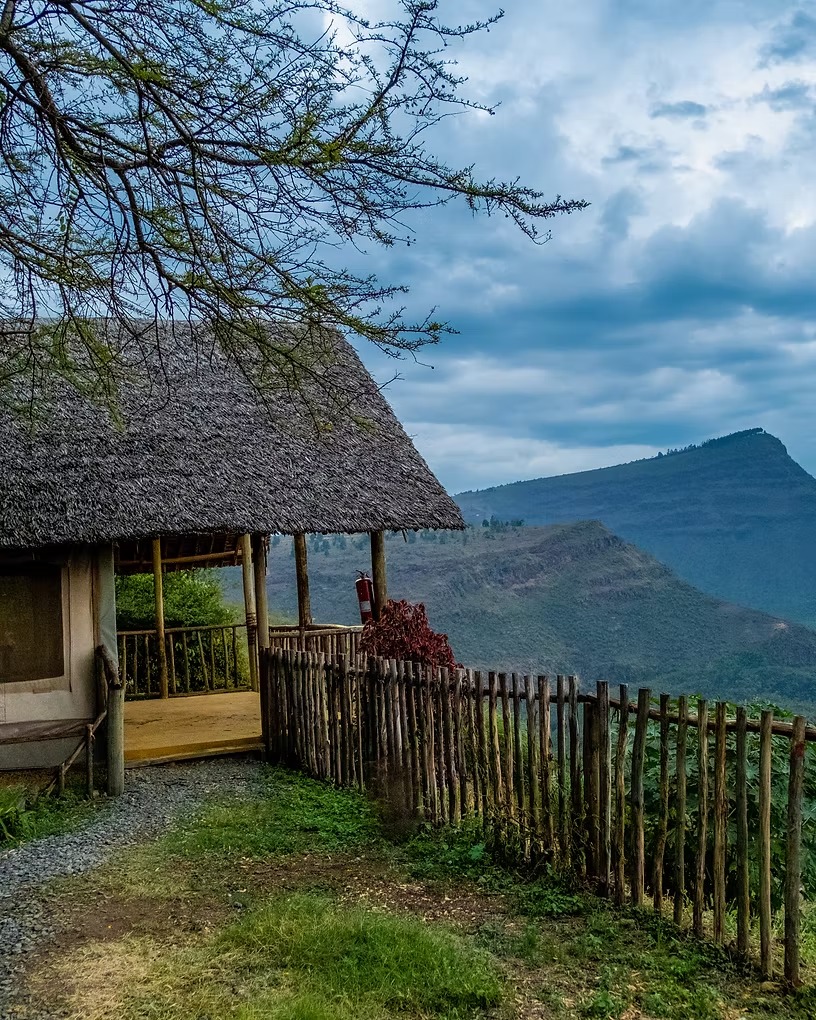
At the crater rim's edge, the Family Banda has the widest veranda and most expansive view at Maili Saba. A main adult sleeping room connects internally to a children's room. The wide veranda is built for gathering at golden hour. En-suite with hot shower and flush toilet. Children 3 to 12 at 50% of the adult rate; under 3 stay free.
Every moment at Maili Saba Camp is crafted to immerse you deeper in the wild.
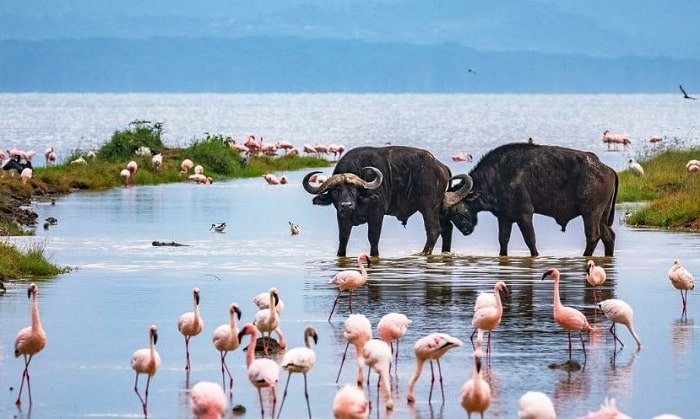
The lake supports Africa's largest flamingo concentration, sometimes exceeding one million birds. Resident wildlife includes lion, leopard, black and white rhino, buffalo, and the rare Rothschild giraffe. Morning and afternoon game drives depart from camp.
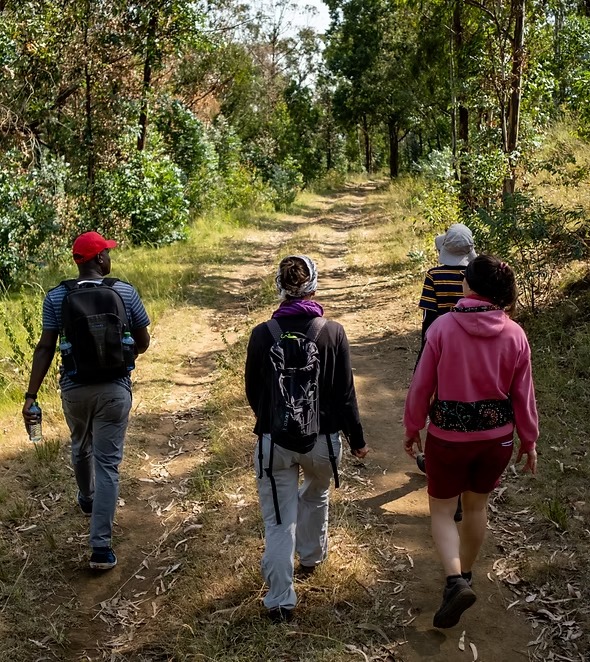
Rim trails offer changing views into the twelve-kilometre caldera throughout the day. Longer hikes descend into the crater through indigenous bush, passing steam vents and lava formations. Half and full-day options with community guides knowledgeable in the site's geological and cultural history.
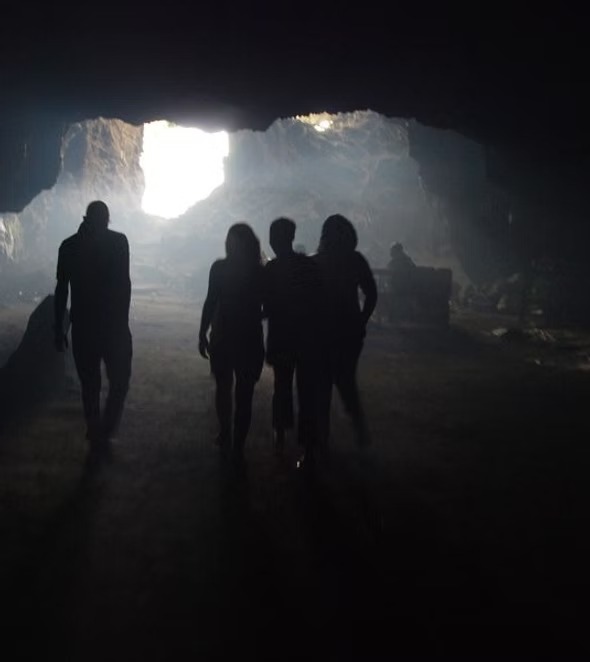
Lava tube caves beneath the crater, formed thousands of years ago, are accessible on guided visits. The caves hold cultural significance for local Maasai and Kikuyu communities. Head torches and sturdy footwear advised.
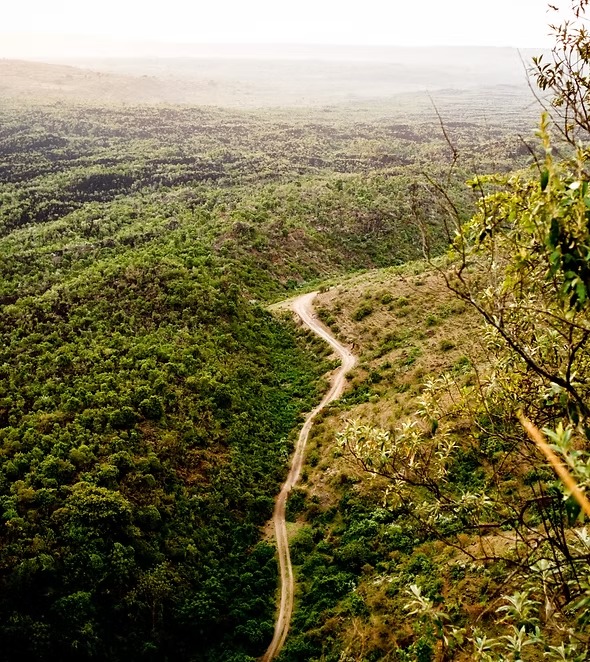
Bike riding along the crater rim and surrounding trails at a pace that lets the landscape register. Routes range from short rim circuits to longer hill trails. Sundowner loops ending at the pool bar are a camp favourite.
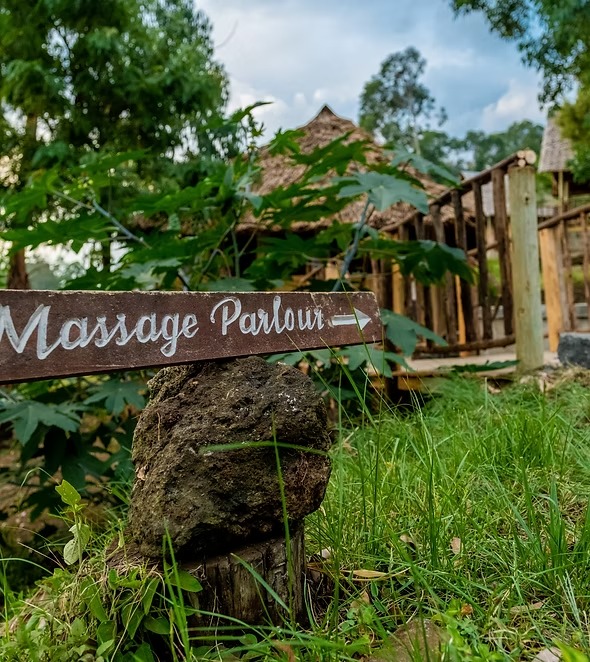
spa offering massage, body treatments, and beauty therapy. Couples' sessions available on request. Small, personalised, and unhurried. Advance booking advised.
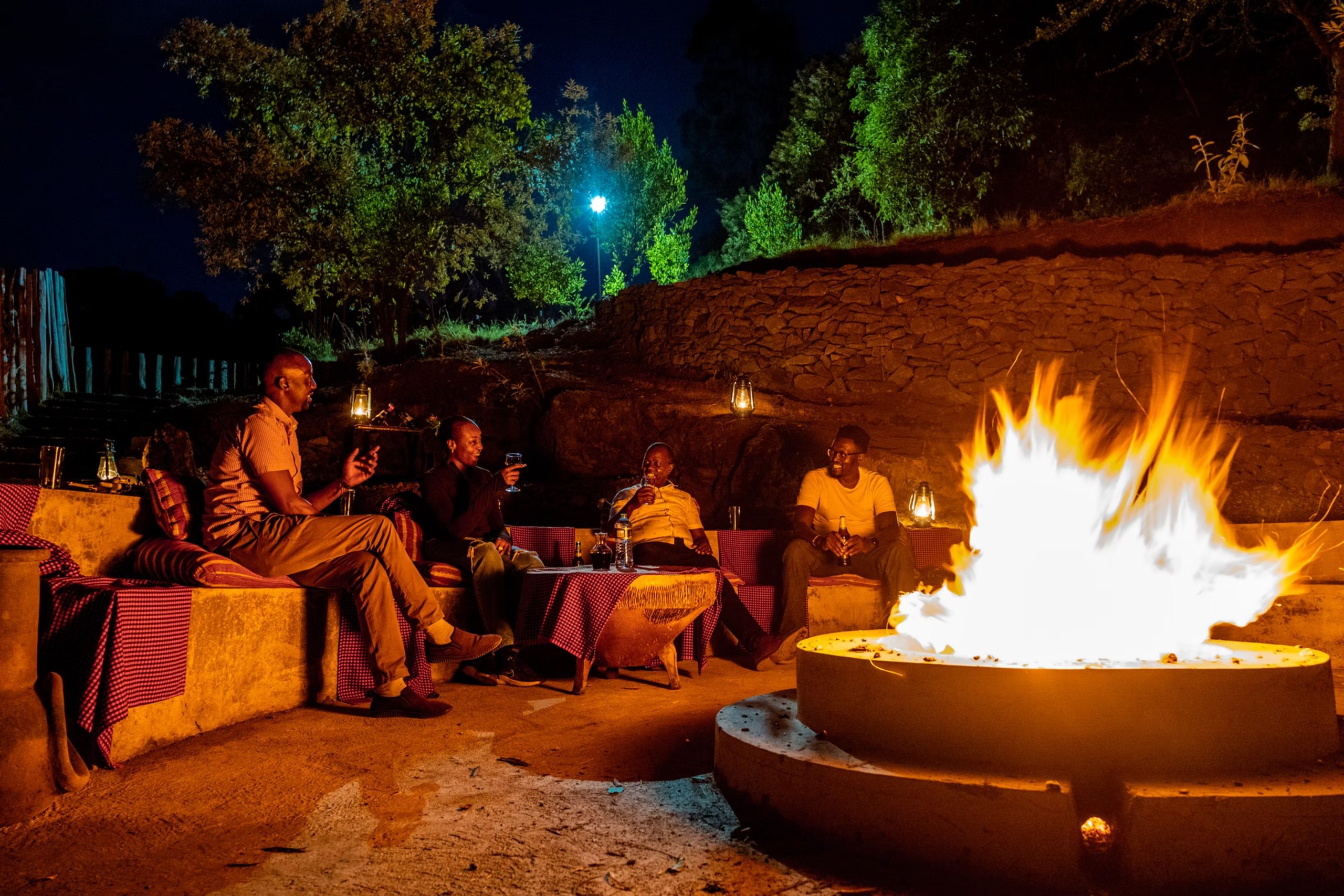
The pool faces the Menengai Crater directly. Sun loungers and pool bar service throughout the day. Sundowner setups on the crater rim or at any banda's private veranda available on request.
Ready to plan your stay?
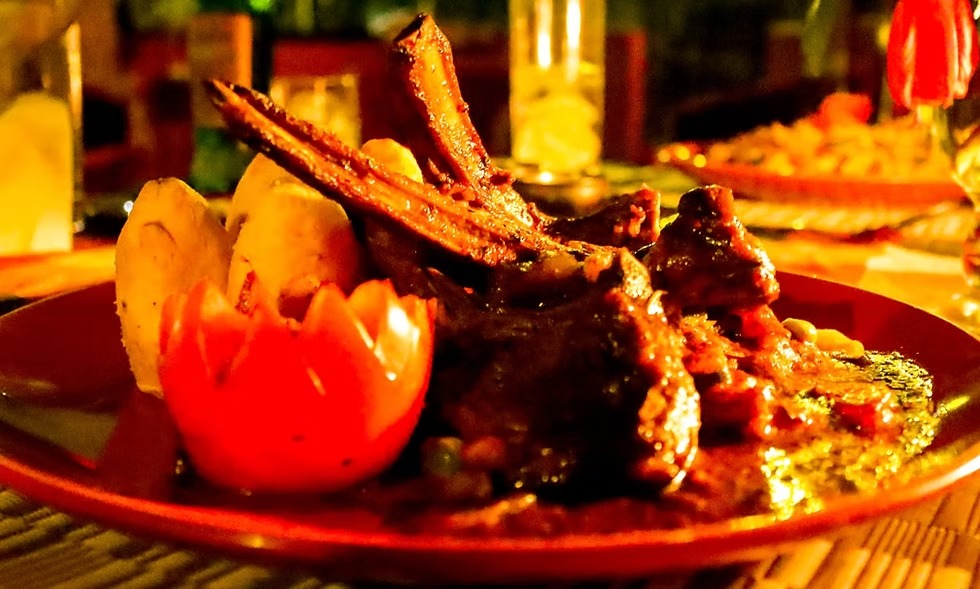
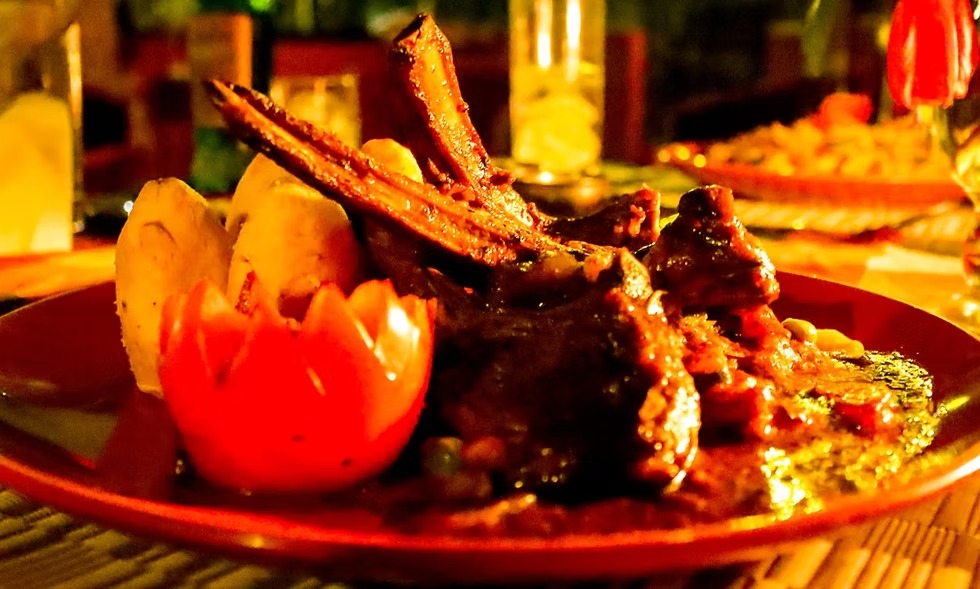
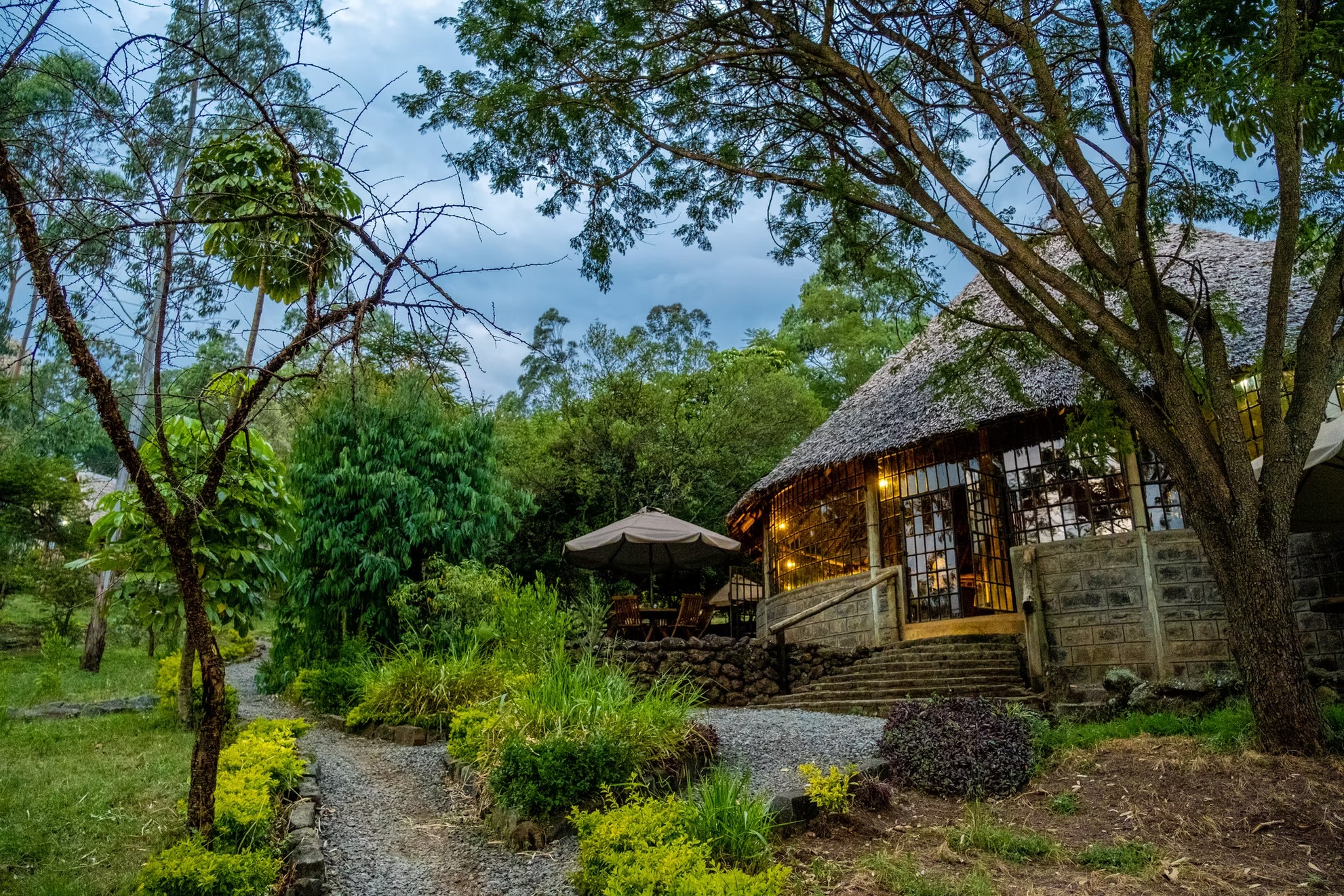
The Maili Saba restaurant is a rustic, oil lamp-lit space that serves local and continental dishes with a daily-changing menu and a commitment to using fresh, locally sourced ingredients. Meals are taken either inside the main lodge — a room that multiple guests have described as a work of art in its own right — or outside in the garden, where the crater view accompanies breakfast and the night sky accompanies dinner. The kitchen is unhurried and personal: orders are taken individually rather than buffet-style, and the soups in particular draw repeated mention in guest feedback.
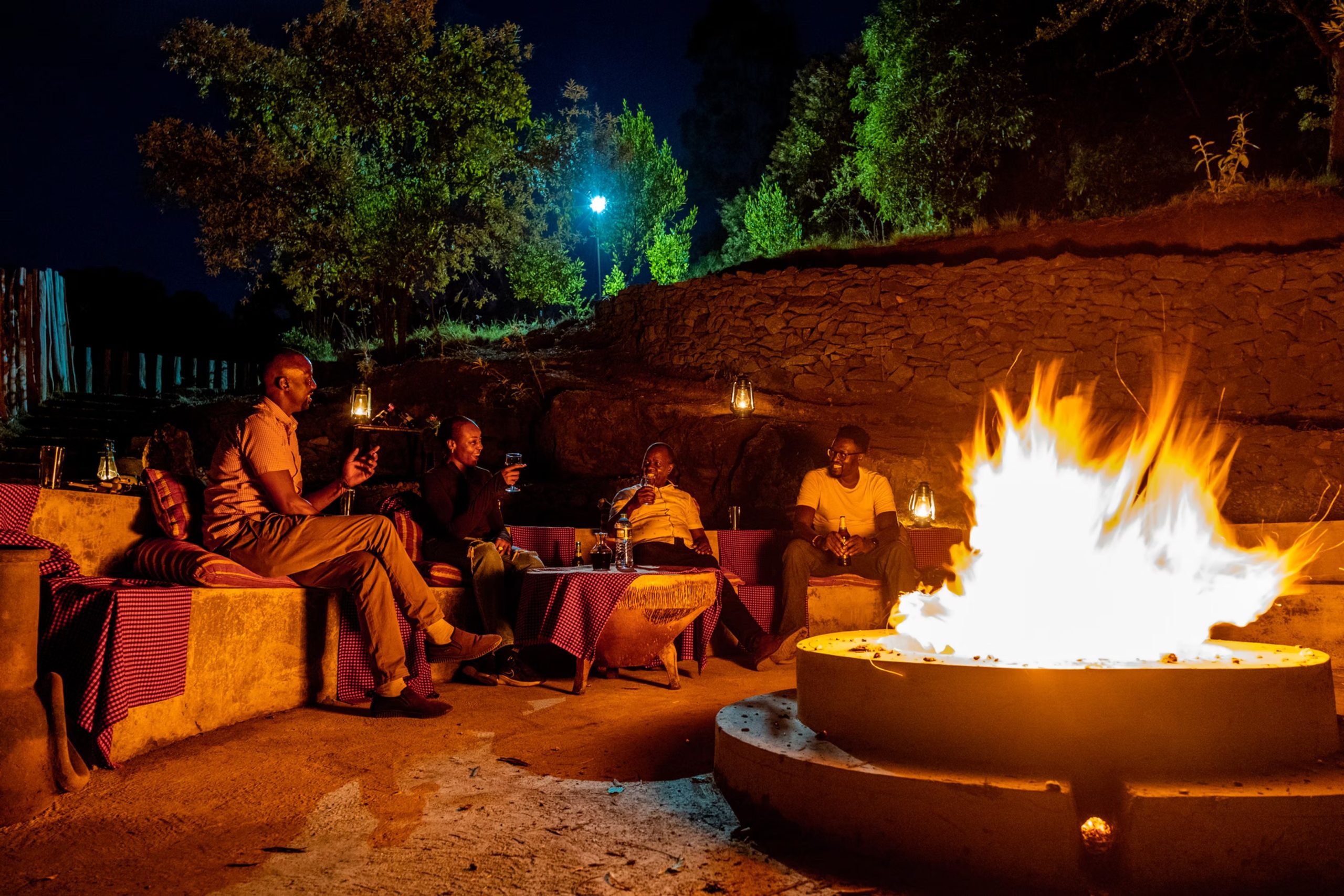
The bar is well stocked with local beers, wine, spirits, and a range of cocktails. Sundowners on the crater rim — chairs, drinks, and the Menengai light fading to purple — are the natural conclusion to any afternoon at the camp. Three board arrangements are available: Bed and Breakfast, Half Board (breakfast plus one other meal), and Full Board covering all three meals. Dietary requirements including gluten-free and vegetarian are catered to with advance notice.
Nakuru and the Menengai Crater are accessible year-round, and the camp’s combination of crater activities, Lake Nakuru game drives, and in-camp relaxation means that weather is less determinative of the experience than it would be at a pure game drive destination.
Lake Nakuru National Park’s flamingo population fluctuates significantly with the lake’s water level, which is driven by rainfall patterns across the greater Rift Valley catchment. The dry seasons — January to February and June to October — tend to produce more stable lake levels and the greatest flamingo concentrations; these months also offer excellent predator and rhino sightings as the vegetation is short and visibility is clear. The park is worth visiting in any season, but guests with flamingo photography as a primary objective should travel in the dry months and confirm lake conditions with African Trails Expeditions before finalising dates.
The crater itself is best experienced on foot or by bicycle in the early morning — the light is extraordinary at that hour, the crater mist is still settling in the caldera, and the birdsong is at its most intense. The late afternoon through sunset is the other great window, and the camp’s sundowner setup has been designed around it.
Green season (April–May long rains, November short rains) brings dramatic skies, flowering vegetation on the crater walls, and migratory birds to the area. For guests who are not primarily flamingo-focused, these months offer a different and equally rewarding version of the same landscape.
Explore handcrafted itineraries where Maili Saba Camp forms part of the journey.
Please share your name and email so we can follow up with you.