Masai Mara vs Serengeti
There is a question every serious safari traveller eventually faces, and no honest guide will pretend the answer is simple. The Maasai Mara and the Serengeti are, in the truest sense, two halves of the same extraordinary story: a single, sweeping ecosystem that sprawls across the Kenya-Tanzania border, teeming with life, shaped by ancient rhythms, and capable of stopping even the most seasoned traveller in their tracks.
Yet they are not the same. The feel of the land differs. The light differs. The quality of the silence differs. After two decades of guiding discerning travellers through both, the team at African Trails Expeditions has learned that the right answer depends almost entirely on who is asking, and what they are truly seeking.
Here is what we know.
Setting the Stage: Two Parks, One Great Ecosystem
The Maasai Mara National Reserve occupies roughly 1,510 square kilometres of southwestern Kenya. Named for the Maasai people who have tended these grasslands for centuries, and for the Mara River that cuts a dark, crocodile-filled line through the plains, the Mara is compact by African standards, but what it lacks in size, it more than compensates for in concentration. The wildlife is dense here, the predator activity is relentless, and the open savannah means that very little goes unseen.
Across the border in northern Tanzania, the Serengeti National Park is a different proposition entirely. At approximately 14,750 square kilometres, it is one of the largest and oldest ecosystems on earth. The name itself comes from the Maasai word siringet, “the place where the land runs on forever”, — and standing in the middle of the southern plains at first light, you understand immediately why that name was chosen. The Serengeti does not merely contain wilderness. It is wilderness, in its most elemental form.
Both parks form part of the broader Mara-Serengeti ecosystem, and together they host one of the great wildlife spectacles on the planet: the Great Migration, the annual movement of over two million wildebeest, zebra, and gazelle across the plains in search of fresh grazing. This migration is circular, ceaseless, and extraordinary, and understanding where the herds are in their cycle is often the single most important factor in planning your safari.
Wildlife: Density, Drama, and the Art of the Encounter
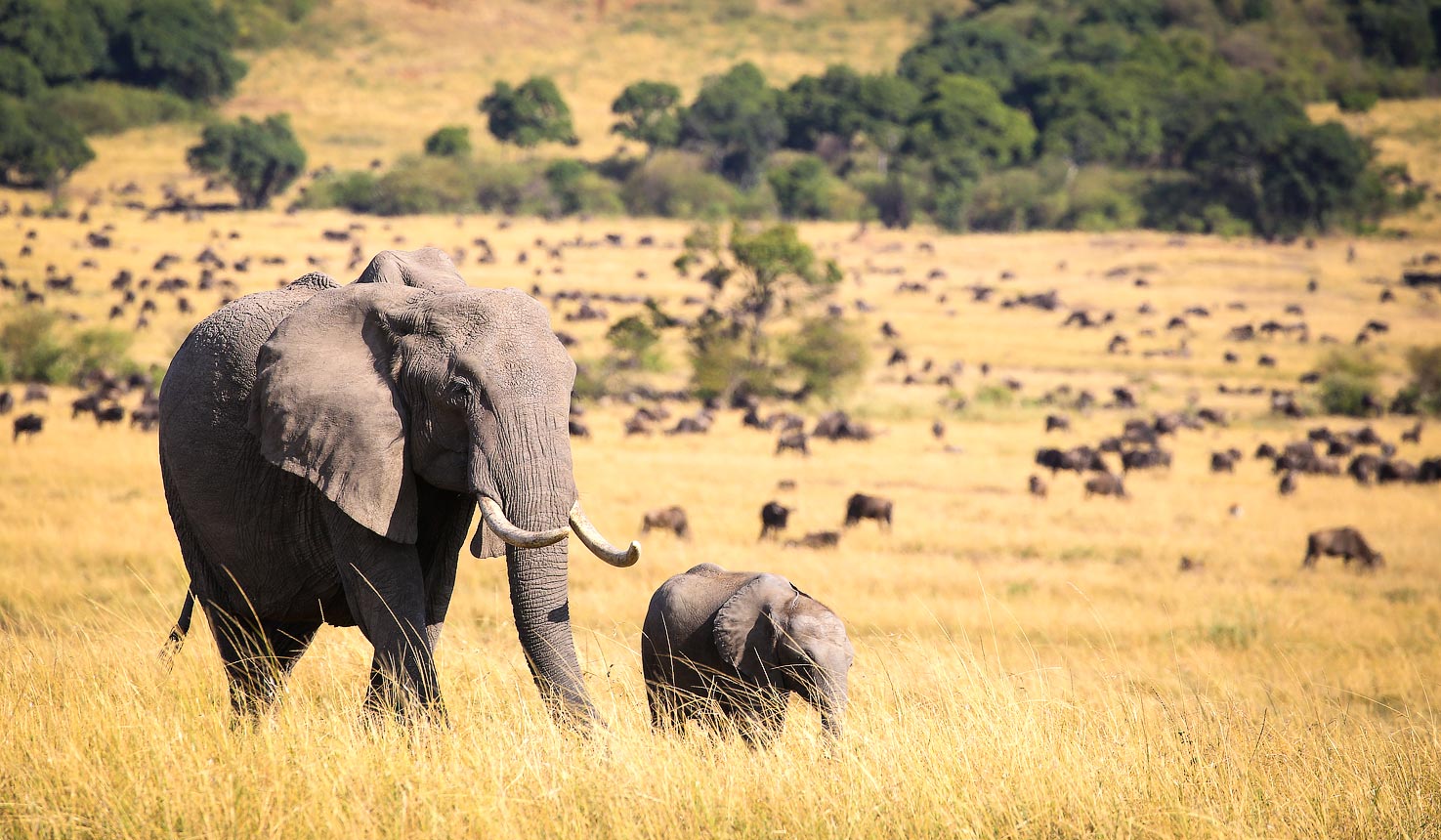
Both parks carry the full cast of East African wildlife. The Big Five are resident in both, and the supporting roster — cheetah, wild dog, giraffe, hyena, hippo, and countless antelope species — is exceptional on either side of the border. But the character of the encounter differs in ways that matter.
The Maasai Mara is, quite simply, one of the finest places on earth to watch big cats. The resident lion prides are well-studied and relaxed around vehicles; you can observe a morning hunt, a leopard draped across an acacia branch, and a cheetah mid-stalk, all within a single game drive. The open, short-grass plains keep sightlines long and clear. For predator-focused guests, the Mara is very difficult to surpass.
The Serengeti offers something different: a sense of scale and discovery that the Mara, for all its brilliance, cannot replicate. The park’s varied ecosystems, the short-grass southern plains, the wooded western corridor, the riverine forests of the north, the ancient kopjes rising from the central Seronera valley mean that each zone delivers a genuinely distinct experience. Lion prides here are large. Elephant herds move through the woodlands in impressive numbers. And the sheer spaciousness of the landscape lends every sighting a particular grandeur.
One further note: if the black rhino is on your list, Kenya’s dedicated conservancies and the Ngorongoro Crater, a natural complement to any Serengeti itinerary, offer your most reliable sightings. Rhino populations remain fragile, and these protected areas represent the best of the conservation work being done to secure their future.
The Great Migration: Which Park, and When?
This is the question we are asked most often, and the answer requires a little more nuance than most articles allow.
The Migration is not a single event, it is a perpetual cycle. The herds are always moving, always somewhere within the ecosystem, and with careful planning, you can witness something extraordinary in both parks, depending on the time of year.
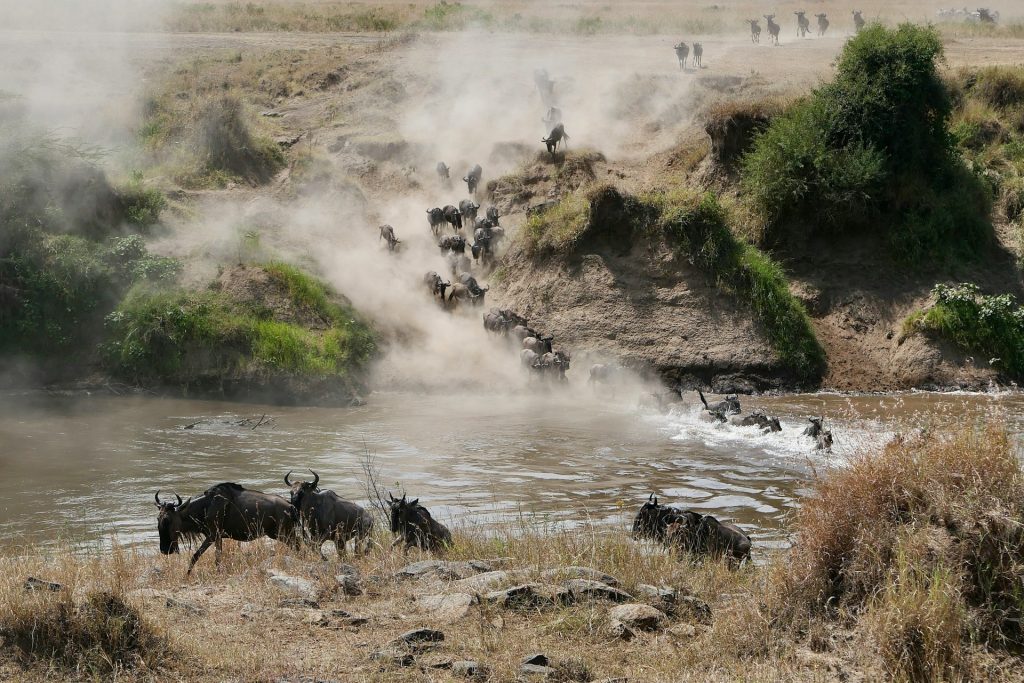
July to October is the Mara’s signature season. This is when the great columns of wildebeest push north across the Tanzanian border and the Mara River crossings take place, those scenes of chaos, courage, and crocodile that define the Migration in the popular imagination. The crossings are wonderfully unpredictable; you may wait hours, even a full day, for the herds to commit to the water. But when they go, there is nothing else in the natural world quite like it.
For the rest of the year, the Serengeti holds the Migration in various and equally compelling forms. January and February bring the calving season to the southern Ndutu plains, hundreds of thousands of wildebeest giving birth within a matter of weeks, drawing every predator in the ecosystem and producing wildlife viewing that rivals the river crossings for sheer, raw drama. Between March and June, the herds gather and begin their northward push through the western corridor, with the Grumeti River crossings adding their own spectacle to the journey.
Our honest counsel: if the river crossings are your primary ambition, build your safari around the Mara during peak season. If you want to follow the full arc of the Migration, or experience the calving season that most visitors overlook entirely — a well-crafted Serengeti itinerary, ideally combining two or more zones, will reward you beyond expectation.
Landscape and Atmosphere: What Does the Land Feel Like?
Safari is not only about the animals. It is about the sensation of being somewhere wild and ancient and alive, and on that measure, both parks deliver, in distinctly different registers.
The Maasai Mara has an intimacy to it. The rolling hills, the scattered acacia, the long golden light of late afternoon — it is a landscape that feels knowable, even familiar, and that quality makes it deeply comfortable for first-time safari guests. Sunsets here are almost theatrically beautiful, flooding the plains in amber and copper while lions call in the middle distance.
The Serengeti asks more of you — and gives more in return. Its scale can feel almost disorienting on first arrival: endless sky, endless grass, a horizon that never quite arrives. But spend a few days here and something shifts. You begin to feel the rhythm of the place, the deep geological patience of it. The kopjes — worn granite outcrops rising from the plains — are magnificent both as landscapes and as lion habitat, and the diversity of environments across the park means that no two days in the Serengeti look the same.
Accessibility and Where to Stay
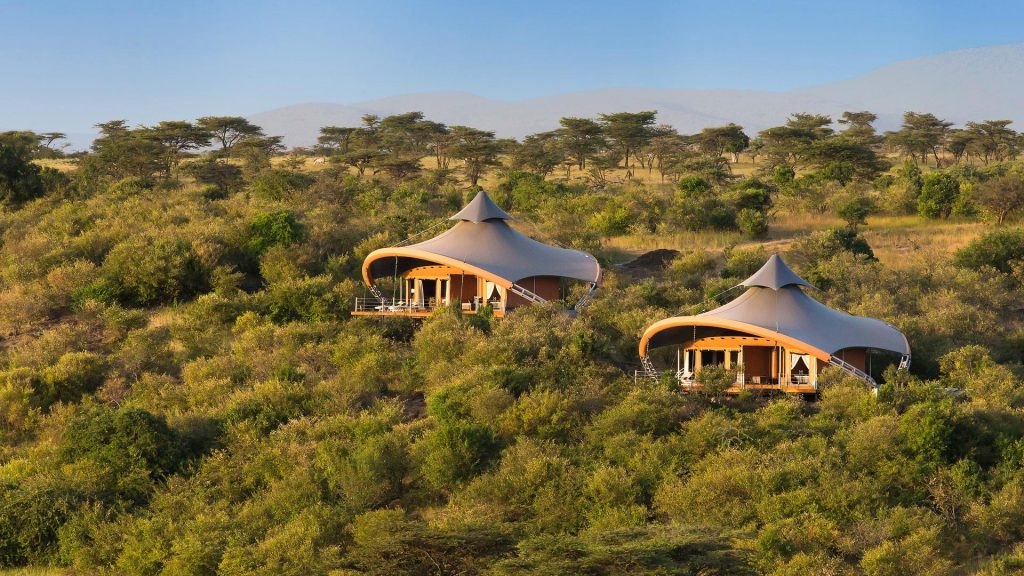
Getting to the Mara is straightforward. Regular scheduled flights connect Nairobi’s Wilson Airport to the Mara’s several airstrips in under an hour, and the drive from Nairobi, while long, passes through some rewarding landscapes. The concentration of lodges and tented camps around the reserve means that world-class accommodation is never far from the action.
The Serengeti rewards commitment. Reaching the southern plains or the remote northern corridor typically involves a flight into Kilimanjaro or Arusha, followed by a light-aircraft connection into the park. The distances are greater, and a satisfying Serengeti safari generally calls for a longer stay. But the trade-off is a sense of space and exclusivity, particularly in the northern and western areas, that the more accessible Mara simply cannot match.
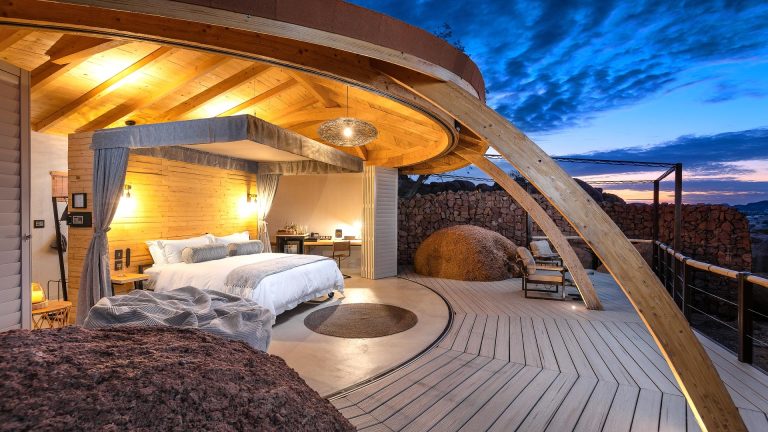
Accommodation across both ecosystems has reached exceptional standards. From the intimate tented camps of the Olare Motorogi Conservancy, among them the celebrated Mahali Mzuri, with its private concession and near-exclusive big cat access, to the classic permanent lodges of the Seronera valley and the mobile camps that follow the Migration through the Serengeti’s seasonal zones, the choice is wide and the quality, at the luxury end, is genuinely remarkable.
So, Which Should You Choose?
The honest answer is: both, if your time and appetite allow. A combined Kenya-Tanzania itinerary — the Mara and the Serengeti bookending a longer East Africa journey — is one of the finest safari experiences on earth, and it is one we have crafted and refined for our guests over many years.
If you can only choose one, let your priorities guide you. Choose the Maasai Mara for unparalleled big cat sightings, the drama of the river crossings between July and October, and an accessible, immersive introduction to East African safari. Choose the Serengeti for scale, diversity, the calving season, and a sense of wilderness that reaches back to the very beginnings of the natural world.
Either way, you will not come home unchanged. That much, we can promise.
Ready to start planning? Contact our team to begin designing your bespoke safari.