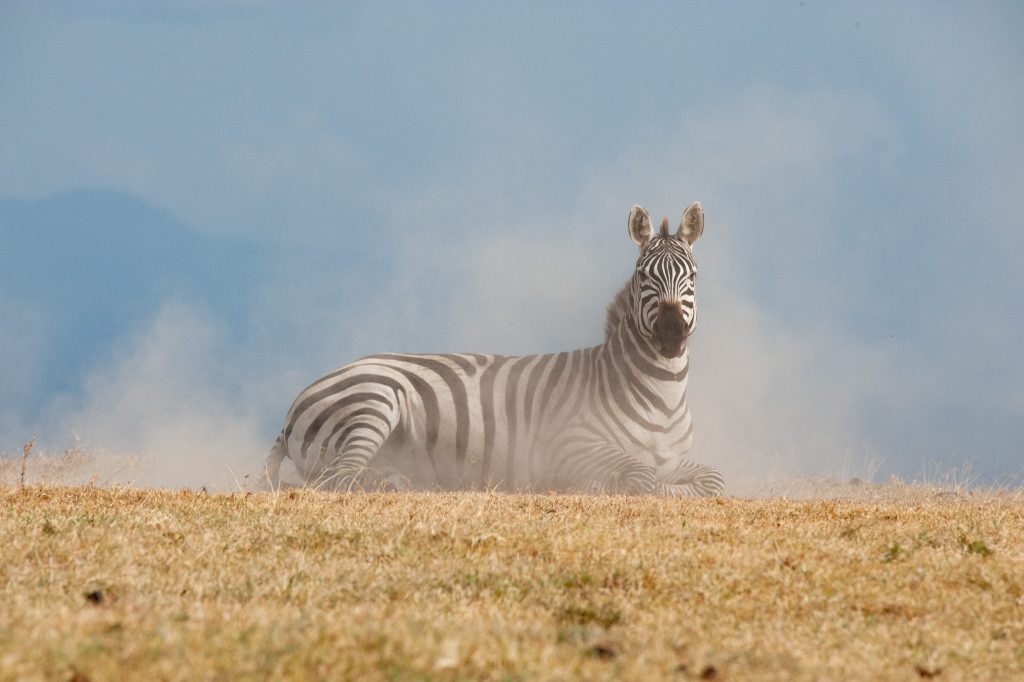
Serengeti National Reserve
The greatest wildlife spectacle on earth — where two million animals follow an ancient rhythm across an endless plain
About Serengeti National Reserve
There are places whose reputation arrives so completely formed, so saturated with expectation, that the actual experience of being there risks disappointment. The Serengeti is not one of them. Whatever you have read, whatever footage you have watched, whatever stories you have been told — the Serengeti, seen from the ground at dawn, with the light running low across the grass and the silence broken only by the distant sound of a lion — exceeds it all. It is one of those rare places where reality is larger than the idea of it.
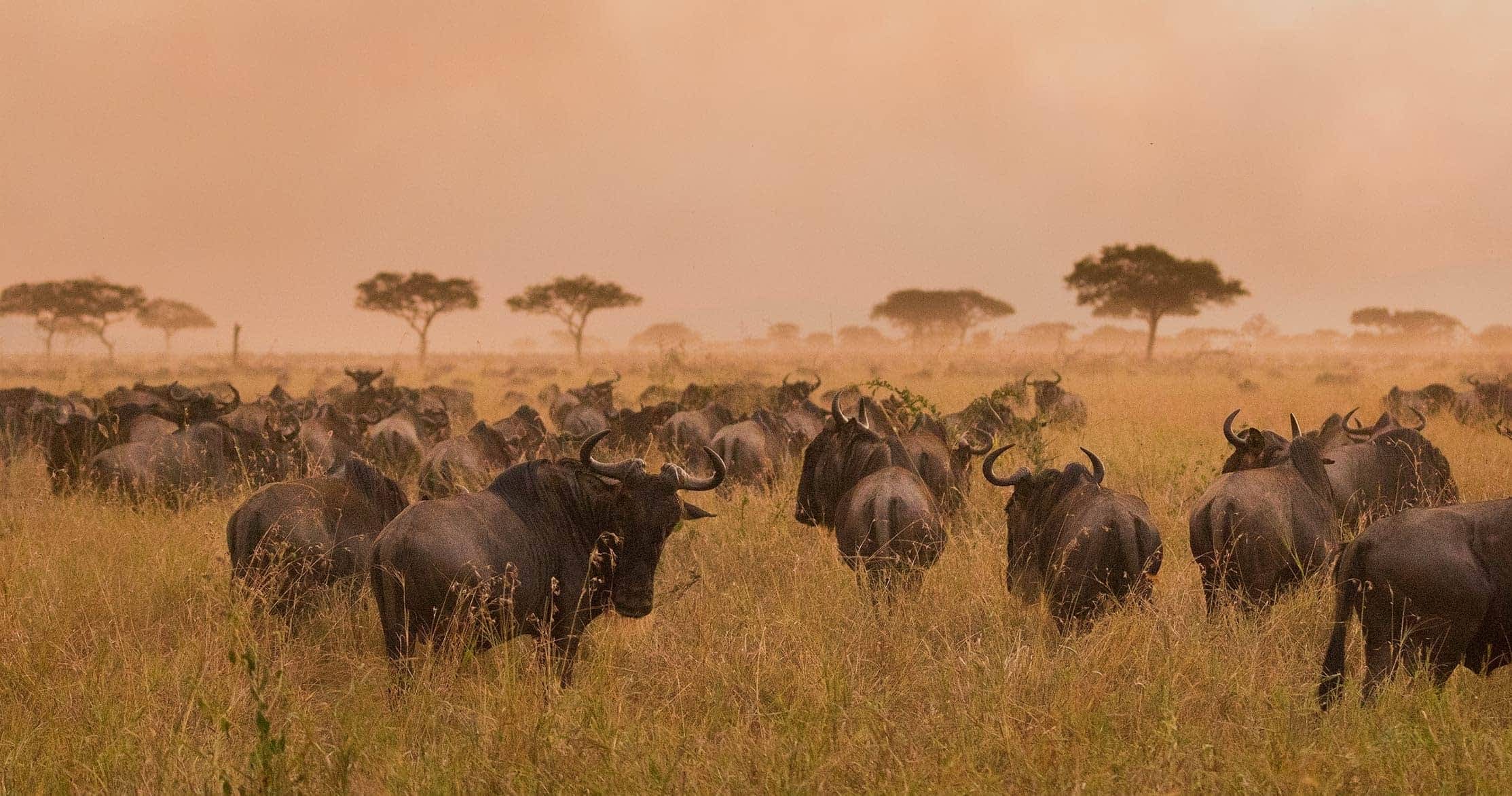
Tanzania’s Serengeti National Park covers 14,763 square kilometres of open savannah, acacia woodland, kopje-studded plains and seasonal river systems in the country’s north. It is the centrepiece of the broader Serengeti–Mara ecosystem — a continuous wildlife corridor that extends north into Kenya’s Maasai Mara — and together this system supports the largest overland animal migration on the planet. Approximately 1.5 million wildebeest, 400,000 zebra and 200,000 Thomson’s gazelle move in a continuous annual circuit through this landscape, following rainfall and the green grass it produces, crossing rivers, surviving predators, and returning year after year to the southern plains where new life begins.
The Great Migration is the Serengeti’s defining spectacle, but it is far from its only one. The park holds Africa’s highest density of large predators — lion, leopard, cheetah, wild dog, spotted hyena — concentrated in numbers that produce predator sightings of a frequency and quality unmatched anywhere else on the continent. The kopjes of the central Seronera region shelter some of Africa’s most famous lion prides. The Grumeti and Mara river crossings are among wildlife photography’s most dramatic events. The southern plains in calving season — January to March — produce a spectacle of birth and predation that rivals anything the migration itself delivers.
The Serengeti also rewards those who look beyond the headline acts. Its birdlife runs to over 500 species. Its landscape — the endless plains of the south giving way to acacia woodland and then the rocky, broken terrain of the north — changes character dramatically across its vast area. And its human story, from the Maasai who once grazed cattle across these plains to the scientists who have spent careers studying its ecology, adds layers of meaning that a single visit only begins to reveal.
To visit the Serengeti properly is to understand why East Africa became the world’s safari destination. Everything else — every other park, every other ecosystem — is, in some sense, a variation on what the Serengeti perfected.
Quick Facts
International Adults: USD 70 per day
International Children (5–15): USD 35 per day
Fees payable via TANAPA. ATE manages all park fee logistics for guests.
Wildlife of Serengeti National Reserve
The numbers that define Serengeti wildlife are almost impossible to hold in the mind. One and a half million wildebeest. Four thousand lion. One thousand leopard. Hundreds of cheetah. Africa’s largest wild dog population. These are not estimates from a single census but accumulations from decades of research in the world’s most studied wildlife ecosystem — and they translate, on the ground, into a quality of game viewing that no other park on the continent consistently matches.
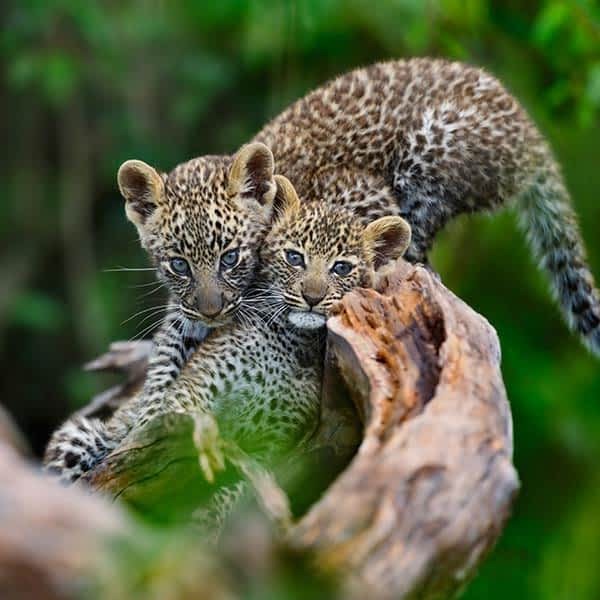
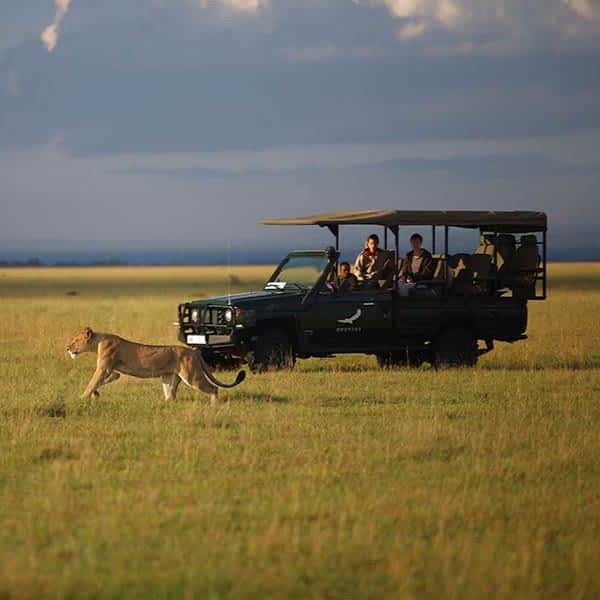
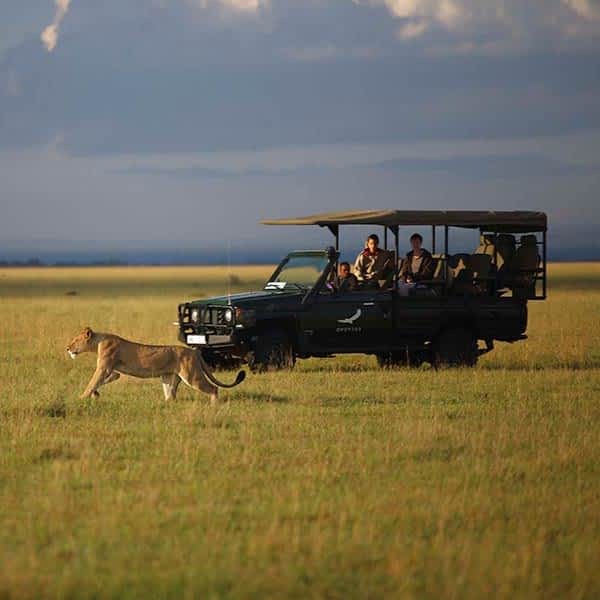
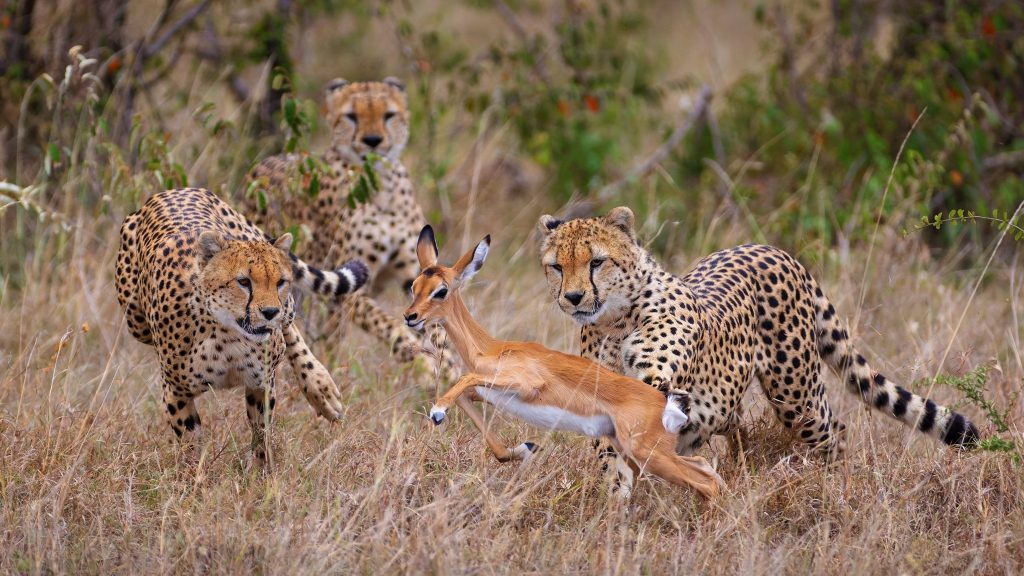
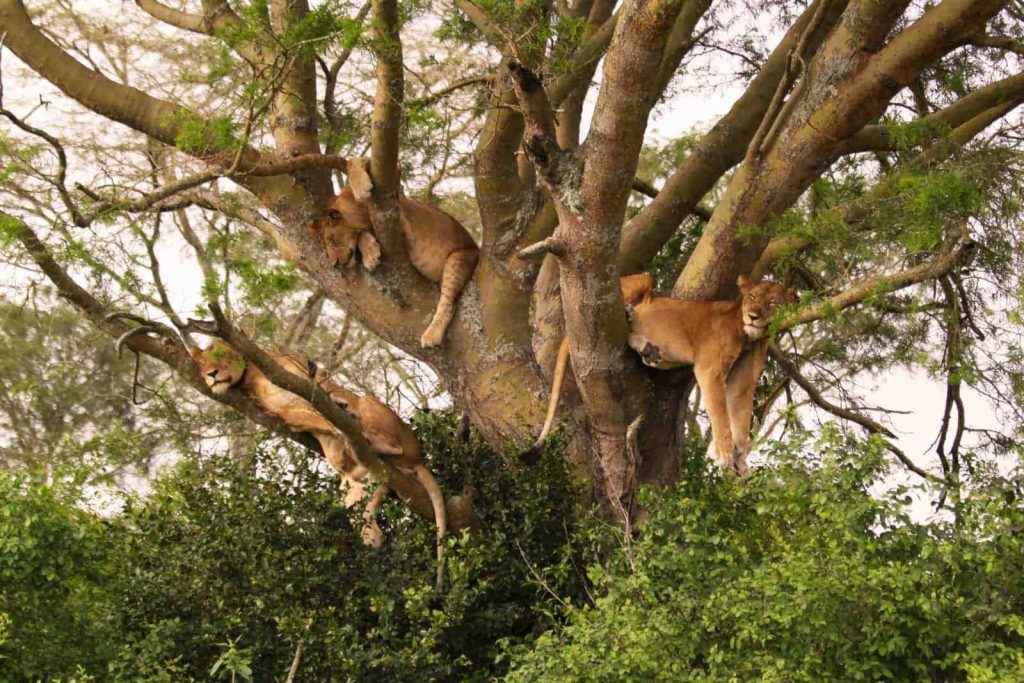
The predator density is Serengeti’s most immediately striking feature for first-time visitors. In the central Seronera region, lion are so reliably encountered that guides speak not of finding lion but of which pride they will visit first. Leopard drape themselves along the sausage trees along the Seronera River with a frequency that makes their notorious elusiveness in other parks seem almost implausible. Cheetah hunt the open southern plains with a visibility made possible by the lack of cover — the entire pursuit, from stalk to chase to kill, plays out in full view across flat ground. Spotted hyena move in clans of thirty or forty animals. And wild dog — arguably Africa’s most endangered large carnivore — maintain packs in the western corridor that are among the continent’s most reliably located.
The herbivore base that supports this predator density is staggering. Beyond the migration herds, the Serengeti holds permanent resident populations of elephant, buffalo, giraffe, zebra, topi, eland, kongoni, impala, Thomson’s and Grant’s gazelle, warthog and a dozen other species. Even when the migration has moved on to another part of the ecosystem, the Serengeti’s resident wildlife population would make it one of Africa’s premier game viewing destinations in its own right.
The Great Migration — Earth’s Largest Wildlife Movement
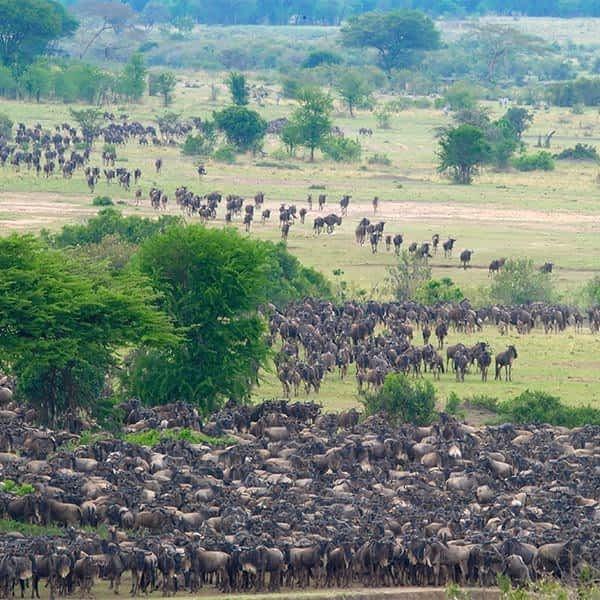
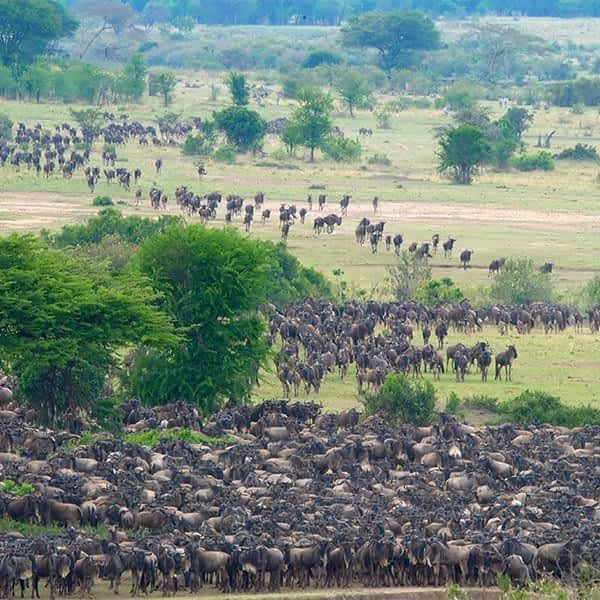
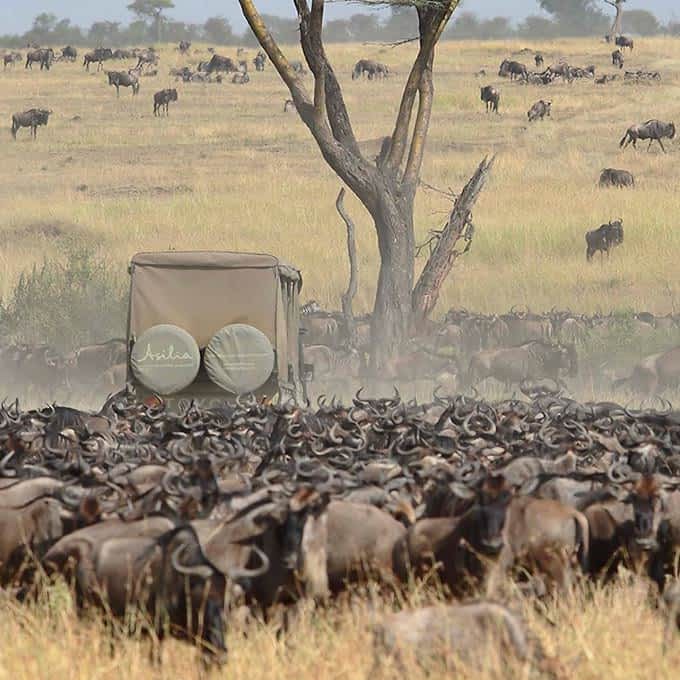
The Great Migration is the annual movement of approximately 1.5 million wildebeest, 400,000 zebra and 200,000 Thomson’s gazelle in a continuous circuit through the Serengeti–Mara ecosystem. It is the largest overland animal migration on the planet and the event that draws more wildlife travellers to East Africa than any other single spectacle.
The migration moves in a broadly clockwise direction through the year. From January to March, the vast herds concentrate on the short-grass southern plains around Ndutu for the calving season — one of nature’s most intense events, with approximately 8,000 wildebeest born every day at the peak, and predators arriving in extraordinary numbers to capitalise on the abundance of vulnerable young. From April to June, as the rains arrive and the southern grass is depleted, the herds begin moving north and west through the Western Corridor, crossing the Grumeti River in a series of crossings that, while smaller than the Mara crossings, produce spectacular predation events in the resident crocodile population. From July to October, the herds reach the Mara River in the north — and the crossings begin. Thousands of animals plunge into the river simultaneously, navigating crocodile, strong currents and steep banks in scenes of controlled chaos that wildlife photographers travel specifically to capture. From November to December, the herds begin moving south again as the short rains bring new grass to the plains, completing the circuit.
No single visitor sees the entire migration — it is too large, too spread, too continuous for that. What any visitor to the Serengeti at the right time sees is a chapter of it: a crossing, a calving plain, a predator hunt in the dust of moving herds. And any one of those chapters is enough.
Special Species: The Serengeti holds Africa's largest lion population and one of the continent's last viable black rhino sanctuaries in the Moru Kopjes area. African wild dog — with fewer than 6,000 remaining globally — maintain one of their strongest populations in the western corridor. The park also protects the world's densest cheetah population, and the Grumeti River supports Nile crocodile of exceptional size.
Landscape & Ecosystem
The Serengeti is not a single landscape — it is a sequence of them, each with its own character, its own wildlife community, and its own quality of light and silence. Understanding this geography is essential to understanding why different times of year produce such radically different experiences in the same park.
The Southern Plains stretch from the park’s southern boundary toward the central Seronera region — an immense, apparently featureless grassland underlain by volcanic ash from the Ngorongoro highlands that prevents deep root growth and keeps the grass short. This is the calving ground: from January to March, the wildebeest return here because the short grass that grows after the short rains is nutritionally perfect for lactating mothers and growing calves. The plains feel genuinely infinite at this time of year, the horizon in every direction occupied by moving animals.
The Central Seronera Region is the park’s wildlife hub — where the Seronera River creates a permanent water source in the otherwise seasonal landscape, and where the kopjes (isolated granite outcrops) provide denning sites for lion and leopard and perches for cheetah. The famous Seronera Valley lion prides have been studied continuously since the 1960s. This is the region most visitors experience first and the one that delivers the most consistently excellent game viewing across all seasons.
The Western Corridor narrows toward Lake Victoria, its terrain more wooded than the southern plains, with the Grumeti River running through it. The woodland supports a distinct community — colobus monkey, topi, eland — and the Grumeti crossing, when the migration passes through between May and July, attracts some of the largest Nile crocodile in Africa. The western corridor is less visited than the central and northern Serengeti, which makes it more interesting for travellers seeking space and solitude.
The Northern Serengeti — sometimes called the Lamai region — borders Kenya’s Maasai Mara across the Sand River and is where the Mara River crossings occur from July to October. The terrain here is hillier and more forested than the south, and the Mara River itself cuts through deeply eroded banks that create the crossing points that have become synonymous with Serengeti photography. The northern Serengeti receives fewer visitors than central Seronera despite hosting the migration’s most dramatic events, and the camps here — smaller, more remote, more expensive — attract travellers who understand what they are paying for.
The Kopjes deserve their own mention as one of the Serengeti’s most distinctive features. These ancient granite islands, some worn smooth over millions of years, others still angular and dramatic, dot the plains throughout the park. They trap rainwater in rock pools that sustain life long after the surrounding plains have dried, and they provide the elevated vantage points that lion, leopard and cheetah use for hunting. A sunrise spent watching a kopje come alive — a leopard descending, rock hyrax emerging, raptors taking the first thermals — is one of the Serengeti’s most complete wildlife experiences.
Experiences & Activities
The Serengeti is large enough to offer genuinely different experiences depending on where you are, what season you visit, and what your guide prioritises. The park rewards repeat visits — each one revealing a different chapter of the same extraordinary story.
When to Visit Serengeti National Reserve
The Serengeti is the rare park where the answer to “when should I visit?” is genuinely “it depends what you want to see” — because the park offers fundamentally different but equally extraordinary experiences in every season. Understanding the migration calendar is the starting point for any Serengeti itinerary.
January to March — Calving Season brings the wildebeest herds to the southern plains around Ndutu for one of nature’s most intense events. Approximately 500,000 calves are born over a six-week period, drawing predators in extraordinary concentrations. Cheetah, lion and hyena hunting newborns on the open plains, with the Ngorongoro highlands on the southern horizon, is a spectacle of sustained drama that rivals the river crossings. This is also the easiest time of year to see wild dog, as packs denning near the southern plains are highly visible. Accommodation at Ndutu can be booked a year or more in advance for January and February.
April and May see the migration begin moving north and west as the long rains arrive and the southern grass is depleted. The landscape greens dramatically, the light becomes softer and more photogenic, and visitor numbers drop significantly as many travellers avoid the rains. For those who don’t mind occasional showers, April and May offer the Serengeti at its most lush and its least crowded — with the added benefit of resident predators who are highly active regardless of season.
June to July sees the herds moving through the Western Corridor and beginning to approach the Mara River in the north. The Grumeti crossings in June and July are spectacular in their own right — smaller than the Mara crossings but equally dramatic for the ferocity of the crocodile activity. The dry season is establishing itself, temperatures are comfortable, and game viewing quality across the park is at its peak.
August to October is the Serengeti’s most famous season — the period of the Mara River crossings in the northern Serengeti. Timing a visit to coincide with an actual crossing requires patience (the herds can wait on the riverbank for days before committing) but a guide who knows the northern Serengeti well can position guests for a crossing with reasonable reliability. This is also the period of maximum visitor numbers and maximum accommodation pressure — book well in advance.
November and December see the migration beginning to move south as the short rains bring new grass to the plains. The southern Serengeti and Ndutu begin to fill with animals again. This is a transitional period — less dramatic than either the calving season or the crossings, but consistently excellent for resident wildlife and increasingly popular as a quieter alternative to peak season.
Best Months to Visit
Safaris Featuring the Serengeti
Every Serengeti itinerary African Trails builds is anchored to the migration calendar, the specific region of the park that delivers the best experience for your travel dates, and the accommodation that matches both. No two Serengeti safaris are the same — and that is exactly as it should be.
Tanzania Safari & Zanzibar Beach Holiday
Tanzania Best Migration Route Safari
Frequently Asked Questions
The Mara River crossings typically occur between late July and October, when the northern Serengeti herds build on the southern bank of the Mara River before committing to cross. The peak crossing period is generally August and September, though this varies year to year depending on rainfall patterns. The Grumeti River crossings in the Western Corridor occur earlier — June and July — and while smaller in scale, produce equally dramatic predation events. We track migration movements closely and build every Serengeti itinerary around the most current information available for your travel dates.
The Serengeti and the Maasai Mara are part of the same ecosystem — the migration moves between them continuously — but they feel very different on the ground. The Serengeti is approximately ten times larger, which means more space, more varied terrain, and the ability to find genuine solitude even in peak season. The Mara is smaller, more accessible from Nairobi, and during the crossing season (July–October) can feel very busy near the river crossings. For pure scale, diversity of landscape and the full migration story, the Serengeti wins. For accessibility and the convenience of a Kenya circuit, the Mara is hard to beat. The ideal itinerary, for those with the time, includes both.
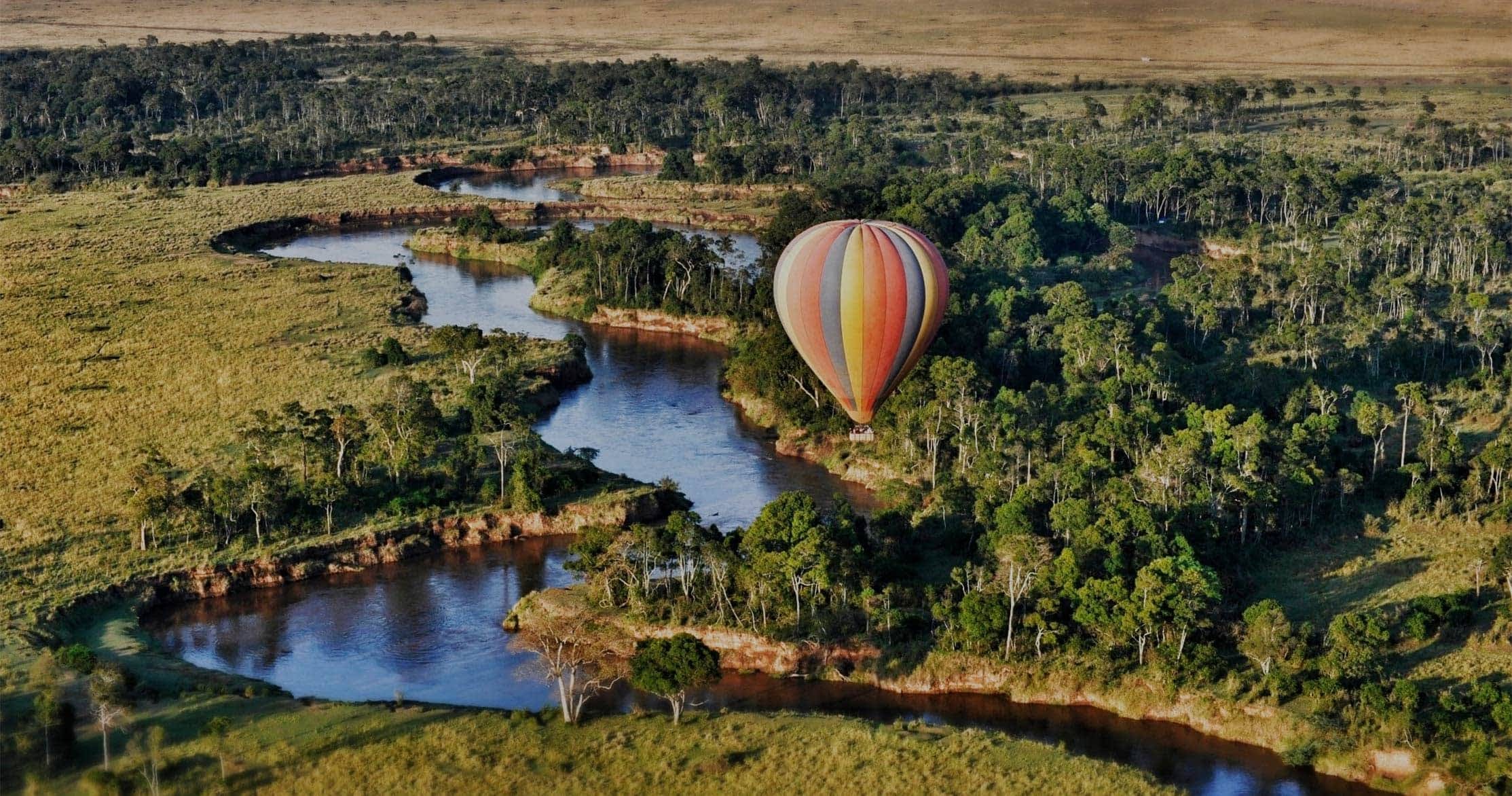
For most guests who do it, the balloon safari is the highlight of their entire East Africa trip. The experience of floating silently above the Serengeti at dawn — below the eye line of giraffe, close enough to see a lion on a kill without disturbing it — is genuinely different from anything a vehicle-based game drive delivers. The bush breakfast that follows, laid out on the plains, is an occasion in its own right. It is expensive, and it requires an early start, but we have yet to meet a guest who regretted it. We recommend booking it for your first or second morning while the excitement of being in the Serengeti is still at its peak.
The answer depends entirely on your travel dates and priorities. For the calving season (January–March), stay near Ndutu on the southern plains. For the Grumeti crossings (June–July), the Western Corridor. For the Mara River crossings (August–October), the northern Serengeti or Lamai region. For year-round predator viewing and reliable game across all seasons, the central Seronera region. Many of our multi-night Serengeti itineraries move between two regions — typically combining Seronera with whichever seasonal region is producing the most interesting activity during your dates.
The Serengeti holds lion, leopard, elephant, buffalo and black rhino — all five species are present. Lion, leopard, elephant and buffalo are reliably seen; black rhino are extremely rare and largely confined to the Moru Kopjes area in the south-west, where a small protected population is carefully managed. If black rhino is a priority sighting, we typically recommend combining the Serengeti with Ngorongoro Crater, where rhino sightings are more consistent, or building a dedicated rhino component at Ol Pejeta in Kenya into the broader itinerary.
A minimum of four nights gives you enough time to cover the park’s key areas and experience both morning and evening game drives properly. Five to seven nights allows for a more relaxed pace — time to wait out a river crossing, spend a morning following a cheetah hunt, or simply sit at a waterhole and watch the Serengeti come to you. For clients combining the Serengeti with Ngorongoro, Tarangire and a Kenya extension, we typically allocate four to five nights in the Serengeti and build the rest of the circuit around it. The Serengeti is a park that rewards time generously — there is no such thing as too many nights here.
Plan Your Serengeti National Reserve Safari
Our specialists have guided guests through Serengeti National Reserve for over two decades. Tell us when you'd like to travel and we'll take care of the rest.