From
$7,221

🔒 Your details are kept private and never shared with third parties.
Ten tents on the Talek River, a kitchen garden, a Gold Eco-rating, and the Maasai Mara fifteen minutes from the gate
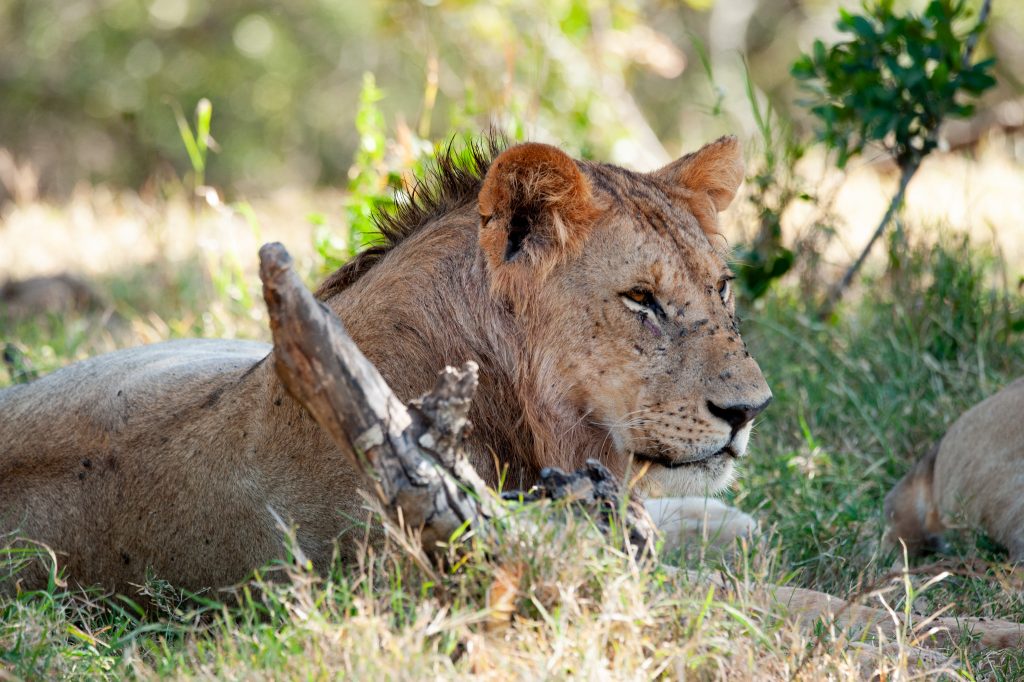
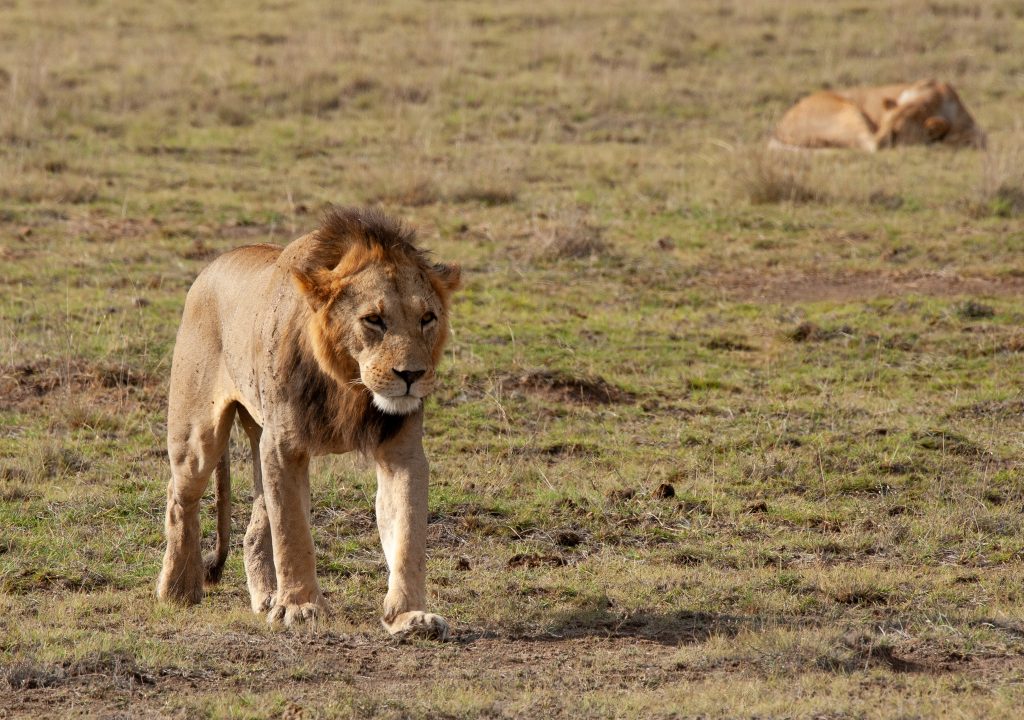
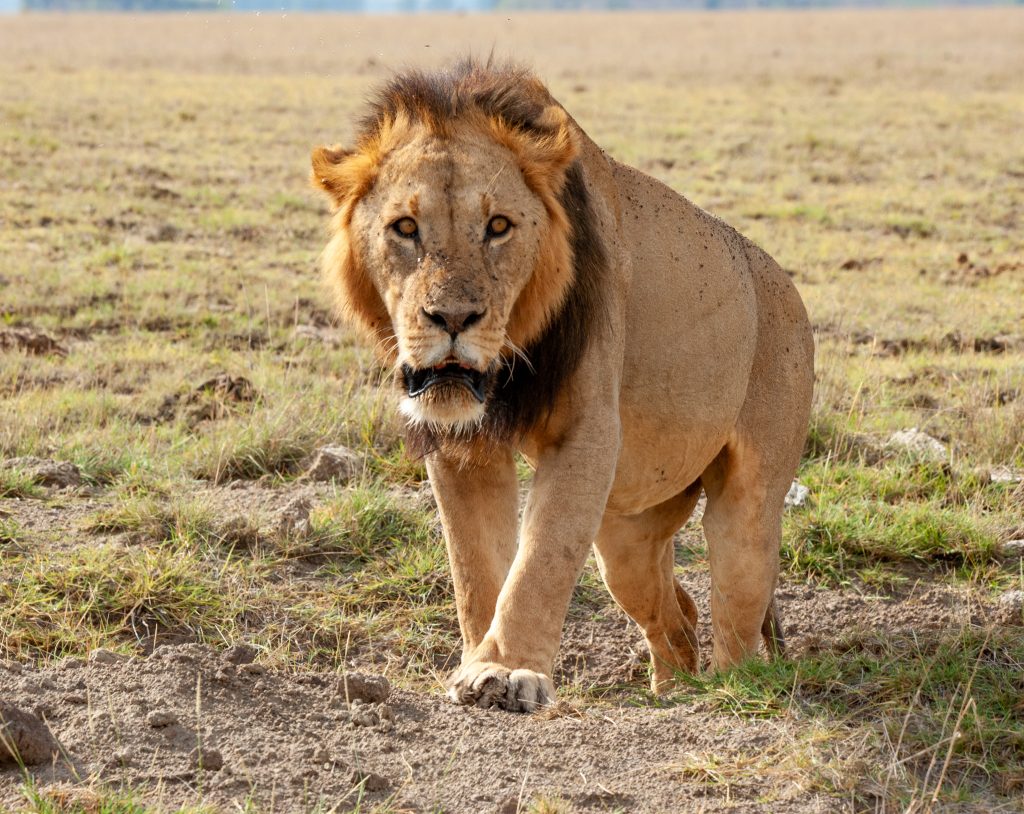
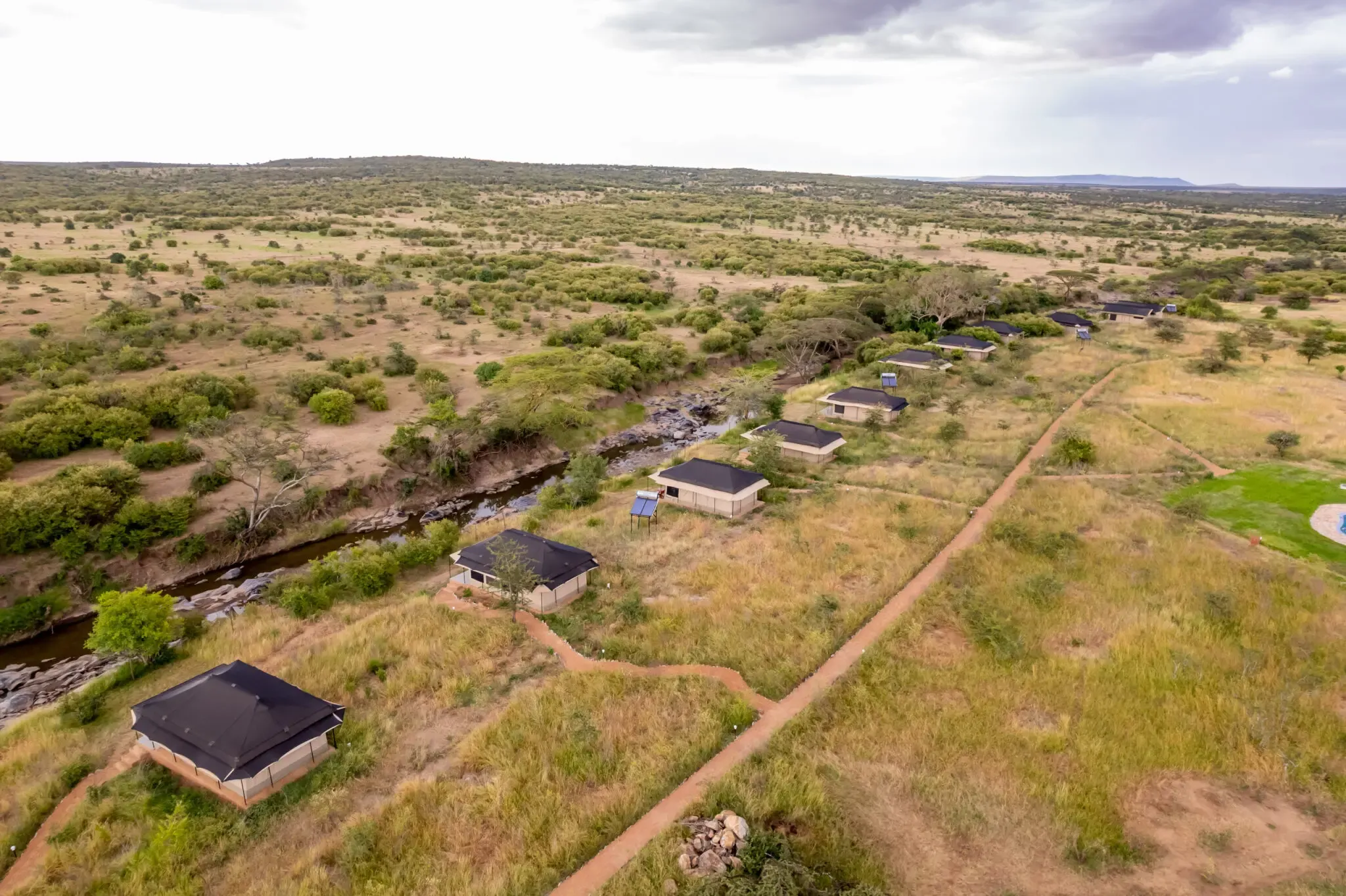
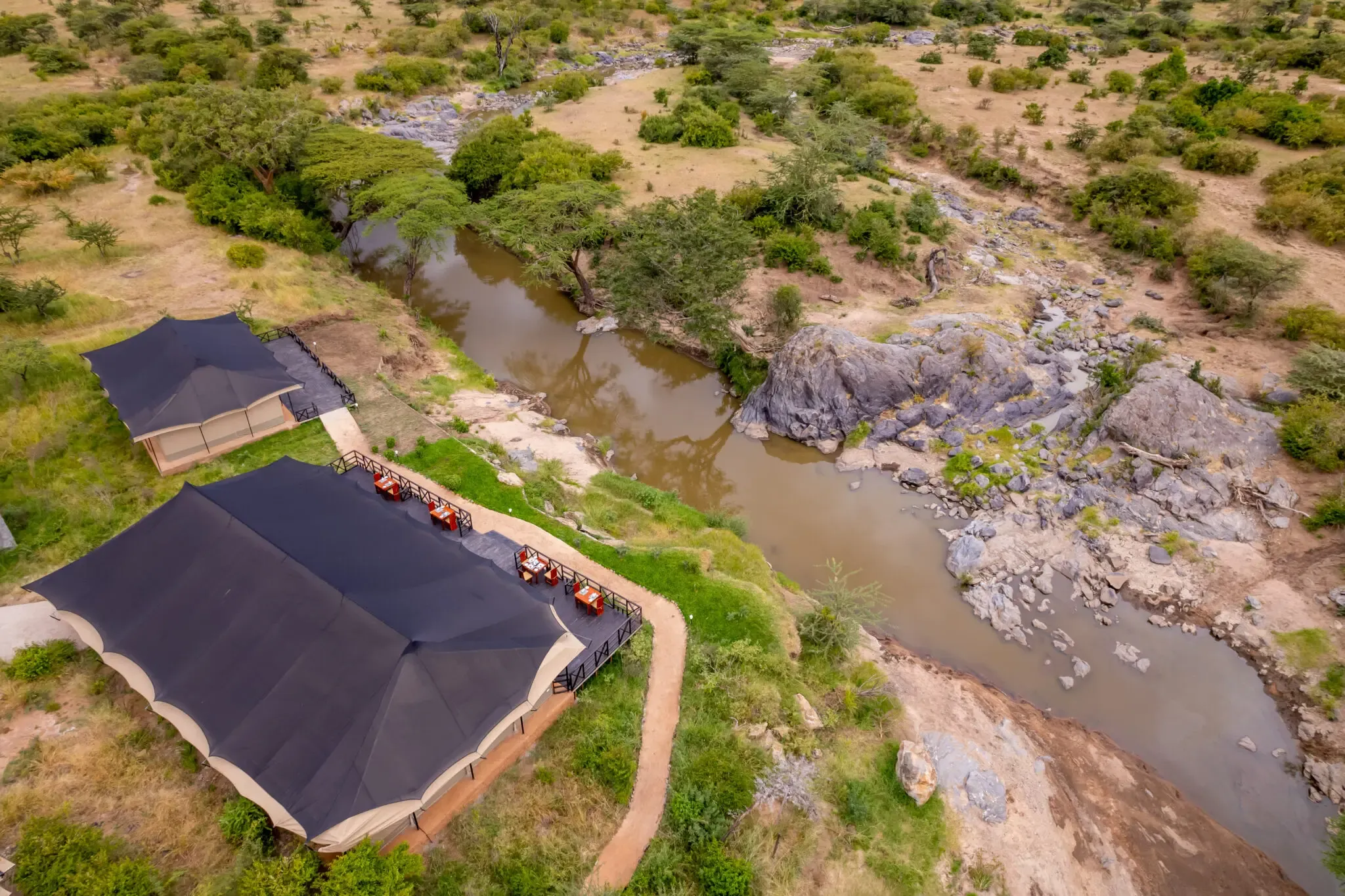
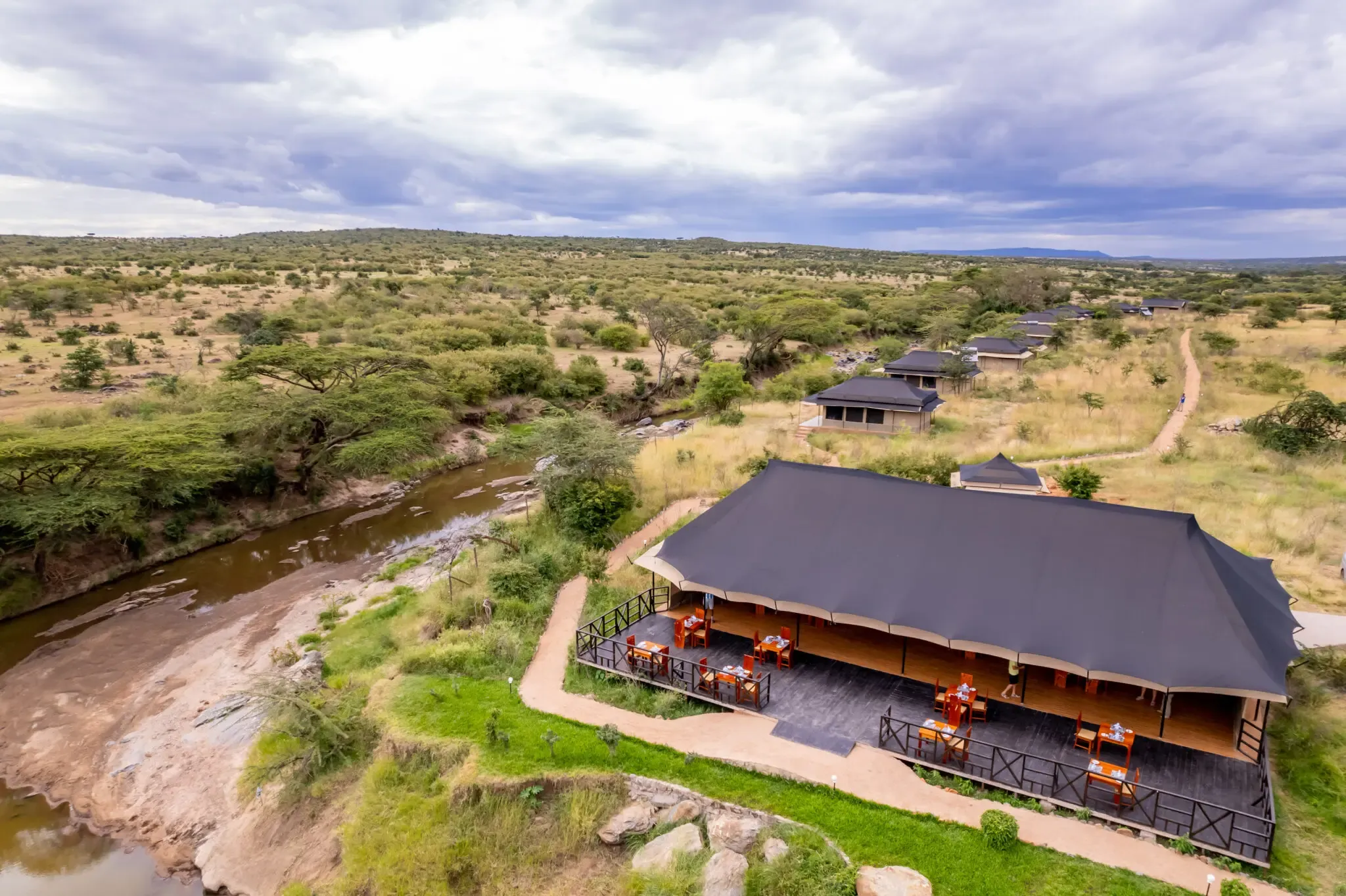
The camp sits on the banks of the Talek River, between the Naboisho and Nashulai conservancies, on a stretch of the Mara ecosystem where the Talek functions less as a scenic backdrop and more as a working wildlife corridor, delivering hippos to the restaurant’s view and the low, unmistakable rumble of lions to the tents after dark. Sekenani Gate is fifteen minutes away. The Maasai Mara National Reserve is beyond it. This is a camp that understands what proximity is worth, and has built an entire philosophy around using it well.
The ten tents are the starting point for understanding what Mtito offers and why it works. Ten is not a compromise born of available land — it is a decision made in service of the guest experience and the ecosystem in equal measure. A camp of this size operates at a pace and with a quality of personal attention that larger properties can describe in brochures but cannot replicate in practice. The chef comes to speak with guests personally before every meal. The manager knows your preferences by the second morning. When your child mentions at five o’clock that they are hungry, dinner is on the table at six. This is what intimate means when it is not merely a word in a rate card.
The kitchen garden grows within the camp itself — tomatoes, eggplant, courgettes, herbs, leafy greens — harvested each morning by the same hands that will prepare them. By the time the first game drive returns and breakfast is served on the riverside terrace, what arrives at the table was still in the soil a few hours ago. This farm-to-plate commitment is the foundation of Mtito’s Gold Eco-rating from Eco Tourism Kenya — an accreditation earned through daily operational practice rather than aspiration, and complemented by a strict zero-plastic policy that extends across every guest-facing and back-of-house function in the camp.
The Talek River, from every tent and from the restaurant terrace, is a living stage. Hippos surface and submerge through the evening and into the night. Giraffes move along the far bank at dusk. The camp is positioned between two of the Mara ecosystem’s most productive conservancies, and the wildlife corridor this creates means that some of the most memorable sightings at Mtito happen without a game drive at all — from a canvas chair on a private deck, over breakfast, or in the dark, identified by sound alone. Mtito Safari Camp is not trying to be the largest property in the Mara. It has long since been decided to be one of the best.
On the banks of Aruba Dam in Tsavo East — a year-round waterhole drawing elephant, buffalo, crocodile, and 500-plus bird species all day. Fifty-two rooms and tents, including a new Club Wing, overlook it directly. No vehicle required.
Gold Eco-rated, zero single-use plastics, and an organic kitchen garden harvested each morning. Guests plant and name a tree — and return to watch it grow. Maasai guides, community staff, village visits as standard. Every stay funds conservation and community work in the Mara ecosystem.
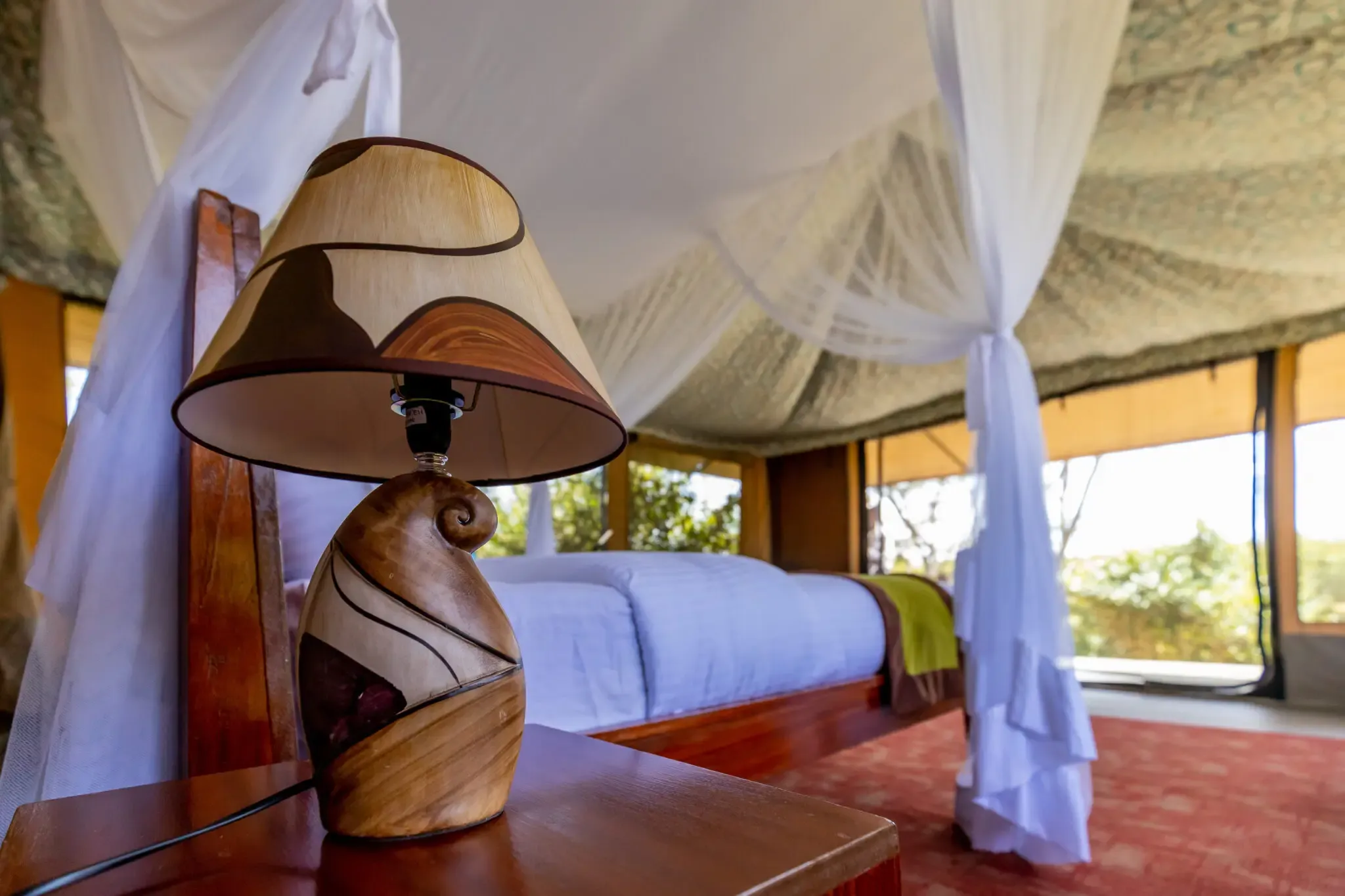
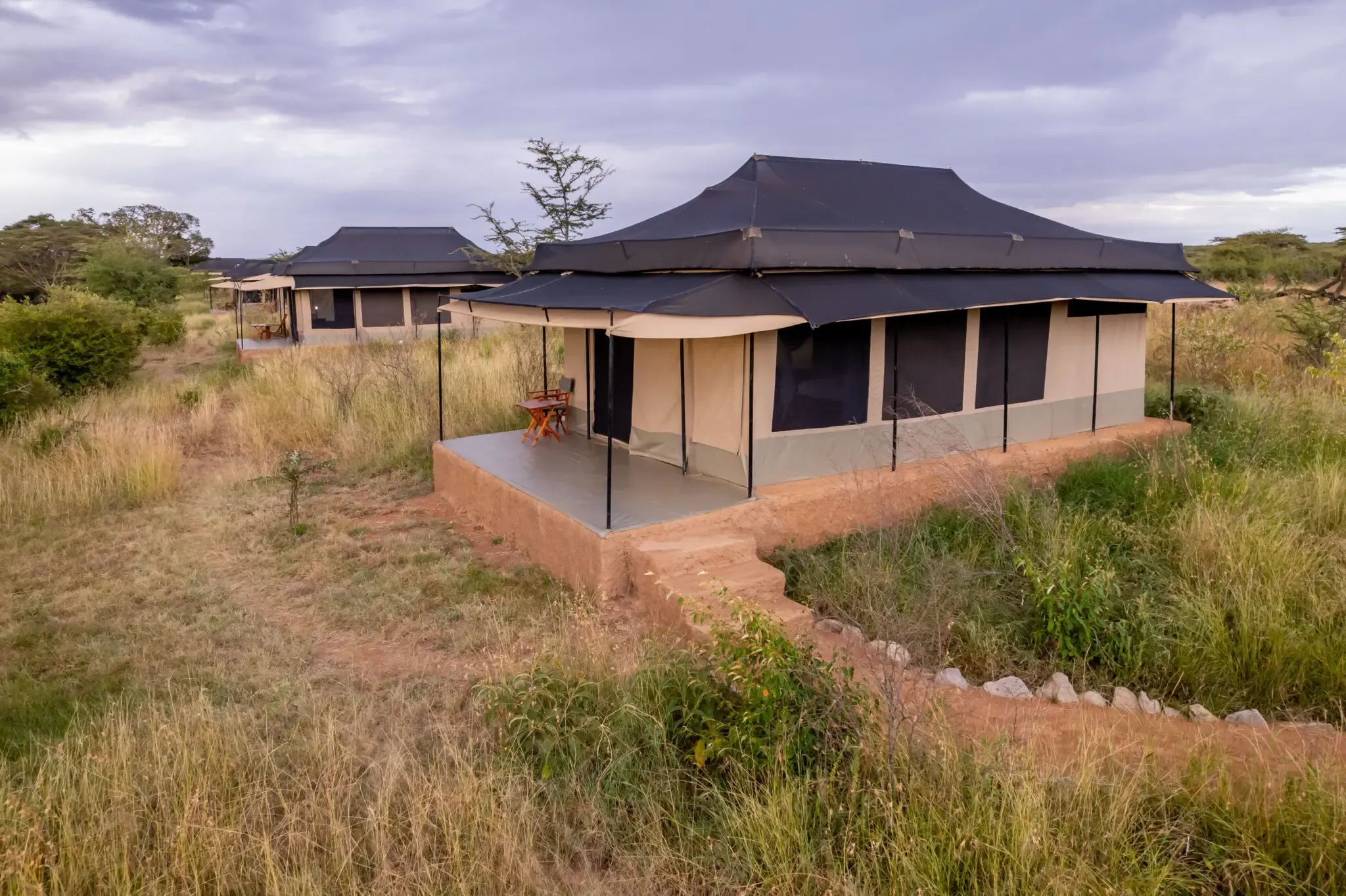
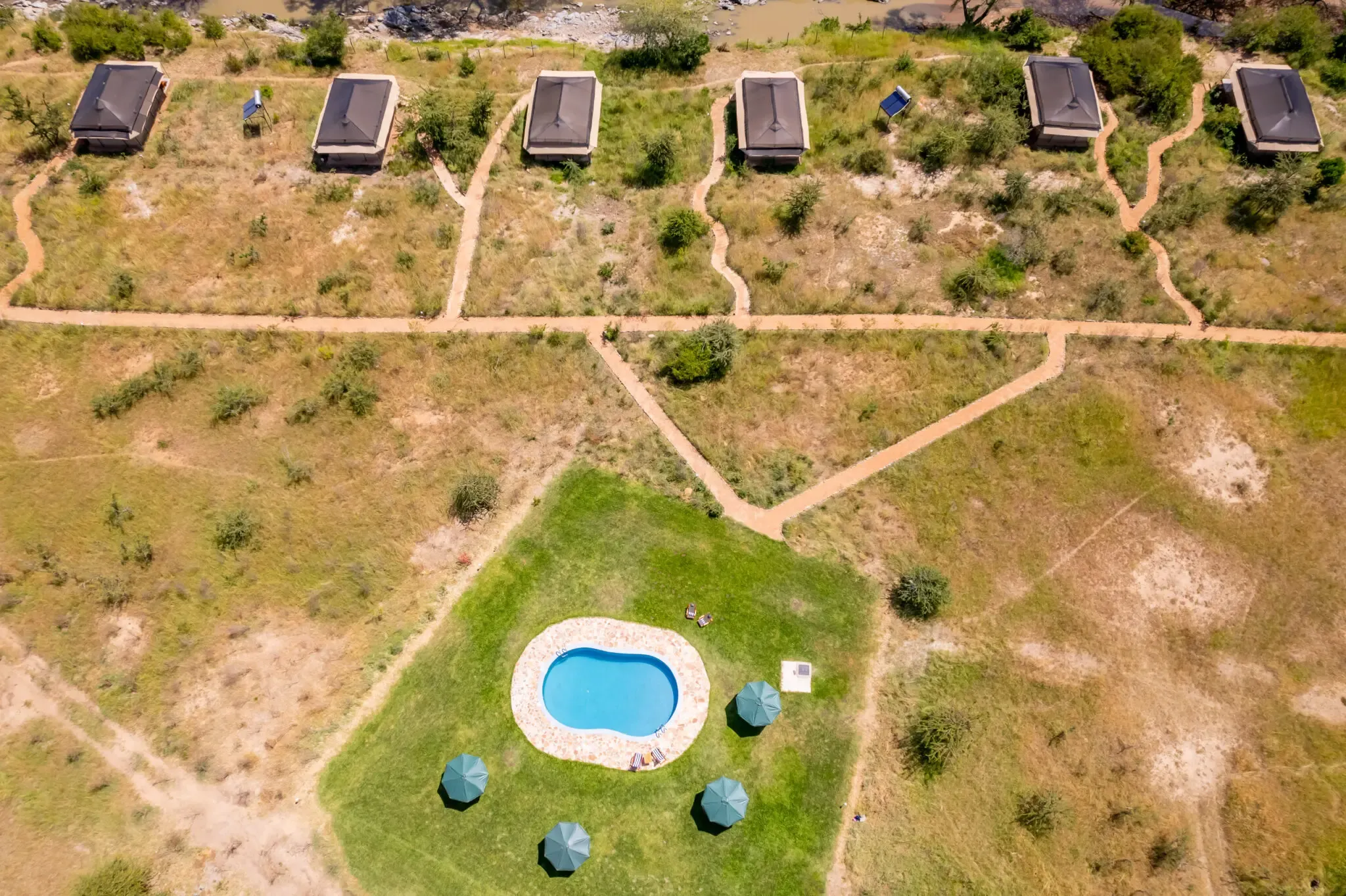
Each of Mtito’s ten tented suites opens directly onto the Talek River through a private deck positioned to catch the movement of whatever the river has decided to put on that morning. The tents are individually furnished and generous in proportion, with proper beds dressed in quality linens, en-suite bathrooms with hot showers, working areas and full connectivity in the camp’s public spaces. Warm tones and natural materials keep interiors grounded in the landscape. The camp’s scale means that housekeeping is thorough and personal, room service is available around the clock at no additional cost, and the transition between tent and the rest of the camp — restaurant, bar, pool, garden — is easy and unhurried. WiFi is available in the main lounge area. In the tents, the Talek River is a more useful signal than any network.
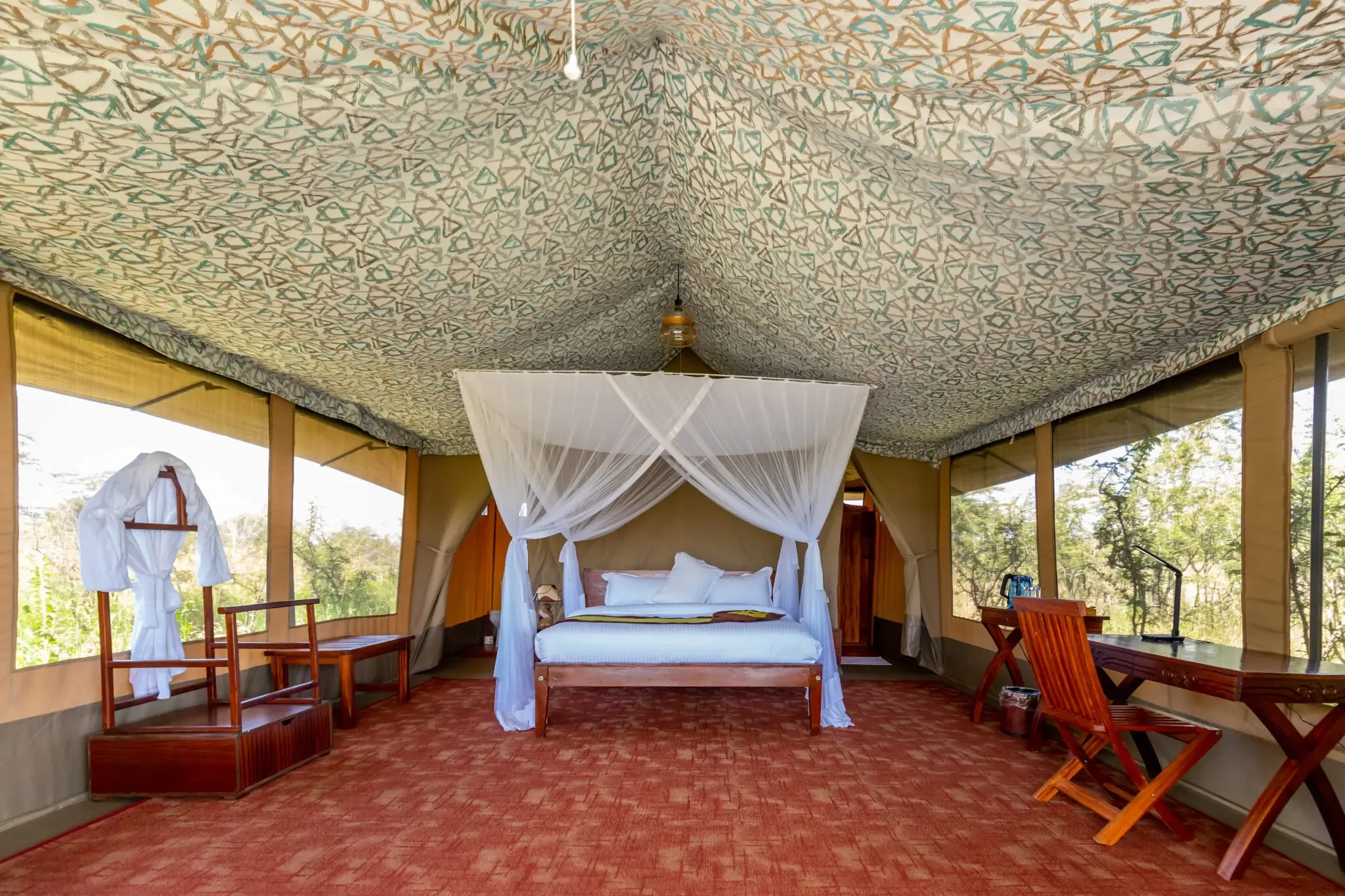
A private tented suite for solo travellers — one bed, en-suite bathroom with hot shower, private balcony facing the Talek River, working area and all standard amenities. The camp's most intimate configuration: a room that makes no pretence of being anything other than a well-considered place to sleep in the Mara, wake to the river, and go again
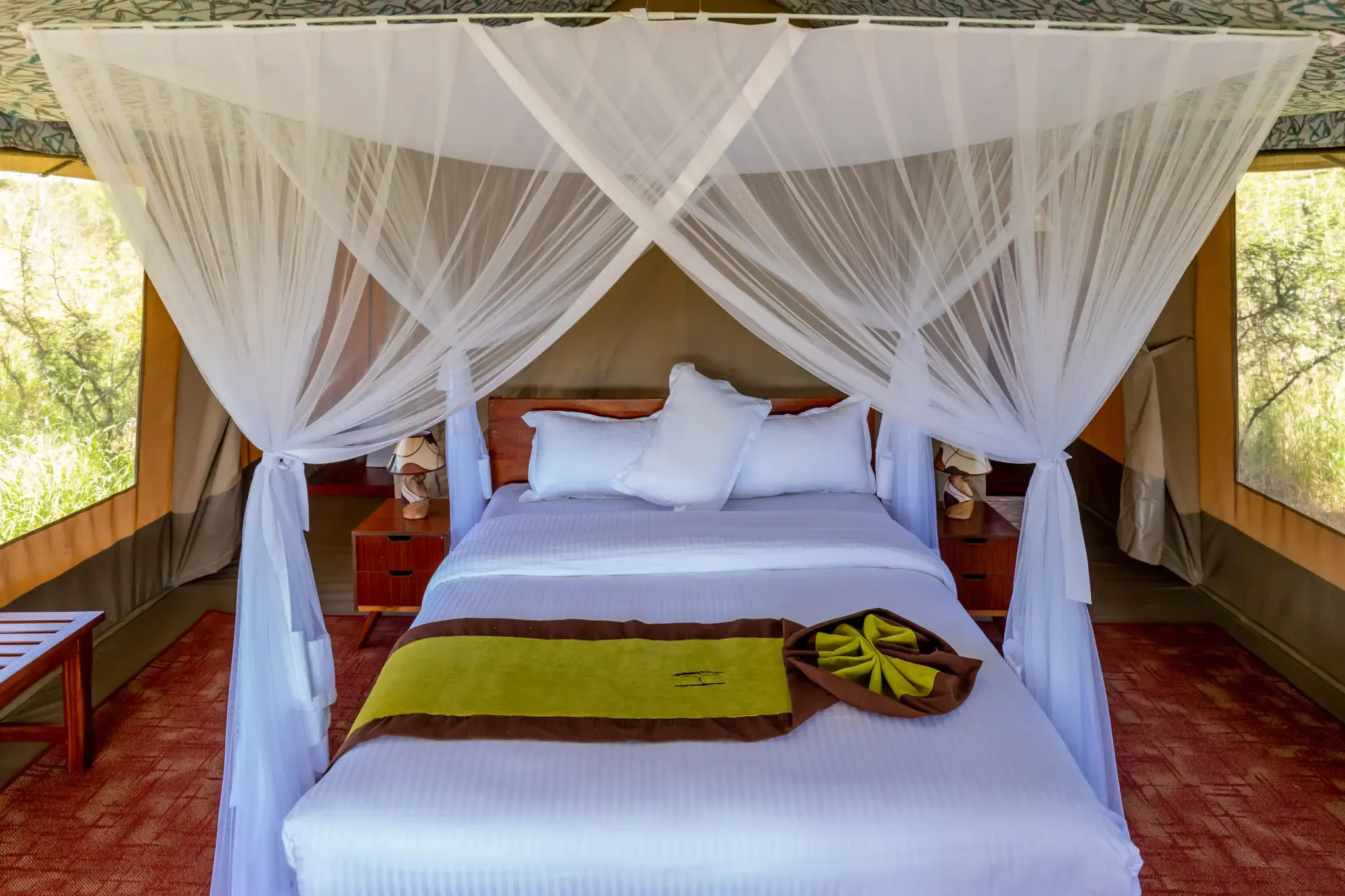
Two beds with the option to add a rollaway, en-suite bathroom with hot shower, private balcony overlooking the Talek River, seating area and full camp amenities. A comfortable and flexible configuration for two guests travelling as friends, colleagues, or family members who prefer separate sleeping arrangements. The Talek River view and the sounds that come with it are identical regardless of tent
A two-bedroom configuration designed for families — one king bed for parents and twin or double beds for children, private deck facing the Talek River, full en-suite facilities and the same camp-wide amenities throughout. Children between 4 and 12 years sharing with two adults are charged at 50% of the adult rate; children under 3 stay free.
Every moment at Mtito Safari Camp is crafted to immerse you deeper in the wild.
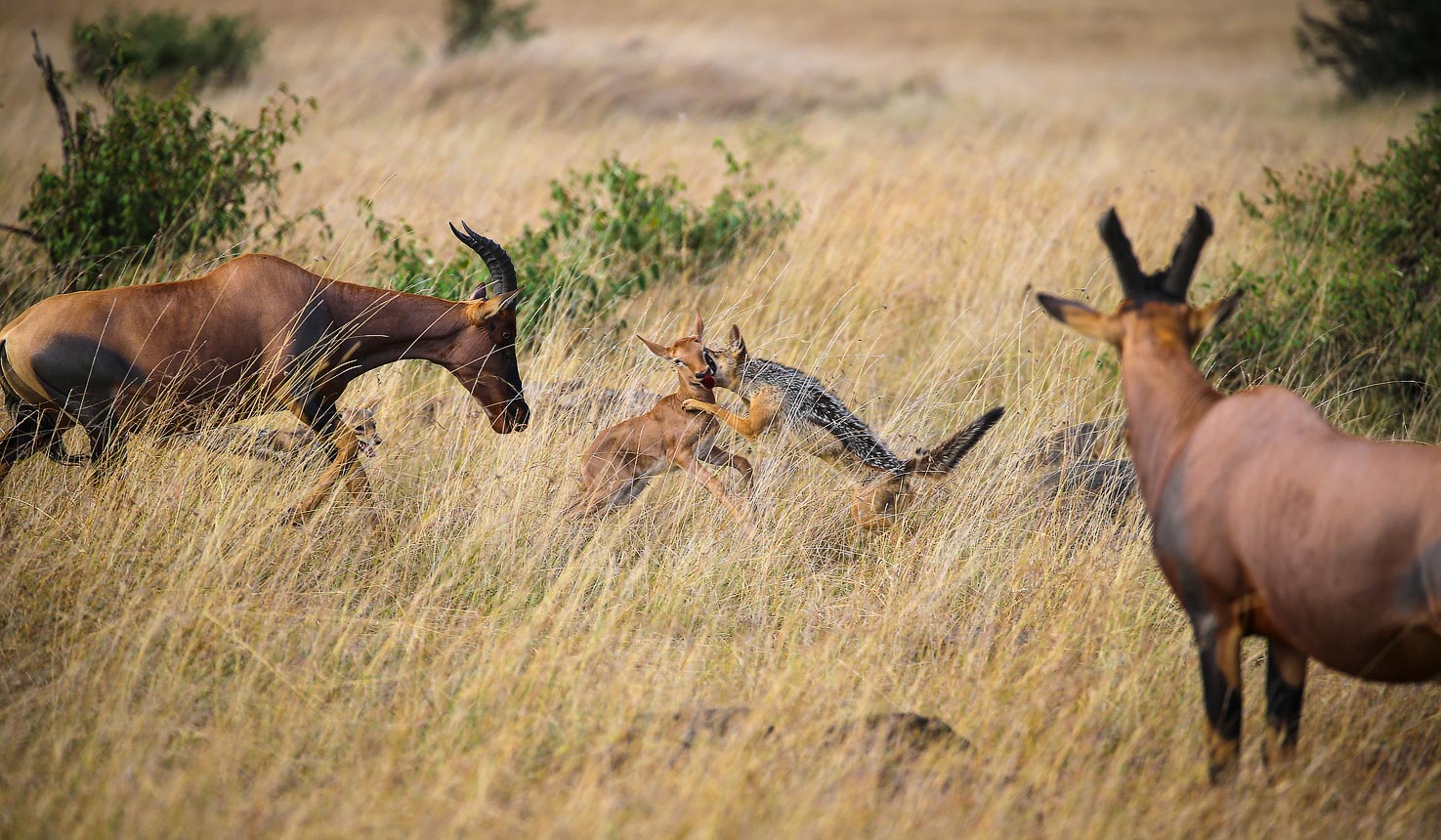
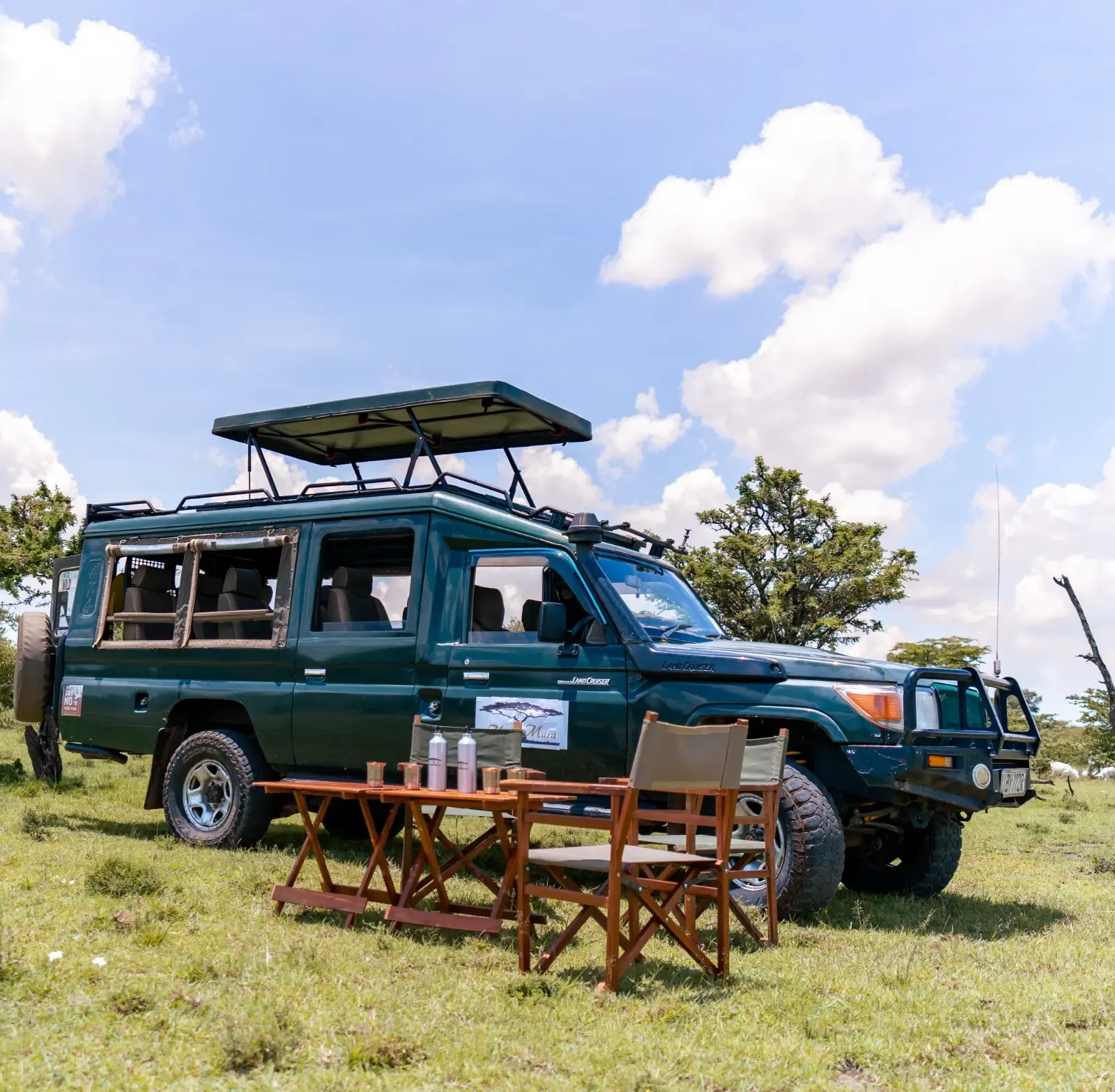
Morning and evening drives into the Maasai Mara National Reserve in open safari jeeps — included in all rates. Sekenani Gate is fifteen minutes from camp, giving guests maximum time in the reserve and minimum time on the road.
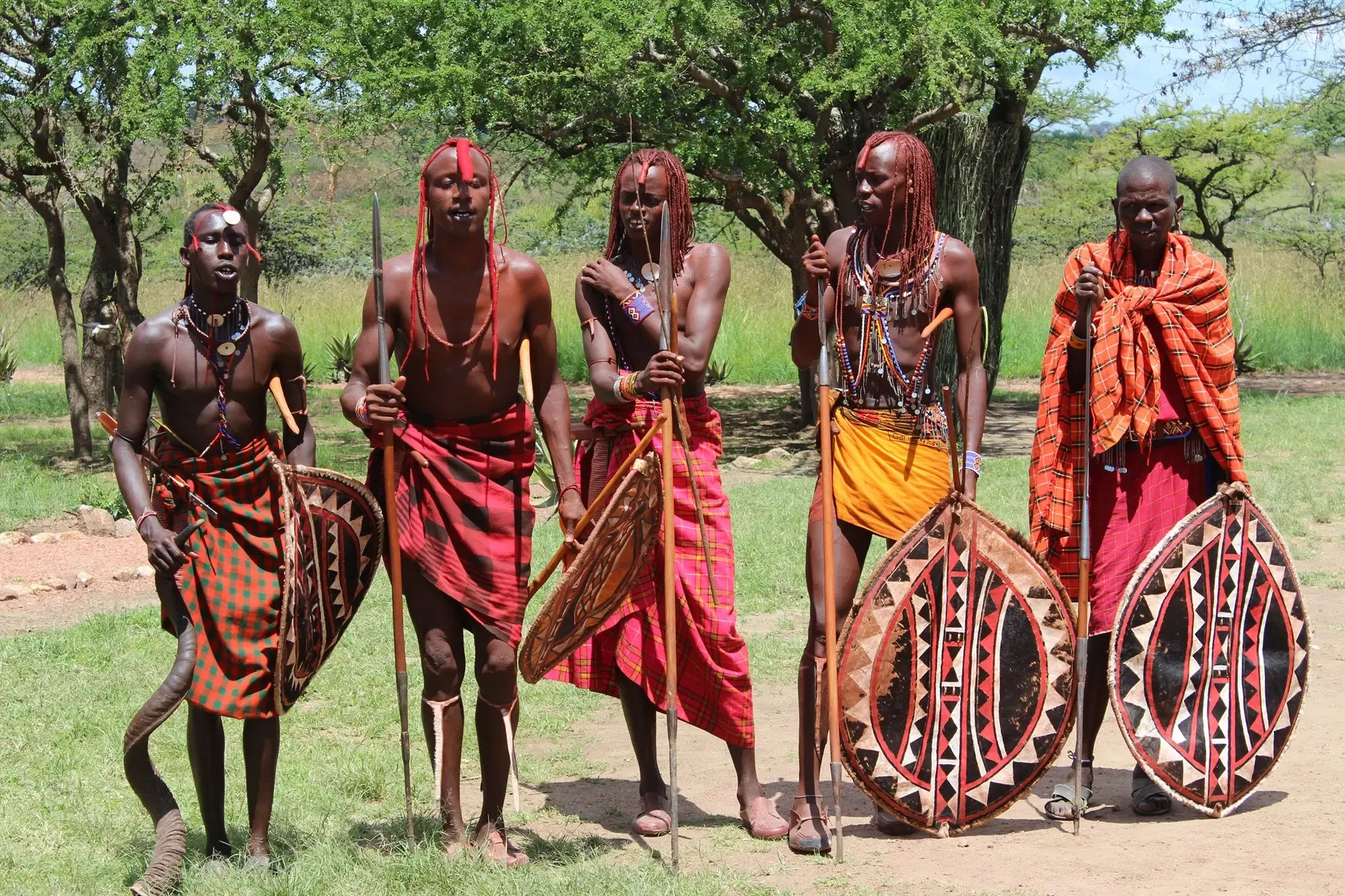
A guided visit to a neighbouring Maasai community — listening to elder stories, learning traditional practices, witnessing ceremonial customs and understanding the relationship between the Maasai people and the wildlife ecosystem they have inhabited for centuries. Camp guides facilitate an encounter
As the afternoon drive ends and the Mara light begins its transformation, guests gather at Mtito's iconic signature tree for handcrafted cocktails and cold drinks as the sky moves through orange, crimson and gold above the savannah. Included in all rates.
Ready to plan your stay?
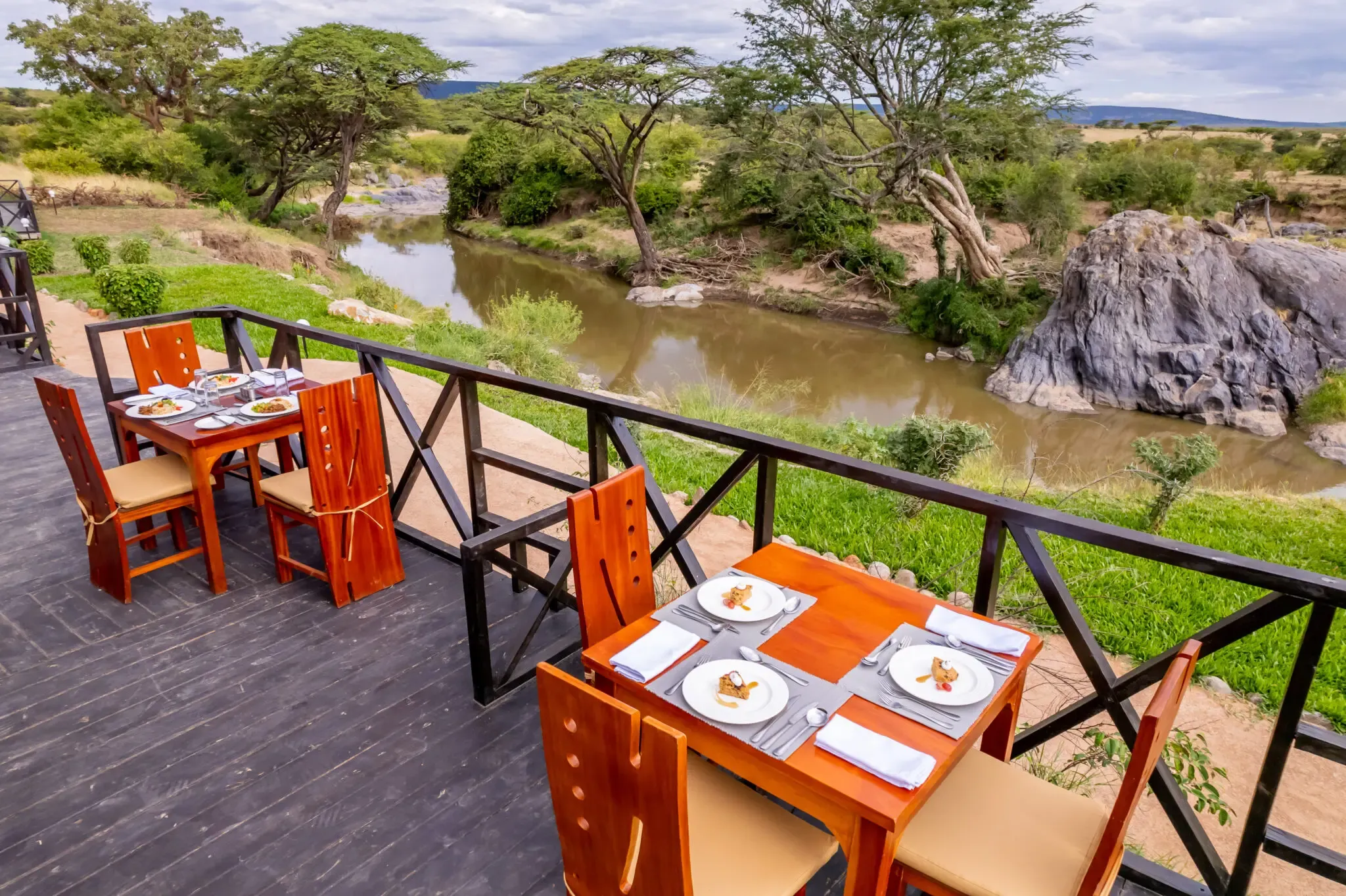
At Mtito Safari Camp, dining begins not in the restaurant but in the garden. The camp’s organic shamba grows against the river bank — tomatoes, eggplant, courgette, herbs, leafy greens and seasonal produce harvested at dawn, before the first game drive departs. By the time breakfast is served on the riverside terrace, the ingredients were still in the soil a few hours ago. This is farm-to-plate not as a concept but as a daily operational reality, and the difference arrives in every dish.
The chef runs a kitchen that operates like a conversation. He speaks with guests personally before each meal — understanding preferences, dietary requirements, and what various members of a family will actually eat — then prepares a four-course dinner fresh each evening: soup, salad, a main course built around the garden’s seasonal offering, and dessert. The menu changes daily. The produce changes daily. The view from the restaurant terrace, facing the Talek River as hippos grunt and shift in the shallows below, does not change — but it never becomes routine.
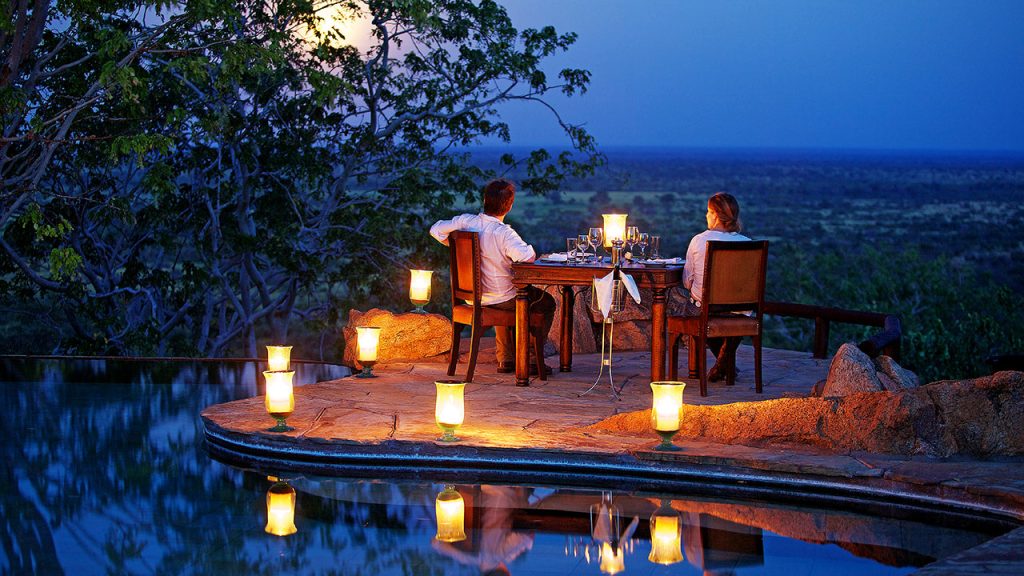
Breakfast is served on the open-air terrace as the morning drive returns, unhurried and generous. Lunch is lighter and flexible. Afternoon tea and homemade snacks wait on return from the evening drive. The riverside bar stocks the full all-inclusive range: wines, beers, spirits, cocktails and non-alcoholic drinks — all included in the rate. Bush breakfasts served in the open Mara as the sun rises, and bush dinners beneath a star-dense sky, are available on request and consistently described by guests as the most memorable meals of their stay.
The Maasai Mara National Reserve is rewarding in every month of the year, and Mtito’s position on the Talek River — with year-round wildlife movement through the corridor directly outside the tents — means that the camp delivers compelling sightings regardless of season.
The peak season from July through September is the period of the Great Wildebeest Migration: more than 1.5 million wildebeest and several hundred thousand zebra enter the Mara from the Serengeti, and the river crossings they make are among the most visceral wildlife spectacles available anywhere on earth. Sekenani Gate, fifteen minutes from camp, gives guests direct access to the crossing sites during this period. August and September are the crossing peaks; July marks the beginning of the main movement into the Mara. Park fees for July through December are $200 per adult per day.
January through March offers exceptional game viewing with a completely different character: lower visitor numbers, superb predator visibility as dry grass opens the landscape, and the full resident population of the Mara — lion, leopard, cheetah, elephant, buffalo, giraffe — present and active throughout. These are among the finest months for photography and for guests who prefer the Mara at its quietest.
The green season of April and May brings the long rains and a transformed landscape of vivid colour. Wildlife disperses as water becomes available throughout the ecosystem, and track conditions can be challenging after sustained rainfall. Rates fall to their lowest of the year, and the camp offers an unusually private experience for those willing to embrace the season’s character. October through December brings the Mara’s return to dry-season conditions: the shoulder season offers excellent game viewing, progressively more accessible rates than the July–September peak, and the particular atmosphere of a reserve settling back into its own rhythm after the Migration has moved south.
Explore handcrafted itineraries where Mtito Safari Camp forms part of the journey.
Please share your name and email so we can follow up with you.