Best Time for a Luxury Safari in Kenya
There is no wrong time to go on safari in Kenya. But there are times that will reorder your sense of what wildlife and landscape can mean, and those times are worth planning for with some precision.
Ask a hundred safari operators when you should visit Kenya, and you will receive a hundred versions of the same qualified answer: it depends. It depends on whether you want to witness the Great Migration at full roar, or whether you want the Laikipia plateau in the long golden light of January with no other vehicle in sight. It depends on whether you are travelling with children for whom the predator concentrations of the dry season are the centrepiece, or whether you are a photographer for whom the green season’s dramatic skies and rich, saturated colour are the point.
What you will not receive from most operators is genuine honesty about the tradeoffs: the fact that peak season in the Maasai Mara during August concentrates extraordinary wildlife into a landscape shared with hundreds of other vehicles. Or that the so-called low season in Kenya is, in practice, one of the finest times to be on safari, if you know where to go and who to ask.
This is the guide we give our own guests before they commit to dates. It covers every month, every season, the specific wildlife events that anchor each period, and the honest counsel you need to choose the itinerary that fits your journey, not a generic booking calendar.
| KENYA SAFARI SEASONS AT A GLANCE |
| Month | Season | Wildlife Highlight | Crowd Level |
| Jan – Feb | Dry (Peak) | Predator action, calving season | Moderate |
| Mar – May | Long Rains | Green landscapes, rare birds | Low |
| Jun | Shoulder Dry | Migration arrives, great game | Moderate |
| Jul – Aug | Dry (Peak) | Great Migration river crossings | High |
| Sep – Oct | Dry (Peak) | Migration, predator concentrations | High |
| Nov | Short Rains | Low crowds, excellent game | Low |
| Dec | Shoulder Dry | Year-end wildlife, fresh grass | Moderate |
Understanding Kenya’s Two Dry Seasons
Kenya sits astride the equator and its climate is governed less by cold and heat than by two annual rainfall cycles. The long rains arrive in April and last through May. The short rains begin in November and typically ease by December. Between these two wet periods sit two dry seasons: a major dry season that runs from late June through October, and a shorter but equally fine dry period from January through March.
The practical significance for a safari traveller is straightforward. In the dry seasons, vegetation thins and water sources concentrate. Animals gather around permanent rivers, springs, and waterholes in predictable patterns. Predators follow prey, and predator sightings accumulate. The grass is short enough to see a lion in a recline at two hundred metres. The tracks are firm, the skies are clear, and the light in the early mornings and late afternoons has the warm, lateral quality that makes every landscape look as though it has been composed for the purpose.
Both dry seasons are excellent. They differ in what they offer, which is why understanding them separately is more useful than treating them as interchangeable.
July to October: The Great Migration Window
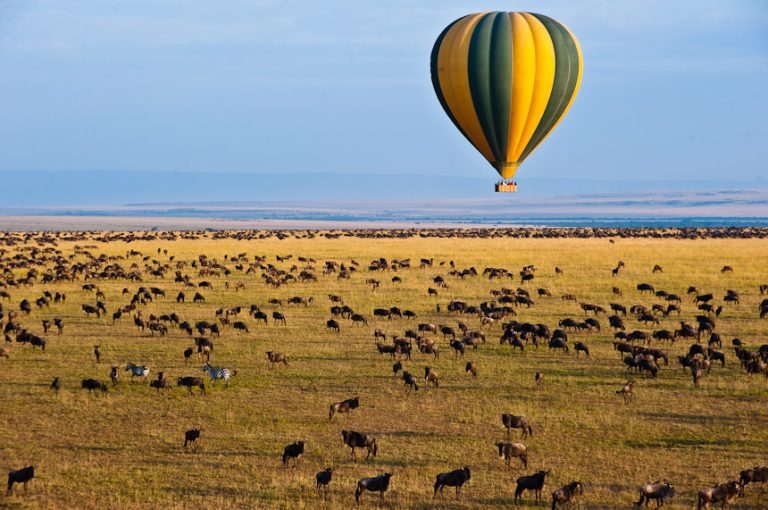
This is the season that most people think of when they think of Kenya on safari. The annual wildebeest migration from the Serengeti enters the Greater Mara ecosystem from late June onward, reaching its peak density between July and September before beginning the return journey south in October. By mid-July, the northern Serengeti and the Maasai Mara are home to the largest overland animal migration on the planet: roughly 1.5 million wildebeest, 200,000 zebra, and 350,000 gazelle moving in a circuit governed entirely by rainfall and the availability of grass.
The River Crossings
The Mara River crossings are the event that defines this season. Wildebeest, prompted by a trigger that biologists still do not fully understand, gather at the bank in masses of several thousand, then plunge en masse into a river patrolled by large Nile crocodiles. The crossing itself takes minutes. The theatre before it, the milling, the false starts, the surging retreats, can last hours. When it happens, it is one of the most viscerally dramatic wildlife spectacles anywhere on earth.
From a private conservancy camp, you approach crossing points on your own terms, without the vehicle queues that form at the public reserve crossing sites. Your guide has radio contact with trackers across the ecosystem. When a crossing is imminent, you are positioned before the crowd gathers, or often without a crowd at all.
The Honest Assessment of Peak Season
July to October is also the most crowded period in the Maasai Mara National Reserve, and crowded here means dozens of vehicles converging on the same sighting. For guests staying inside or immediately adjacent to the reserve in high-occupancy camps, this is the unavoidable reality. It is also the reason that private conservancy access matters more during peak season than at any other time of year. The wildlife is extraordinary regardless. The experience of that wildlife depends entirely on where you are positioned and who planned your stay.
For first-time safari travellers with the Great Migration as their primary goal, July through September in a private conservancy camp bordering the Mara is the recommendation. No qualification necessary.
January to February: The Secret Peak Season
Among experienced safari travellers and the guides who accompany them, January and February are a closely held preference. The second dry season is in full effect. The Maasai Mara National Reserve is operating at a fraction of its July volume. The private conservancies are quiet. Rates at many of the finest camps are at their annual low, and availability that would require months of advance notice in August can sometimes be secured weeks out.
The Calving Season
In January and February, the wildebeest calving season takes place on the short-grass plains of the southern Serengeti and northern Tanzania, and its effects are felt across the Mara ecosystem. Predator activity in Kenya during this period is exceptional: lions are well-fed, cheetahs are active, and the resident leopard population in the conservancies behaves with a confidence that reflects the relative scarcity of disturbance.
The Mara itself holds its resident wildlife populations year-round. Elephants, buffalo herds, giraffes, and the large resident predator prides are always present. In January, you encounter them with the unhurried attention they deserve, without a competing vehicle in your peripheral vision.
Amboseli in January
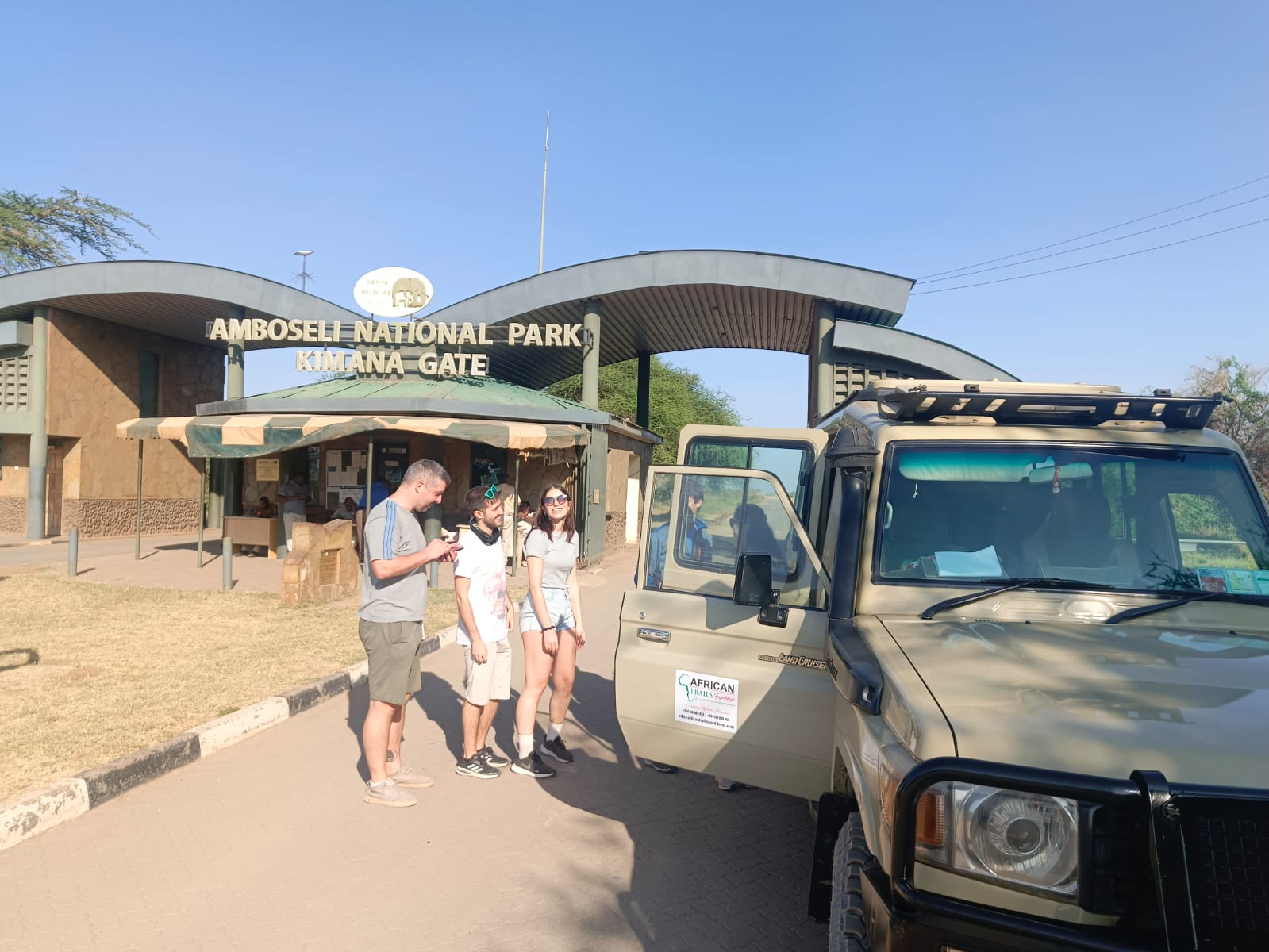
Amboseli National Park, south of Nairobi below the Kilimanjaro massif, is at its finest in January. The wet season has recently ended. The grass is green enough to frame an elephant herd beneath Kilimanjaro’s snow-capped summit, but short enough to support excellent visibility. The elephant population at Amboseli is among the best-studied in Africa and some of the largest bulls on the continent congregate here. In January, you share the experience with far fewer fellow travellers than in the summer months.
June: The Shoulder Month Specialists Recommend
June is the month our specialists most reliably recommend to guests who want the experience of peak season without its full weight. The dry season has taken hold. The grass is thinning. Wildlife is beginning to concentrate around water. In the Greater Mara, the advance herds of the migration are arriving: zebra typically lead by two to three weeks, and by mid-June the plains north of the reserve and across the private conservancies are already receiving significant wildlife movement.
The notable advantage: the mid-season price point applies at most camps, and crowd levels in the reserve and conservancies are substantially lower than July and August. For guests who can travel in June, it represents the strongest value-to-experience ratio in the Kenya safari calendar.
The weather in June is consistently dry and cool by Kenyan standards, particularly at altitude. Morning game drives in the Mara at dawn in June require a fleece. The light is exceptional.
The Green Season: Why Kenya’s Low Season Is Underrated
The term ‘low season’ in the context of luxury safari is largely a function of marketing calendars and historical pricing structures. It does not describe the quality of the wildlife experience available to a guest who chooses to travel during the rains. It describes the preferences of the mass-market safari visitor, which are not your preferences.
What the Green Season Offers
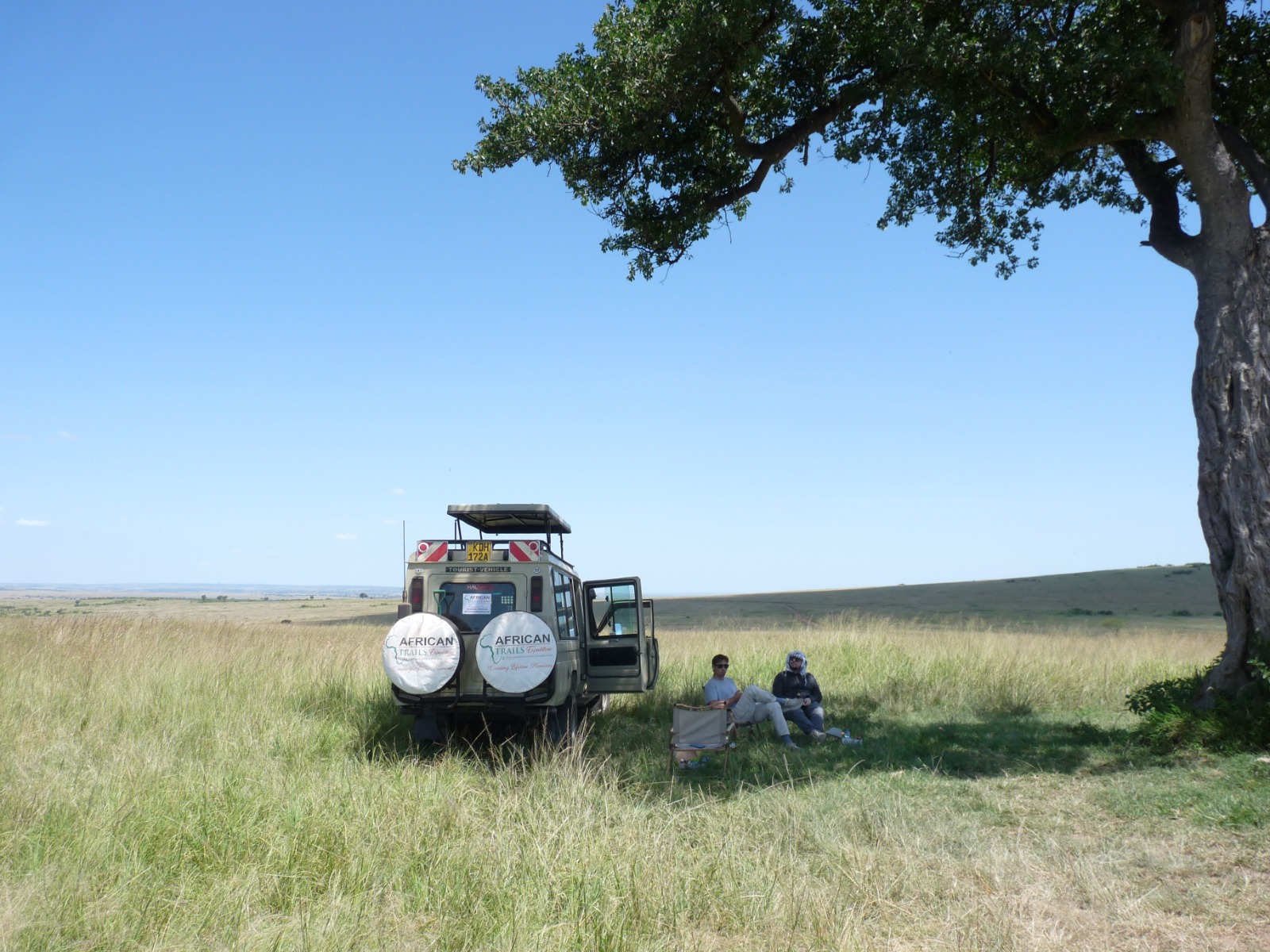
Between the long rains of April to May and the short rains of November, the Kenyan landscape transforms. The plains turn a saturated, almost improbable green. Migratory birds arrive from Europe and Central Asia, including dozens of raptor species that are absent from Kenya during the dry season. Resident breeding species are in plumage. Wildflowers appear across the conservancy grasslands. The sky above the Mara escarpment takes on a drama, low cloud, building cumulus, and theatrical afternoon light, that the hard blue of dry-season days cannot match.
Newborn wildlife is abundant. Elephant calves, lion cubs, and young leopard are present across the ecosystem. For photographers with an eye for intimate behavioural portraiture rather than landscape spectacle, the green season is a serious alternative.
Predator sightings during the green season are sometimes described as harder to achieve because of the taller grass. This is partially true in the open reserve. In private conservancies, where guides work on foot and with tracker networks, the grass height is less significant as a constraint.
April to May: The Long Rains, Honestly Assessed
April and May are the wettest months in Kenya and the closest the country has to a genuine off-season. Some smaller camps close entirely during this period. The tracks in lower-lying conservancy areas can become impassable after heavy rain, and multi-day fly-camping or walking programmes are weather-dependent in a way they are not at other times of year.
The guests who travel in April and May are typically those who have been to Kenya before and who are specifically seeking the solitude, the reduced rates, the landscape in its most dramatically verdant state, and the birding. For first-timers, we would generally recommend arriving in late May when the rains are easing rather than at the April peak.
One important exception: Samburu National Reserve in northern Kenya receives less rainfall than the south and is often viable and excellent in April and May, when the southern parks are at their wettest.
November: The Quiet Month That Rewards the Patient
November falls within the short rains, but in most years the rains are moderate and intermittent rather than sustained. They come in the afternoon, often as brief dramatic storms that clear before dark. Morning game drives are typically dry. The grass is long enough to give the landscape a lush quality but not so impenetrable as to suppress sightings significantly.
November is, in our experience, one of the most genuinely underappreciated months in the Kenya safari calendar. Camps that were fully booked through October have immediate availability. The Maasai Mara is quiet. The conservancies are uncrowded. Many of the best guides have more time for individual guests because their vehicles are not managing multiple concurrent bookings.
The wildebeest have largely returned south, but the Mara’s resident wildlife is excellent, the light has returned to a warm quality after the cooler peak-season months, and the short-rains landscapes carry a freshness that the dry season, for all its photographic advantages, cannot offer.
Best Time to Go: A Quick-Reference Guide by Priority
Best time for the Great Migration: July to September, Maasai Mara private conservancies
Best time for predator sightings: August to October or January to February, Mara conservancies
Best time for big herds without crowds: June, Maasai Mara and Olare Motorogi
Best time for photography: June to October for dramatic light and wildlife density; November to December for green landscape and moody skies
Best time for value: January to February, June, or November
Best time for first-time visitors: July to September for the full Great Migration experience
Best time for repeat visitors: January to February or June for a more personal, unhurried safari
Best time for honeymooners: June or January to February — intimacy, luxury, and fewer fellow travellers
Best time for families with children: July to September for maximum wildlife action and reliable weather
Best time for birdwatching: November to April, when migratory species are present
Best Time by Destination
Maasai Mara and Private Conservancies
Year-round wildlife, with the Great Migration as the centrepiece between July and October. Dry season (June to October, January to February) delivers the best general wildlife viewing. Private conservancy access improves the experience in every season but is most critical during the crowded July to September peak.
Amboseli National Park
Best from January to February and June to October. The post-wet-season period of January offers green landscapes against Kilimanjaro and lower visitor numbers. July to October brings consistent dry-season clarity. Avoid the wettest weeks of April and November when the short-grass plains can be waterlogged.
Samburu National Reserve
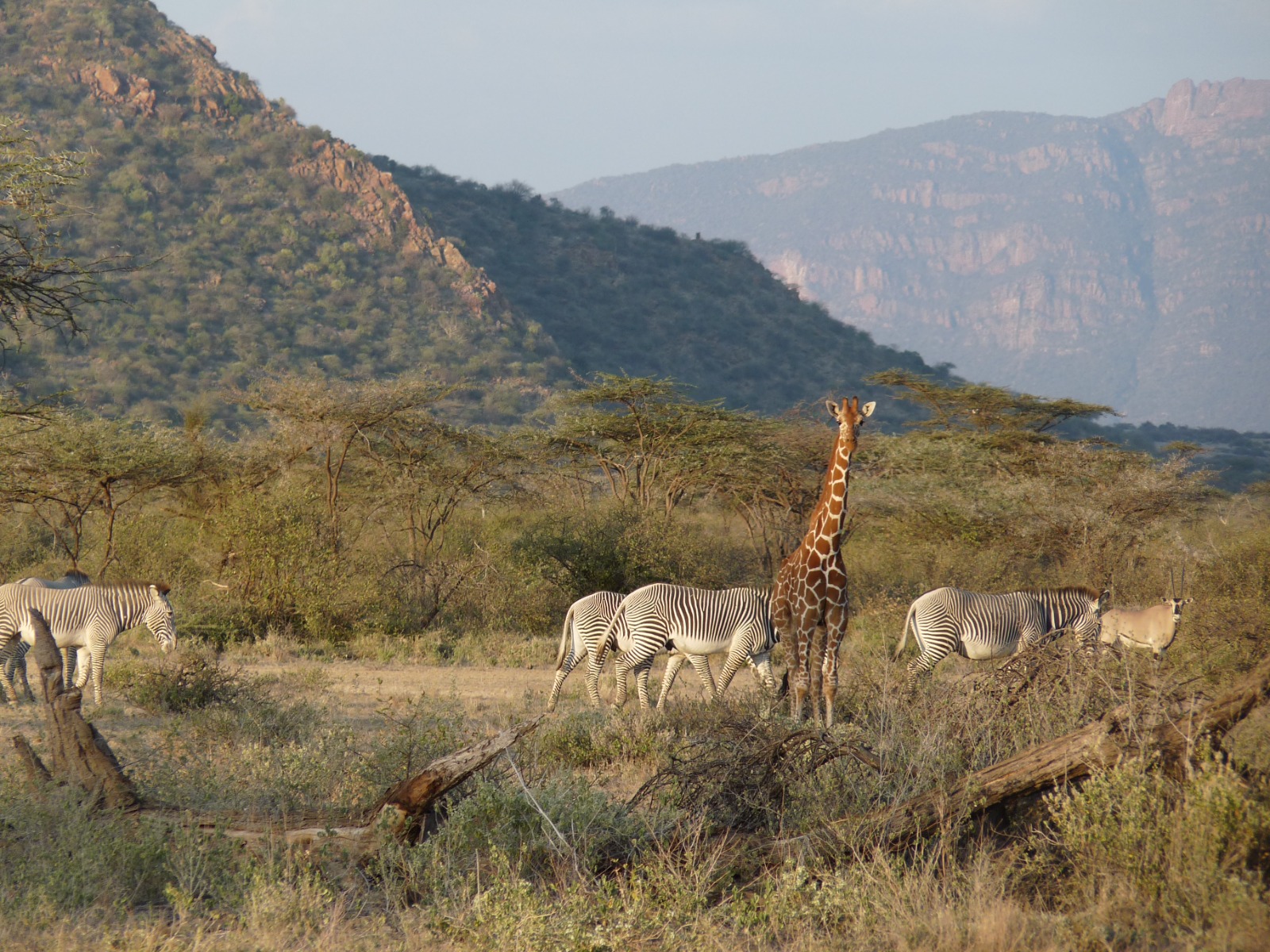
A year-round destination with a more arid character that makes it less rainfall-dependent than the south. The dry months of January to February and July to October are excellent, but Samburu also performs well in April and May when the southern parks are quieter and less accessible. The endemic northern species, the Grevy’s zebra, reticulated giraffe, gerenuk, and Beisa oryx, are present year-round.
Laikipia Plateau
Kenya’s most under-explored luxury safari terrain. Laikipia’s semi-arid highland character means it receives more reliable year-round game viewing than the rainfall-dependent south. The dry months concentrate black and white rhino, elephant, lion, and wild dog around the plateau’s permanent rivers and springs. January and February are particular highlights: low visitor numbers, excellent light, and a landscape that looks as though it has been cleared and polished for your arrival.
Tsavo West
The landscape of Tsavo West, where Finch Hattons and the natural springs that anchor the camp are located, is best experienced in the dry months of June to October and January to February. The dry-season elephant herds that gather at Mzima Springs are among the most reliably spectacular wildlife concentrations in southern Kenya, and the Kilimanjaro views from the camp are at their clearest in the dry-season mornings of July and August.
Booking Lead Times: How Far Ahead Should You Plan?
The finest private conservancy camps in Kenya allocate a portion of their rooms to specialist operators on contracted basis. This means that in peak season, the camps that most discerning travellers want are effectively fully committed six to twelve months in advance through operator relationships, not available on open booking platforms at all.
- July to September (peak migration): 9 to 12 months in advance for first-choice camps
- January to February (shoulder peak): 4 to 6 months in advance
- June: 3 to 5 months in advance
- October to December: 2 to 4 months in advance for most camps
- April to May: often available within weeks
The practical implication: if you have a specific camp in mind, or a specific safari experience that depends on a particular property, contact a specialist operator as early as possible. The best experiences in Kenya are not found late.
| SPECIALIST NOTE FROM AFRICAN TRAILS EXPEDITIONS
Over two decades of guiding guests through Kenya’s safari calendar, we have noticed a consistent pattern: the guests who travel outside the obvious peak window, in January, June, or November, almost always say they would not change a thing. They cite the guides who had more time for them, the sightings unshared with other vehicles, and the sense of a landscape encountered on personal terms. The right time to visit Kenya is the time that fits your life and your priorities. Our job is to ensure that whichever month you choose, your experience of it is the best it can be. |
FAQs: Kenya Safari Timing
What is the single best month to visit Kenya on safari?
For the Great Migration and peak predator activity combined, August is the single most compelling month in the Kenyan safari calendar. The migration herds are at their densest in the Greater Mara, river crossings are occurring regularly, and the dry-season conditions produce excellent game viewing across all species. If your budget allows and your dates are flexible, August in a private conservancy camp offers the archetypal Kenyan safari experience.
Is Kenya safe to visit year-round?
Yes. Kenya’s safari ecosystem is stable and professionally managed across all seasons. Specific regions and access routes may require adjustment during the wettest periods of April and May. Still, the country as a whole remains fully operational for luxury safari travel throughout the year. Your specialist operator will advise on itinerary adjustments appropriate to your travel dates.
Is the Great Migration only in the Maasai Mara?
No. The Great Migration is a year-round circuit that spans the Serengeti ecosystem in Tanzania and the Greater Mara ecosystem in Kenya. The wildebeest are in Kenya between approximately June and October. The remainder of the year they are in Tanzania, where the calving season (January to February) and the Grumeti River crossings (June) are the equivalent centrepiece events. A combined Kenya-Tanzania itinerary can be designed to follow the migration across both countries in a single journey.
What should I pack for a Kenya safari?
Neutral-coloured lightweight clothing is appropriate for all seasons. For the dry season mornings of July to September and January to February, a warm fleece and a light down vest are recommended: the Mara at 5.30am in July is cold. In the green season, a waterproof layer and a dry bag for camera equipment are advisable. Sunscreen and a wide-brim hat are essential year-round.
Can I combine Kenya with Tanzania or Uganda in one trip?
Yes, and we frequently design itineraries that do exactly this. A combined Kenya and Tanzania journey might begin in the private conservancies of the Greater Mara, move south to the Serengeti and Ngorongoro Crater, and close in Zanzibar. A Kenya and Uganda combination allows you to add mountain gorilla tracking in Bwindi Impenetrable Forest to a Mara safari, creating a journey with two entirely distinct wildlife experiences separated by a short flight.
Is Kenya suitable for a honeymoon safari?
Kenya is one of the world’s premier honeymoon safari destinations, and many of the finest private conservancy camps are specifically designed around the needs of couples seeking privacy, exceptional food, and access to wilderness without crowds. Our recommendation for honeymooners is January to February or June: the intimacy of low visitor numbers, the full range of luxury camp services operating at capacity, and the wildlife quality that justifies the journey entirely.
How long should a Kenya safari be?
A minimum of seven nights allows for a meaningful experience across two or three distinct safari areas. Ten to fourteen nights is more generous and enables the kind of unhurried rhythm in which the finest safari moments tend to occur: the morning that begins with nothing scheduled and ends with a lion kill sixty metres from the vehicle. We typically recommend a minimum of three nights in any single camp to allow the landscape and its rhythms to settle into your experience.
| PLAN YOUR TAILOR-MADE KENYA SAFARI
The best Kenya safari is not found in a brochure. It is designed around the specific time of year you can travel, the experiences that matter most to you, and the relationships a specialist operator holds with the camps and guides who will define your journey. African Trails Expeditions has been operating tailor-made Kenya safaris for over twenty years. We hold direct allocations at the finest private conservancy camps, work with Kenya’s most experienced guide teams, and design itineraries for guests who want more than a standard package. Tell us when you want to travel, what you want to experience, and what you want to feel when you return. We will take it from there. |