Is Kenya Safe to Visit?
Every year, thousands of travellers from the US, UK, Australia, and Europe ask the same question before booking their East African dream: is it safe to travel to Kenya?
It’s a fair question. And it deserves an honest, knowledgeable answer, not the kind of vague reassurance you’ll find on a government advisory page, and not the breathless dismissal of anyone who dares raise it.
The short answer is yes, Kenya is safe to visit, especially for travellers on a well-planned luxury safari. The longer answer is worth reading, because understanding how Kenya is safe will help you travel with confidence, choose the right experiences, and enjoy the kind of trip that leaves you looking up return flights before you’ve even landed home.
Kenya’s Tourism Reality
Kenya welcomed over two million international visitors last year. The Maasai Mara continues to rank among the world’s great wildlife destinations. The Laikipia Plateau, Amboseli, and the coast around Watamu and Diani draw a growing and notably repeat international clientele.
The picture you may have in your mind from dated news cycles is not the Kenya that luxury travellers experience today. Nairobi has evolved into a sophisticated, cosmopolitan city with world-class restaurants, contemporary hotels, and a growing arts and food scene. The safari circuit is mature, professionally managed, and geared toward guests who expect a high standard of service, safety, and personal care.
This does not mean Kenya is without nuance. Like any destination, it rewards preparation. And that preparation is exactly what the right safari operator exists to provide.
Understanding Kenya Travel Safety by Region
Kenya is not a single, uniform experience. Safety, like landscape, varies by region, and knowing the difference matters.
Nairobi
Nairobi has a reputation that its city centre, to some extent, still earns. Certain neighbourhoods, particularly around the central business district at night, warrant the same street-smart awareness you would apply in any major city. Petty theft and opportunistic crime exist, as they do in London, New York, and Sydney.
For luxury travellers, this is largely a non-issue. Staying in Westlands, Gigiri, Karen, or Muthaiga, moving by private transfer, and dining at established restaurants means your Nairobi experience is urbane, easy, and genuinely enjoyable. The city has excellent hotels, outstanding food, and warm, hospitable people who take pride in showing it off.
If you are transiting through Nairobi en route to a safari, a guided city experience or an overnight at a well-positioned hotel transforms what could feel like a stopover into a highlight in its own right.
The Maasai Mara and Safari Regions
The Maasai Mara, Amboseli, Laikipia, Samburu, and the private conservancies surrounding them are among the safest places to visit in Kenya. These areas operate within a well-established hospitality ecosystem. Camp and lodge security is taken seriously. Bush walks are guided by professionals with deep field knowledge. Game drives happen within environments that are, by design, focused entirely on your wellbeing and experience.
Kenya safari safety in these environments is not a marketing claim. It is a structural reality. The camps, the conservancies, the rangers, and the guides all have a vested interest in maintaining a world-class reputation, because that reputation is the product.
Wildlife safety is guided entirely by your guides and camp team. You are never walking into the bush unaccompanied, never making decisions about proximity, and never left to figure things out alone. The guidance you receive, before and during every activity, is professional, calm, and designed to let you engage with wildlife with genuine closeness and complete safety.
The Coast
Kenya’s Indian Ocean coast, stretching from Watamu and Malindi down through Diani, is relaxed, beautiful, and well-suited to families, honeymooners, and post-safari beach extensions. The resort areas are established, well-staffed, and geared toward international visitors.
The northern border regions, certain parts of the Somali border area, and some coastal zones near the Tanzanian border carry elevated advisories. These are not areas on any luxury itinerary. Your operator will know this without being asked.
What a Luxury Safari Operator Does for Your Safety
This is where the distinction between independent travel and a properly curated luxury safari matters most.
When you travel with an experienced operator like African Trails Expeditions, your safety is not an afterthought. It is woven into every decision: which conservancies and camps are selected, which routes are used, which airstrips are preferred, how transfers are arranged, and what contingency plans exist should anything require adjustment.
Martin, who has guided across East Africa for over two decades, understands these landscapes not from a map but from years on the ground. That knowledge, and the network of trusted partners, camps, and drivers it has built, is what separates a seamlessly safe experience from the uncertainty of going it alone.
Our team is available around the clock. Enquiries are responded to within minutes. And every itinerary we build, whether a first-time Kenya safari or a multi-country East Africa journey, is designed around both the beauty of the destination and the confidence of knowing every detail has been considered.
Practical Kenya Travel Advice
A few genuinely useful notes for travellers preparing to visit:
Health and vaccinations. Yellow fever vaccination is required if arriving from a yellow fever endemic country. Malaria prophylaxis is recommended for most safari regions. Speak to a travel health clinic at least six weeks before departure. Most luxury camps provide mosquito nets and take preventative measures as standard.
Travel insurance. Non-negotiable. Choose a policy that covers emergency medical evacuation, which in remote safari areas means air evacuation to Nairobi. This is standard advice for any serious safari destination.
Currency and connectivity. Nairobi is cashless-friendly and M-Pesa makes mobile payments seamless throughout the country. At the camps and lodges on your itinerary, everything is handled. Remote areas have limited connectivity, which, for most guests, is the point.
Travel advisories. The UK Foreign Office, US State Department, and Australian DFAT all maintain Kenya advisories at a standard travel-with-awareness level for tourist destinations. Read them for context; use your operator’s on-the-ground knowledge as your practical guide.
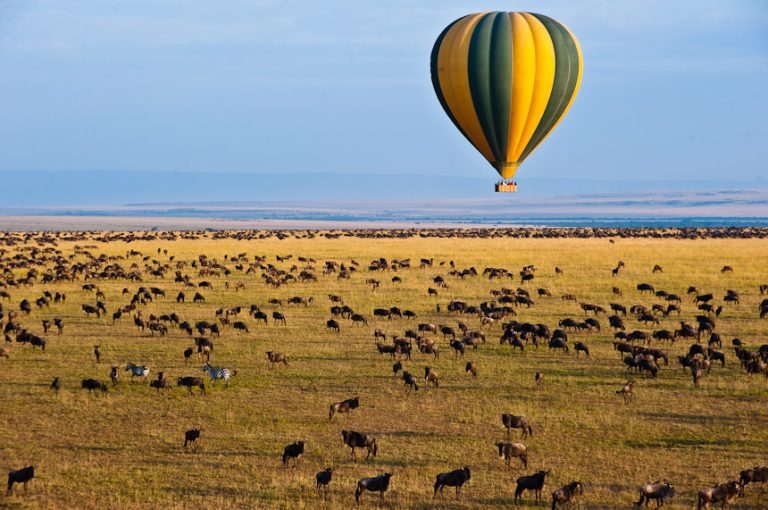
Best time to visit Kenya. The Maasai Mara’s Great Migration peak runs from July through October, when wildebeest river crossings are at their most dramatic. January through March offers excellent game viewing with fewer visitors. The long rains in April and May bring quieter camps and lush landscapes, and often outstanding birding. There is genuinely no bad time to visit, only different versions of extraordinary.
Why Travellers Keep Coming Back
What strikes most first-time visitors to Kenya, once they are actually here, is how quickly the question of safety dissolves into something else entirely.
It dissolves into the sound of a lion calling at 3 am from somewhere close, close enough that you lie still and listen. Into the particular quality of light on the Mara at sunrise. Into a guide who knows the name of every bird, every tree, and every individual elephant in the area, and who shares that knowledge with quiet, unhurried generosity.
Kenya does not just meet expectations. For most travellers, it exceeds them in ways they struggle to articulate on the flight home.
The question worth asking is not whether Kenya is safe. It is whether you are ready to go.
If you are, we would love to help you plan it.
Explore our Kenya luxury safaris or speak directly with one of our experts to begin designing your itinerary.