Tsavo West National Park
Kenya's most dramatic wilderness — where red elephants roam volcanic terrain and the bush swallows you whole
Tsavo West National Park
If the Maasai Mara is Kenya’s most celebrated stage, Tsavo West is its most primal. Covering nearly 10,000 square kilometres of volcanic landscape in Kenya’s south-east, this is wilderness on an entirely different scale, ancient, untamed and largely undiscovered by the crowds that descend on the northern parks.
Tsavo West sits within the larger Tsavo ecosystem, the biggest protected area in Kenya and one of the largest in the world. Its western boundary traces the Tanzanian border; its eastern edge dissolves into Tsavo East. Together they form a continuous sweep of bush that stretches further than the eye or the imagination can fully hold.
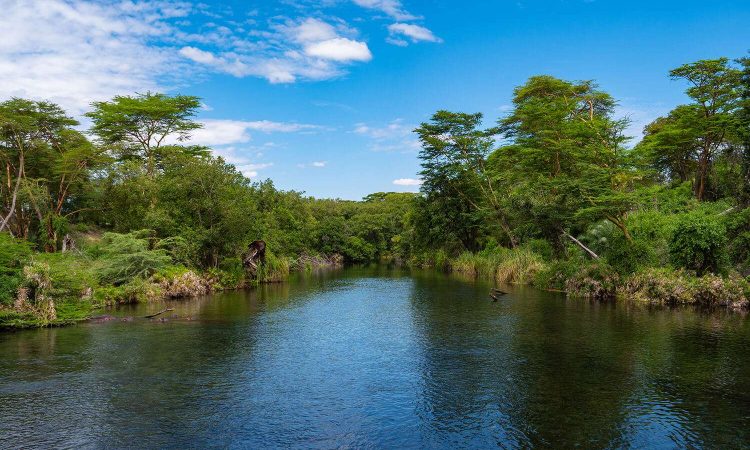
What makes Tsavo West exceptional is its geological drama. The landscape here is defined by volcanic cones, ancient lava flows and the underground rivers that emerge spectacularly at Mzima Springs, where crystal-clear water wells up from beneath black basalt rock and sustains an improbable garden of hippos, crocodiles and underwater life. It is one of the most quietly extraordinary sights in all of East Africa.
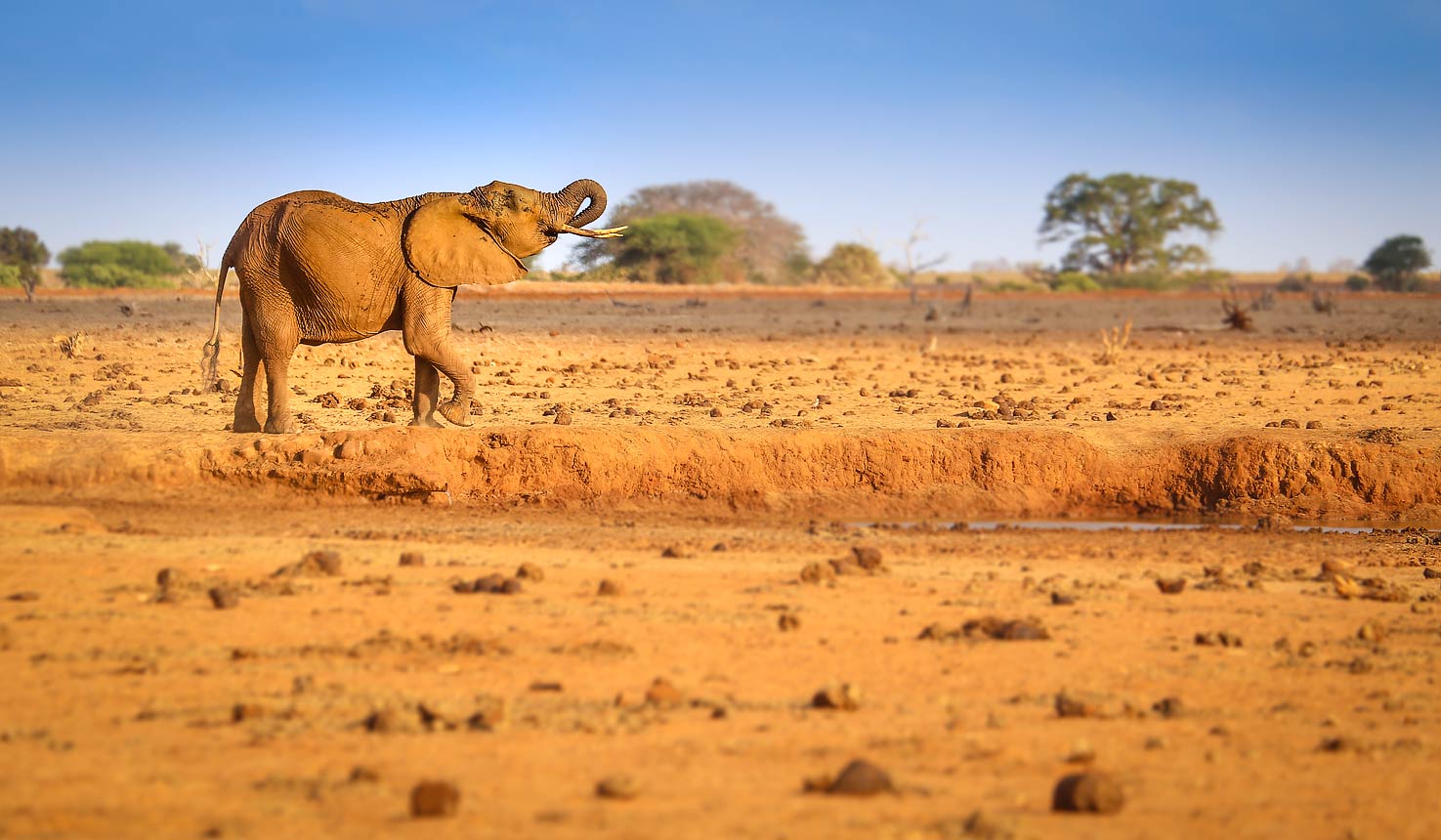
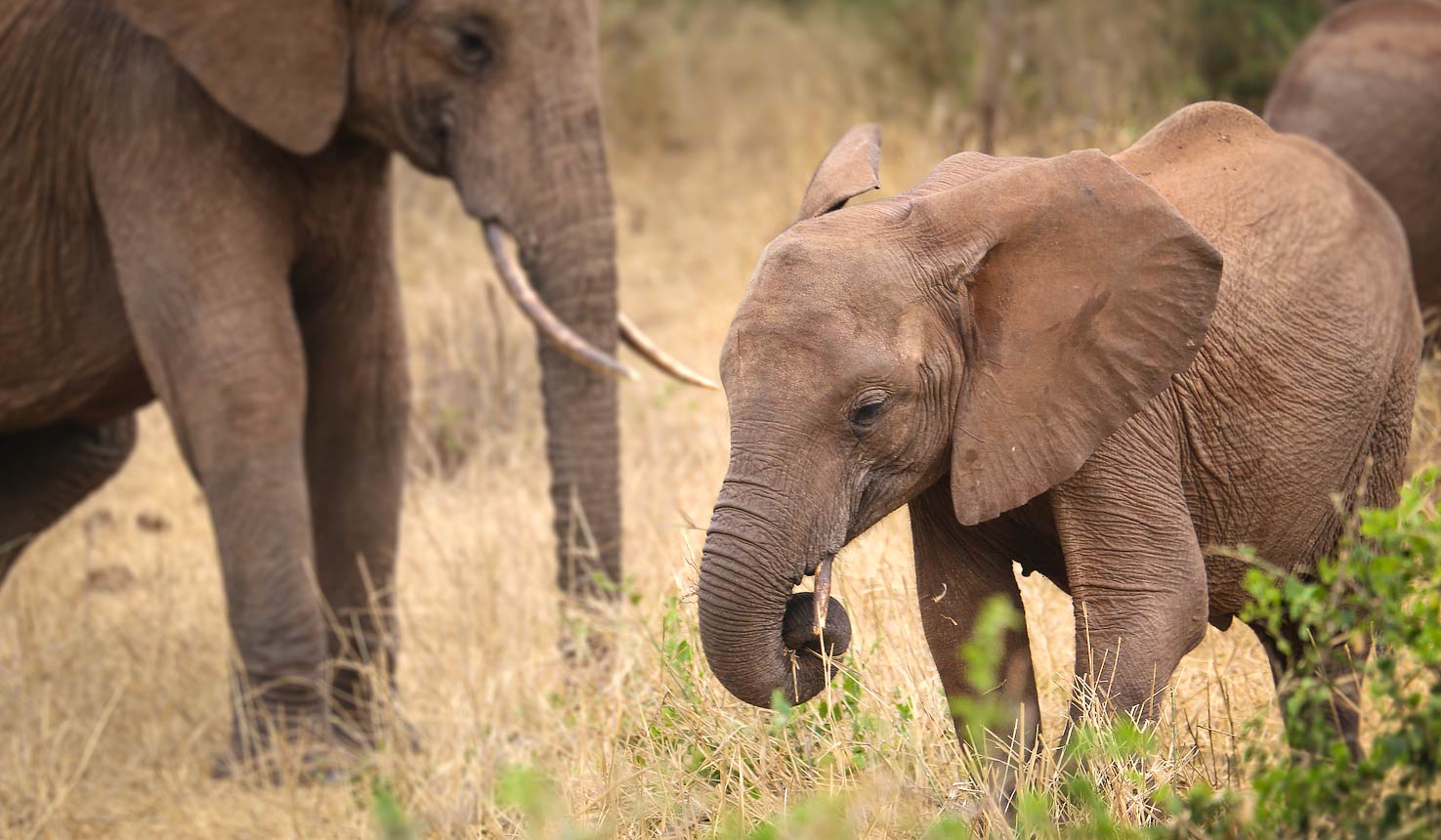
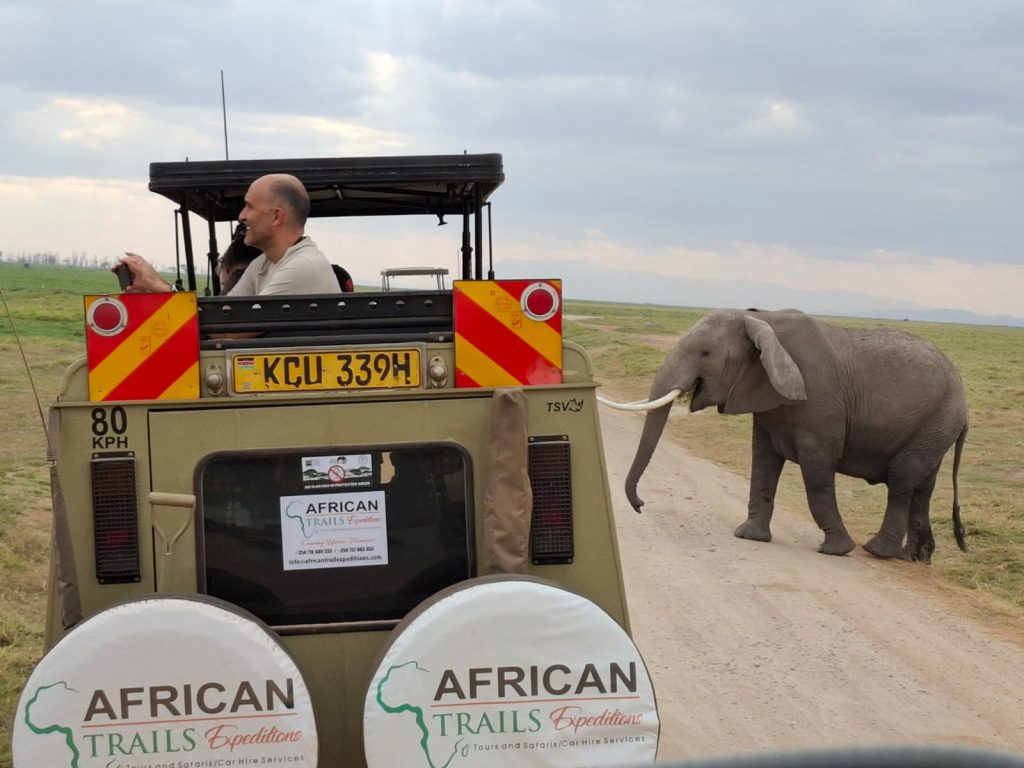
This is also the home of Tsavo’s most iconic residents, the red elephants. Dusted in the park’s distinctive crimson soil, these are among the largest elephant bulls on the continent. Watching a herd move through the Poacher’s Lookout grasslands in the early morning light, their coats glowing copper against the green acacia, is a sight that stays with a traveller long after they have returned home.
Quick Info
- International Adults: US$ 52 per day
- International Children (3–17): US$ 35 per day
Fees payable via the KWS eCitizen platform. ATE manages park fee logistics for all guests.
Wildlife
Tsavo West carries wildlife in extraordinary density, but on its own unhurried terms. This is not the grassland theatre of the Mara, where the action is constant and visible. Tsavo West asks something more of its visitors: patience, quiet, and a willingness to move slowly through thick bush until the moment the trees part and something magnificent stands before you. The reward, when it comes, is entirely your own.
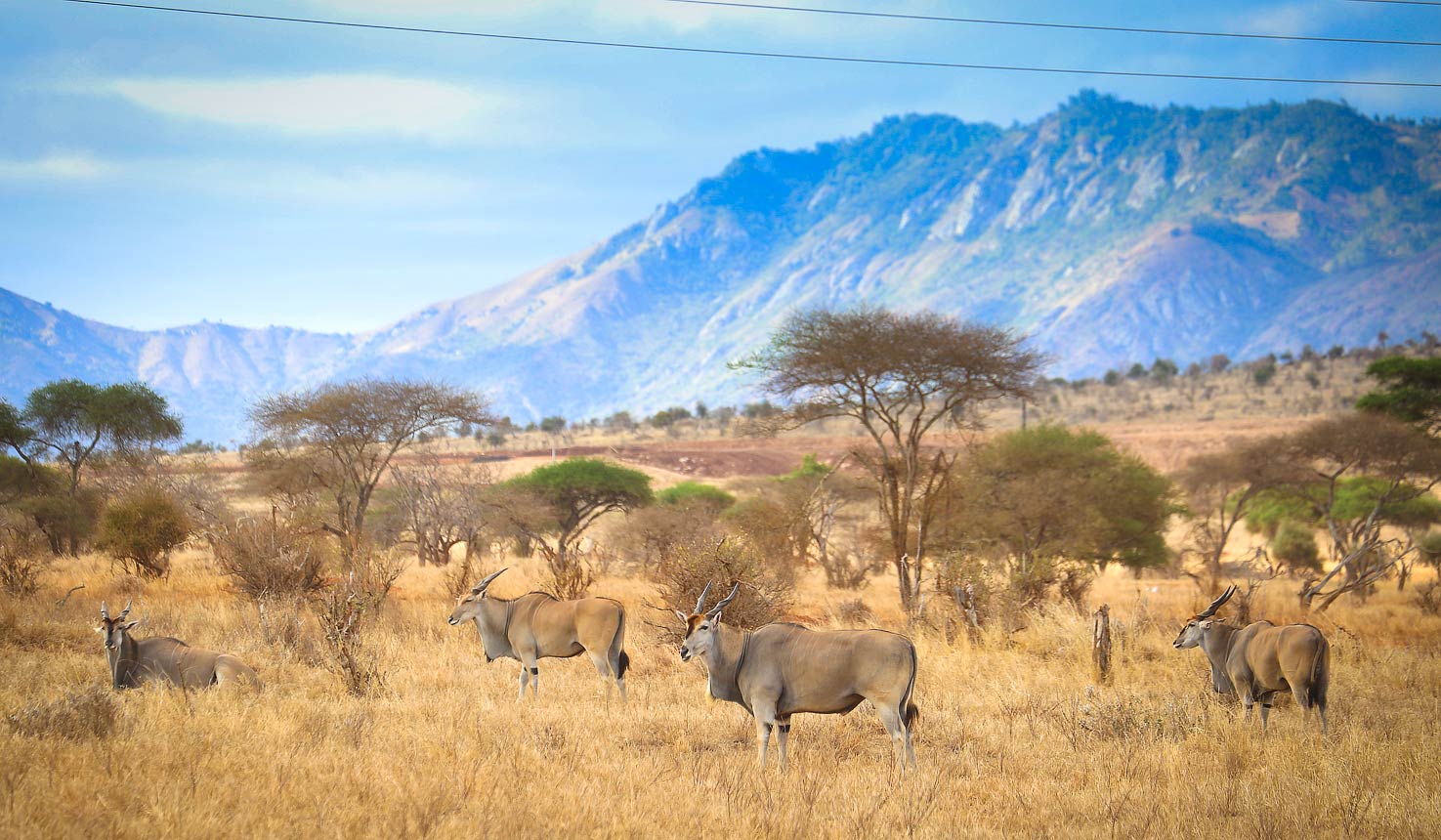
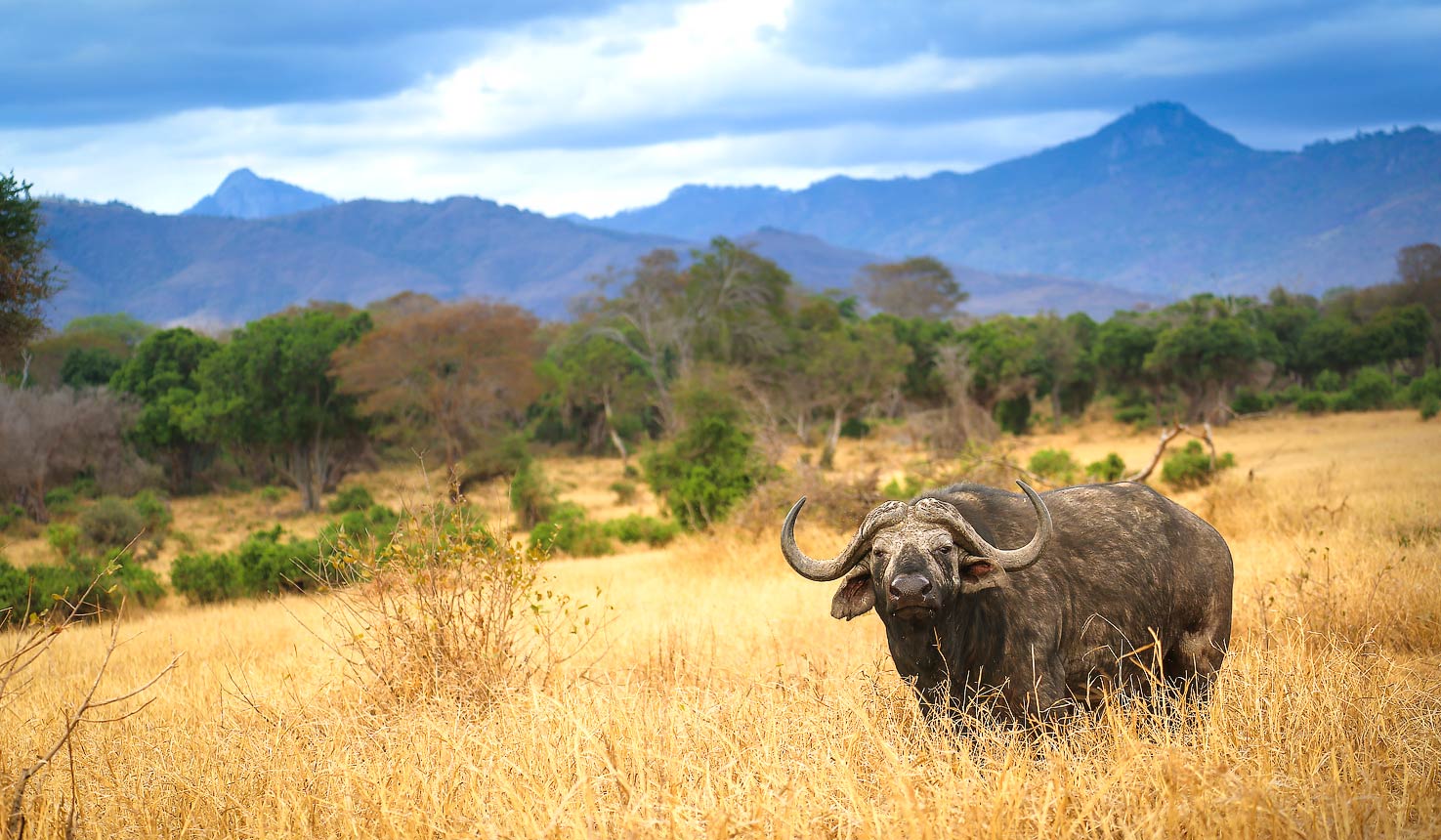
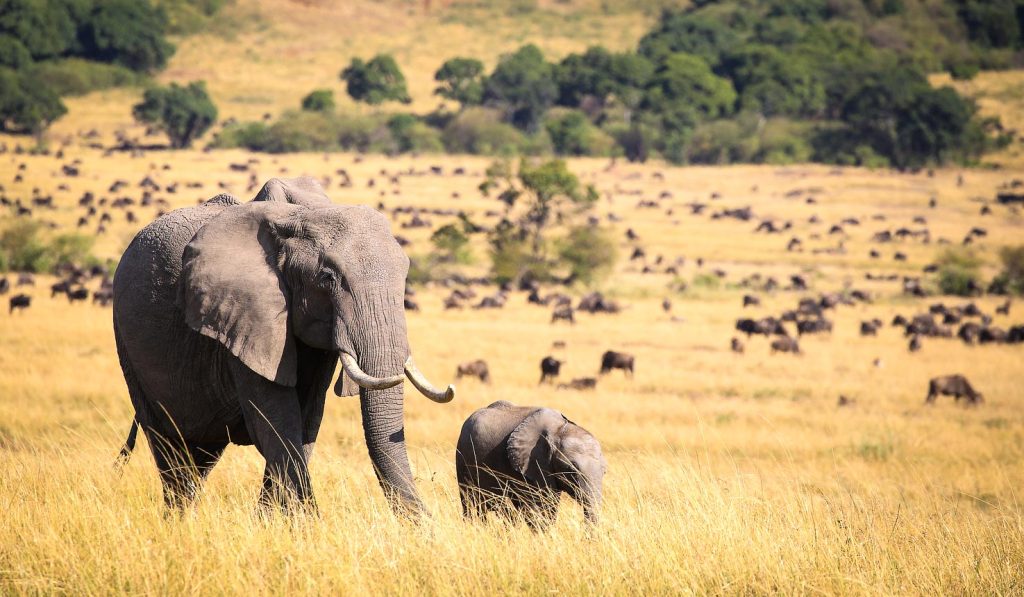
The park holds one of Kenya’s largest elephant populations, lion, leopard, cheetah, buffalo and a healthy population of hippo clustered around the Mzima Springs waterways. Black rhino — once poached to the edge of local extinction — are being carefully recovered within protected sanctuary areas inside the park.
The Red Elephants of Tsavo
Nowhere else in Kenya will you encounter elephants quite like this. Tsavo’s red elephants are not a separate subspecies; they are African savanna elephants whose habit of dust-bathing in the park’s iron-rich volcanic soil has stained their hides a deep, extraordinary rust-red. The effect in the morning light is almost surreal.
These bulls are large, even by elephant standards; Tsavo is famous for its tuskers, the great-tusked males whose ivory sweeps almost to the ground. The park is one of the last places in Africa where you can still encounter these animals in genuine numbers. Watching a herd of sixty or seventy elephants materialise from the acacia scrub at a waterhole, their coats the colour of baked earth, is one of the defining wildlife encounters in all of East Africa.
Our specialists know the waterhole circuits and movement patterns that give you the best chance of finding them on foot on undisturbed ground, with no other vehicle in sight.
Landscape & Ecosystem
Tsavo West is defined by one of the most geologically dramatic landscapes in East Africa. The park sits on ancient volcanic terrain; lava flows that date back thousands of years have shaped a broken, otherworldly topography of rocky outcrops, lava fields and dry riverbeds that suddenly bloom green after rain.
The Chyulu Hills mark the park’s north-western boundary, their slopes covered in forest that provides cool relief from the heat of the lower plains. These hills are geologically among the youngest volcanic formations in the world; some flows are less than 500 years old, and they feed Mzima Springs underground, where the water travels 50 kilometres beneath the lava before surfacing.
Mzima Springs itself is one of the most extraordinary natural features in Kenya. Two million gallons of fresh water emerge daily from below the lava rock, creating a series of pools edged with doum palms and papyrus. Hippos wallow in the upper pools; crocodiles cruise the shallows. An underwater viewing chamber — one of the very few in Africa — allows guests to observe hippos moving beneath the surface, an experience that borders on the dreamlike.
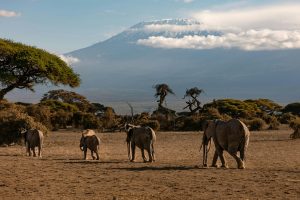
The Poacher’s Lookout, perched on the lip of an old volcanic crater, offers one of the broadest wildlife panoramas in Kenya. On a clear morning, Kilimanjaro rises above the southern horizon — an immense white cone floating above the African bush. Watching the sun move across a landscape this old and this still is the kind of experience that reorders priorities.
Experiences & Activities
Tsavo West rewards those who go beyond the game drive. The park's scale, geology and diversity of habitats make it one of Kenya's most layered safari destinations — capable of holding a traveller's attention for days.
When to Visit Tsavo West National Park
Tsavo West is a year-round destination, but its character shifts dramatically with the seasons — and understanding those shifts is the difference between a good trip and an extraordinary one.
June to October is the long dry season and the prime time for wildlife viewing. Vegetation thins, waterholes concentrate the game, and the skies stay cloudless for weeks on end. Elephant activity around the springs and river margins is exceptional. Temperatures are warm but manageable, and the evenings cool quickly at elevation.
December to March is the short dry season — a second peak that many travellers overlook entirely, which means the park is quieter still. The light is extraordinary at this time of year, and Kilimanjaro views from Poacher’s Lookout are at their clearest in January and February.
April and May bring the long rains. The park turns vivid green, the birdlife reaches extraordinary diversity, and the accommodation rates drop significantly. Game viewing is harder in the thick vegetation, but for landscape photography and birding, this is one of the most rewarding periods in the park.
Tsavo West can be combined seamlessly with Amboseli National Park — Kilimanjaro’s base, just over the border — and with Finch Hattons, the park’s only luxury tented camp, for a dedicated Tsavo experience.

Safaris Featuring Tsavo West
Every African Trails itinerary through Tsavo West is built around your pace, your priorities and the season. Whether you want a dedicated three-night Tsavo immersion or a broader southern Kenya circuit taking in Amboseli and the coast, our specialists will design something that fits.
Where to Stay in Tsavo West National Park
Accommodation options in Tsavo West are deliberately few — which is entirely the point. The park has resisted the density of lodges found elsewhere in Kenya, preserving a sense of genuine remoteness. African Trails works exclusively with properties that match the park's character: extraordinary location, small scale and complete immersion in the wilderness.
Finch Hattons
📍 Tsavo West National Park, adjacent to natural springs
Ashnil Aruba Lodge
📍 Tsavo West national Park
Severin Safari Camp
📍 Tsavo West National Park
Explore More Parks in Kenya
Frequently Asked Questions
Tsavo West is approximately 240 km south-east of Nairobi — around four to five hours by road via the Nairobi–Mombasa Highway, entering through the Mtito Andei gate. For guests on a fly-in safari, charter flights from Wilson Airport in Nairobi take around 45 minutes and land at the Finch Hattons airstrip inside the park. African Trails manages all transfers and flight logistics for our guests.
Yes. Tsavo West is a well-managed national park with KWS ranger presence throughout. All African Trails game drives are conducted with experienced, licensed guides who know the park intimately. Bush walks are led with a KWS-armed ranger escort. The main wildlife risk — as in any game reserve — is observing animals from a respectful distance, which your guide will always manage. The park poses no security concerns for visitors.
Black rhinos are present in Tsavo West within a protected sanctuary area, and sightings do occur — though they are rare and should never be expected or promised. The rhino population is recovering under a dedicated KWS conservation programme. If a rhino encounter is a priority for your safari, we would also recommend building in time at Ol Pejeta Conservancy in Laikipia, which has the highest black rhino density of any conservancy in East Africa and a more reliable sighting record.
The two parks share the same vast Tsavo ecosystem but feel completely different. Tsavo East is flatter, drier and more open — game viewing is often easier in its wide grasslands and along the Galana River. Tsavo West is more dramatic and diverse: its volcanic terrain, Mzima Springs, the Chyulu Hills and the jungle density of its southern sections create a richer, more layered experience. Most travellers find Tsavo West the more visually compelling of the two. The ideal itinerary, if time allows, includes both.
We recommend a minimum of three nights to do the park justice. Two nights is workable but leaves little room for the slower rhythms — early morning drives, a guided Mzima walk, a sundowner at Poacher’s Lookout — that make Tsavo West memorable. Four or five nights allows you to combine it with a day trip into the Chyulu Hills or a visit across to Amboseli, where Kilimanjaro is at its most imposing. Our specialists can help you build the right balance for your trip.
Plan Your Visit to Tsavo West National Park
Our safari specialists are ready to craft your perfect wildlife experience