From
$5,115

Start Planning Your Tailor-Made Journey
🔒 Your details are kept private and never shared with third parties.
Kenya's only private island resort — coral seas, sacred forest, green turtle beaches and the Indian Ocean in every direction
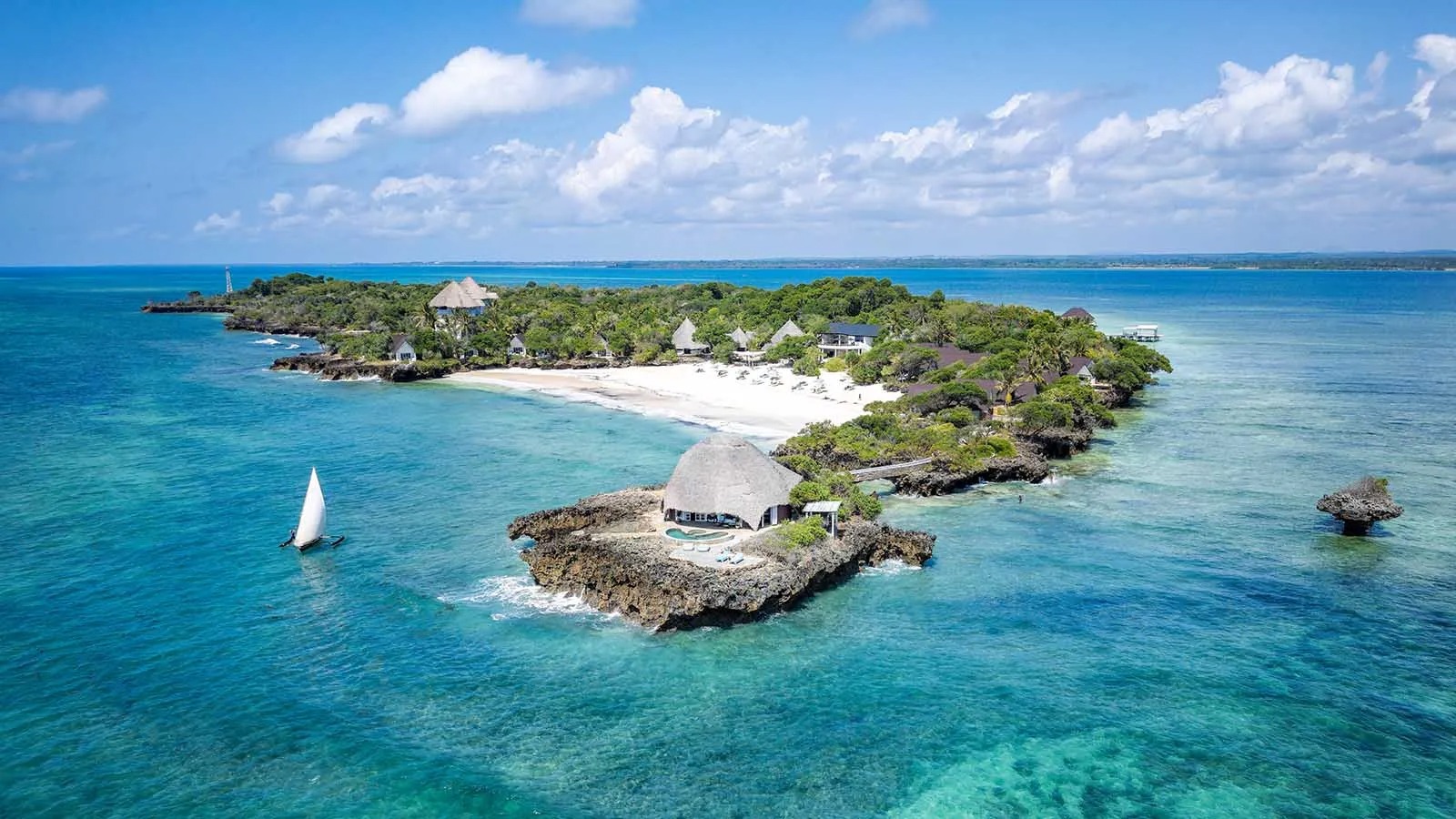
There is a small island off Kenya’s south coast, six hundred metres from the mainland, ten kilometres south of Diani Beach, that cannot be fully explained in advance. Chale Island has to be experienced in sequence: the boat transfer from the Galu Beach jetty, the first view of the island as it resolves itself from the mangrove-fringed horizon, the moment you step ashore and understand that you are on land that belongs — in every meaningful sense — to the coral sea surrounding it, the ancient forest covering its southern half, the turtles that nest on its beaches, and the two troops of colobus monkeys that regard new arrivals with the practised indifference of those who got here first.
The Sands at Chale Island occupies the northern portion of a coral island that measures nine hundred metres in length and three hundred metres across — the resort’s fifteen acres of indigenous forest, powder-white sand bay and reef-protected lagoon sitting against a southern half that is a protected Mijikenda kaya, one of the ancestral village sites of the Mijikenda people that are scattered along the Kenyan coast and hold genuine sacred status. The island is not divided carelessly. The resort’s philosophy —
stated directly and honoured operationally — is that the buildings should be elegant but never dominant, blending into the natural environment and reflecting the traditional architecture of the coast rather than competing with it.
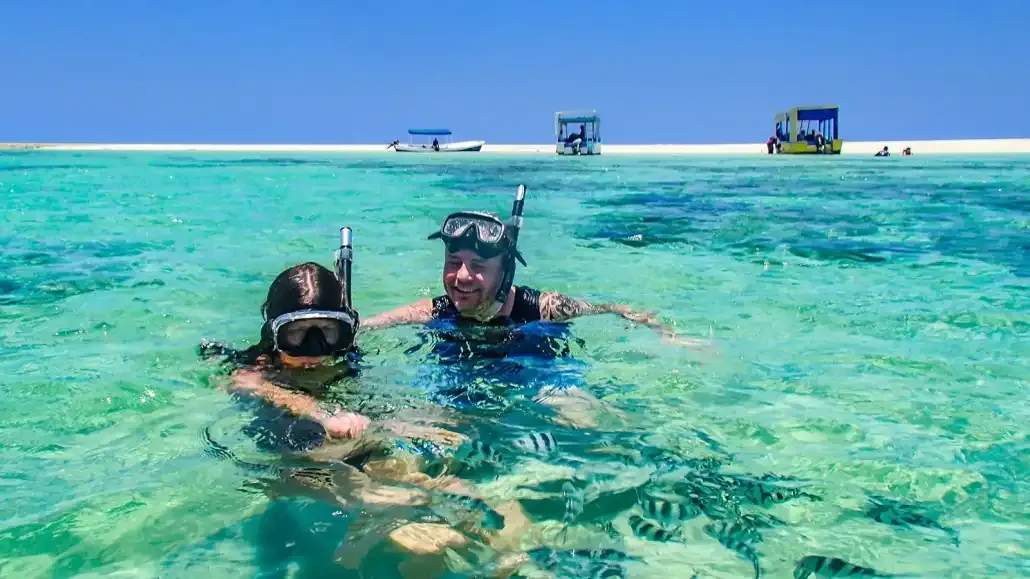
The reef makes Chale Island. Directly offshore, protecting the beach from wave action and creating the exceptional water clarity that the island’s lagoon is known for, the coral garden surrounding Chale is one of the most intact and productive sections of reef on the Kenya coast. Whale sharks visit the deeper waters between November and February — encounters coordinated by Diving the Crab, one of Kenya’s most established dive operations, which has been based on this coast since 1985. Dolphins are a regular presence in the channel between island and mainland. Green turtles nest on the beach, monitored and protected by the island’s partnership with Diani Turtle Watch. Snorkelling from the shore is extraordinary on a good tide. Scuba diving from the island’s own boat is among the finest available anywhere on the Kenya coast.
The resort holds Africa’s Leading Private Island Resort award from the World Travel Awards 2024, Silver Eco-rating from Eco Tourism Kenya, and has been featured by National Geographic Traveller. These are not details that require embellishment. Chale Island earns them through the basic arithmetic of what the island is — a place of genuine biodiversity, significant cultural heritage and exceptional natural beauty, with a resort that has the good sense to serve it rather than overwhelm it.
Africa's Leading Private Island Resort 2024. The Sands at Chale Island sits on a 900-metre coral island off Kenya's south coast — 53 rooms, eight restaurants and bars, a living reef, resident colobus monkeys, nesting sea turtles, and a protected Mijikenda sacred forest on the island's southern half
Silver Eco-rating from Eco Tourism Kenya. The Thinking Green programme covers turtle nest monitoring with Diani Turtle Watch, single-use plastic elimination, organic produce from the Nomad Farm, reef and colobus habitat protection, and monthly community reef clean-ups. The island's southern half — a Mijikenda sacred Kaya forest — is preserved entirely. The ecology is not a marketing commitment.
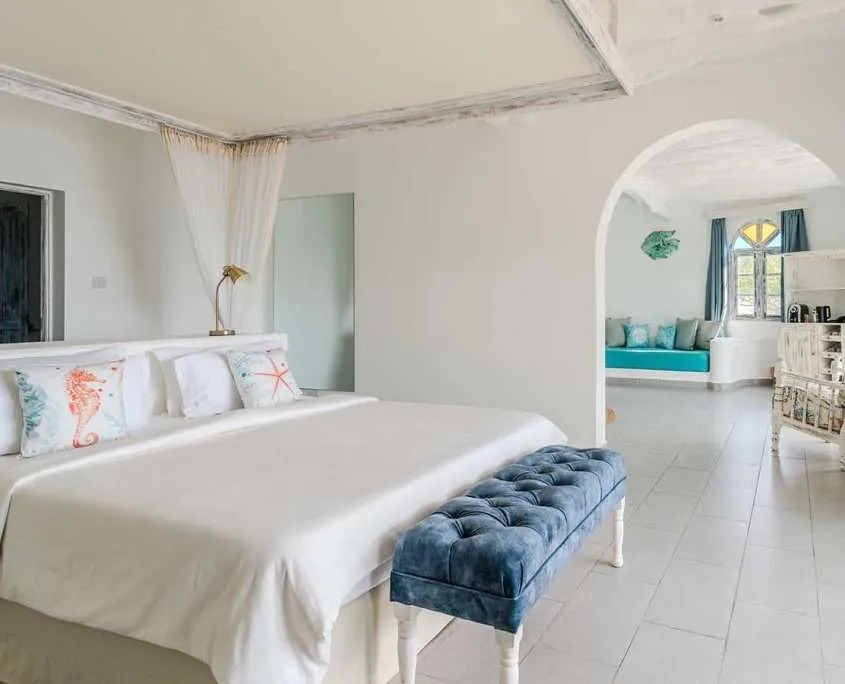
The architecture of The Sands at Chale Island follows a single principle: elegance that defers to the natural environment rather than competing with it. Swahili-inspired design runs throughout — natural timber, traditional fabrics, thatch roofs, whitewashed walls and carved woodwork that reflects the coastal culture the island belongs to. All 53 rooms have sea views. All are air-conditioned, en-suite and equipped with the practical amenities expected of a five-category island resort. The five room types move from the extensively renovated Ocean View Bandas — the island’s most numerous and most popular category — up through Standard Rooms, Tower Suites, and the resort’s two utterly singular signature suites: the Overwater Suite, the first of its kind in Kenya, and the Suite on the Rock, set on its own private islet and connected to the main island by a stone bridge.

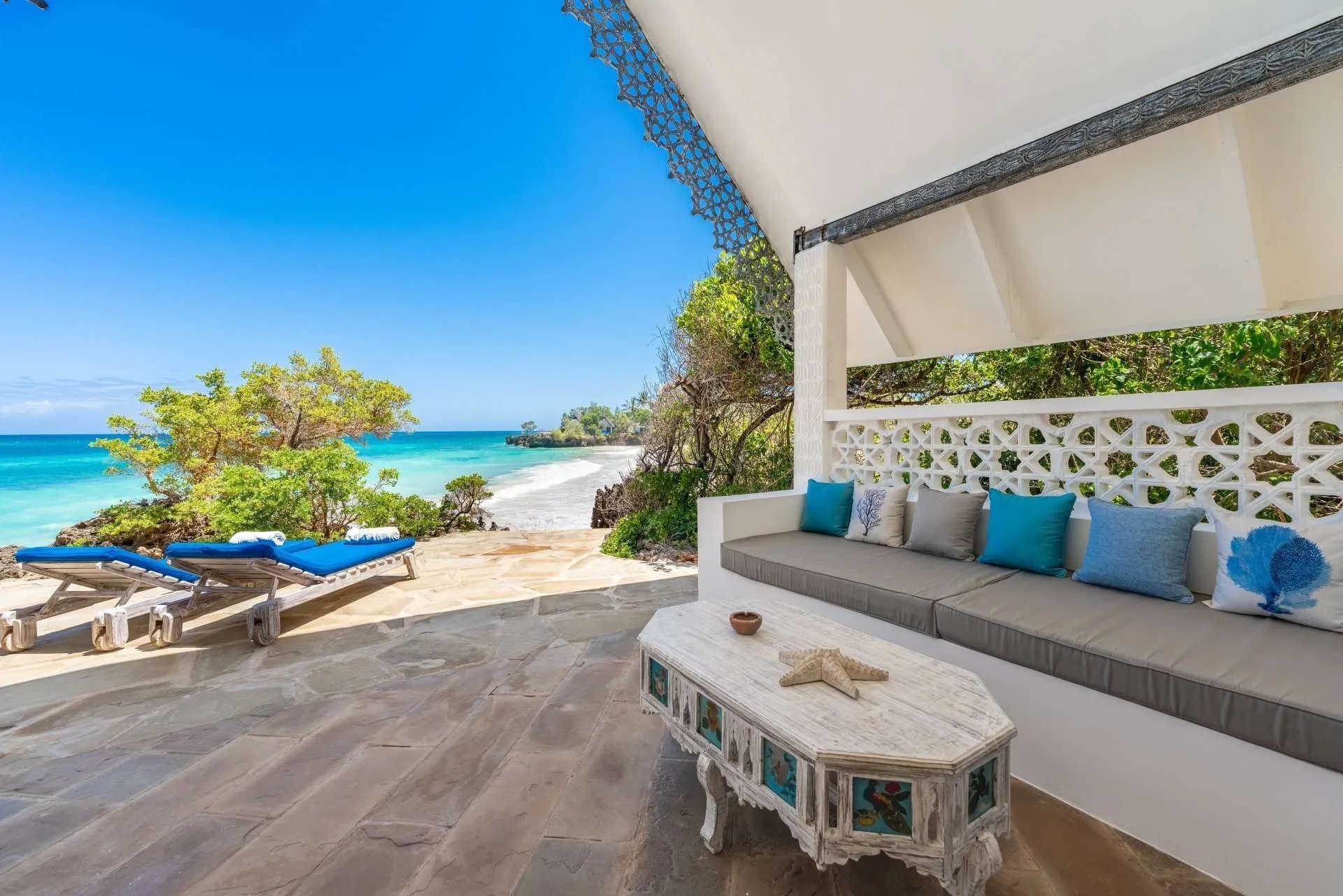
Twenty-nine recently revamped bandas — banda meaning small house in Swahili — are the island's most sought-after category. At 65 square metres each, with private verandas, sun beds and Swahili day beds, high palm-thatch roofs and authentic Kenyan design details. Thirteen face the lagoon; sixteen face the beach. Both orientations have their devoted advocates.

A first of its kind in Kenya, the Overwater Suite offers amazing views of Bird Island, Gazi Bay and the Shimba Hills. Suspended over the lapping waves of the Indian Ocean below, these Suites are the perfect place to watch the ebb and flow of the tide and the changing nature of Chale Island throughout the day.

Set on its own private islet connected to the main island by a stone bridge, the Suite on the Rock offers complete seclusion. A soaring thatched roof plunges at the centre to channel rainwater into an interior garden. A circular stairway winds past an intricate wall garden to an upstairs lounge, while the front veranda overlooks the cliff face and sunbathing deck below.
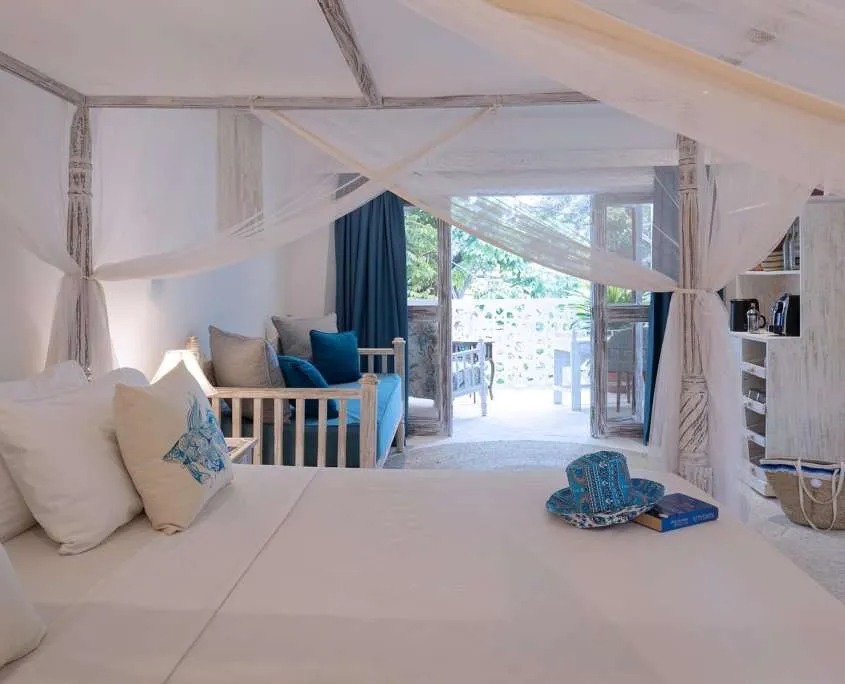
These spacious rooms offer stunning views of the island or the ocean. Featuring a spacious master bedroom, and private balcony area these rooms are perfect for relaxing getaways

Ten Tower Suites sit above the island's tree canopy, delivering panoramic ocean views unavailable to lower categories. At 95 square metres, each offers a large bedroom, separate living area and a private balcony where the sun rises directly over the Indian Ocean. The defining suite for elevation and perspective.
Every moment at Chale Island is crafted to immerse you deeper in the wild.

Diving the Crab — operating on Kenya's south coast since 1985, Pure Air certified. Guided dives across Kinondo Reef, macro sites and whale shark waters (November–February). PADI instruction available. Monthly reef clean-ups with the island's conservation team.

One of the most accessible and intact reefs on the Kenya coast. Snorkel from the beach or by short boat transfer — reef fish, moray eels, octopus, hawksbill turtles and exceptional coral. Equipment and guided sessions available.
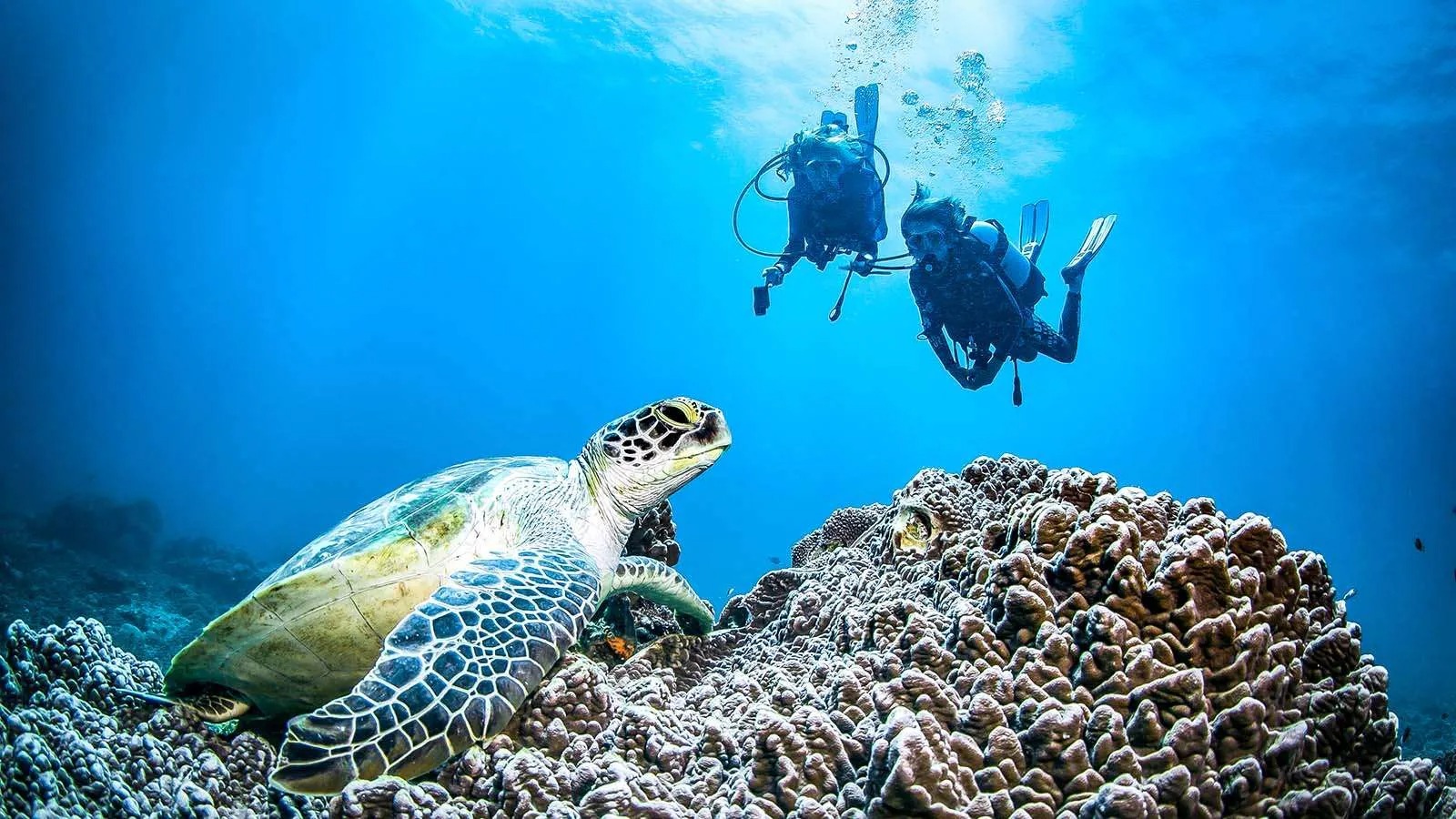
Chale Island is a green sea turtle nesting site, monitored in partnership with Diani Turtle Watch. Turtles nest year-round, with hatchling releases among the island's most memorable moments. Guests are briefed on respectful observation on arrival.

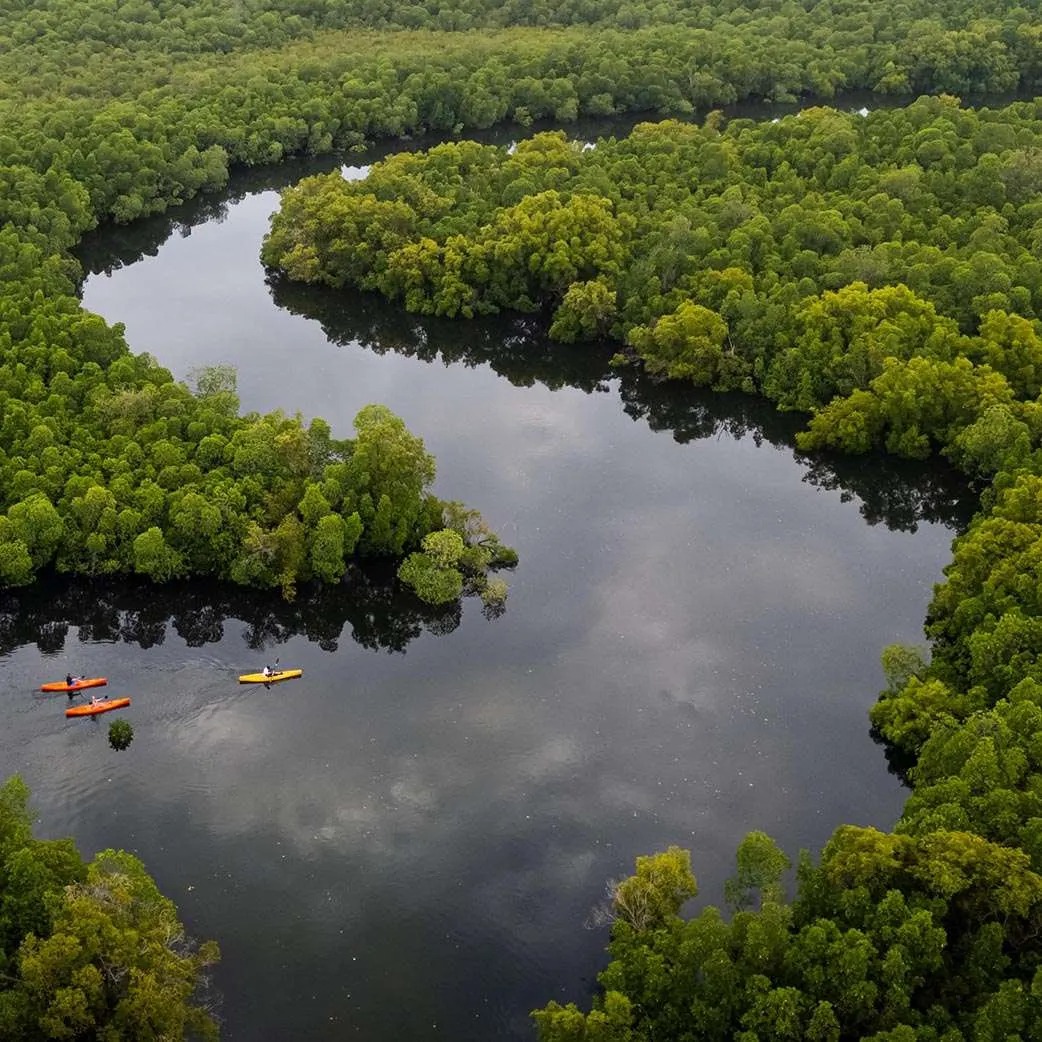
The reef-protected waters around Chale Island are ideal for kayaking and stand-up paddleboarding. Exploring the coastline reveals hidden bays, rock pools and mangrove inlets inaccessible any other way — best at dawn when the channel is glassy and still. Equipment available from the resort.
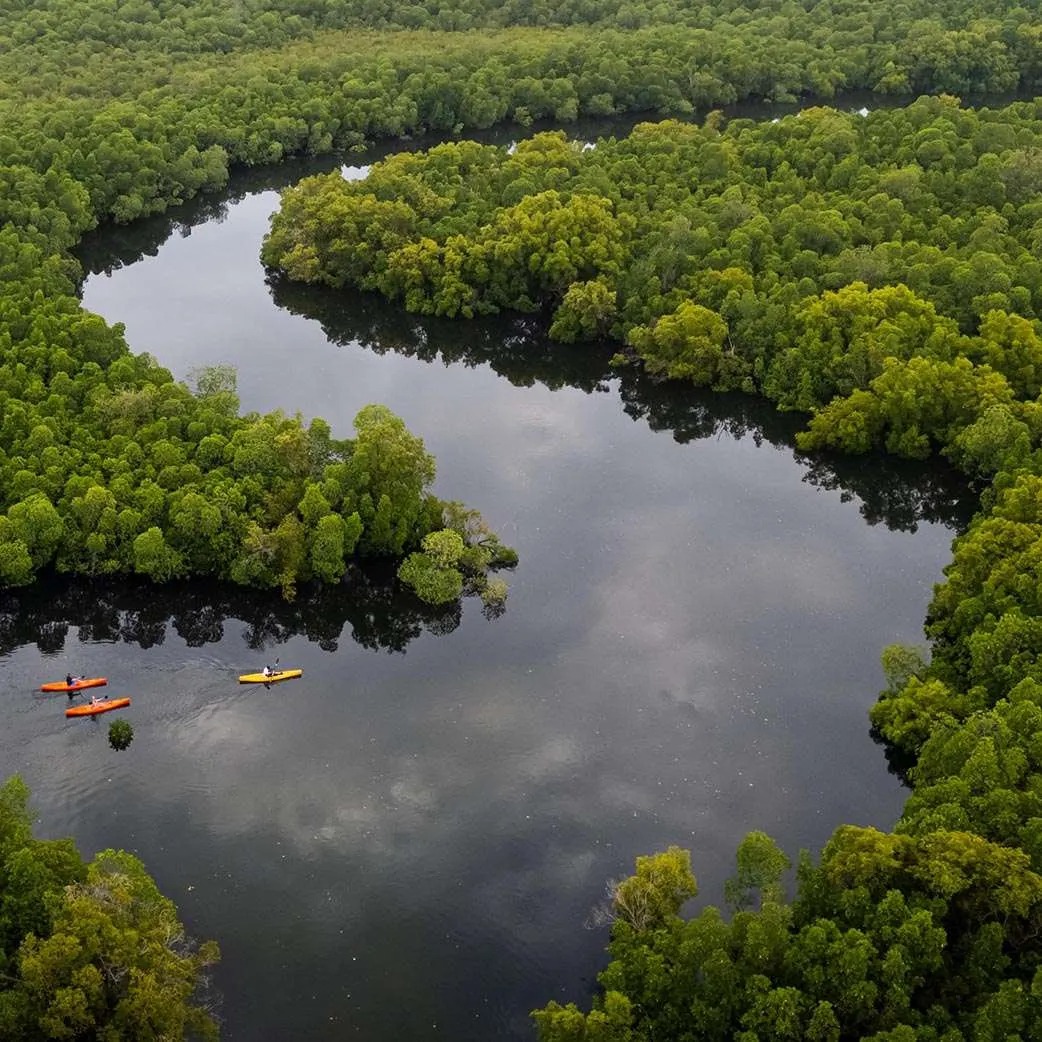
Gazi Bay shelters East Africa's tallest mangrove forest — alive with kingfishers, herons, mudskippers and fiddler crabs. A guided boat or kayak tour through the channels is one of the coast's most distinctive natural encounters.
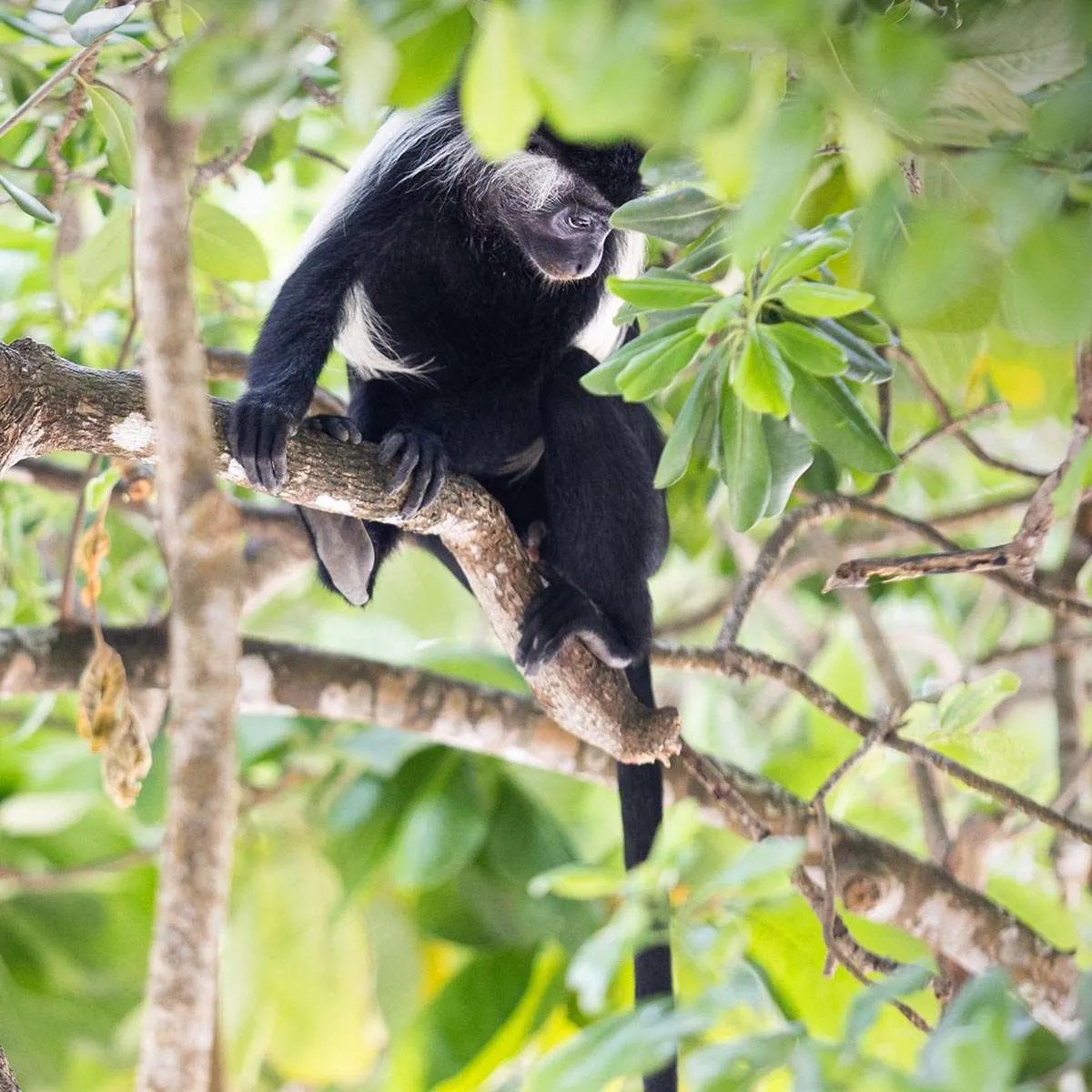
Two resident colobus monkey troops inhabit the island's forest canopy, moving through the trees above the accommodation with easy familiarity. Forest trails allow close observation, guided by resort naturalists who know the troops' daily patterns.
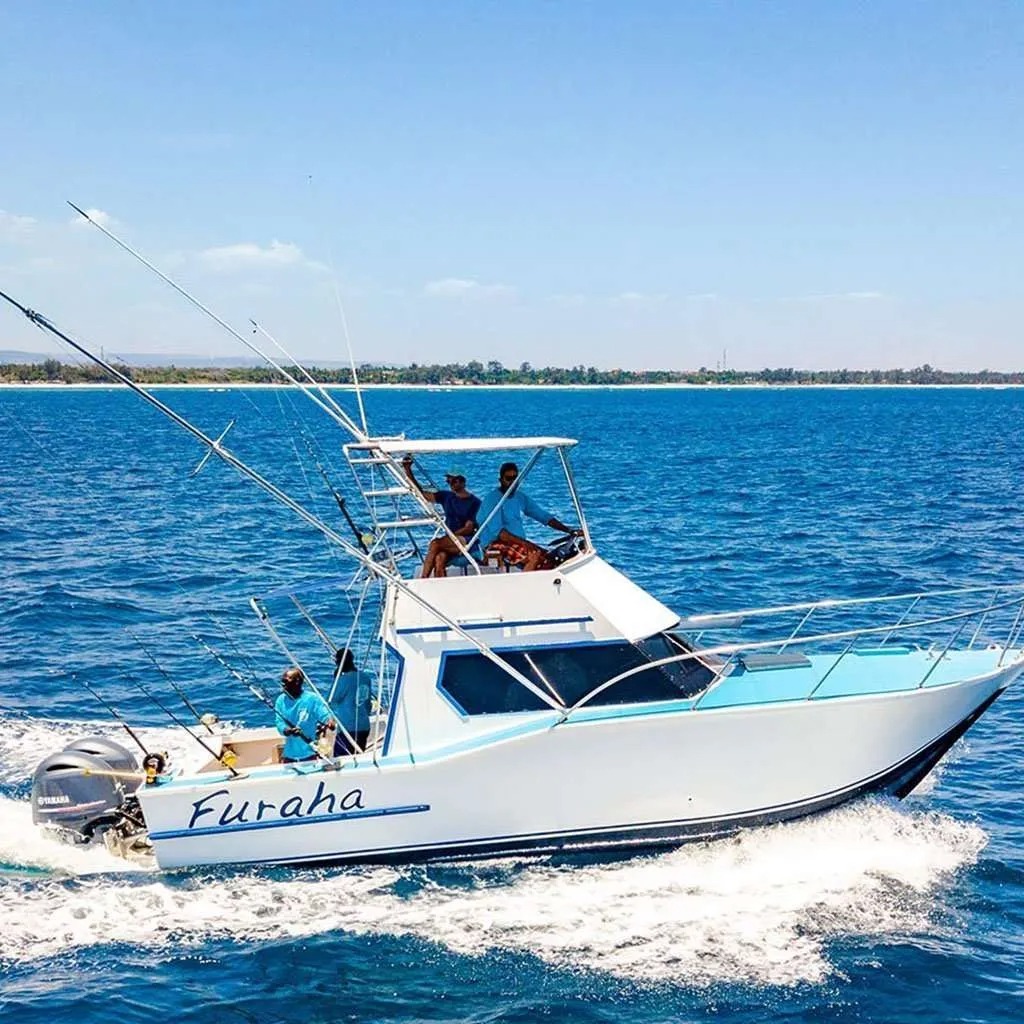
Deep sea fishing for marlin, sailfish, dorado, tuna and wahoo is available through partner operators. Full equipment, experienced crews and catch-and-release encouraged for billfish. Half and full-day charters on request.
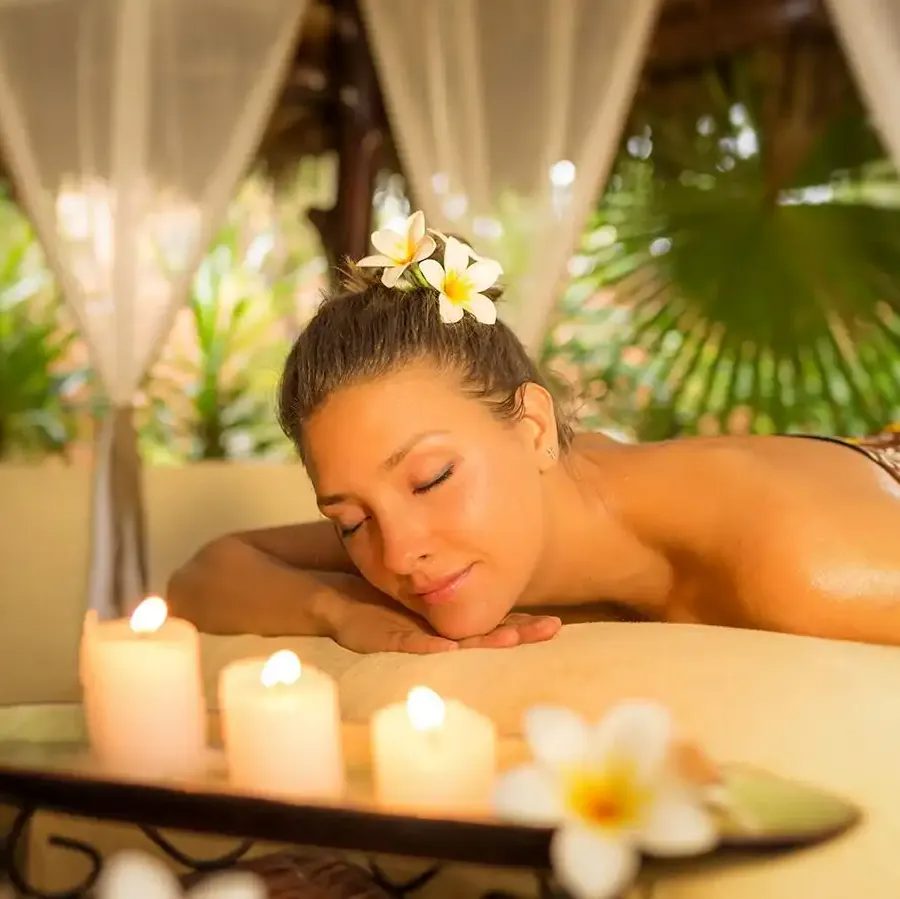
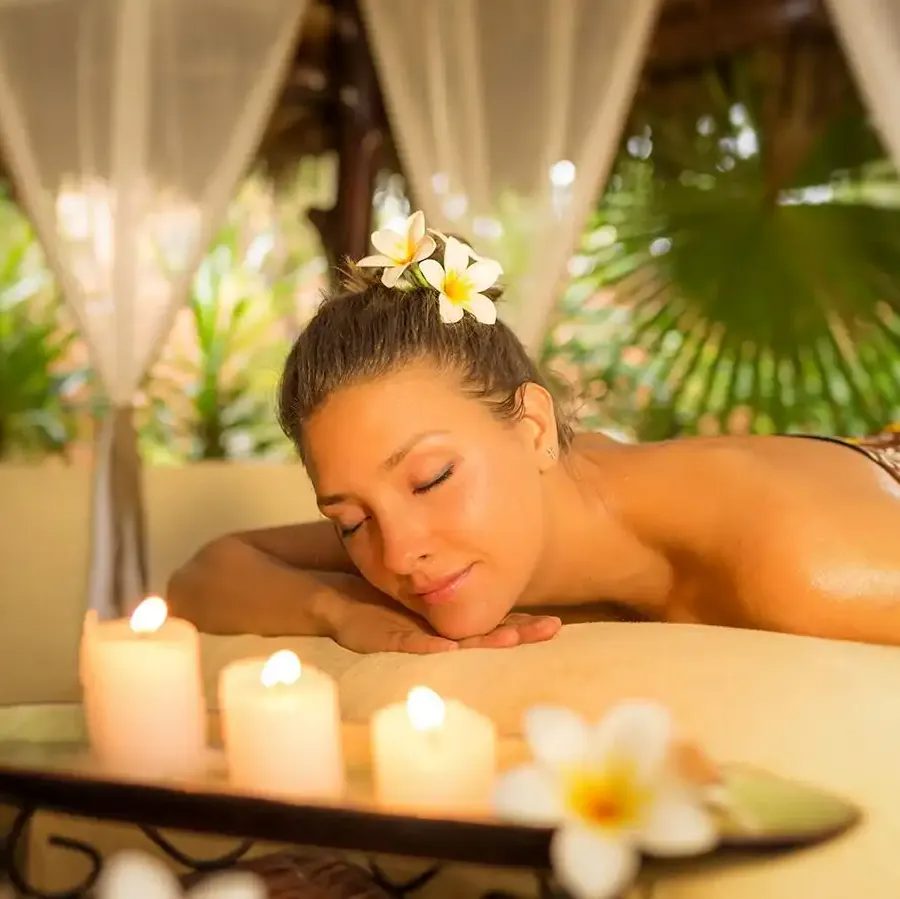
Maisha Poa Spa occupies nine open-air treatment rooms, putting the island's sounds and air into every session. Massages, body wraps, facials and wellness therapies blend contemporary technique with coastal tradition. A 24-hour fitness room is available to all guests.
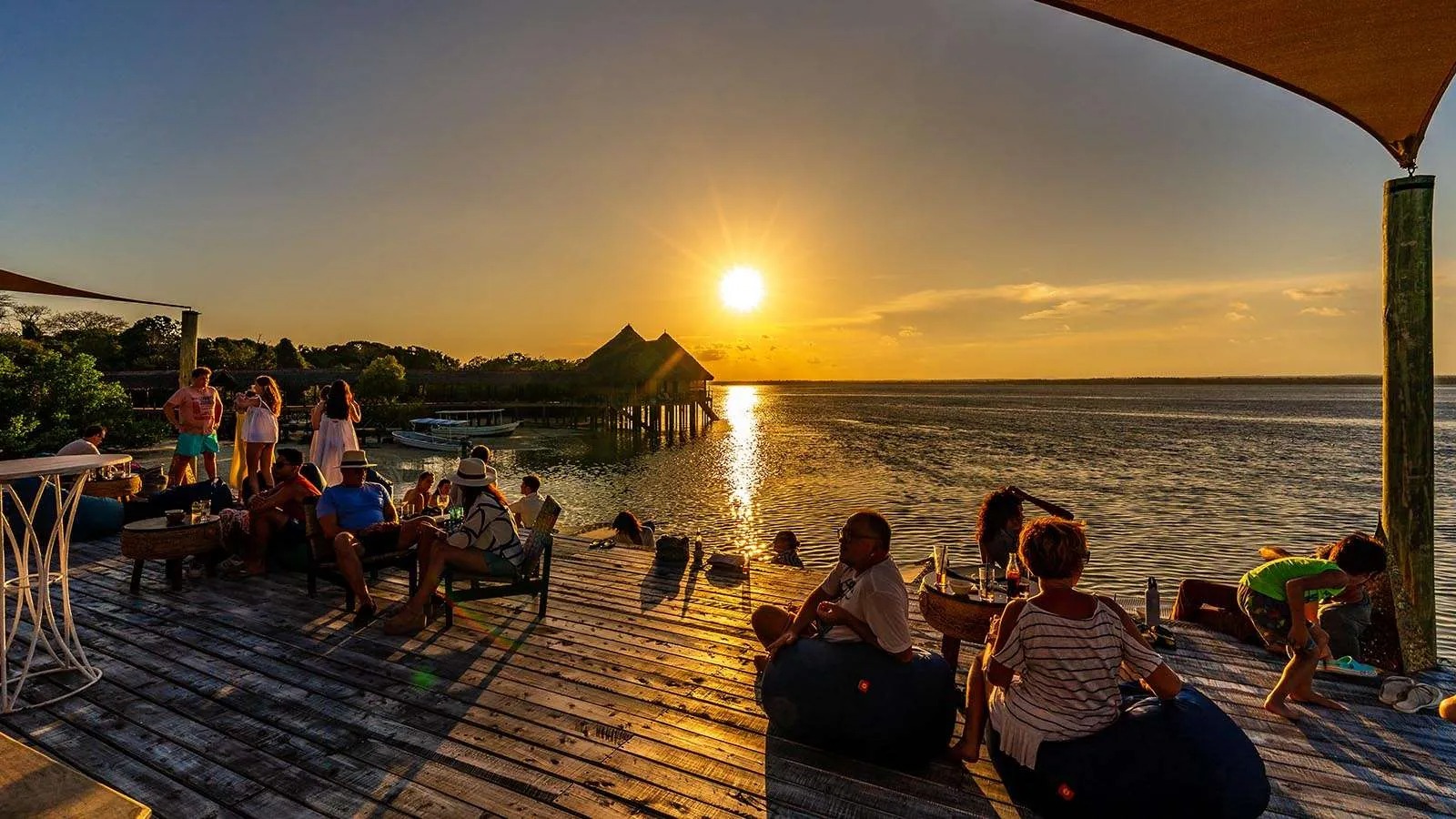
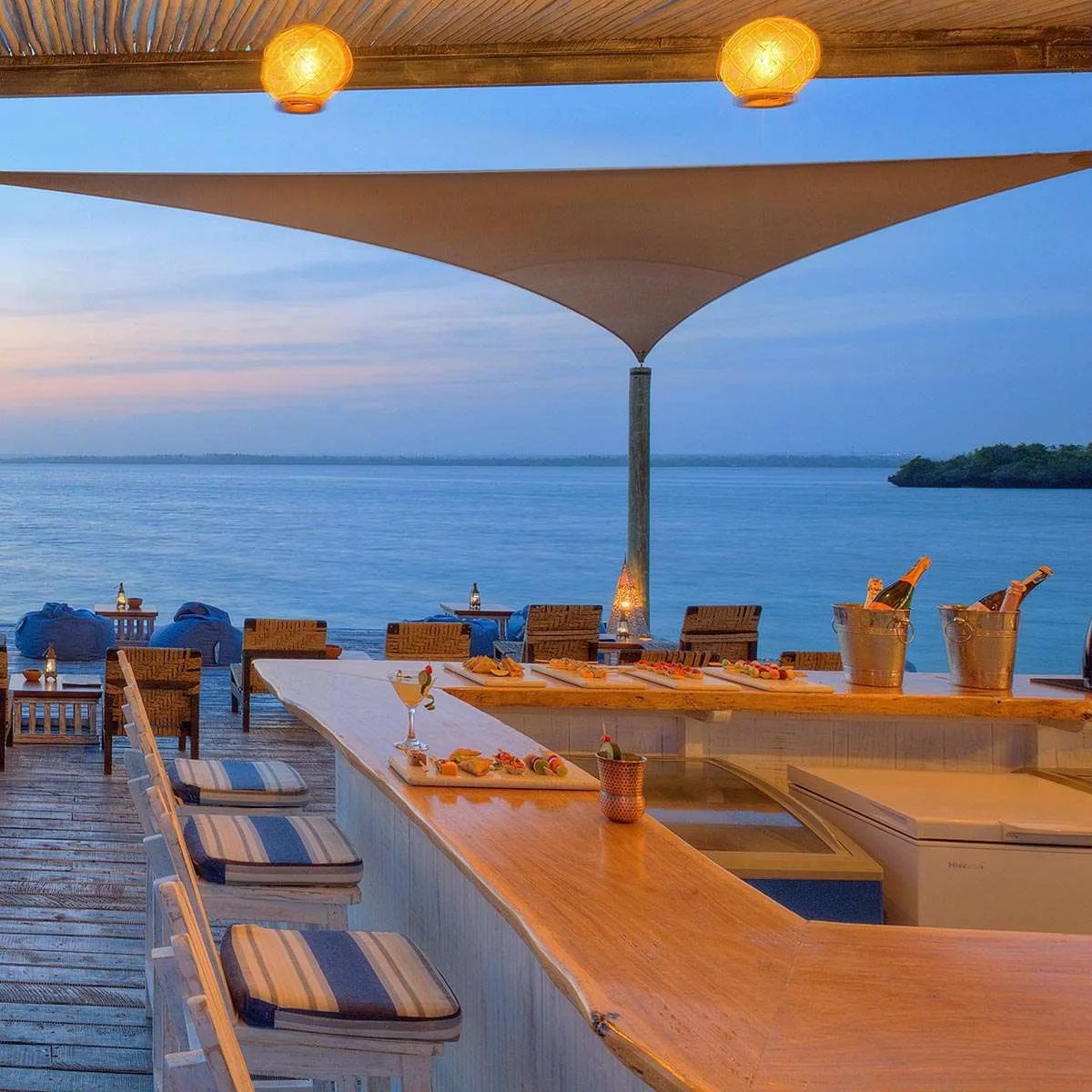
Mkoko Bar is the island's prime sundowner point — the Shimba Hills on the horizon, the reef below, dhows moving through the golden light. The natural conclusion to an afternoon at Chale Island.
Ready to plan your stay?
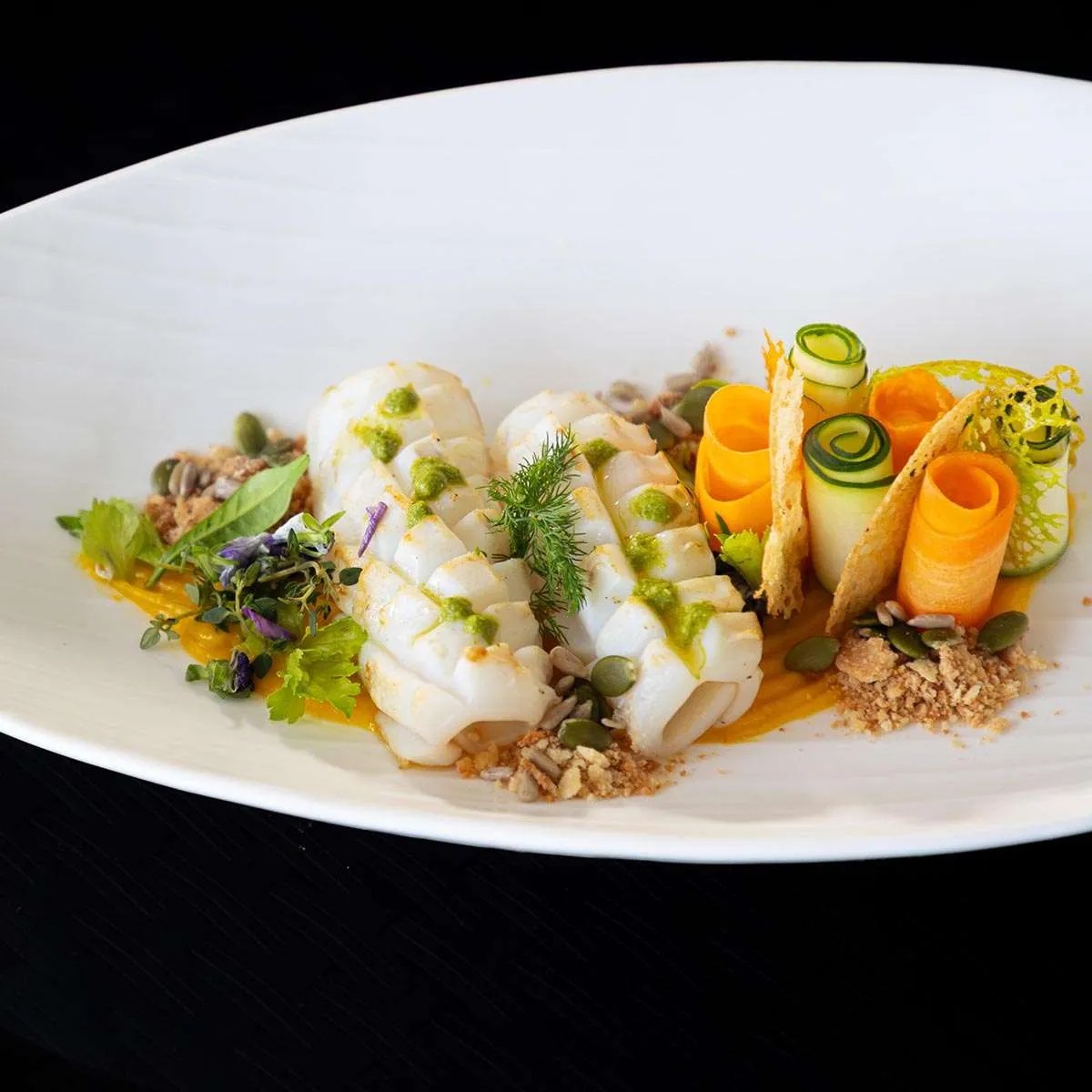
Eight restaurants and bars. On an island of nine hundred metres. The Sands at Chale Island takes food seriously — not in the formal sense of white tablecloths and hushed rooms, but in the direct sense of a resort that has invested in variety, quality and setting in equal measure, and built an entire dining landscape from the resources of the coastline around it.
The main restaurant steps directly onto the centre of the beach — the truest possible definition of beachfront dining, where the Indian Ocean is not a view but an adjacency. The kitchen’s emphasis is on freshness: Chef Evans and his team lead with live grilling stations, a pasta corner, and a menu that moves between traditional Kenyan cuisine, Italian and Oriental dishes, drawing on locally sourced produce and the extraordinary abundance of the Indian Ocean directly offshore. The sustainable Nomad Farm supplies fresh organic produce across the group’s properties. Seafood is prepared with the confidence of a kitchen that has never had to work hard to find it.
Katika Ziwa is the island’s dedicated seafood restaurant — a speciality operation whose daily catch translates into menus of genuine coastal character. Mkoko Bar, positioned for the sundowner, needs no further introduction than its location: the point on the island from which the sky’s daily performance over the Indian Ocean is most completely visible.
The beach bar, the poolside bar and the additional dining options across the resort’s eight venues ensure that no meal at Chale Island is ever obligatory or routine.
All-inclusive rates are available and cover meals and beverages across the resort’s dining venues. Standard bed-and-breakfast rates allow guests to explore the menu at their own pace.





The Kenya coast is a year-round destination, and Chale Island — protected from wave action by its reef and positioned just four degrees south of the equator — operates without seasonal closure. The timing of a visit shapes the experience rather than determining whether one is possible.
The long dry season from June through October is the most consistently rewarding period for the full range of island activities. The southeast trade wind keeps temperatures comfortable and humidity manageable, the sea is calm and clear, and underwater visibility on the reef reaches its annual peak. This is the season when the island’s marine life is most concentrated and accessible, and when deep sea fishing for marlin and sailfish is at its most productive. October marks the transition out of the dry season — still excellent conditions, quieter visitor numbers and the island beginning to feel more private.
January through March brings the short dry season: flat seas, exceptional diving and snorkelling conditions, the lowest visitor numbers of the year, and — crucially — the peak season for whale shark encounters in the waters offshore. Whale sharks are present between November and February, making this period the specific window for guests whose priority is the largest fish in the ocean. Turtles nest on the beaches throughout the year, with the resort’s Diani Turtle Watch partnership monitoring sites regardless of season.
April and May bring the long rains — the heaviest rainfall of the year, when conditions on the reef can become variable and the sea crossing from the mainland occasionally uncomfortable. These months are best avoided for a beach-focused stay, and the resort may adjust programming accordingly.
November marks the return to dry-season conditions: good diving, calm seas, the beginning of the whale shark season, and rates that represent excellent value before the December festive period lifts demand.
Explore handcrafted itineraries where Chale Island forms part of the journey.
Please share your name and email so we can follow up with you.