From
$6,519

Start Planning Your Tailor-Made Journey
🔒 Your details are kept private and never shared with third parties.
Six tents beside three waterholes and the sacred Double Fig Tree, with roofs that open to the Kenyan night sky.
Mara Naboisho Conservancy is managed on a model that limits the number of beds per acre to a fraction of what the adjacent national reserve permits. The result is a wildlife experience that feels categorically different from the Mara’s busier zones: fewer vehicles at sightings, drives that extend past sunset into the darkness where leopard hunt and hyena work the edges of the waterhole, and a landscape that receives the same wildebeest herds during migration but watches them without the convoy of vehicles that forms on the national reserve side of the boundary.
Saruni Leopard Hill’s position within the conservancy is specific. The camp sits in a valley beside three active waterholes, with the culturally significant Double Fig Tree — split by lightning in the 1950s and revered by the Maasai — framing the morning horizon from the raised deck. That combination of waterhole proximity and the tree’s silhouette produces dawn and dusk light that guests mention before almost anything else when they return home and try to describe the camp.
The architecture is the camp’s second distinction. Each suite takes its circular form from the Maasai manyatta, raised on timber platforms with the view wrapping almost fully around the interior. The motorised roof opens at a button press to reveal the night sky above the mosquito net. It is an idea that reads as a gimmick until the moment you use it, at which point it becomes the detail around which the rest of the stay is organised.
Within Mara Naboisho's 50,000 acres of private wilderness, Saruni Leopard Hill offers night drives, outstanding big cat sightings, and six suites with motorised roofs that open to the African night sky. One of TIME's World's Greatest Places to Stay.
Saruni Leopard Hill holds Ecotourism Kenya's Gold eco-rating and operates on solar power with employment drawn almost entirely from the surrounding Maasai villages. A portion of every guest stay funds the Koiyaki Safari Guiding School, which trains the next generation of Maasai guides to work across the Mara ecosystem.
Six suites are arranged across the valley slope, each a circular manyatta-form tent on a raised timber platform. The design gives a near-360-degree view: from the bed, the Double Fig Tree and the waterholes; from the bathroom at the rear, the hillside and whatever is moving through the surrounding vegetation at night. The motorised roof opens at a button press — guests report leaving it open through the night and waking to birdsong at first light or to the full silence of Naboisho at 3am, which has its own quality. The four deluxe tents each have their own waterhole sightline and a veranda that works as a coffee platform at dawn and a sundowner position in the late afternoon. The honeymoon suite sits slightly apart from the others with the most unobstructed view of the three waterholes. The family tent connects two bedrooms with a shared veranda — a practical configuration for families with children, who must be accompanied outside the tents at all times in an unfenced camp operating in active wildlife territory.
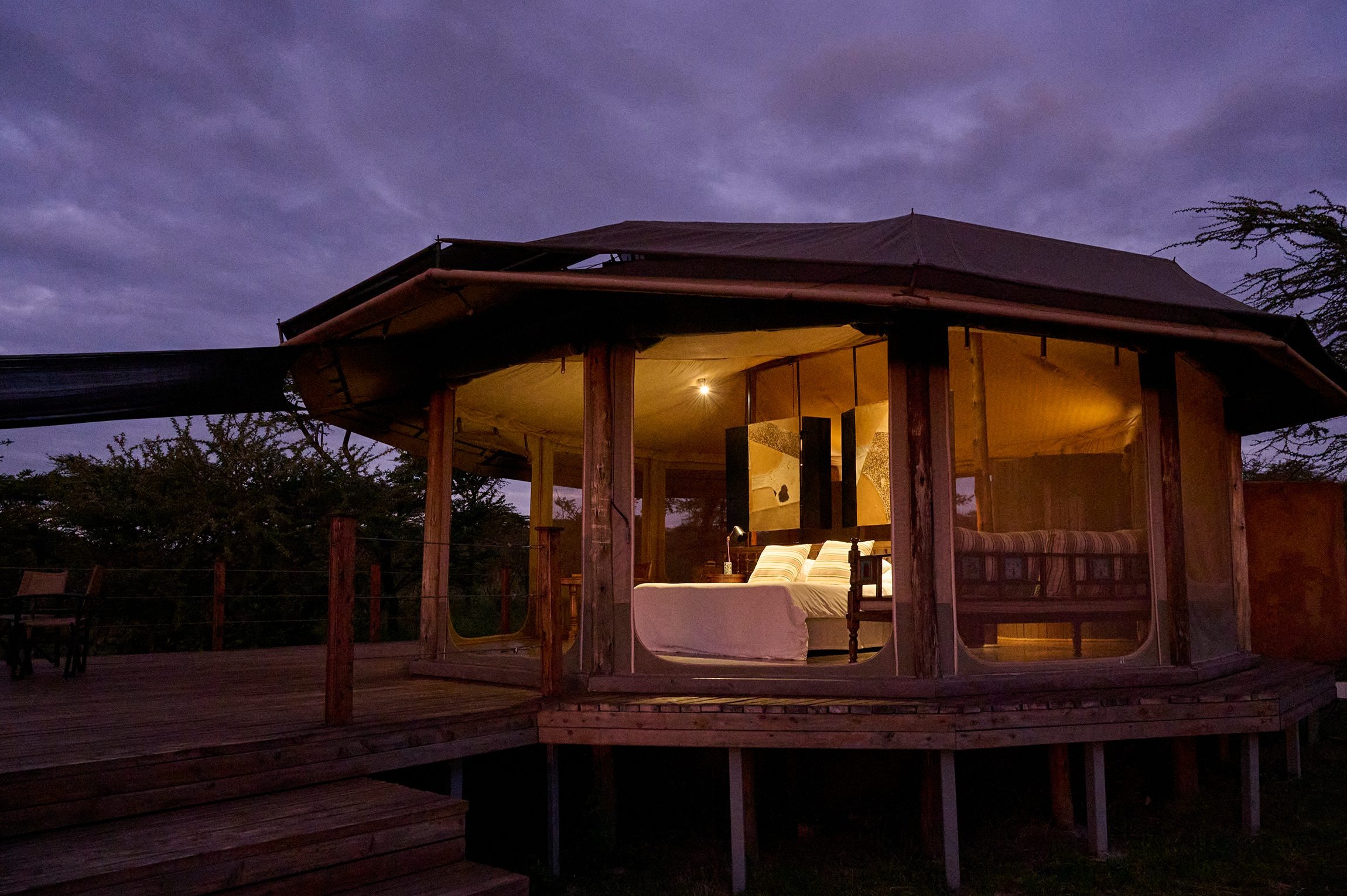
Four circular suites on raised timber platforms, each with a motorised roof that opens to the night sky. Private verandas face the conservancy and waterholes, with Maasai-influenced interiors and indoor and outdoor showers. The design directs attention outward, precisely the point in a conservancy this productive.

The honeymoon suite shares the same manyatta footprint but occupies the most direct sightline to the three waterholes. Slightly apart from the main cluster for added privacy, with the same motorised starbed roof. Suited to couples who want the Naboisho experience at its most intimate.

The family suite connects two bedrooms within the manyatta form, each with its own bathroom, a shared veranda and lounge between them, and motorised starbed roofs in both rooms. Children above five are welcomed, with a wildlife safety orientation on arrival.
Every moment at Saruni Leopard Hill is crafted to immerse you deeper in the wild.

Naboisho permits night drives; the national reserve does not. Leopard, hyena, and nocturnal species become directly observable after dark, guided by Maasai with specific knowledge of individual animals. For guests who know the Mara, it is the single most significant differentiator Naboisho offers.

Three waterholes sit directly in front of camp, visible from the deck, lounge, and most verandas. Elephant, plains game, and predators come down throughout the day, making time between drives a wildlife experience in its own right. Guides monitor activity and adjust drive times accordingly.
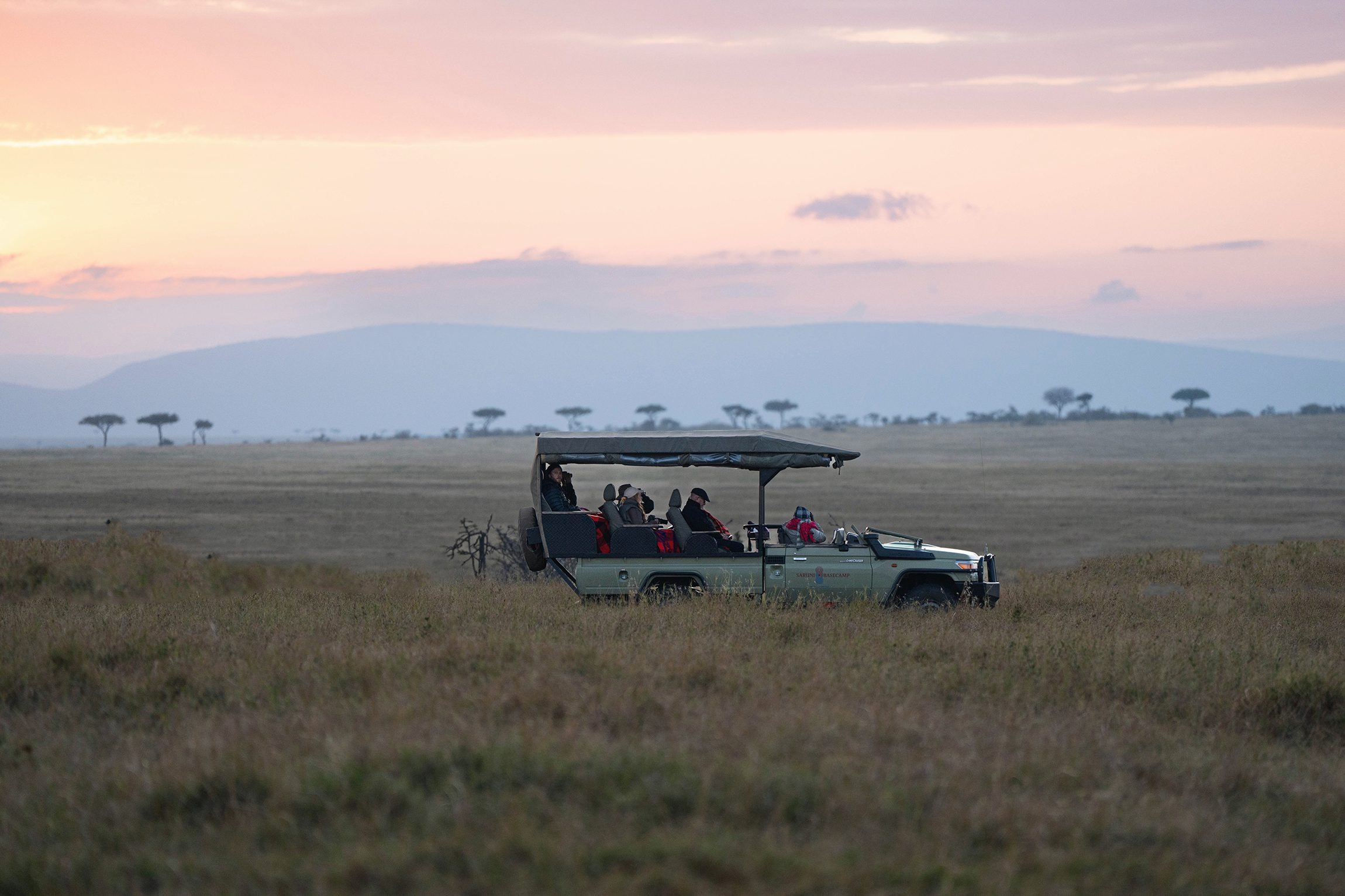
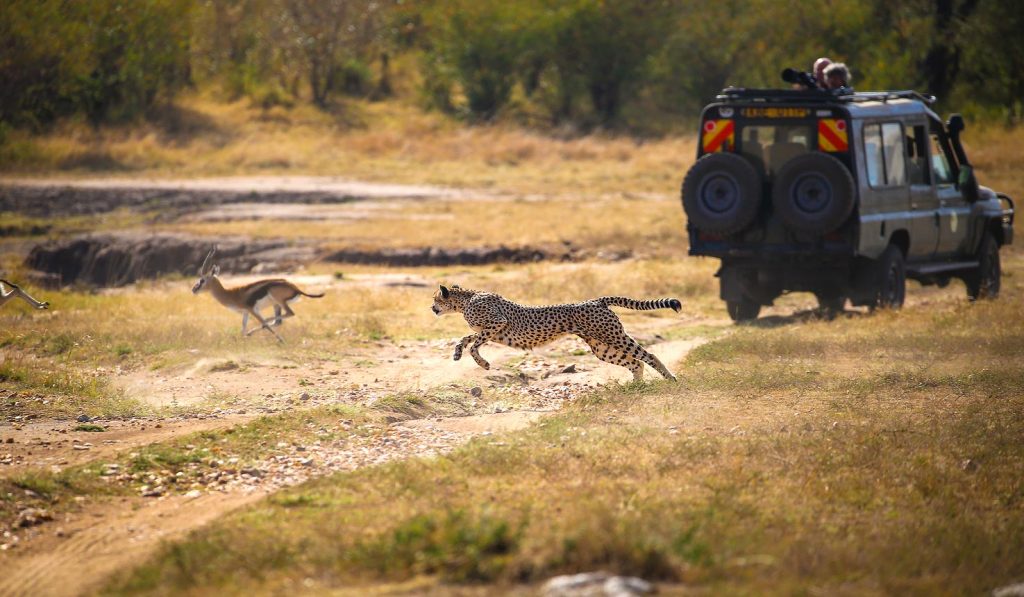
Naboisho holds one of the highest lion densities in the Mara ecosystem, with low vehicle pressure and a single vehicle per sighting protocol. Guides have tracked the same prides for years, with knowledge of individual animal ranges that determines what each drive produces.

Walking is permitted in Naboisho; the national reserve does not allow it. The camp's Maasai guides cover tracks, bird calls, medicinal plants, and the evidence of what moved through overnight, a dimension of the Mara entirely invisible from a vehicle.
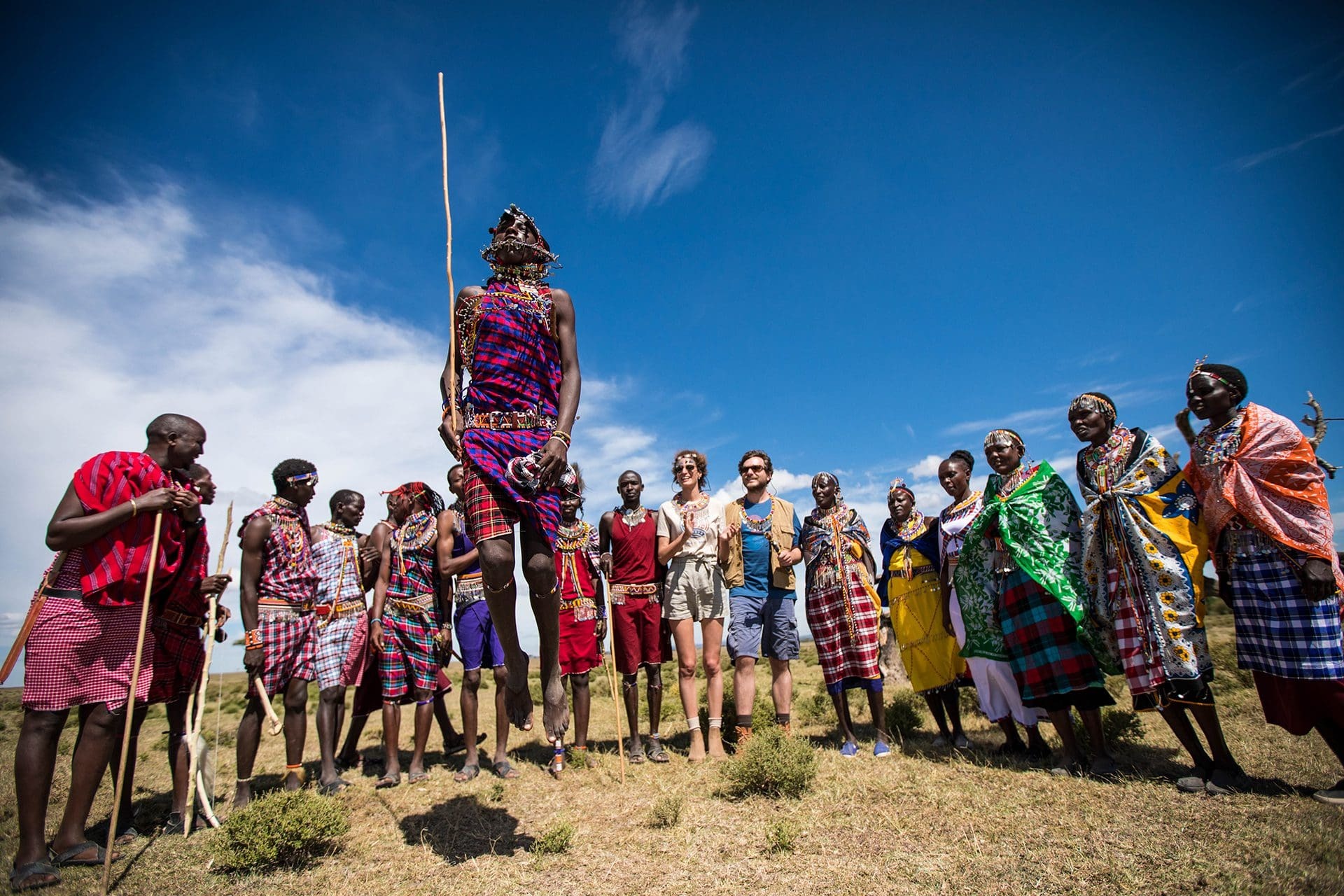
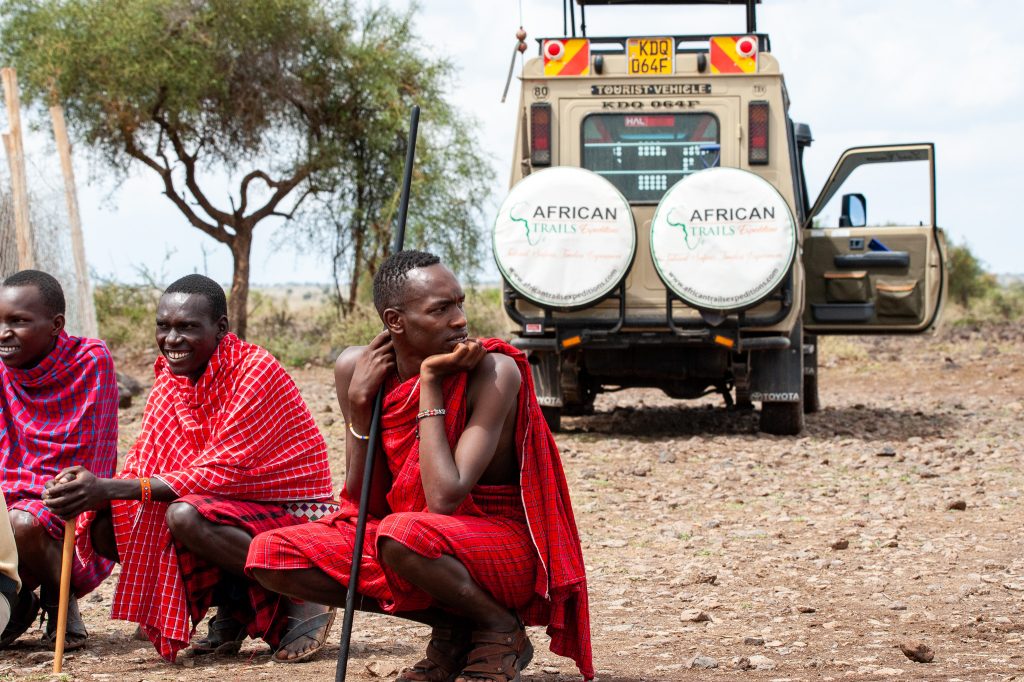
Most guides are Maasai from the communities whose land Naboisho was built to protect. Cultural village visits are genuine exchanges rather than performances, supported by the camp's contribution to the Koiyaki Safari Guiding School, which trains young Maasai as professional guides.
Ready to plan your stay?
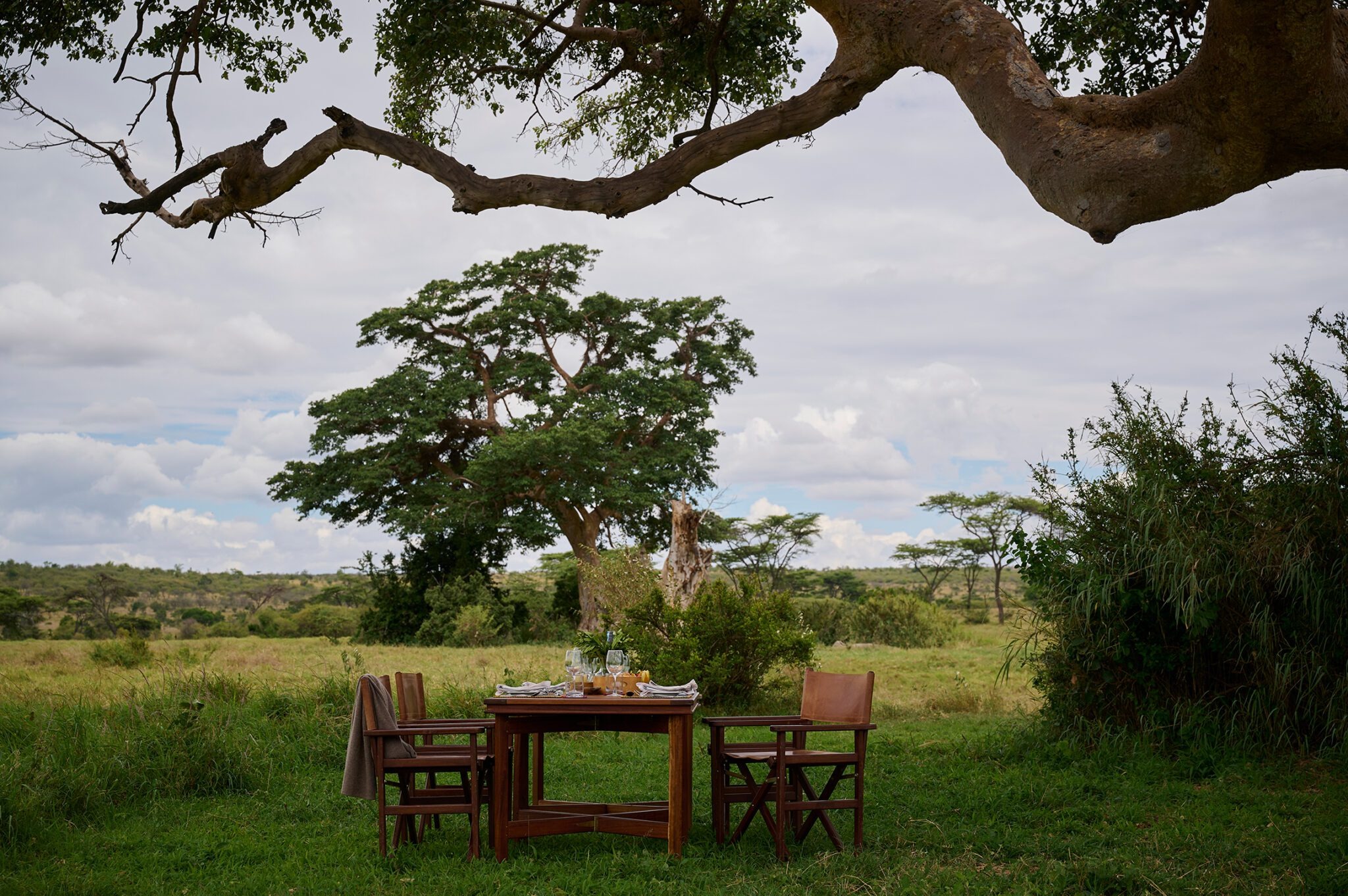
Meals at Saruni Leopard Hill move between the raised main dining deck and the bush depending on the guide’s read of where the morning’s best breakfast position lies. The kitchen runs on locally sourced produce with a strong Italian influence — Saruni Basecamp’s founding register carried across the group — and the results are consistently cited in guest reviews alongside the game drives rather than as an afterthought. Picnic breakfasts taken on drive are a standard part of the programme, the location chosen by the guide each morning as considered as any other decision he makes. Sundowners at the Double Fig Tree or at a position in the conservancy selected for the evening light are offered on the afternoon drive. The lounge tent beside the main dining area carries a bar and a library of East Africa natural history and field guides — a useful space for the hour between returning from drive and sitting down for dinner.




Saruni Leopard Hill is open year-round. July through October is the Great Migration period: the wildebeest herds move into the Mara ecosystem from the Serengeti in late June, building through July, with peak river crossing activity in August and September before the herds begin to thin in October. Naboisho’s proximity to the Maasai Mara National Reserve means guests can join a reserve day visit during this period to access the main crossing zones, returning to the conservancy’s quieter density each evening. January through March is the most productive big cat period outside the migration: resident lion, cheetah, and leopard populations are undistracted by the herds, the landscape is drying into the long grasses of the short dry season, and the visitor volumes across both the conservancy and the reserve are considerably lighter than the July–September peak. June offers excellent general game viewing in a greener landscape as the dry season begins, with increasing wildlife concentration at the waterholes. November and December bring the short rains — shorter grass, arriving calves, and the Mara at its most photogenic in morning light.
Explore handcrafted itineraries where Saruni Leopard Hill forms part of the journey.
Please share your name and email so we can follow up with you.