From
$6,519

Start Planning Your Tailor-Made Journey
🔒 Your details are kept private and never shared with third parties.
Nine tented suites in a 60,000-acre private conservancy where the lion density is among the highest in Africa and the only vehicle at a sighting is yours
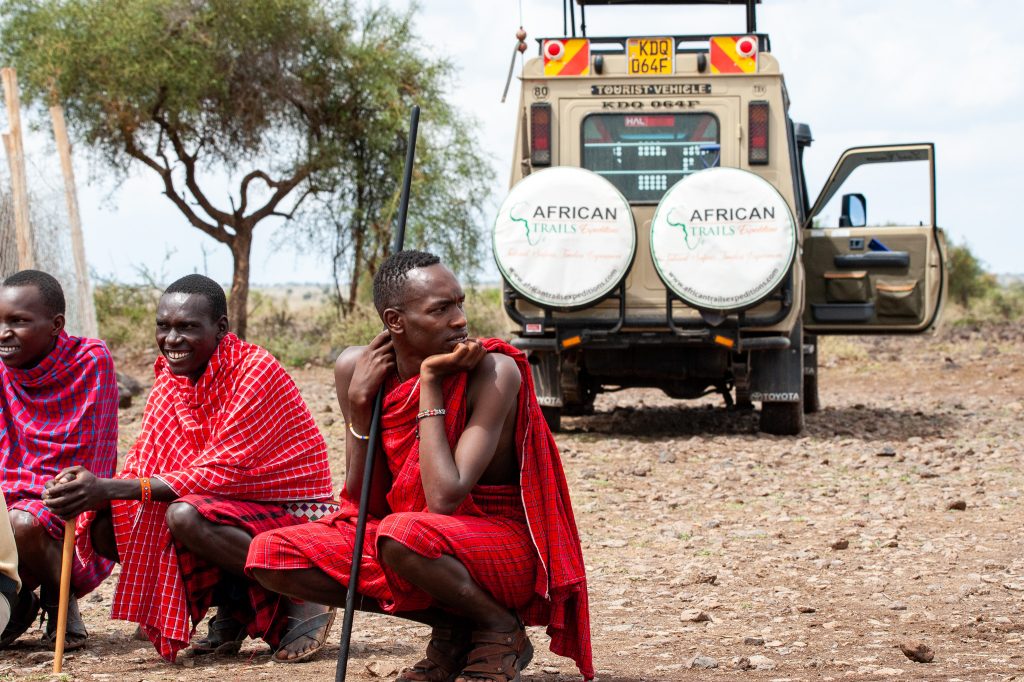
In March 2010, more than 500 Maasai families in the greater Mara ecosystem made a collective decision that has since become one of the most studied and cited examples of community-led conservation in Africa. They pooled their land into a single conservancy, committed to a 25-year lease to tourism operators, and named it Naboisho — the Maa word for “coming together.” The result is 60,000 acres of managed wilderness bordering the Maasai Mara National Reserve, carrying some of its strongest wildlife and none of its congestion.
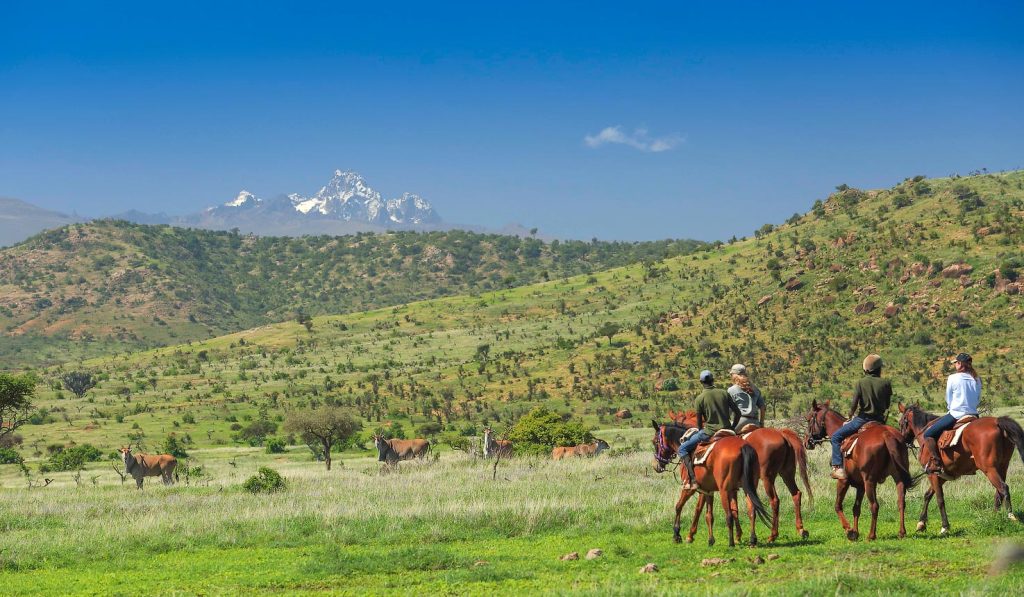
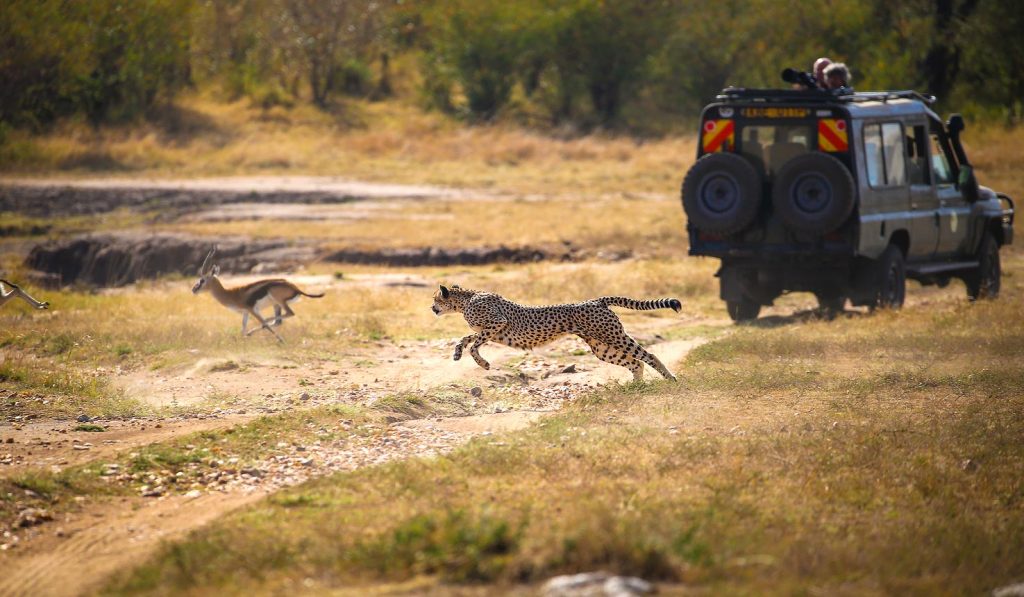
The conservancy’s architecture is deliberate: a fixed ceiling on the number of camps permitted inside it, a daily limit on the number of vehicles at any wildlife sighting, and a mandatory minimum distance from animals that applies to every operator equally. These are not administrative niceties. They are the mechanism by which Naboisho has built and maintained a wildlife density — particularly a lion population of between 70 and 100 individuals, among the highest concentration in the entire Mara-Serengeti ecosystem — that the national reserve, with its open access and volume of vehicles, cannot replicate. When guests at Naboisho Camp stop at a lion pride on their morning drive, there is typically one vehicle at the sighting. Possibly two. It is a categorically different experience from the equivalent moment in the reserve.
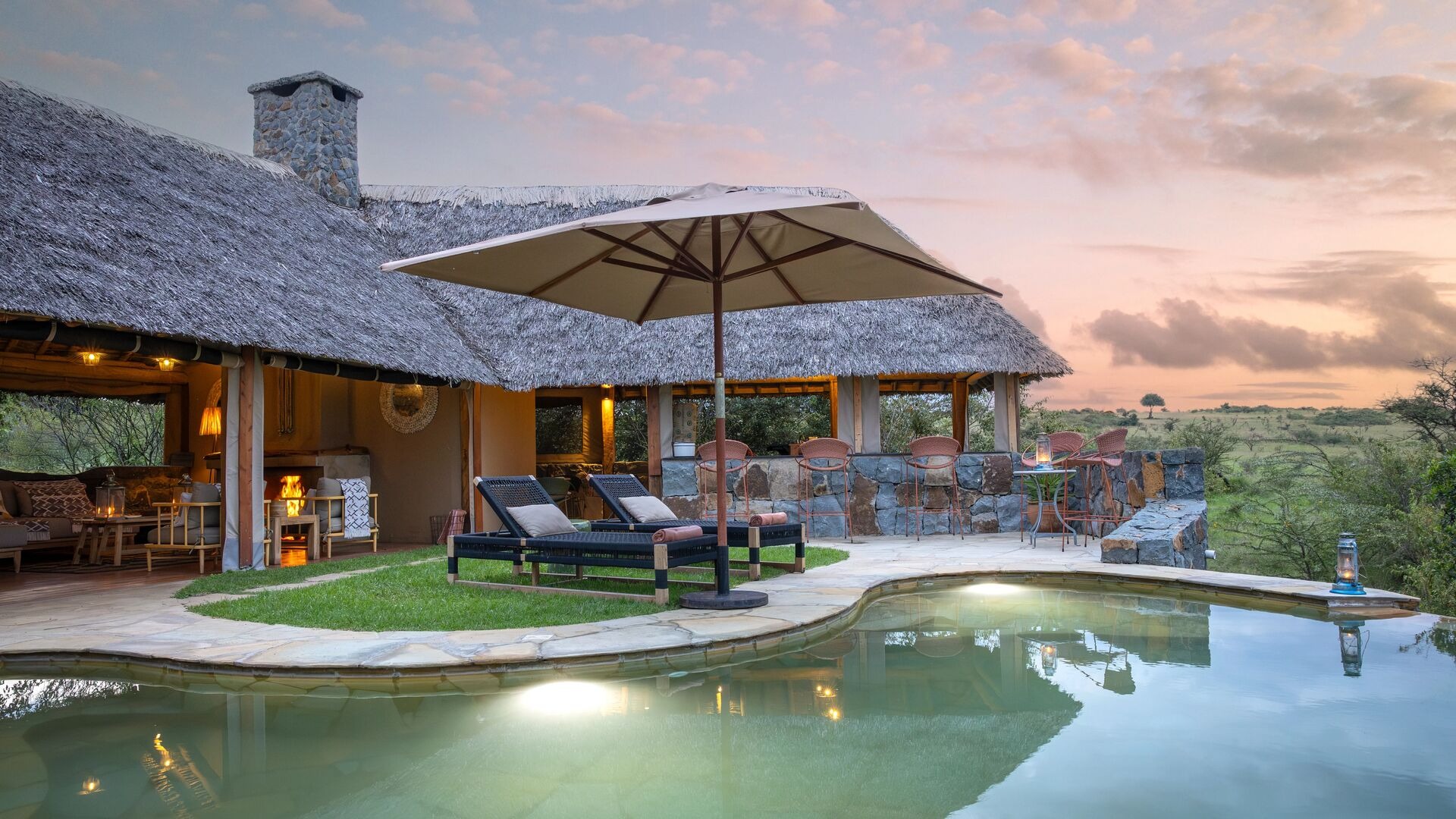
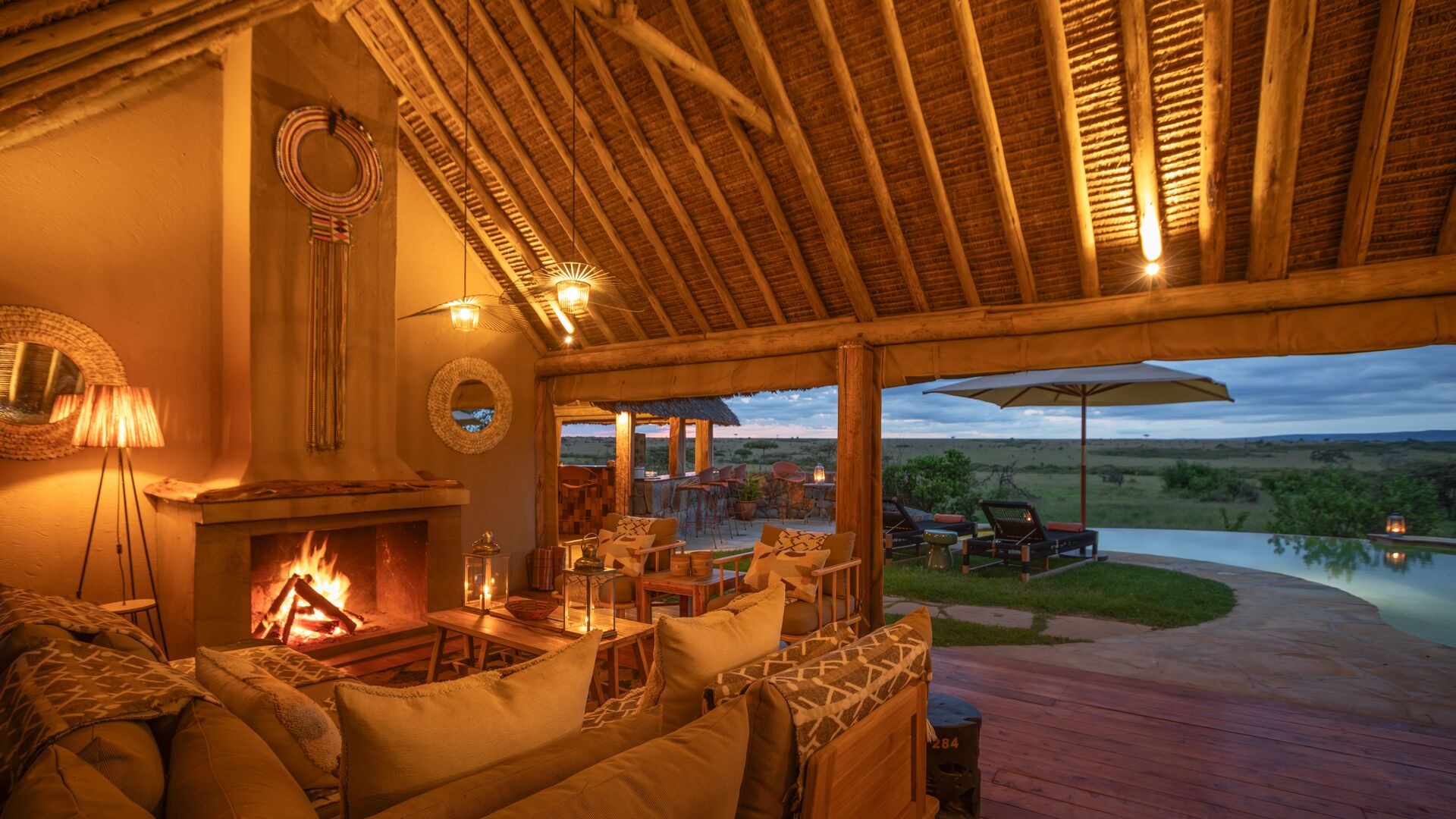
Naboisho Camp is operated by Asilia Africa and holds nine fully refurbished tented suites on a hilltop position with commanding views across the conservancy plains to the Maasai Mara National Reserve beyond. The main area — thatched lounge, stone fireplace, swimming pool, and a dining room that opens entirely to the view — sits above a waterhole where elephant, buffalo, and plains game arrive on the daily schedule that a permanent water source in semi-arid country produces. The camp’s activity programme extends the standard Mara offering in every direction that the conservancy’s private status makes possible: night drives, walking safaris into areas where dangerous wildlife may be encountered, fly camping overnight in the bush, and a dedicated photographic safari vehicle with rotating chairs and drop sides for the guests whose primary purpose in the Mara is to return with images rather than memories.
60,000 acres, hard limits on camps and vehicles, nine tented suites. One of the highest lion densities in Africa, night drives and fly camping the national reserve does not permit, and a conservancy where the Maasai relationship is built into the land title itself.
All tourism fees channelled directly into conservancy management and monthly lease payments to 500-plus Maasai landowners under a 25-year agreement. 95% local workforce. Asilia's conservation commitment funds anti-poaching, Smithsonian-partnered wildlife monitoring, and community programmes covering clean water, renewable energy, education, and women's economic empowerment.
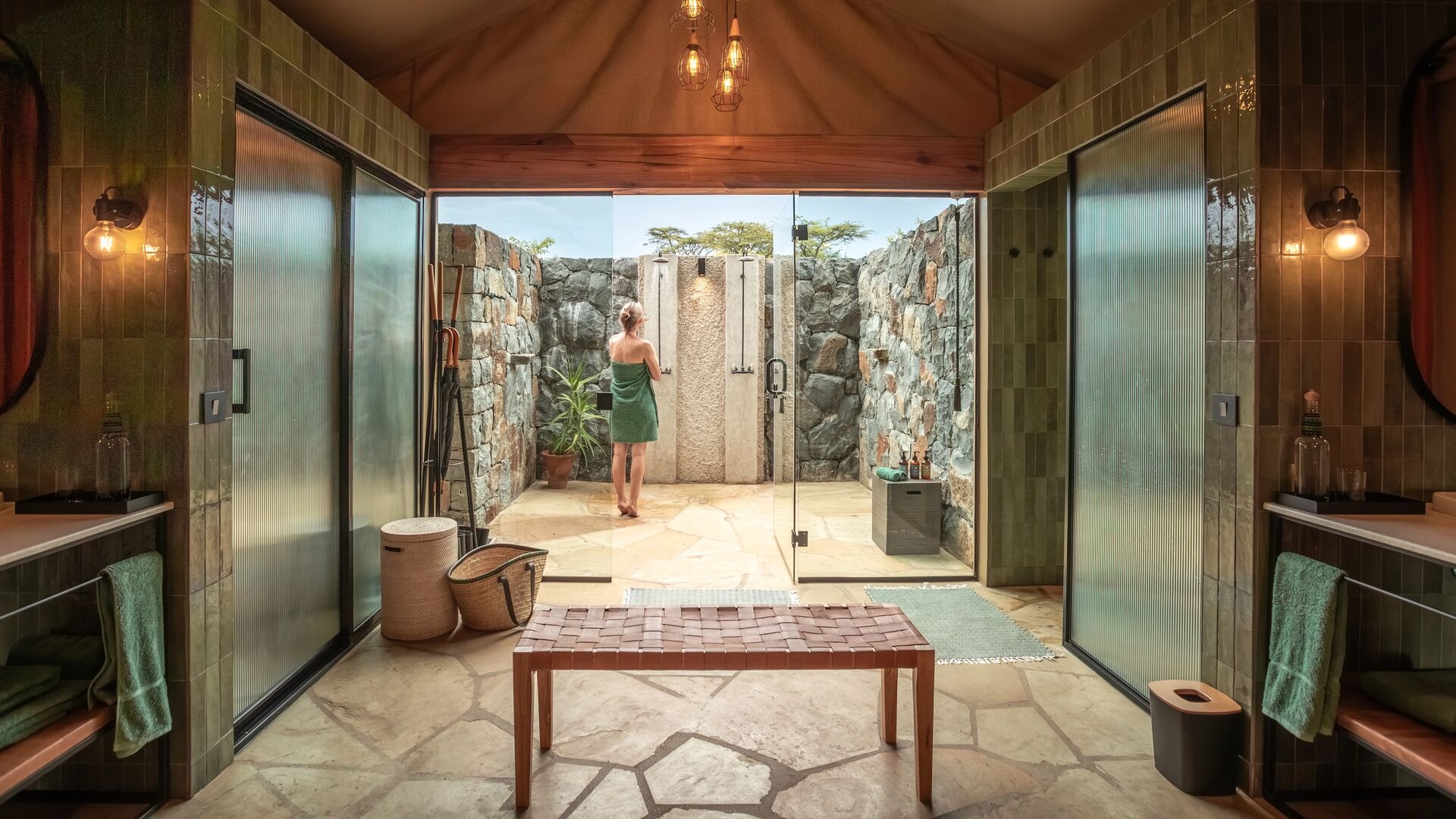
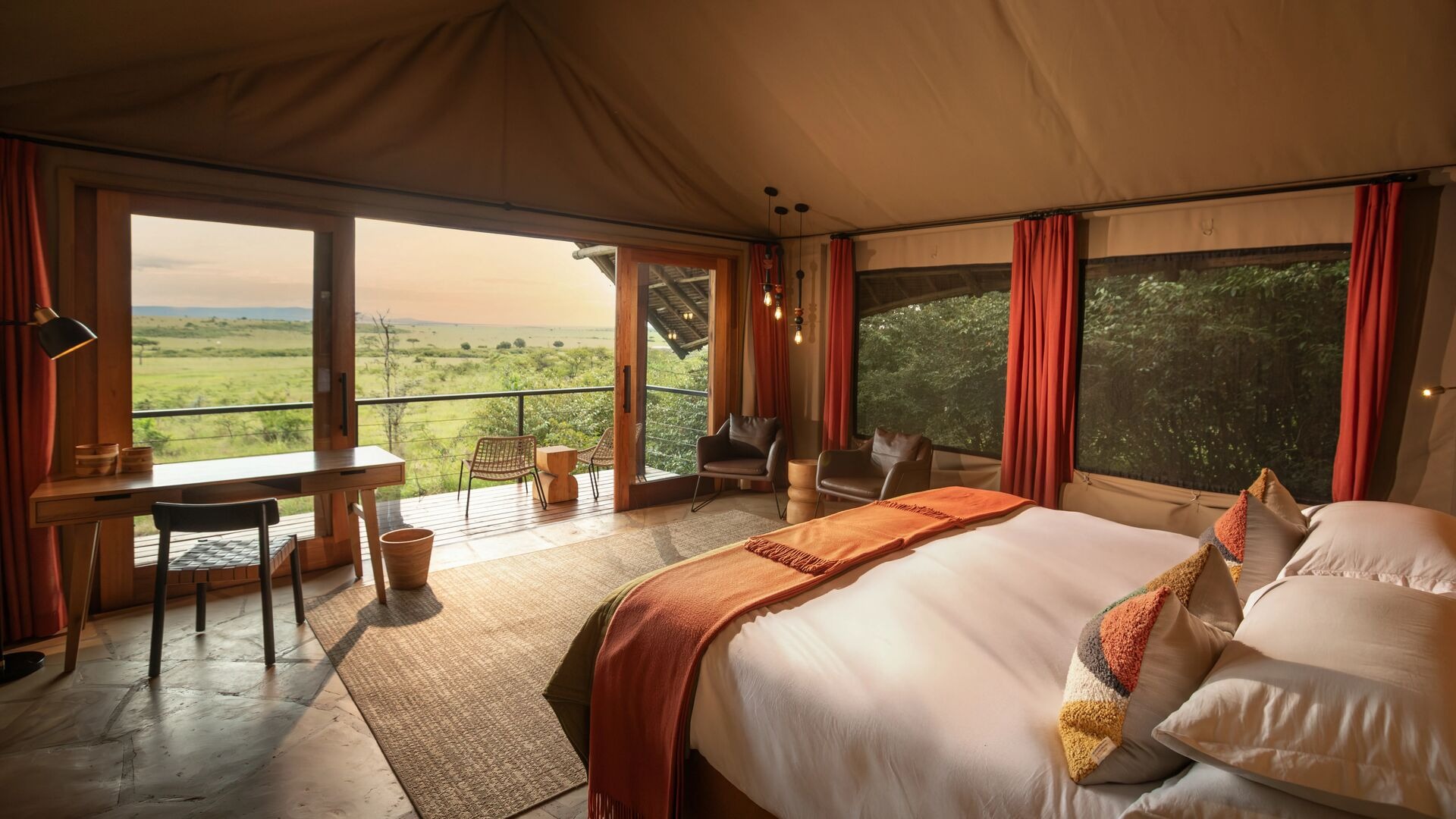
Nine tented suites are distributed along the camp’s hilltop position, each refurbished to a standard that Asilia describes as luxurious and spacious — the interiors carry natural textures, considered symmetry, and the kind of restraint in material choices that reads as intentional rather than minimal. Each suite has a private veranda with a daybed, positioned to face the conservancy plains and the Maasai Mara National Reserve visible on the horizon. En-suite bathrooms run to both indoor and outdoor showers — the outdoor option is not a token gesture but a fully functional alternative, positioned relative to the veranda view in a way that makes it the obvious choice on clear mornings. Two of the nine suites are configured as family suites: a full suite with an annexed sleeping area for children, maintaining the privacy and sightline of the adult space while keeping the family group within a single contained footprint. The swimming pool is positioned adjacent to the main lounge area, with the waterhole and the plains beyond it as the constant backdrop.

Seven suites along the hilltop, each with unimpeded sightlines across the Naboisho plains to the Maasai Mara. Natural textures, considered lighting, locally made furnishings. Private veranda daybed, indoor and outdoor showers, the latter open to the sky.
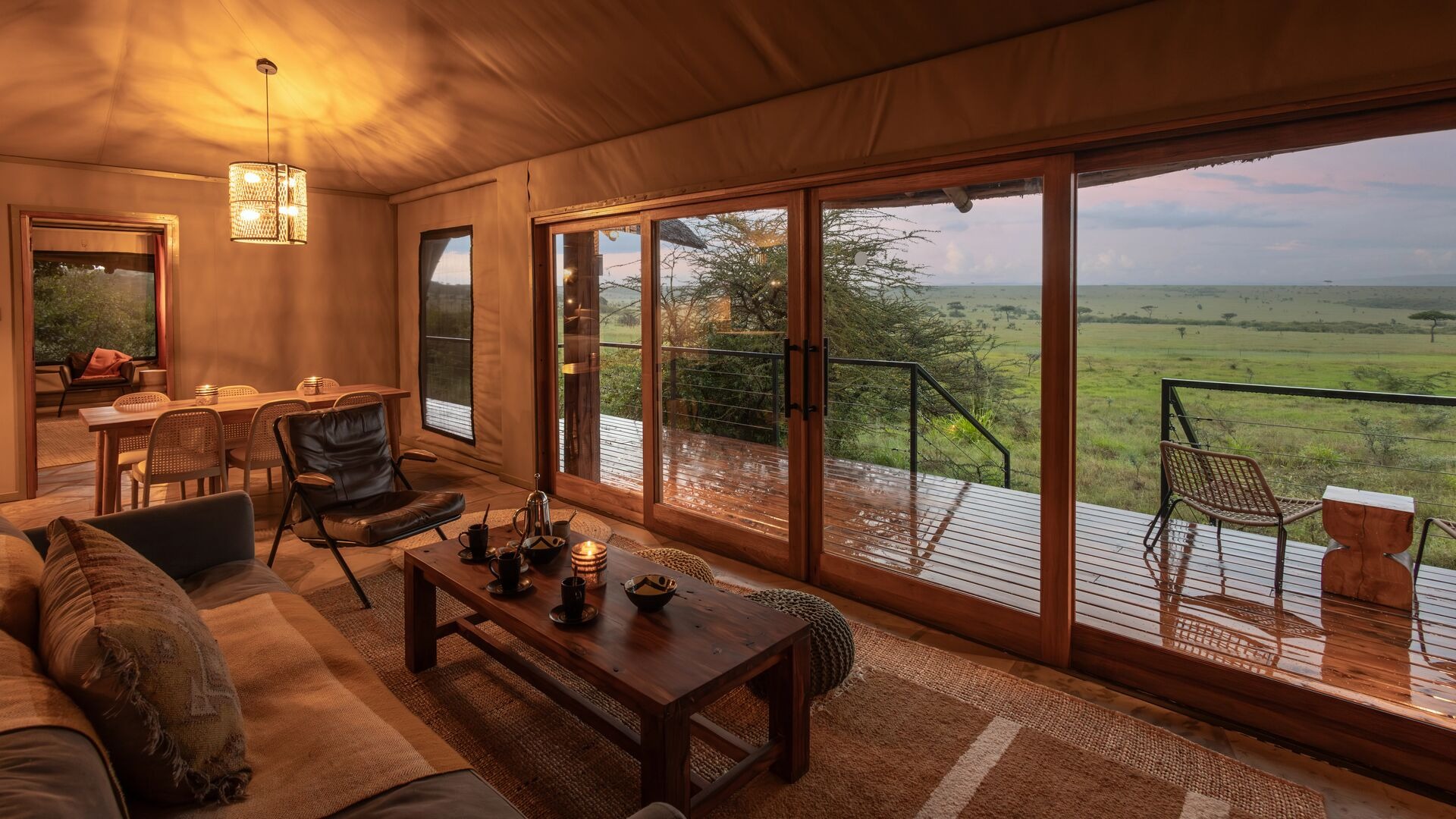
Two suites configured as family suites: a full tented suite with a connected children's annex providing separate sleeping space. The adult suite retains its full specification; the annex adds beds and a small sitting area adjusted to the group's needs. Children above five welcomed, with Maasai bow-and-arrow making and guided wildlife tracking through the camp grounds.
Every moment at Naboisho Camp is crafted to immerse you deeper in the wild.
Ready to plan your stay?
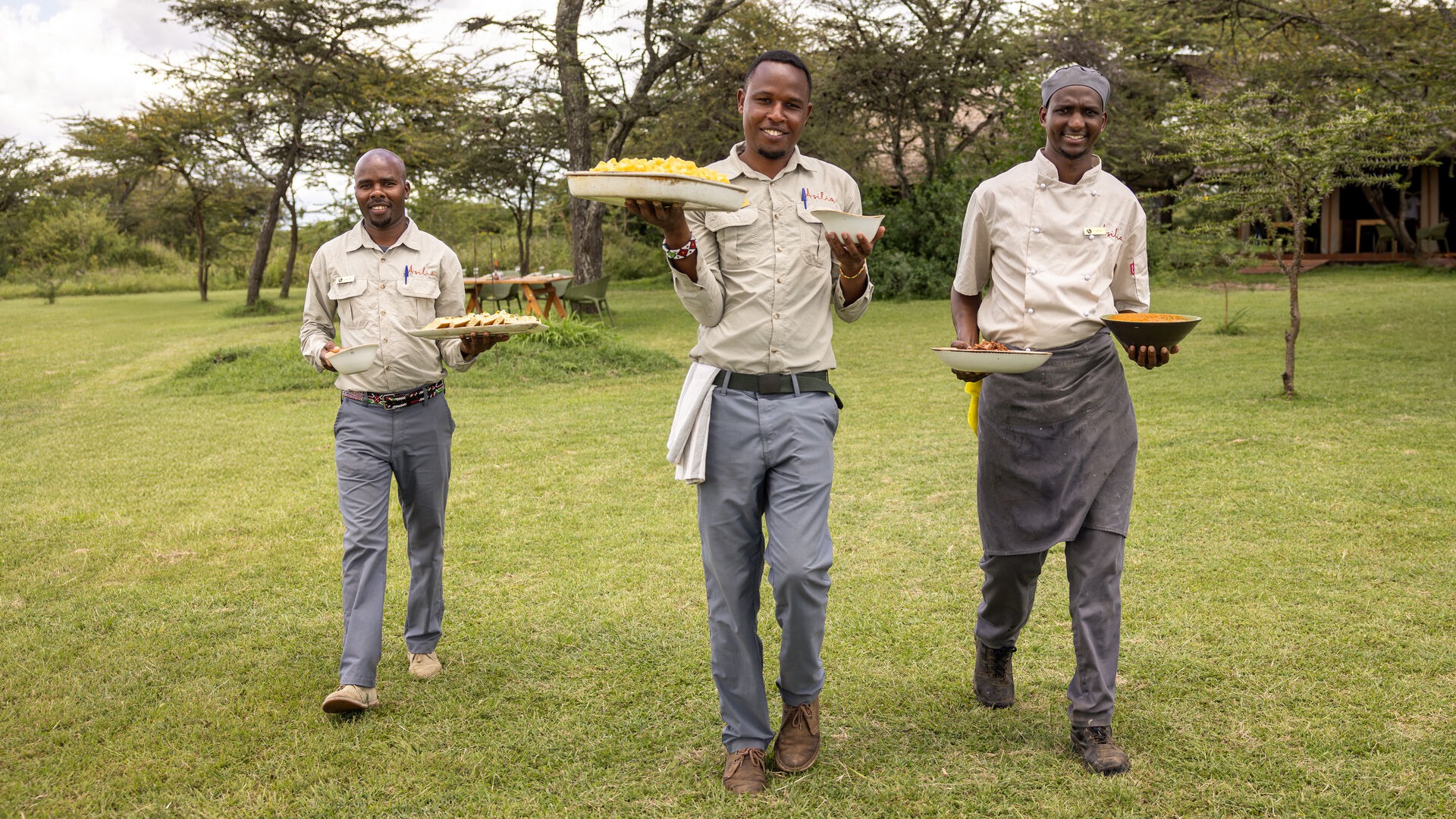
Meals at Naboisho Camp are served across several settings, and the kitchen operates with enough confidence in what it produces to vary the location rather than defaulting to the same dining room at every sitting. Breakfast is typically taken in the open air — either in the camp’s main dining area overlooking the waterhole, or in the bush as a full spread laid out beside the vehicle at a position the guide has chosen for the morning light and the animal activity around it. Lunch in camp is a lighter, buffet-style affair under the acacia shade; dinner returns to the main mess tent, where the open-sided structure and the fireplace between them make a long evening meal the natural anchor of the day. Freshly baked breads, biscuits, and muffins are a consistent detail that guests note because they are genuinely good rather than because they are a novelty. The traditional afternoon tea at four o’clock — a deliberate old-East Africa rhythm — is the signal that the bush day is about to resume for the late drive. Sundowners are taken in the conservancy, at a position and time selected by the guide for maximum effect.







The Naboisho Conservancy delivers exceptional game viewing in every month of the year, which is not a marketing claim but a structural consequence of its conservancy model: resident wildlife density that does not depend on the Great Migration, and an activity programme — night drives, walking safaris, fly camping — that performs regardless of season. The distinction between seasons is one of character rather than quality. July through October is the peak of the Great Migration, when the wildebeest herds move north from the Serengeti into the greater Mara ecosystem and the conservancy fills with the energy that the crossing zones produce. During this period, a full-day drive into the Maasai Mara National Reserve gives access to the river crossings while the conservancy itself continues to offer its private and uncongested alternative. January and February deliver the Mara’s dry-season predator viewing at its most reliable, with lower visitor volumes across all camps. November and December bring migratory birds in exceptional numbers and photography conditions — clean air, green landscapes, golden light — that make the post-rains period specifically sought after by photographers and guests with flexible timing. The long rains of April and May are the quietest period, with the conservancy at its most lush and the least visited.
Explore handcrafted itineraries where Naboisho Camp forms part of the journey.
Please share your name and email so we can follow up with you.